
Choosing the best single room heat recovery ventilator (HRV) involves balancing efficiency, ease of installation, and cost. The Panasonic Intelli-Balance 100 stands out as the overall best for its reliable performance and adaptability. For those seeking a budget-friendly yet effective option, the Vents-US Micra 150 offers ductless convenience with lower upfront costs. Meanwhile, the Broan B210E75RS excels in high airflow and premium build quality for larger or more demanding spaces. In this guide, I’ll break down the key differences, tradeoffs, and what makes each model suitable for specific needs—continue reading for the full comparison.
Key Takeaways
- The top models balance high heat recovery efficiency with ease of use and installation flexibility.
- Ductless options like the Micra 150 provide quick setup for smaller spaces but may lack some advanced features.
- Premium units like the Broan B210E75RS deliver high airflow but come at a higher cost and complexity.
- Smart controls and remote operation enhance usability, especially in hard-to-reach locations.
- Tradeoffs often involve choosing between cost, installation complexity, and the level of energy savings.



More Details on Our Top Picks
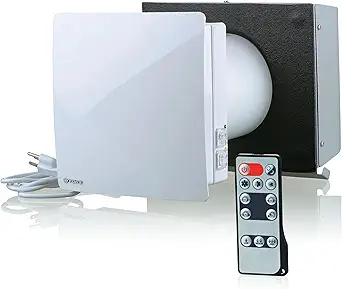
Heat Recovery Ventilator with Ceramic Heat Exchanger, Wall-Mounted Fresh Air System with WiFi/Remote Control for Home, Attic, Garage
This HRV stands out for its high-efficiency ceramic heat exchanger that recovers up to 90% of heat, making it an excellent choice for those who prioritize energy savings in small spaces. Compared with the Vents-US Micra 150, it offers more advanced smart control via WiFi and remote, giving users effortless management of airflow, humidity, and modes. The magnetic easy-clean panel simplifies maintenance, a plus for DIY enthusiasts. However, its focus on single-room use means it may fall short for larger spaces or whole-house needs. The quiet EC motor ensures minimal disruption, ideal for bedrooms or offices. The tradeoff is that this model lacks the high airflow capacity of larger units like the Broan B210E75RS, making it less suited for very high ventilation demands. This pick is perfect for smart homeowners seeking efficient, quiet, and easy-to-control ventilation in small or specific areas.
Pros:- High heat recovery efficiency up to 90%, reducing energy costs
- Smart WiFi and remote control for convenient operation
- Detachable magnetic panel for effortless cleaning
- Ultra-quiet operation thanks to energy-saving EC motor
Cons:- Limited airflow capacity suitable only for small spaces
- No integration with whole-house ventilation systems
- Requires WiFi connectivity for full smart features
Best for: Homeowners or small space dwellers seeking energy-efficient, WiFi-enabled ventilation with easy maintenance
Not ideal for: Large households needing whole-house ventilation or high airflow capacity, as it is designed for single-room use
- Heat Recovery Efficiency:Up to 90%
- Control:WiFi & Remote
- Fan Speed Modes:Adjustable
- Motor Type:EC, PWM controlled
- Airflow Capacity:Variable, suitable for small rooms
- Filter Type:G4 filter
Bottom line: Ideal for tech-savvy individuals wanting efficient, quiet ventilation in a single room with smart controls.
VENTS-US Frigate HRV 120s Heat Recovery Ventilator – Whole House Ventilation Fan with Up to 118 CFM and Freeze Protection
This model offers a reliable solution for whole-house ventilation with a maximum airflow of 118 CFM, making it suitable for continuous, balanced air exchange. It compares favorably to the Broan B210E75RS in terms of its corrosion-resistant steel casing and high thermal recovery rate of up to 73%, especially in cold climates thanks to its freeze protection. Its three-speed control allows for flexible operation, and the dual washable filters help maintain indoor air quality. The built-in anti-frost protection and durable construction make it a dependable choice for colder regions. However, its size and installation complexity mean it may be less suitable for small or retrofit spaces. The system’s efficiency—recovering up to 73% of heat—delivers significant energy savings. The tradeoff is that it’s a whole-house unit, which might be overkill for a simple single-room requirement. This system is best for homeowners wanting a robust, whole-house HRV with freeze protection and high efficiency.
Pros:- Up to 118 CFM airflow capacity for whole-house ventilation
- High thermal recovery up to 73%, reducing heating costs
- Corrosion-resistant steel casing for durability
- Three-speed control for flexible airflow management
Cons:- Larger size and more complex installation compared to single-room units
- Higher upfront cost and maintenance complexity
- Designed primarily for whole-house rather than small spaces
Best for: Homeowners needing a durable, whole-house HRV with excellent cold climate performance
Not ideal for: Individuals seeking a compact, single-room ventilation solution or minimal energy recovery needs
- Airflow Capacity:Up to 118 CFM
- Heat Recovery Rate:Up to 73%
- Control:3-speed
- Core Material:Polystyrene
- Durability:Steel casing
- Frost Protection:Integrated anti-frost
Bottom line: Best suited for larger homes in cold climates requiring reliable, efficient, whole-house ventilation.
VENTS-US Micra 150 – Ductless HRV Heat Recovery Ventilator, 71 CFM with Remote, Built-In Temperature Sensor
The Micra 150 offers a ductless solution with 71 CFM airflow, making it ideal for retrofit installations where ducting isn’t feasible. Compared with the Broan B210E75RS, it shines for its simplicity and suitability in bedrooms, offices, or small apartments. Its built-in temperature sensor and remote control provide convenient operation and climate management. The heat recovery efficiency of up to 88% helps reduce heating costs, especially in colder climates. Its quiet operation and dual filtration improve indoor air quality without noise disturbance. The main tradeoff is its limited airflow capacity, which may not serve larger spaces well. Its wall-mounted, ductless design makes it perfect for spaces that need fresh air but lack duct infrastructure. This pick is best for small, retrofit, or ductless applications where efficiency and ease of installation matter.
Pros:- High heat recovery efficiency up to 88%
- Ductless, easy to install in retrofit scenarios
- Built-in temperature sensor for climate control
- Remote control for convenient operation
Cons:- Limited airflow capacity (71 CFM) suitable only for small spaces
- No whole-house coverage
- Requires wall mounting, less flexible for large areas
Best for: Residents in small or retrofit spaces needing ductless, energy-efficient ventilation with remote control
Not ideal for: Large homes or spaces requiring high airflow or whole-house ventilation
- Airflow Capacity:71 CFM
- Heat Recovery Efficiency:Up to 88%
- Control:Remote, built-in sensor
- Operation Noise:Low
- Filtration:Dual filters
- Mounting:Wall-mounted, ductless
Bottom line: Perfect for small, ductless spaces needing efficient, easy-to-control ventilation without extensive installations.
Broan B210E75RS AI 206 CFM Wall or Ceiling Mounted Energy Recovery Ventilator
The Broan B210E75RS is a powerful ERV with 206 CFM, designed for larger homes needing significant airflow and high-efficiency heat recovery of up to 81%. It features VIRTUO™ technology that auto-balances airflow, simplifying installation and maintenance—making it the ideal choice for whole-house systems. Its LCD display provides real-time data and diagnostics, enhancing usability. Compared to the Vents-US Frigate 120s, it offers higher capacity and a more sophisticated control interface, suitable for demanding environments. Its versatile top or side port options allow flexible installation. The main tradeoff is its size and complexity, making it less suitable for small or retrofit spaces. Its high SRE (up to 81%) significantly cuts energy costs, especially in colder climates. This system works best for large homes requiring robust, high-capacity ventilation with smart, auto-balancing features.
Pros:- High airflow capacity of 206 CFM for whole-house ventilation
- Auto-balancing and self-adjusting VIRTUO™ technology
- High heat recovery rate up to 81%
- Flexible installation with top or side ports
Cons:- Larger footprint and more complex installation process
- Higher initial cost
- Overkill for small or single-room applications
Best for: Large residences or multi-zone homes needing high airflow and automatic balancing
Not ideal for: Small spaces or retrofit scenarios with limited space or lower ventilation needs
- Airflow Capacity:206 CFM
- Heat Recovery Rate:Up to 81%
- Control:Auto-balancing LCD
- Core Material:ERV core
- Installation:Wall or ceiling mount
- Special Features:Self-adjusting, diagnostics
Bottom line: Best for large homes seeking high-capacity, smart, energy-efficient whole-house ventilation.
Panasonic Intelli-Balance 100 ERV, 30-100 CFM, Plug-In, Cold Climate
The Panasonic FV-10VEC2 offers a flexible ventilation solution with adjustable airflow from 30 to 100 CFM, making it highly suitable for cold regions where precise control is essential. Compared to the Broan B210E75RS, it excels in its adaptability and energy efficiency, certified by ENERGY STAR. The two DC/ECM motors with Pick-A-Flow selector allow custom airflow, and the boost function rapidly increases airflow to 100 CFM when needed. Its compact design fits well in small spaces like bathrooms or utility rooms. The MERV 8 filter helps maintain air quality, and the unit is designed for easy plug-in operation. The main tradeoff is that it’s less suitable for whole-house ventilation and has a lower maximum airflow capacity than larger systems. Its strength lies in cold climate zones and adjustable, energy-efficient performance. This model is ideal for cold climates requiring flexible, energy-efficient ventilation in small to medium spaces.
Pros:- Adjustable airflow from 30 to 100 CFM
- Energy-efficient DC/ECM motors with Pick-A-Flow
- Certified ENERGY STAR for energy savings
- Boost function for rapid airflow increase
Cons:- Limited to 100 CFM maximum, not suitable for large areas
- Designed mainly for small to medium spaces
- Requires plug-in power source
Best for: Residents in cold climates needing adjustable, ENERGY STAR certified ventilation for small to medium spaces
Not ideal for: Large homes or spaces requiring high airflow capacity or whole-house solutions
- Airflow Range:30-100 CFM
- Control:Manual, boost, Min/Hr timer
- Energy Certification:ENERGY STAR
- Motors:Dual DC/ECM
- Filters:MERV 8
- Size:Compact wall-mount
Bottom line: Best for cold climate homes needing flexible, energy-efficient ventilation with precise control.
VENTS-US TwinFresh Comfo RB1-50-2 – Ductless ERV Through-the-Wall Single Room Ventilation Fan, 30 CFM, Energy Recovery Ventilator with Remote Control and Humidity Sensor
This model stands out for its combination of high energy recovery efficiency, quiet operation, and ease of installation, especially compared to the Panasonic Intelli-Balance 100, which offers broader CFM range but involves ductwork. The TwinFresh Comfo is ideal for small rooms up to 500 sq ft where ductless installation is essential, such as bedrooms or tiny homes. Its reversible DC motor runs at just 0.2 sones, making it almost inaudible, and the built-in humidity sensor helps maintain comfortable indoor moisture levels. However, the unit’s 30 CFM capacity may fall short for larger spaces, and its relatively basic filtration system (MERV 5) doesn’t address all indoor air quality concerns. Compared with larger, ducted ERVs like the Broan B210E75RS, this is less powerful but much simpler to install and maintain. Best for homeowners prioritizing straightforward installation and quiet, energy-efficient ventilation in small spaces.
Pros:- Exceptional energy recovery rate of up to 88%, reducing heating/cooling costs
- Near-silent operation at only 0.2 sones, suitable for bedrooms and quiet spaces
- Compact, ductless design enables easy installation through standard wall openings
- Built-in humidity sensor for automatic moisture control
Cons:- Limited to 30 CFM, not suitable for larger rooms or high occupancy areas
- Basic filtration (MERV 5) may not sufficiently improve indoor air quality in polluted environments
- Some users may find the aesthetic design less modern compared to premium units
Best for: Small room occupants needing efficient, quiet, ductless ventilation—ideal for bedrooms or basement nooks.
Not ideal for: Large or highly air-polluted spaces requiring heavy-duty filtration or higher airflow capacities.
- Air Flow Capacity:30 CFM
- Noise Level:0.2 sones
- Motor Type:DC reversible motor
- Power Consumption:4.5 watts
- Installation Type:Ductless through-the-wall
- Filter Type:MERV 5
- Temperature Range:Down to -4°F
- Control:Remote control
- Dimensions:18.5″ D x 12.19″ W x 10.25″ H
Bottom line: This pick is best for small, self-contained rooms where quiet operation and energy efficiency are key priorities.
Through Wall HEPA Ventilation Fan with WiFi & Remote Control, Ultra Quiet EC Motor Wall Vent, Fresh Air Intake & Air Exchange System for Bedroom, Home Office, Attic
This product earns its spot for integrating advanced HEPA filtration, WiFi control, and ultra-quiet operation, making it a strong alternative to the simpler TwinFresh Comfo for tech-savvy users. Unlike the TwinFresh, which offers basic humidity sensing and lower filtration, this fan’s multi-stage system (pre-filter, HEPA, activated carbon) effectively reduces dust, pollen, and odors, which is ideal for allergy sufferers or air quality enthusiasts. The WiFi connectivity via Tuya app allows remote adjustments and mode switching, adding convenience for busy households. Its 350 CFM airflow capacity surpasses the TwinFresh’s, suitable for larger or more active spaces like home offices or attics. However, it operates at a slightly higher noise level (28 dB), which may bother extremely noise-sensitive users. The installation may also be more complex due to its larger size and ducting options. Best for users prioritizing filtration, smart control, and higher airflow in enclosed or larger rooms.
Pros:- Three-stage filtration system with HEPA, improving indoor air purity significantly
- WiFi enabled with app control for remote operation and scheduling
- High airflow capacity of 350 CFM for larger rooms or higher occupancy
- Ultra quiet operation at 28 dB suitable for night-time use
Cons:- Installation can be more complex due to size and ducting requirements
- Higher price point reflecting advanced filtration and smart features
- Slightly higher noise level compared to ultra-quiet non-WiFi models
Best for: Homeowners who want integrated filtration, app control, and quiet operation for bedrooms or busy home offices.
Not ideal for: Small spaces or users seeking a basic, plug-and-play solution without smart features or extensive filtration needs.
- Air Flow Capacity:350 CFM
- Noise Level:28 dB
- Motor Type:EC brushless motor
- Power Consumption:8 watts
- Installation Type:Wall-mounted
- Filtration System:Pre-filter, HEPA, activated carbon
- Control:WiFi app, remote control
- Dimensions:15.4″ D x 11.4″ W x 16″ H
- Recommended Uses:Bedrooms, home offices, attics
Bottom line: This fan is best for users seeking smart, filtration-rich ventilation with high airflow for larger or more polluted indoor spaces.

How We Picked
These products were evaluated based on their heat recovery efficiency, ease of installation, build quality, noise levels, and smart features. I prioritized models that are specifically designed for single rooms, emphasizing compactness and user-friendly controls. Cost-to-performance ratio played a significant role, with a preference for units that offer reliable operation without excessive complexity or price. The ranking reflects a combination of these factors, aiming to identify options suitable for different budgets and technical comfort levels while maintaining strong energy recovery performance.Factors to Consider When Choosing Best Single Room Heat Recovery Ventilators
When selecting the best single room heat recovery ventilator, it’s important to consider not just initial cost but also installation requirements, energy efficiency, and maintenance. Understanding your specific space size and usage patterns helps determine the right airflow capacity. Additionally, features such as smart controls, noise levels, and maintenance ease can significantly impact daily usability. This guide covers key factors to help you make an informed decision that balances performance and convenience.Airflow Capacity and Room Size
Matching the ventilator’s airflow capacity to your room size is essential for effective ventilation without excessive energy use. A unit with too low CFM (cubic feet per minute) won’t adequately ventilate, while one with too high CFM can cause drafts and waste energy. For typical bedrooms or offices, a model around 30-50 CFM is usually sufficient, but larger or more demanding spaces may require higher capacity options. Always verify the manufacturer’s recommendations for room size to avoid over- or under-ventilation.
Efficiency and Heat Recovery Performance
The core benefit of an HRV is energy savings through heat recovery. Look for units with high heat exchange efficiency, ideally above 70%. This means less heat is lost when bringing in fresh air, reducing heating costs. Some models feature ceramic heat exchangers or advanced core materials that boost efficiency further. Remember, higher efficiency units tend to be more expensive but can pay for themselves over time through lower energy bills.
Ease of Installation and Maintenance
Consider whether the unit is ducted or ductless, as this affects installation complexity and cost. Ductless models like the Micra 150 are quicker to set up but may be limited in capacity. Wall-mounted units usually require some professional installation, especially for venting and electrical connections. Maintenance involves regular filter cleaning or replacement; units with accessible filters and clear instructions tend to be more user-friendly. Think about your technical comfort level and whether you prefer a plug-in unit or one requiring more extensive setup.
Smart Features and Controls
Smart controls, WiFi connectivity, and remote operation are increasingly common and can greatly improve usability. These features allow you to adjust settings, monitor performance, or schedule operation from your phone or remote. They’re particularly helpful if the unit is installed in a hard-to-reach location. However, these features typically come at a premium, so consider whether they are worth the extra cost based on your lifestyle and needs.
Noise Levels and Operating Quietness
Since these units are often placed in bedrooms or home offices, noise level matters. Look for models rated at or below 30 dB for quiet operation. Some units incorporate sound-dampening features or quieter motors that minimize disturbance. Keep in mind that higher airflow units tend to be noisier, so balance your need for ventilation with comfort. Reading user reviews for real-world noise performance can also help gauge suitability.
Frequently Asked Questions
Can I install a single room HRV myself, or do I need professional help?
Many ductless models are designed for straightforward installation and can often be set up by a handy homeowner with basic tools. However, units that require venting or electrical work may benefit from professional installation to ensure safety and optimal performance. Proper installation is key to maximizing energy savings and avoiding issues like air leaks or inadequate airflow. If you’re unsure about your skills, consulting an HVAC technician might be a wise investment.
How often should I clean or replace the filters on my HRV?
Most single room HRVs with filters require cleaning every 3 to 6 months, depending on usage and air quality. Some models feature washable filters, which can be cleaned and reused, reducing ongoing costs. Others use replaceable filters that should be swapped out periodically. Regular maintenance ensures the unit operates efficiently, maintains good indoor air quality, and prolongs its lifespan. Always follow the manufacturer’s recommendations for maintenance schedules.
Are ductless HRVs as effective as ducted systems?
While ductless HRVs can effectively improve air quality in smaller spaces, their capacity and efficiency may be limited compared to ducted systems designed for whole-house ventilation. Ductless units are ideal for single rooms or spaces where installing ducts is impractical. They typically offer easier installation and lower upfront costs but may not provide the same consistent, high-level energy recovery as larger ducted models. For larger or multiple-room needs, a ducted system might be more suitable.
What features should I prioritize for use in cold climates?
In cold climates, look for HRVs with freeze protection features and robust heat exchangers that retain efficiency despite low outdoor temperatures. Units like the Panasonic Intelli-Balance 100 are designed for cold weather with features that prevent frost buildup. Insulation around the unit and proper installation are also critical to prevent heat loss. Prioritizing models with cold climate ratings ensures reliable operation and energy savings during winter months.
How much can I expect to save on heating costs with an HRV?
The savings depend on your local climate, home insulation, and the efficiency of the HRV. Generally, a well-chosen HRV can reduce heating costs by 10-30% by recovering heat from exhausted air. The upfront investment can be offset over time through lower energy bills, especially in colder regions. To get a clearer idea, consider the unit’s heat recovery efficiency and your typical energy consumption. Proper usage and maintenance also maximize these savings.
Conclusion
For most homeowners seeking a reliable, energy-efficient solution, the Panasonic Intelli-Balance 100 ranks as the best overall choice, offering a balance of performance, features, and ease of use. Budget-conscious buyers will find the Vents-US Micra 150 a practical entry point, especially for smaller spaces or where ducting isn’t feasible. Those needing high airflow and premium features should consider the Broan B210E75RS, suitable for larger rooms or more demanding environments. Beginners or those with limited technical skills may prefer plug-and-play units like the VENTS-US TwinFresh Comfo RB1-50-2. Ultimately, selecting the right HRV depends on your space size, climate, and budget—use this guide to find the best fit for your needs.