
TL;DR
Deirdre feels her husband Martin criticizes her mopping without helping, while Martin argues her method is inefficient. The debate highlights differing views on household chores and fairness.
A domestic disagreement over floor cleaning methods has brought to light differing views on household chores, with Deirdre accusing her husband Martin of criticizing her mopping without contributing, while Martin questions her technique but refuses to do it himself.
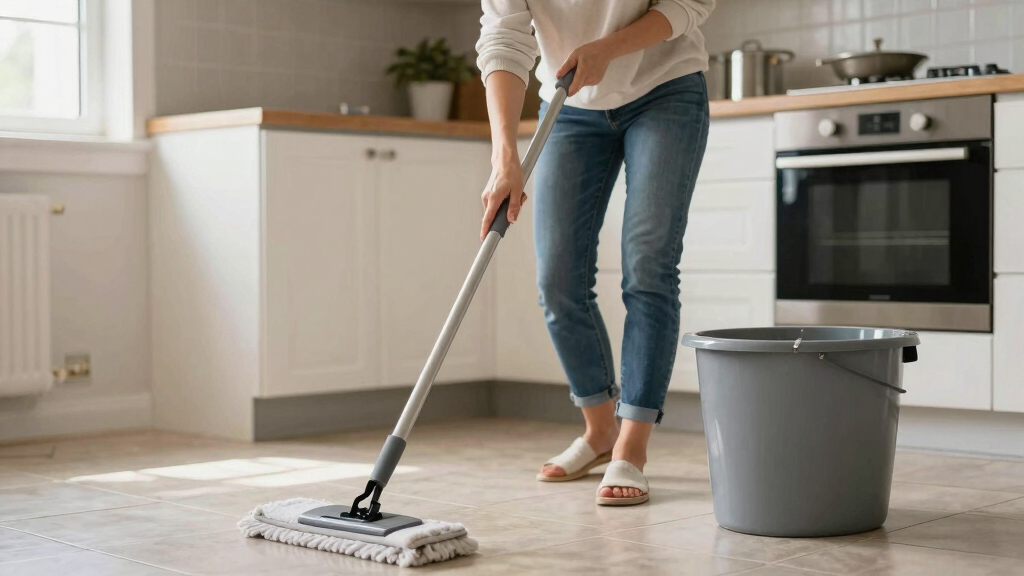
Deirdre, who has been mopping her floors weekly for years, states that Martin frequently criticizes her technique, claiming it spreads dirt rather than cleans. She reports that he has once made a mess trying to mop himself and that he prefers vacuuming, which he considers more efficient. Martin counters that traditional mopping redistributes dirt and advocates for a method involving a specialized bucket that separates clean and dirty water, which he refuses to help implement. He insists his approach is more logical and efficient, though he admits he does not want to participate in the actual mopping process. The couple has differing opinions on whether household chores should be shared equally or if specific tasks require particular methods.
Why It Matters
This dispute underscores broader questions about household fairness, effective cleaning practices, and gender roles in domestic chores. It also highlights how disagreements over routine tasks can cause tension in relationships, especially when one partner feels unappreciated or dismissed.
professional mopping bucket with water separation
As an affiliate, we earn on qualifying purchases.
As an affiliate, we earn on qualifying purchases.
Background
Similar disputes over household chores are common, with debates often centering on the best methods for cleaning and the division of labor. The issue of mopping, in particular, has been scrutinized for its effectiveness and the proper way to do it. Experts note that traditional mopping can be inefficient if not done correctly, but many households still rely on it for hygiene. The controversy here reflects ongoing discussions about how couples share domestic responsibilities and communicate about household tasks.
“What gets to me is that whenever I get the mop out, instead of helping, Martin criticizes me. It’s about basic cleanliness and doing a job that has to be done.”
— Deirdre
“Most people mop inefficiently. It isn’t cleaning — it’s just redistributing the dirt. I want us to use a system that separates clean and dirty water, but she dismisses it.”
— Martin
“Martin refusing to mop the floor just because he doesn’t like Deirdre’s method is childish. It’s a basic household task that should be shared.”
— Caro, 61
“Martin seems more interested in objecting than solving the problem. If he has concerns, he should help find a solution or do the task himself.”
— Sarah, 30
As an affiliate, we earn on qualifying purchases.
What Remains Unclear
It remains unclear whether Martin will agree to buy a specialized mop and bucket system or change his approach. The couple’s future cooperation on chores and the resolution of their disagreement are still developing.
electric spin mop for hardwood floors
As an affiliate, we earn on qualifying purchases.
As an affiliate, we earn on qualifying purchases.
What’s Next
The couple is expected to discuss potential solutions, such as investing in better cleaning equipment. An online poll is closing on May 27 to gauge public opinion on whether Martin should mop or stay out of it.
As an affiliate, we earn on qualifying purchases.
Key Questions
Is traditional mopping effective for cleaning floors?
Traditional mopping can be effective if done properly, including changing water frequently and wringing out the mop thoroughly. However, many experts argue it can be inefficient if water is reused excessively, leading to dirt redistribution.
Should household chores be divided equally regardless of method?
Many believe chores should be shared fairly, but the method of performing them can vary based on preferences and efficiency. Communication and compromise are key to resolving disagreements.
What are alternative cleaning methods to traditional mopping?
Using a mop with a separate clean water compartment, steam cleaners, or microfiber mops are options that can improve cleaning effectiveness and reduce dirt spread.
How can couples resolve disagreements over chores?
Open communication, mutual respect, and willingness to compromise are essential. Investing in better tools or dividing tasks based on preferences can also help improve cooperation.
Source: Guardian Life