TL;DR
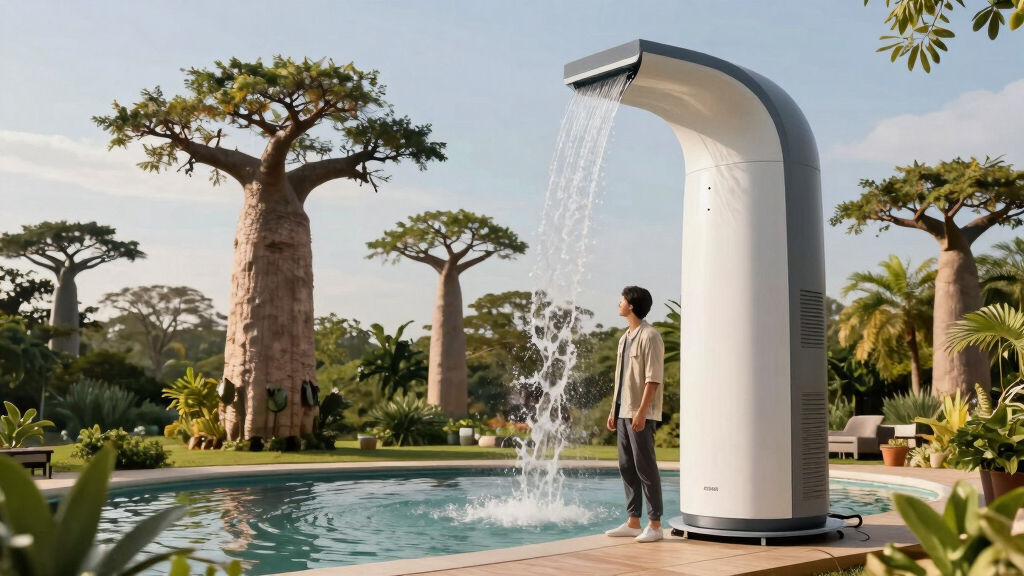
A new renewable energy facility off Madagascar, inspired by baobab trees, is now operational. It uses ocean water directed through a floating waterfall system to generate power, representing an innovative eco-friendly technology.
A floating power plant inspired by baobab trees has started generating renewable energy off Madagascar, utilizing ocean water through a waterfall system. This innovative project aims to provide sustainable power while minimizing environmental impact, marking a significant development in renewable energy technology.

Get home appliances delivered free with Prime
- Fast, free delivery on millions of items
- Prime Video, Amazon Music and more included
- Member-only deals all year
The power plant, designed to resemble the shape and structure of a baobab tree, is anchored in the ocean near Madagascar. It employs a continuous waterfall system where ocean water is directed through underwater marine domes, creating a flow that drives turbines to produce electricity. The project was developed by an unspecified team of engineers and architects, with design elements inspired by natural forms.
According to design diagrams and drawings released by the developers, the system involves underwater domes that channel ocean water into a waterfall-like flow, which then powers turbines housed within the floating structure. The plant is said to be environmentally friendly, utilizing renewable ocean energy without emitting greenhouse gases. The project’s operational status was confirmed by sources close to the development, with initial energy output reportedly meeting expected levels.
Innovative Use of Natural Forms for Renewable Energy
This project demonstrates a novel approach to harnessing oceanic renewable energy by mimicking natural structures like baobab trees. Its floating design allows deployment in deep-sea environments, potentially expanding renewable energy options for coastal regions worldwide. If successful at scale, it could influence future marine-based power generation, reducing reliance on fossil fuels and contributing to climate change mitigation efforts.
Products Worth Considering

Hisense 55-Inch E6SR Series 4K UHD Hi-QLED Roku Smart TV (2026 Model)

Philips Hue Bridge Pro Starter Kit with 4 A19 E26 Color Smart Bulbs

eufy Security SoloCam E42 4-Camera Kit, 4K Solar Security Camera System
As an affiliate, we earn on qualifying purchases.
Emerging Trends in Marine Renewable Energy
Marine renewable energy technologies have been evolving, with projects exploring wave, tidal, and ocean thermal energy conversion. This floating waterfall system is a recent innovation, drawing inspiration from natural forms to optimize efficiency and environmental integration. Madagascar, with its extensive coastline and energy needs, has become a testing ground for such new solutions, aiming to diversify its energy portfolio and reduce dependence on imported fossil fuels.
“This floating waterfall system represents a significant step forward in marine renewable energy, combining biomimicry with innovative engineering to create sustainable power solutions.”
— an anonymous researcher
Details on Capacity and Long-Term Performance Unclear
It is not yet confirmed how much energy the plant will generate sustainably over the long term or how it will perform under varying ocean conditions. Details about the project’s scalability, maintenance, and potential environmental impacts are still emerging.
Monitoring, Expansion Plans, and Further Testing
The next steps include ongoing performance monitoring, environmental assessments, and potential scaling of the technology. Developers plan to publish detailed data on energy output and ecological impact in the coming months, with possible expansion to other coastal regions if results are favorable.
Key Questions
How does the floating waterfall power plant generate electricity?
It directs ocean water through underwater domes into a waterfall-like flow, which then drives turbines to produce electricity.
Is this technology environmentally safe?
According to the developers, the system is designed to be environmentally friendly, utilizing renewable ocean energy without emitting greenhouse gases.
What is the potential for scaling this technology?
While initial results are promising, it remains uncertain how scalable the system is for larger energy needs or different locations. Further testing and data are needed.
When will more detailed performance data be available?
The developers plan to release additional performance and environmental impact data within the next few months as monitoring continues.
Source: designboom