
Among these seven options, the Cooper & Hunter Hyper Heat 12,000 BTU is my best overall pick for cold-weather-focused shopping because its Hyper Heat designation gives it the clearest cold-climate intent. The TOSOT Aoraki 12,000 BTU 110–120V stands out for homes where standard household voltage may simplify installation, while the Goodman 2.5-ton packaged heat pump suits buyers seeking a centralized, packaged system rather than a wall-mounted mini-split. The main tradeoffs are heating capacity, electrical requirements, system format, and how much cold-weather performance is documented for the specific model. A high efficiency rating alone does not show how much heat a unit can deliver in severe cold. Read on for the full comparison, selection criteria, and guidance on matching a heat pump to your climate and home.

Get home appliances delivered free with Prime
- Fast, free delivery on millions of items
- Prime Video, Amazon Music and more included
- Member-only deals all year
Complete the kit

Key Takeaways
- The Cooper & Hunter Hyper Heat earns the lead because its model name signals a cold-weather focus; confirm its low-temperature capacity and operating range before purchase.
- The TOSOT Aoraki 12,000 BTU 110–120V is the standout for voltage flexibility, but a 110–120V connection does not by itself prove stronger heating in extreme cold.
- The DELLA 12,000 BTU and TOSOT Aoraki 12,000 BTU models offer similar nominal capacity, so cold-weather output, installation requirements, and included controls matter more than capacity alone.
- The 18,000 BTU DELLA Optima and TOSOT Aoraki are aimed at larger or higher-load spaces; choosing one for a small room without a load calculation can lead to poor comfort and cycling.
- The Goodman packaged unit is the format outlier: it may fit a centralized system plan, while the ductless models offer room-by-room installation without the same packaged-system layout.
| DELLA 12,000 BTU Ductless Mini Split Heat Pump, 25 SEER2, 230V, Wi-Fi and Alexa, 16.4 ft Installation Kit |  | Best Overall for Small Cold-Climate Rooms | Cooling capacity: 12,000 BTU | Heating capacity: 12,000 BTU/h | Coverage: Up to 550 sq. ft. | VIEW LATEST PRICE | See Our Full Breakdown |
| DELLA Optima 18,000 BTU Mini-Split Heat Pump, 23 SEER2, Wi-Fi and Alexa, 230V | | Best for Larger Spaces | Cooling capacity: 18,000 BTU | Heating capacity: 19,000 BTU/h | Coverage: Up to 1,000 sq. ft. | VIEW LATEST PRICE | See Our Full Breakdown |
| TOSOT 12,000 BTU 24.5 SEER2 Mini Split Aoraki Series 110-120V White |  | Best for Homes Without 230V Service | Cooling and heating capacity: 12,000 BTU; 1 ton | Coverage: Up to 750 sq. ft. | Efficiency: 24.5 SEER2 | VIEW LATEST PRICE | See Our Full Breakdown |
| Cooper & Hunter Hyper Heat 12,000 BTU Wall-Mount Mini-Split Heat Pump, 230V, 24 SEER2 | 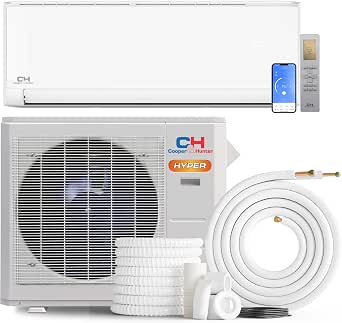 | Best for Subzero Winter Reliability | Cooling capacity: 12,000 BTU; 1 ton | Efficiency: 24 SEER2 | Minimum heating temperature: -22°F | VIEW LATEST PRICE | See Our Full Breakdown |
| TOSOT Aoraki 18,000 BTU Ductless Mini Split Heat Pump, 24.5 SEER2, 208–230V, Black |  | Best for Cold-Climate Large Rooms | Heating and cooling capacity: 18,000 BTU | Efficiency: 24.5 SEER2 | Voltage: 208–230V | VIEW LATEST PRICE | See Our Full Breakdown |
| TOSOT Aoraki 12,000 BTU Mini-Split Air Conditioner and Heat Pump |  | Best for Quiet Cold-Weather Comfort | Cooling capacity: 12,000 BTU | Heating capacity: 12,000 BTU | Efficiency: 24.5 SEER2 | VIEW LATEST PRICE | See Our Full Breakdown |
| Goodman 2.5 Ton 13.4 SEER Packaged Heat Pump GPHH33031 (R-32 Refrigerant) |  | Best Packaged Option for Whole-House Applications | Capacity: 2.5 tons | Efficiency: 13.4 SEER | Refrigerant: R-32 | VIEW LATEST PRICE | See Our Full Breakdown |
| cold climate heat pump | Efficiency | Voltage | Refrigerant | Cooling capacity |
|---|---|---|---|---|
| DELLA 12,000 BTU Ductless Mini | 25 SEER2; 10.5 HSPF2 | 230V | — | 12,000 BTU |
| DELLA Optima 18,000 BTU Mini-S | 23 SEER2; 10 HSPF2 | 230V | R-454B | 18,000 BTU |
| TOSOT 12,000 BTU 24.5 SEER2 Mi | 24.5 SEER2 | 110–120V | R-32 | — |
| Cooper & Hunter Hyper Heat 12, | 24 SEER2 | 230V | R-454B | 12,000 BTU; 1 ton |
| TOSOT Aoraki 18,000 BTU Ductle | 24.5 SEER2 | 208–230V | R-32 | — |
| TOSOT Aoraki 12,000 BTU Mini-S | 24.5 SEER2 | 208–230 V | R-32 | 12,000 BTU |
| Goodman 2.5 Ton 13.4 SEER Pack | 13.4 SEER | — | R-32 | — |
More Details on Our Top Picks
DELLA 12,000 BTU Ductless Mini Split Heat Pump, 25 SEER2, 230V, Wi-Fi and Alexa, 16.4 ft Installation Kit
For a smaller room that needs both winter heat and summer cooling, I’d put this DELLA near the front of the list. Its stated heating range reaches -22°F, matching the cold-weather reach of the Cooper & Hunter Hyper Heat, while its 25 SEER2 rating is higher than that model’s 24 SEER2. The 12,000 BTU capacity and coverage claim of up to 550 sq. ft. make it a more natural fit for a bedroom or compact living area than the 18,000 BTU DELLA Optima.
The tradeoff is that this is not a plug-in project: it needs a 230V supply, a 20A fuse, and installation work that includes vacuuming the lines. Its included 16.4-foot line set helps with layout, but does not remove that installation burden. I’d choose it for cold-climate performance and quiet, app-connected comfort in a modest-sized space—not for heating a large open plan.
Pros:- Rated to provide heating down to -22°F, a useful low-temperature range for cold-climate use.
- 25 SEER2 efficiency is the highest among the listed products.
- Mute mode is specified at 30 dB, with soft airflow for quieter room comfort.
- Wi-Fi, Alexa control, and a 16.4-foot pre-flared copper line set are included.
Cons:- The 12,000 BTU capacity and stated coverage limit its fit in larger spaces.
- Requires 230V power and a 20A fuse.
- Installation requires line-set vacuuming and may call for professional help.
Best for: Owners of a well-insulated bedroom or small living area up to about 550 sq. ft. who want cold-weather heating, cooling, and app or Alexa control.
Not ideal for: Buyers heating a large or poorly insulated open-plan space, or anyone without access to 230V power and professional-quality refrigerant-line installation.
- Cooling capacity:12,000 BTU
- Heating capacity:12,000 BTU/h
- Coverage:Up to 550 sq. ft.
- Efficiency:25 SEER2; 10.5 HSPF2
- Minimum heating temperature:-22°F
- Voltage:230V
- Mute-mode noise:30 dB
- Controls:Remote, app, and Alexa
- Included installation kit:16.4 ft pre-flared copper line set and drain hose
Our verdict“Choose this DELLA for a smaller room where -22°F heating capability, high efficiency, and smart controls matter more than easy installation.”
DELLA Optima 18,000 BTU Mini-Split Heat Pump, 23 SEER2, Wi-Fi and Alexa, 230V
The DELLA Optima earns its place for buyers who need more capacity than the 12,000 BTU options can offer. It is rated for spaces up to 1,000 sq. ft., with 18,000 BTU cooling and 19,000 BTU/h heating, so it better suits a larger living area than the DELLA 12,000 BTU model. Its 34 dB mute mode, app control, and Alexa compatibility add convenience, while the included pre-flared line set and drain hose cover some of the parts needed for setup.
Cold-weather reach is the main compromise: it is specified to heat down to -13°F, not the -22°F listed for the DELLA 12,000 BTU or the Cooper & Hunter Hyper Heat. That difference matters in regions with long, severe cold snaps, where backup heat may be needed. I’d favor this unit for a larger, moderately cold space, but not as the strongest choice for extreme winter conditions.
Pros:- 18,000 BTU cooling and 19,000 BTU/h heating suit larger spaces than the 12,000 BTU models.
- Coverage is specified up to 1,000 sq. ft.
- App, remote, and Alexa controls provide several ways to manage operation.
- Includes a 16.4-foot pre-flared copper line set and drain hose.
Cons:- Its -13°F minimum heating temperature is less suited to severe cold than the -22°F DELLA and Cooper & Hunter models.
- 23 SEER2 is lower than the efficiency ratings of the other listed mini-splits.
- Requires 230V power, line-set vacuuming, and a 20A fuse.
Best for: Households looking to heat and cool a larger room or open living area up to about 1,000 sq. ft. that rarely falls below -13°F.
Not ideal for: Buyers in regions with frequent temperatures below -13°F, or households without a 230V circuit and access to suitable mini-split installation.
- Cooling capacity:18,000 BTU
- Heating capacity:19,000 BTU/h
- Coverage:Up to 1,000 sq. ft.
- Efficiency:23 SEER2; 10 HSPF2
- Minimum heating temperature:-13°F
- Voltage:230V
- Mute-mode noise:34 dB
- Refrigerant:R-454B
- Included line set:16.4 ft pre-flared copper
Our verdict“Pick the DELLA Optima when room coverage matters more than the lower-temperature heating range offered by the lineup’s coldest-rated models.”
TOSOT 12,000 BTU 24.5 SEER2 Mini Split Aoraki Series 110-120V White
The TOSOT Aoraki’s distinguishing advantage is its 110–120V supply, which may fit projects where the 230V requirement of the DELLA and Cooper & Hunter models is a barrier. It still offers -22°F to 122°F operation and a 24.5 SEER2 rating, giving it a strong cold-weather and efficiency profile for a 12,000 BTU system. Its stated 20 dB indoor noise level is also lower than the 30 dB mute-mode figure listed for the smaller DELLA.
The claimed coverage reaches 750 sq. ft., but I would not choose by area alone: insulation, layout, and local design temperatures affect how much capacity a room needs. Setup is a bigger commitment than the voltage might suggest. The system requires professional installation, weighs over 100 pounds, and its optional ERV ventilation equipment needs additional wall vents. Compared with the DELLA, it offers quieter stated indoor operation and a lower-voltage supply, but more installation and handling complexity.
Pros:- Operates across a stated range from -22°F to 122°F.
- 110–120V supply distinguishes it from the 230V DELLA and Cooper & Hunter options.
- 24.5 SEER2 efficiency and a 20 dB stated indoor noise level.
- Wi-Fi control and optional ERV integration are available.
Cons:- Professional installation is required, and the 103.1-pound unit can be difficult to handle.
- The optional ERV is not included and requires additional wall vents.
- The product data does not specify an included line-set length or heating capacity in BTU/h.
Best for: Owners of a smaller home or addition who need a 110–120V mini-split with low-temperature operation and very quiet indoor airflow.
Not ideal for: DIY installers or buyers who need a simple, ready-to-use ventilation package; professional installation is required and the optional ERV adds separate vent work.
- Cooling and heating capacity:12,000 BTU; 1 ton
- Coverage:Up to 750 sq. ft.
- Efficiency:24.5 SEER2
- Operating temperature range:-22°F to 122°F
- Voltage:110–120V
- Indoor noise:20 dB
- Refrigerant:R-32
- Weight:103.1 lb
- Warranty:5 years
Our verdict“Choose the TOSOT Aoraki when 110–120V power and quiet operation are priorities, provided you can arrange professional installation.”
Cooper & Hunter Hyper Heat 12,000 BTU Wall-Mount Mini-Split Heat Pump, 230V, 24 SEER2
The Cooper & Hunter Hyper Heat is the most cold-focused 12,000 BTU pick here: its stated heating range reaches -22°F, making it a closer fit for severe winter conditions than the DELLA Optima, which is rated down to -13°F. Its 24 SEER2 efficiency, inverter operation, and 22.5 dB noise figure support steady, quiet room comfort rather than simple on-off heating. Wi-Fi Smart Kit and a 16-foot installation kit are also included.
Compared with the TOSOT Aoraki, this model needs 230V power, while the TOSOT runs on 110–120V; that can decide which system fits an existing electrical setup. The tradeoff is installation: professional work is required, and delivery is coordinated to an accessible point outside the home rather than necessarily to the room where it will be installed. I’d shortlist it for a cold region, but not for a low-effort DIY project.
Pros:- Specified to heat at outdoor temperatures down to -22°F.
- Inverter operation supports more consistent temperature control.
- 24 SEER2 efficiency and a stated 22.5 dB noise level.
- Wi-Fi Smart Kit and a 16-foot insulated copper line set are included.
Cons:- Requires professional installation and 230V power.
- Freight delivery is coordinated to an accessible outdoor point, which may require extra handling.
- Its 12,000 BTU capacity is better suited to a single zone than a large open-plan area.
Best for: Homeowners in regions with subzero winter temperatures who need a 12,000 BTU wall-mounted system and can arrange professional installation.
Not ideal for: Buyers without 230V service, those seeking a DIY installation, or anyone who needs delivery directly inside the home.
- Cooling capacity:12,000 BTU; 1 ton
- Efficiency:24 SEER2
- Minimum heating temperature:-22°F
- Voltage:230V
- Noise level:22.5 dB
- Refrigerant:R-454B
- Power consumption:1,314.6 watts
- Installation type:Wall-mounted split system
- Included installation kit:16-foot insulated copper line set, communication cable, drainage extension, and accessories
Our verdict“Choose the Cooper & Hunter Hyper Heat for a single zone in a severe-winter climate if you have 230V service and professional installation arranged.”
TOSOT Aoraki 18,000 BTU Ductless Mini Split Heat Pump, 24.5 SEER2, 208–230V, Black
For a larger zone that still needs cold-weather capability, this 18,000 BTU TOSOT Aoraki combines more capacity than the 12,000 BTU Cooper & Hunter Hyper Heat with a stated operating range down to -22°F. Its 24.5 SEER2 rating is also higher than the DELLA Optima’s 23 SEER2, while the inverter, rotary-scroll compressor is designed for variable operation. At up to 29 dB indoors, it offers a quiet-room profile, and its black finish gives buyers an alternative to the white indoor units in this lineup.
The tradeoff is that the product data gives no specific coverage area, so I would not assume it suits every large room without a heat-load assessment. The optional ERV is sold separately and needs additional wall vents; professional installation is recommended. Compared with the smaller TOSOT Aoraki, this model gives buyers more nominal capacity, but its 208–230V requirement rules out the lower-voltage option.
Pros:- 18,000 BTU capacity paired with a stated operating range down to -22°F.
- 24.5 SEER2 efficiency and an inverter, rotary-scroll compressor.
- Indoor noise is specified as low as 29 dB.
- Includes Wi-Fi app and remote controls, plus a 16-foot copper line set.
Cons:- Requires 208–230V power and professional installation is recommended.
- The optional ERV is sold separately and requires additional wall vents.
- No room-coverage area is provided in the product data.
Best for: Owners of a larger single-zone living area who want 18,000 BTU capacity, cold-weather operation, and a black indoor unit.
Not ideal for: Buyers who need a 110–120V system, a specified room-coverage figure, or included fresh-air ventilation equipment.
- Heating and cooling capacity:18,000 BTU
- Efficiency:24.5 SEER2
- Voltage:208–230V
- Operating temperature range:-22°F to 122°F
- Indoor noise:As low as 29 dB
- Refrigerant:R-32
- Compressor:Inverter, rotary-scroll
- Controls:App and remote
- Included line set:16 ft copper line set
Our verdict“Choose this Aoraki for a larger cold-climate zone when its 18,000 BTU capacity fits your heat-load needs and 208–230V power is available.”
TOSOT Aoraki 12,000 BTU Mini-Split Air Conditioner and Heat Pump
The TOSOT Aoraki 12,000 BTU stands out for pairing a stated operating range down to -22°F with quiet indoor operation as low as 20 dB. That makes it a strong fit for a bedroom or other small zone where both winter heating and low fan noise matter. Its 24.5 SEER2 rating is competitive with the DELLA 12,000 BTU model’s 25 SEER2, while the Aoraki’s listed low-temperature range gives cold-climate buyers a clear reason to favor it. Wi-Fi adds remote control, and an optional ERV accessory can bring in fresh air, though that accessory is sold separately and needs additional wall vents. The 12,000 BTU capacity may not suit larger spaces, and professional installation is recommended; buyers seeking whole-house capacity should look at a larger system instead.
Pros:- Listed operating range extends down to -22°F, supporting use in very cold conditions.
- Indoor noise is rated as low as 20 dB, a useful fit for bedrooms and quiet workspaces.
- 24.5 SEER2 efficiency and inverter operation support efficient variable-capacity heating and cooling.
- Wi-Fi control is built in, with optional ERV compatibility for added ventilation.
Cons:- At 12,000 BTU, capacity may be insufficient for larger or poorly insulated spaces.
- The ERV accessory is sold separately and requires additional wall vents.
- Professional installation is recommended, adding coordination beyond a simple appliance setup.
Best for: Homeowners heating and cooling a single small-to-medium room in a cold region who value quiet operation, Wi-Fi control, and a published low-temperature operating range.
Not ideal for: Buyers who need one system for a large open-plan area or whole home, or who want fresh-air ventilation without buying an accessory and adding wall vents.
- Cooling capacity:12,000 BTU
- Heating capacity:12,000 BTU
- Efficiency:24.5 SEER2
- Operating temperature range:-22 to 122°F
- Indoor noise:As low as 20 dB
- Voltage:208–230 V
- Refrigerant:R-32
- Controls and features:Inverter, Wi-Fi, heating and cooling
- Model:SU-AORAKI12-230
Our verdict“Choose the Aoraki for a quiet, single-zone system with a stated -22°F operating limit; choose a higher-capacity option if you need to condition more space.”
Goodman 2.5 Ton 13.4 SEER Packaged Heat Pump GPHH33031 (R-32 Refrigerant)
The Goodman GPHH33031 serves a different purpose from the wall-mounted TOSOT Aoraki: it is a 2.5-ton packaged unit intended for whole-house residential or light commercial applications, not a single-room ductless zone. Its inverter and multi-speed ECM motor allow variable operation, while the scroll compressor and all-aluminum evaporator coil round out a design aimed at a permanent system installation. The tradeoff is efficiency: its listed 13.4 SEER is modest beside the 24.5 SEER2 Aoraki and the 25 SEER2 DELLA 12,000 BTU, though those ductless units are not direct capacity or installation matches. The Goodman’s packaged format and single indoor circuit limit flexibility, and the listing does not provide a low-temperature operating limit, so I would not choose it on the strength of cold-weather performance claims alone.
Pros:- 2.5-ton capacity suits larger whole-house or light commercial applications better than the 12,000 BTU mini-splits in this roundup.
- Inverter technology and a multi-speed ECM motor support more controlled heating and cooling operation.
- All-aluminum evaporator coil and scroll compressor are specified for the packaged system.
- Includes a 10-year limited parts warranty when installed by a qualified professional.
Cons:- Listed 13.4 SEER efficiency trails the TOSOT Aoraki and DELLA 12,000 BTU mini-splits by a wide margin, though they serve different system formats.
- No low-temperature operating range is provided, making cold-weather performance harder to compare.
- Packaged installation and a single indoor circuit offer less room-by-room flexibility than ductless options.
Best for: Homeowners or light commercial operators replacing or planning a professionally installed packaged system for a whole-house application who need 2.5-ton capacity.
Not ideal for: Buyers seeking a ductless room-by-room system, high seasonal efficiency, or published confirmation of operation at very low outdoor temperatures.
- Capacity:2.5 tons
- Efficiency:13.4 SEER
- Refrigerant:R-32
- Voltage and phase:208/230 V, single phase
- Compressor:Scroll
- Motor:Multi-speed ECM
- Evaporator coil:Aluminum alloy
- Installation type:Packaged
- Warranty:10-year limited parts warranty with qualified professional installation
Our verdict“Pick the Goodman when you need a professionally installed 2.5-ton packaged system, but choose a cold-climate mini-split if a published low-temperature limit is your priority.”

How We Picked
I compared the seven products by how clearly their specifications and format support cold-climate use, rather than treating seasonal efficiency figures as proof of winter performance. I weighed stated heating capacity, voltage, system type, nominal efficiency, and practical installation fit, while giving extra attention to cold-weather positioning such as the Hyper Heat name. A rating such as SEER2 describes cooling efficiency, so I did not use it as a stand-in for heating performance in low temperatures.
The ranking favors models that appear more directly suited to cold-weather heating and provide a clear fit for common home needs. The Cooper & Hunter Hyper Heat leads on stated cold-climate positioning, followed by options with useful distinctions in voltage, capacity, and system format. Products without detailed low-temperature output or operating-range information rank lower because buyers cannot compare their winter capability confidently from the supplied specifications alone. Before choosing any unit, I recommend checking the manufacturer’s heating capacity at low outdoor temperatures, approved installation requirements, and local installer guidance.
| cold climate heat pump | Refrigerant |
|---|---|
| DELLA 12,000 BTU Ductless Mini | — |
| DELLA Optima 18,000 BTU Mini-S | R-454B |
| TOSOT 12,000 BTU 24.5 SEER2 Mi | R-32 |
| Cooper & Hunter Hyper Heat 12, | R-454B |
| TOSOT Aoraki 18,000 BTU Ductle | R-32 |
| TOSOT Aoraki 12,000 BTU Mini-S | R-32 |
| Goodman 2.5 Ton 13.4 SEER Pack | R-32 |
Factors to Consider When Choosing Best Cold Climate Heat Pumps
Cold-weather performance depends on more than a product name or efficiency number. I would match a unit to the home’s heating load, winter design temperature, electrical service, and installation layout before comparing convenience features.
Check Heating Output at Your Local Winter Temperature
Ask for the unit’s heating capacity at the outdoor temperature your area commonly reaches during its coldest periods, not just its nominal BTU figure. Heat pumps can deliver less heat as outdoor temperatures fall, and two models with the same listed capacity may behave differently in cold weather. A cold-climate designation can help narrow the field, but it is not a substitute for a published performance table. Compare that low-temperature output with a room-by-room or whole-home heat-loss calculation. If the figures are missing, ask the manufacturer or installer before buying. This step can prevent choosing a unit that needs frequent backup heat when winter conditions are at their hardest.
Size the System to the Actual Heating Load
BTU capacity is not a simple proxy for room size because insulation, windows, air leakage, ceiling height, and sun exposure all affect demand. Oversizing can cause frequent cycling and uneven temperatures, while undersizing may leave rooms cold during long stretches of freezing weather. Avoid selecting an 18,000 BTU model merely because it seems more future-proof than a 12,000 BTU option. Request a heat-load calculation rather than relying only on a broad square-footage chart. For ductless systems, also think about whether one indoor head can distribute heat to the areas you use. A properly sized system often matters more to comfort than a small difference in published efficiency.
Treat Electrical Compatibility as a Planning Constraint
The lineup includes 110–120V and 208–230V mini-splits, so electrical service can narrow the choices before performance comparisons begin. Check the exact voltage, breaker, wire, and disconnect requirements in the installation manual; voltage alone does not tell you whether an existing circuit is suitable. A 110–120V model may simplify some projects, but it should not be chosen on convenience if its heating capacity or low-temperature performance does not match the home. Higher-voltage equipment may require electrical work that affects project scope. Have a qualified electrician verify the panel and circuit plan before ordering. This can help avoid delays, incompatible wiring, or unexpected installation changes.
Choose Between Ductless and Packaged System Layouts
A wall-mounted mini-split can heat a targeted zone without adding ductwork, which can suit additions, converted spaces, or homes without central ducts. It may not distribute warmth evenly through a closed floor plan, and adding multiple indoor units changes the system design. A packaged heat pump such as the Goodman belongs to a different installation category and may make more sense when a home already uses compatible ductwork and outdoor equipment placement. Do not compare these formats only by capacity or efficiency labels. Consider duct condition, available wall space, condensate routing, outdoor-unit location, and service access. The right format is the one that fits the building and the contractor’s installation plan.
Plan for Backup Heat and Your Coldest Days
Even a cold-climate heat pump may need supplemental heat when temperatures fall below its useful operating range or the home’s heating demand exceeds its output. Decide whether backup will come from existing electric resistance heat, a furnace, or another approved source, and ask how the system controls the handoff. Backup heat can raise energy use, but it may provide resilience during unusually severe weather or equipment service. Compare the cost and complexity of keeping an existing heating system with the price of relying on the heat pump alone. Ask installers to explain expected performance at local design conditions rather than promising comfort from a nominal rating. A clear backup plan is especially helpful in regions with prolonged subfreezing weather.
Verify Installation, Service, and Documentation Before Purchase
Heat pump performance depends on correct refrigerant handling, line-set sizing, evacuation, airflow, and commissioning, so the installer can matter as much as the equipment choice. Confirm that the contractor is familiar with the specific brand and system type, and ask what commissioning records you will receive. Review warranty terms, approved installation methods, parts availability, and who will handle service in your area. Included installation materials do not necessarily mean a system is ready for a do-it-yourself installation or that local code requirements are covered. Get a written scope that identifies electrical work, mounting, drainage, and start-up checks. Clear documentation can make later troubleshooting and warranty requests easier.
Frequently Asked Questions
Does a high SEER2 rating mean a heat pump will heat well in extreme cold?
No. SEER2 measures seasonal cooling efficiency, not heating output at low outdoor temperatures. For winter performance, ask for the heating capacity and efficiency at several outdoor temperatures, especially near your local design temperature. Check the unit’s stated operating range and whether it needs supplemental heat below a certain point. This is why I do not rank the lineup by SEER2 alone.
Is the Cooper & Hunter Hyper Heat the safest choice for a very cold region?
It is the clearest cold-weather-focused option in this lineup by its Hyper Heat designation, which is why it ranks first. That label does not replace checking documented capacity at low temperatures for the exact model. Ask how much heat it can deliver at your area’s winter design temperature and what backup heat the installer recommends. If that information is unavailable, compare it with another model that has published low-temperature performance data before committing.
Should I choose a 12,000 BTU or 18,000 BTU mini-split?
Choose based on a heat-load calculation, not a general assumption that more capacity is better. The 18,000 BTU models may suit larger or more demanding spaces, while a 12,000 BTU unit may better fit a smaller zone. Oversizing can contribute to cycling and uneven comfort, while undersizing can leave the system short of heat on cold days. Ask an installer to account for insulation, air leakage, windows, layout, and local winter temperatures.
Can the 110–120V TOSOT Aoraki replace a 208–230V model without electrical work?
It may reduce the need for a higher-voltage circuit, but compatibility depends on the unit’s exact electrical requirements and the home’s existing wiring. Verify breaker size, circuit capacity, wire specifications, and local code with a qualified electrician. Also compare low-temperature heating output and capacity, since voltage convenience does not establish cold-weather capability. Treat the electrical advantage as one part of the decision, not the deciding measure of winter performance.
When does the Goodman packaged heat pump make more sense than a ductless mini-split?
The Goodman may fit better when a home is designed for a packaged unit and already has compatible ductwork or a planned central-system installation. A ductless mini-split can be more suitable for a specific room, addition, or home where extending ducts is impractical. Compare the condition and layout of existing ducts, equipment placement, service access, and the work needed to install each format. The Goodman’s stated 13.4 SEER rating is a cooling-efficiency measure, so request separate heating data and low-temperature performance before comparing it with the mini-splits.
Conclusion
For buyers focused on cold-weather positioning, I recommend the Cooper & Hunter Hyper Heat 12,000 BTU as the best overall starting point, provided its published low-temperature capacity fits the home. The TOSOT Aoraki 12,000 BTU 110–120V is my pick for buyers prioritizing a potentially simpler electrical setup, while the 18,000 BTU TOSOT Aoraki is better suited to a larger heating load confirmed by calculation. For a premium decision, I would choose the option whose documented low-temperature output, installation support, and warranty best match the project rather than paying more for a feature label alone. Beginners should start with the 12,000 BTU options and a qualified installer’s load calculation, not choose by room size alone. Buyers with compatible central ductwork can investigate the Goodman packaged heat pump; those heating a single zone without ducts should focus on the mini-splits. In every case, verify cold-weather performance data before ordering.