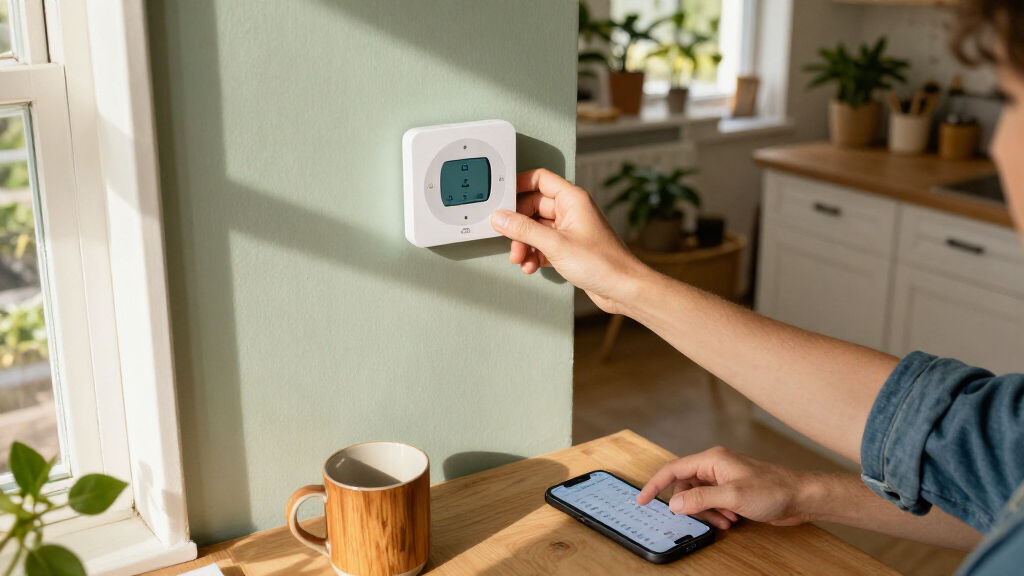
Smart thermostat controllers range from simple app-connected upgrades to models with room sensors and broader home-automation features. I rank the ecobee Smart Thermostat Enhanced first for its combination of scheduling, remote control, and room-by-room options; the Amazon Smart Thermostat stands out for a straightforward Alexa-focused setup, while the Sensi ST55 is a strong alternative for buyers who want familiar controls and flexible scheduling. The main tradeoffs are HVAC compatibility, wiring requirements, ecosystem support, and how much control you want beyond setting a temperature. A lower-complexity model may be easier to live with, while advanced features can help address uneven temperatures or detailed schedules. Continue reading for the full breakdown and help matching a controller to your system.

Get home appliances delivered free with Prime
- Fast, free delivery on millions of items
- Prime Video, Amazon Music and more included
- Member-only deals all year
Complete the kit



Key Takeaways
- ecobee Smart Thermostat Enhanced ranks first because it pairs broad day-to-day control with room-sensor options, giving it more scope than simpler app-connected picks.
- Amazon Smart Thermostat is the straightforward value-minded choice for Alexa households, but its appeal depends more heavily on that ecosystem.
- Wiring and system compatibility separate viable options from unsuitable ones. Riseem specifies a single-stage 1H/1C system and requires a C-wire, making it less flexible than the broader shortlist.
- The two Sensi models serve different priorities: the ST55 is the more capable all-around Sensi choice, while the Sensi Lite ST25 favors a simpler feature set.
- Honeywell Home and Google Nest offer different control styles. amazon.com/dp/B075BF6V58?tag=smartthermostathub-20&ascsubtag=dc-1249581″ target=”_blank” rel=”nofollow sponsored noopener”>Honeywell’s range gives buyers several familiar thermostat formats, while Nest may suit homes already centered on Google services.
| Honeywell Home RTH9585WF1004 Wi-Fi Smart Color Thermostat |  | Best for Customizable Controls | Model: RTH9585WF1004 | Connectivity: Wi-Fi | Display: Customizable color LED touchscreen | VIEW LATEST PRICE | See Our Full Breakdown |
| ecobee Smart Thermostat Enhanced |  | Best for Occupancy-Based Comfort | HVAC compatibility: Compatible with 90% of HVAC systems | Connectivity: Wi-Fi | Display: 4-inch LCD screen | VIEW LATEST PRICE | See Our Full Breakdown |
| Amazon Smart Thermostat |  | Best for Alexa-Centered Homes | Model: S6ED3R | Dimensions: 3.56 × 3.56 × 0.84 inches | HVAC compatibility: Most 24V systems; not compatible with 110–240V systems | VIEW LATEST PRICE | See Our Full Breakdown |
| Sensi ST55 Wi-Fi Smart Thermostat |  | Best for Flexible Smart-Home Compatibility | Model: ST55 | Connectivity: Wi-Fi | Supported HVAC systems: Air conditioner, boiler, furnace, and heat pump | VIEW LATEST PRICE | See Our Full Breakdown |
| Riseem Smart Wi-Fi Thermostat, Single-Stage 1H/1C, 7-Day Programmable, C-Wire Required |  | Best for Basic Single-Stage Systems | Model: STN701W-Blue | System compatibility: Conventional single-stage 1 heat/1 cool systems | Supported fuels: Gas, oil, or electric | VIEW LATEST PRICE | See Our Full Breakdown |
| Honeywell Home X2S Smart Wi-Fi Thermostat |  | Best for Matter Smart Homes | System compatibility: Up to 2 heat/2 cool conventional; up to 2 heat/1 cool heat pump | Connectivity: Wi-Fi | Smart home compatibility: Matter, Amazon Alexa, Google Assistant, Apple HomeKit | VIEW LATEST PRICE | See Our Full Breakdown |
| ecobee Smart Thermostat Essential, Wi-Fi, Energy Star Certified |  | Best for Touchscreen Controls | System compatibility: Most 24 VAC HVAC systems; listed as compatible with 85% of systems | Connectivity: Wi-Fi | Display: 3.74-inch LCD touchscreen | VIEW LATEST PRICE | See Our Full Breakdown |
| Sensi Lite Smart Wi-Fi Thermostat, ST25 | 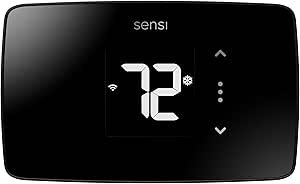 | Best for Easier Wiring | Model: ST25 | Connectivity: 2.4 GHz Wi-Fi | Compatible assistants: Amazon Alexa, Google Assistant, SmartThings | VIEW LATEST PRICE | See Our Full Breakdown |
| Google Nest Thermostat – Smart Programmable Wi‑Fi Thermostat, Charcoal | 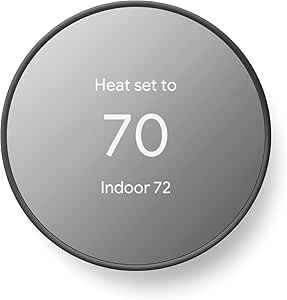 | Best for Google Home Households | Connectivity: Wi-Fi and Bluetooth | Display: 2-inch LCD | Power: Battery powered; 2 included batteries | VIEW LATEST PRICE | See Our Full Breakdown |
| Honeywell Home T5 Smart Wi-Fi Thermostat |  | Best for Seven-Day Scheduling | Model: RTH8800WF2022 | Connectivity: Wi-Fi | Compatible systems: Air conditioner, furnace, heat pump | VIEW LATEST PRICE | See Our Full Breakdown |
| smart thermostat controller | Connectivity | Display | Power | Model |
|---|---|---|---|---|
| Honeywell Home RTH9585WF1004 W | Wi-Fi | Customizable color LED touchscreen | — | RTH9585WF1004 |
| ecobee Smart Thermostat Enhanc | Wi-Fi | 4-inch LCD screen | 24 volts; Power Extender Kit included | — |
| Amazon Smart Thermostat | — | — | — | S6ED3R |
| Sensi ST55 Wi-Fi Smart Thermos | Wi-Fi | LED, 5 inches | Corded electric; two AA batteries included | ST55 |
| Riseem Smart Wi-Fi Thermostat | 2.4 GHz Wi-Fi | Backlit LCD | 24V AC; C-wire required; no batteries | STN701W-Blue |
| Honeywell Home X2S Smart Wi-Fi | Wi-Fi | 6.57-inch LCD | Corded electric; 1 AAA battery required | — |
| ecobee Smart Thermostat Essent | Wi-Fi | 3.74-inch LCD touchscreen | Battery powered; Power Extender Kit sold separately for homes without a C-wire | — |
| Sensi Lite Smart Wi-Fi Thermos | 2.4 GHz Wi-Fi | — | Battery or C-wire; 2 AAA batteries included | ST25 |
| Google Nest Thermostat | Wi-Fi and Bluetooth | 2-inch LCD | Battery powered; 2 included batteries | — |
| Honeywell Home T5 Smart Wi-Fi | Wi-Fi | 4.95-inch LCD touchscreen | 24-volt corded electric; 1 AAA battery | RTH8800WF2022 |
More Details on Our Top Picks
Honeywell Home RTH9585WF1004 Wi-Fi Smart Color Thermostat
I’d choose the Honeywell Home RTH9585WF1004 if clear, customizable on-wall controls matter as much as app access. Its color touchscreen makes schedules and temperature settings easy to read at the thermostat, while energy reports, equipment alerts, and flexible holds add more oversight than the simpler Amazon Smart Thermostat. Alexa and Google Home support also give it broad voice control without tying the whole setup to one assistant. The tradeoff is installation flexibility: this model requires a C-wire, and it won’t work with electric baseboard heat. Compared with the ecobee Smart Thermostat Enhanced, it offers a more customizable display but lacks the ecobee’s occupancy-based adjustments. I’d shortlist it for conventional HVAC homes that have compatible wiring and want a feature-rich wall interface.
Pros:- Customizable color touchscreen puts schedules and settings directly on the wall display.
- Supports remote control through the Honeywell app, Alexa, and Google Home.
- Flexible schedules, energy reports, and permanent, temporary, and vacation holds.
- Alerts can flag filter changes and extreme indoor temperature or humidity.
Cons:- Requires a C-wire, which can limit installation in older homes.
- Not compatible with electric baseboard heat.
- Some heating-only oil furnace systems also require a C-wire.
Best for: Homeowners with compatible forced-air, boiler, steam, or heat-pump systems who want a customizable touchscreen, detailed schedules, and equipment alerts.
Not ideal for: Homes with electric baseboard heat or no C-wire, and buyers seeking occupancy-based automatic adjustments or room-by-room sensing.
- Model:RTH9585WF1004
- Connectivity:Wi-Fi
- Display:Customizable color LED touchscreen
- HVAC compatibility:Forced-air gas, oil, or electric; hot water and steam; heat pumps with electric backup
- C-wire:Required
- Smart home compatibility:Amazon Alexa and Google Home
- Programming:Flexible scheduling; permanent, temporary, and vacation holds
- Mounting:Wall mount
- Certification:ENERGY STAR
Our verdict“Choose this Honeywell if your HVAC system and wiring are compatible and you want a customizable touchscreen with more reporting than the Amazon Smart Thermostat.”
ecobee Smart Thermostat Enhanced
The ecobee Smart Thermostat Enhanced stands out for buyers who want the thermostat to react to daily routines, not just follow a fixed timetable. It adjusts for occupancy, schedule, and humidity, which can help keep comfort steady when rooms or routines change. Its included Power Extender Kit also gives it an installation advantage over the Honeywell RTH9585WF1004 and Amazon Smart Thermostat in homes without a C-wire. Broad support for Alexa, Google Assistant, Apple HomeKit, and SmartThings makes it the most flexible smart-home fit in this group. The main catch is that SmartSensors are sold separately, so room-by-room temperature balancing adds another purchase. I’d pick it over the Sensi ST55 for automatic adjustments, but not if a simple, low-complexity schedule is all you need.
Pros:- Adjusts temperature based on occupancy, schedule, and humidity.
- Includes a Power Extender Kit for homes without a C-wire.
- Works with Alexa, Google Assistant, Apple HomeKit, and SmartThings.
- Provides remote control through the ecobee app and carries a three-year warranty.
Cons:- SmartSensors for room-by-room comfort are sold separately.
- Compatibility needs to be checked against the specific HVAC system.
Best for: Households with changing daily routines, compatible HVAC, and a mix of smart-home platforms that want occupancy-aware temperature adjustments.
Not ideal for: Buyers who want room-by-room sensing included or who only need basic app scheduling without automatic occupancy responses.
- HVAC compatibility:Compatible with 90% of HVAC systems
- Connectivity:Wi-Fi
- Display:4-inch LCD screen
- Control:App and voice assistant
- Smart home compatibility:Amazon Alexa, Android, Apple HomeKit, Google Assistant, and iOS
- Power:24 volts; Power Extender Kit included
- Mounting:Wall mount
- Warranty:3 years
- Certification:ENERGY STAR
Our verdict“Pick the ecobee Enhanced if occupancy-aware control and broad platform support matter more than having room sensors included.”
Amazon Smart Thermostat
I’d put the Amazon Smart Thermostat on the shortlist for homes already organized around Alexa. Scheduling, remote adjustments, and routines run through the Alexa app and compatible devices, making it a straightforward controller for common 24V HVAC systems. Its compact square body and included wall plates help keep the installation tidy, while guided app instructions can make setup less intimidating than wiring a more feature-rich controller. Compared with the ecobee Smart Thermostat Enhanced, it has fewer automatic comfort features and no included Power Extender Kit; compared with the Sensi ST55, it supports a narrower smart-home ecosystem. It also needs a C-wire or separately sold power adapter, and voice control requires a separate Alexa-enabled device. This is a focused choice, not a good fit for buyers who want platform flexibility.
Pros:- Remote temperature control and scheduling through the Alexa app.
- Can use compatible Alexa devices and routines for automatic adjustments.
- Includes wall and cosmetic plates plus an installation tool.
- ENERGY STAR certified and supports guided app-based installation.
Cons:- Requires a C-wire or a separately sold power adapter.
- Supports 2.4 GHz Wi-Fi only, with no 5 GHz support.
- Voice control requires a separate Alexa-enabled device.
Best for: Alexa households with a compatible 24V HVAC system that want app scheduling, remote control, and routines without broad platform requirements.
Not ideal for: Homes using 110–240V systems, people relying on 5 GHz Wi-Fi, or buyers who want voice control without a separate Alexa device.
- Model:S6ED3R
- Dimensions:3.56 × 3.56 × 0.84 inches
- HVAC compatibility:Most 24V systems; not compatible with 110–240V systems
- Power requirement:C-wire or separately sold power adapter
- Wi-Fi:2.4 GHz, 802.11 b/g/n; no 5 GHz support
- Control options:Alexa app, Ring app, on-device touch buttons, and voice control with a compatible Alexa device
- Included components:Thermostat, installation tool, wall plate, cosmetic plate, and quick start guide
- Certifications:ENERGY STAR and ECOLOGO Gold
Our verdict“Choose the Amazon Smart Thermostat for a compatible 24V system when Alexa is your preferred control hub and you can meet its wiring and Wi-Fi requirements.”
Sensi ST55 Wi-Fi Smart Thermostat
The Sensi ST55 is my pick for buyers who value broad smart-home compatibility and a less demanding wiring setup. It works with Alexa, Apple HomeKit, Google Assistant, SmartThings, and Vera, while common-wire-free installation in most applications can make it easier to fit into existing homes than the Honeywell RTH9585WF1004 or Amazon Smart Thermostat. Scheduling, remote access, energy reports, and maintenance reminders cover the core jobs of a smart controller without leaning on occupancy automation like the ecobee Smart Thermostat Enhanced. Its DIY instructions and built-in level also help with a straightforward wall installation. The compromises are that HVAC compatibility still depends on the system, and app features rely on Wi-Fi and setup. I’d choose it for platform flexibility, not for the most automated comfort experience.
Pros:- Supports Alexa, Apple HomeKit, Google Assistant, SmartThings, and Vera.
- Common wire is not required in most applications.
- App instructions and a built-in level support DIY installation.
- Offers schedules, remote access, energy usage reports, and maintenance reminders.
Cons:- Compatibility depends on the home’s specific HVAC equipment.
- Some features require app setup and an active Wi-Fi connection.
Best for: DIY-minded homeowners who want a Wi-Fi thermostat compatible with several major smart-home platforms and whose wiring may not include a common wire.
Not ideal for: Buyers seeking occupancy-based temperature adjustments or anyone whose HVAC equipment falls outside the supported system types.
- Model:ST55
- Connectivity:Wi-Fi
- Supported HVAC systems:Air conditioner, boiler, furnace, and heat pump
- Voltage:24 V AC
- Display:LED, 5 inches
- Compatible controllers:Amazon Alexa, Apple HomeKit, Google Assistant, SmartThings, and Vera
- Power:Corded electric; two AA batteries included
- Mounting:Wall mount
- Certification:ENERGY STAR
Our verdict“Choose the Sensi ST55 if broad platform support and flexible wiring matter more to you than occupancy-based automation.”
Riseem Smart Wi-Fi Thermostat, Single-Stage 1H/1C, 7-Day Programmable, C-Wire Required
The Riseem Smart Wi-Fi Thermostat is the narrow-fit option here: it serves conventional single-stage 1H/1C systems with app control and a 7-day schedule, rather than trying to cover a wide range of HVAC setups. That clear boundary makes it easier to judge than the broader-compatibility ecobee Smart Thermostat Enhanced, but it also rules out heat pumps and multistage equipment. A backlit LCD is useful for checking settings in dim spaces, and the stated temperature control range is within 2°F. Compared with the Amazon Smart Thermostat, Riseem offers a defined weekly schedule but fewer smart-home details in the supplied product data. It requires a 24V C-wire and 2.4 GHz Wi-Fi, so wiring and network compatibility should be checked before choosing it. I’d consider it only for a confirmed single-stage match.
Pros:- Provides app-based remote temperature control.
- Supports customizable 7-day programming.
- Backlit LCD is readable in dim areas.
- Specified temperature control is within 2°F.
Cons:- Limited to compatible conventional single-stage 1H/1C systems.
- Not compatible with heat pumps or multistage systems.
- Requires a 24V C-wire and 2.4 GHz Wi-Fi.
Best for: Owners of conventional single-stage gas, oil, or electric heating and cooling systems who want app access and a weekly schedule.
Not ideal for: Homes with heat pumps, multistage HVAC, no compatible 24V C-wire, or a 5 GHz-only Wi-Fi network.
- Model:STN701W-Blue
- System compatibility:Conventional single-stage 1 heat/1 cool systems
- Supported fuels:Gas, oil, or electric
- Power:24V AC; C-wire required; no batteries
- Connectivity:2.4 GHz Wi-Fi
- Scheduling:7-day programmable
- Temperature control accuracy:Within 2°F
- Display:Backlit LCD
- Dimensions:0.98 × 4.72 × 3.86 inches
Our verdict“Pick Riseem only if you have a confirmed compatible single-stage system and want basic app control with 7-day scheduling.”
Honeywell Home X2S Smart Wi-Fi Thermostat
The X2S is my pick for households that want a thermostat to fit into a mixed-brand smart home: Matter support connects it with Apple HomeKit, Google Assistant, and Alexa, while the Sensi Lite supports SmartThings instead of Matter. Its humidity monitoring and filter reminders add useful HVAC upkeep prompts alongside app, voice, and button controls. Flexible schedules and auto-away make it more capable than a basic programmable controller, and its system support covers specified conventional and heat-pump configurations. The tradeoff is that you’ll need to check your wiring and HVAC setup before buying: a C-wire or adapter may be required, and compatibility is limited to listed stage counts. Choose the ecobee Essential instead if its touchscreen-first controls matter more than Matter.
Pros:- Matter compatibility spans Apple HomeKit, Google Assistant, and Alexa
- Supports flexible scheduling and auto-away
- Humidity monitoring and air-filter reminders add maintenance prompts
- ENERGY STAR certified
Cons:- May need a C-wire or power adapter
- Supported heating and cooling configurations are limited to specified stage counts
Best for: Households using more than one smart home platform that want Matter support, scheduling, and basic HVAC reminders.
Not ideal for: Owners of HVAC systems outside the listed stage configurations or homes without a C-wire who do not want to add a power adapter.
- System compatibility:Up to 2 heat/2 cool conventional; up to 2 heat/1 cool heat pump
- Connectivity:Wi-Fi
- Smart home compatibility:Matter, Amazon Alexa, Google Assistant, Apple HomeKit
- Display:6.57-inch LCD
- Control methods:App, push buttons, voice
- Scheduling:5-1-1 day, 5-2 day, 7 day, weekly, or non-programmable
- Power:Corded electric; 1 AAA battery required
- Mounting and material:Wall mount; plastic
- Warranty:2 years
Our verdict“Choose the X2S if Matter integration and HVAC reminders matter more to you than a touchscreen-focused interface.”
ecobee Smart Thermostat Essential, Wi-Fi, Energy Star Certified
The ecobee Essential suits buyers who want to make adjustments at the wall as well as from a phone: its touchscreen and app controls give it a more direct interface than the Google Nest Thermostat’s app-led setup. Auto-scheduling and Auto-Away can reduce manual changes, while time-of-use preheating or precooling lets owners shift heating or cooling around utility periods. It works with Apple HomeKit, Google Assistant, and Alexa, though buyers should verify HVAC compatibility rather than assume every 24 VAC system is supported. Compared with the Honeywell X2S, it lacks listed Matter support, and the Power Extender Kit and SmartSensor are separate. The Essential makes the most sense when touchscreen use and DIY installation are priorities, not when you want included room sensors or the broadest stated system coverage.
Pros:- Offers touchscreen and app-based control
- Auto-Away and automatic scheduling reduce routine manual adjustments
- Supports Apple HomeKit, Google Assistant, and Alexa
- Time-of-use preheating and precooling can shift HVAC operation around utility periods
Cons:- HVAC compatibility varies and should be checked before purchase
- Power Extender Kit and SmartSensor are sold separately
Best for: DIY-minded homeowners with a compatible 24 VAC system who want touchscreen access and scheduling features alongside app control.
Not ideal for: Buyers who need an included room sensor or have no C-wire and do not want to obtain the separate Power Extender Kit.
- System compatibility:Most 24 VAC HVAC systems; listed as compatible with 85% of systems
- Connectivity:Wi-Fi
- Display:3.74-inch LCD touchscreen
- Smart home compatibility:Apple HomeKit, Google Assistant, Alexa
- Features:Auto-Away, auto-scheduling, fan control, programmable temperature display
- Power:Battery powered; Power Extender Kit sold separately for homes without a C-wire
- Mounting and material:Wall mount; plastic
- Optional accessory:SmartSensor sold separately
- Color:White
Our verdict“Pick the ecobee Essential if you want a wall touchscreen and app-based scheduling, and are comfortable checking compatibility and buying any needed accessories separately.”
Sensi Lite Smart Wi-Fi Thermostat, ST25
The Sensi Lite stands out for homes where thermostat wiring is a concern: most installations do not need a C-wire, which can simplify a DIY replacement compared with the Honeywell Home T5, where a C-wire or adapter may be needed. It still delivers remote app access, voice control, scheduling, geofencing, and usage reports, so skipping a dedicated power wire does not mean giving up common smart-thermostat functions. The built-in level and step-by-step installation guidance also suit owners who want to handle setup themselves. Its limits are practical: it requires 2.4 GHz Wi-Fi, and some systems still need a C-wire or compatible power accessory. Unlike the X2S, it does not list Matter or Apple HomeKit support, so check platform fit before choosing it.
Pros:- Most homes do not require a C-wire
- Offers app control, scheduling, geofencing, and usage reports
- DIY setup includes a built-in level and step-by-step instructions
- ENERGY STAR certified and includes privacy protections
Cons:- Some HVAC systems still need a C-wire or compatible power accessory
- Requires a 2.4 GHz Wi-Fi connection
- Does not list Matter or Apple HomeKit compatibility
Best for: DIY homeowners replacing a compatible thermostat who want remote control and geofencing without a C-wire in most installations.
Not ideal for: Households that rely on Apple HomeKit or Matter, or buyers whose Wi-Fi network does not provide 2.4 GHz connectivity.
- Model:ST25
- Connectivity:2.4 GHz Wi-Fi
- Compatible assistants:Amazon Alexa, Google Assistant, SmartThings
- Supported HVAC equipment:Air conditioner, boiler, furnace, heat pump
- Voltage:24 volts
- Control methods:App, touch, voice
- Power:Battery or C-wire; 2 AAA batteries included
- Display and mounting:LCD; wall mount
- Warranty:3 years
Our verdict“Choose the Sensi Lite if a potentially simpler, C-wire-free DIY installation matters more than Matter or Apple HomeKit support.”
Google Nest Thermostat – Smart Programmable Wi‑Fi Thermostat, Charcoal
The Google Nest Thermostat is a natural fit for owners who want scheduling and away adjustments centered on the Google Home app. It can change temperature when the home is empty, supports voice control through Google Assistant and Alexa, and sends HVAC monitoring alerts. Compared with the Honeywell Home T5, it puts more emphasis on app-based control than a large touchscreen with seven-day scheduling. Nest’s DIY installation is designed to work without a C-wire on most systems, but that does not apply to every setup: some systems need a C-wire or power accessory. The compact, 2-inch LCD also gives less at-the-wall screen space than the T5’s 4.95-inch display. Choose Nest for a Google-led setup and remote automation; skip it if a roomy touchscreen is a priority.
Pros:- Adjusts temperature when the home is away
- Remote control through the Google Home app and voice assistants
- HVAC monitoring alerts provide system notifications
- DIY installation is designed to avoid a C-wire on most systems
Cons:- Some systems require a C-wire or additional power accessory
- The 2-inch LCD is smaller than the Honeywell Home T5 touchscreen
Best for: Google Home households that want app-based scheduling, away adjustments, voice control, and HVAC monitoring alerts.
Not ideal for: Buyers who want a larger touchscreen for frequent adjustments at the wall or whose system requires a C-wire they do not plan to add.
- Connectivity:Wi-Fi and Bluetooth
- Display:2-inch LCD
- Power:Battery powered; 2 included batteries
- Voltage:24 volts
- Control:Remote and voice control
- Smart home compatibility:Google Assistant, Alexa, Android, iOS, Nest
- Supported uses:Heating, cooling, heat pump
- Mounting and material:Wall mount; plastic
- Color:Charcoal
Our verdict“Pick Nest for app-centered control and away adjustments, but choose the Honeywell Home T5 if a larger touchscreen and seven-day schedule matter more.”
Honeywell Home T5 Smart Wi-Fi Thermostat
The Honeywell Home T5 is the strongest fit here for buyers who want seven-day programming and a substantial touchscreen rather than relying mainly on an app. Its geofencing, auto-away, auto changeover, and vacation mode give households several ways to adjust heating and cooling around routines. Compared with the Google Nest Thermostat, the T5 offers a larger 4.95-inch touchscreen and a clearly listed seven-day schedule; Nest instead is designed to avoid a C-wire in most homes. The T5’s own wiring needs also deserve a check: a C-wire or power adapter may be required, and the listing excludes heating-only oil furnace systems unless a C-wire is present. It is a more schedule-focused alternative to the Sensi Lite, but less appealing if wiring flexibility is your main concern.
Pros:- Seven-day programmable schedule
- Geofencing, auto-away, auto changeover, and vacation mode
- 4.95-inch LCD touchscreen
- Supports Alexa, Apple HomeKit, Google Assistant, Android, and iOS
Cons:- May require a C-wire or power adapter
- Does not support heating-only oil furnace systems unless a C-wire is present
Best for: Households with compatible heating and cooling that want a large touchscreen, detailed weekly scheduling, and location-based adjustments.
Not ideal for: Owners of heating-only oil furnace systems without a C-wire, or buyers seeking a thermostat likely to work without adding power wiring.
- Model:RTH8800WF2022
- Connectivity:Wi-Fi
- Compatible systems:Air conditioner, furnace, heat pump
- Display:4.95-inch LCD touchscreen
- Scheduling:7-day programmable
- Features:Geofencing, auto-away, auto changeover, fan control, vacation mode
- Smart home platforms:Amazon Alexa, Android, Apple HomeKit, Google Assistant, iOS
- Power:24-volt corded electric; 1 AAA battery
- Certification:ENERGY STAR
Our verdict“Choose the T5 if a large touchscreen and detailed weekly scheduling outweigh the possibility of needing a C-wire or adapter.”
How We Picked
I compared these smart thermostat controllers by asking how well each one fits real household decisions: whether it matches common HVAC configurations, how much setup effort its wiring may require, and how clearly its controls support everyday scheduling and remote adjustments. I also weighed the practical value of ecosystem compatibility, room-sensing options, and the amount of control offered without adding unnecessary complexity.
The ranking favors a useful balance of compatibility, usability, and feature depth, rather than the longest feature list. That puts ecobee Smart Thermostat Enhanced at the top for its broader control options; simpler picks such as Amazon Smart Thermostat and Sensi Lite rank better for buyers who prefer fewer complications. Models with narrower wiring or system requirements rank lower because a feature-rich controller is no help if it does not match the home’s equipment. Before buying, check each model’s current compatibility information and wiring instructions against your specific HVAC system.
| smart thermostat controller | Model | Smart home compatibility |
|---|---|---|
| Honeywell Home RTH9585WF1004 W | RTH9585WF1004 | Amazon Alexa and Google Home |
| ecobee Smart Thermostat Enhanc | — | Amazon Alexa, Android, Apple HomeKit, Google Assistant, and iOS |
| Amazon Smart Thermostat | S6ED3R | — |
| Sensi ST55 Wi-Fi Smart Thermos | ST55 | — |
| Riseem Smart Wi-Fi Thermostat | STN701W-Blue | — |
| Honeywell Home X2S Smart Wi-Fi | — | Matter, Amazon Alexa, Google Assistant, Apple HomeKit |
| ecobee Smart Thermostat Essent | — | Apple HomeKit, Google Assistant, Alexa |
| Sensi Lite Smart Wi-Fi Thermos | ST25 | — |
| Google Nest Thermostat | — | Google Assistant, Alexa, Android, iOS, Nest |
| Honeywell Home T5 Smart Wi-Fi | RTH8800WF2022 | — |
Factors to Consider When Choosing Smart Thermostat Controllers
Choosing among smart thermostat controllers is less about collecting features and more about matching the controller to your equipment, household routine, and preferred smart-home setup. I would settle compatibility and wiring questions before comparing app features, then decide whether advanced sensing or automation addresses a real need in your home.
Match the thermostat to your HVAC system
Start with the equipment type and configuration, not the thermostat’s app or appearance. Heating-only, cooling-only, heat-pump, and multi-stage systems can require different support, and a controller designed for one configuration may not operate another. Check the model’s compatibility chart using your system’s exact wiring and equipment details rather than relying on a broad label such as “central HVAC.” If you are unsure what a wire or system type does, take a clear photo of the existing terminals and ask a qualified installer or the manufacturer’s support team. A compatibility mismatch can turn a seemingly easy upgrade into extra work or an unusable purchase.
Treat C-wire availability as a purchase decision
A C-wire supplies continuous power to many smart thermostats, but not every home has one connected at the wall. Do not assume an unused wire is available or that a thermostat’s power workaround will suit your system; check the installation instructions for the exact model. Some controllers, including the Riseem option in this roundup, specifically require a C-wire, which narrows where they fit. If adding a wire or adapter would involve electrical work, include that effort when comparing otherwise similar models. Buyers who confirm wiring before ordering are less likely to face a delayed installation or an unexpected service call.
Choose features around your household routine
Think about how often your schedule changes and who needs to adjust the temperature. A household with predictable weekday routines may benefit most from clear scheduling, while people who travel or have irregular hours may value reliable remote controls and flexible changes. Room sensors can help address temperature differences between spaces, but they add another layer of setup and only make sense if uneven comfort is a recurring problem. Avoid paying attention to feature labels alone: ask whether a function changes how your household actually manages heating and cooling. A simpler controller can be the better fit when a schedule and app access cover the need.
Check smart-home compatibility before choosing an ecosystem
Thermostats differ in how they connect with voice assistants, apps, and wider home-automation routines. If your household already relies on Alexa, Google Home, or another platform, verify the exact integrations and supported commands for the thermostat you are considering. Compatibility can shape everyday convenience: a controller that fits your existing setup may be easier to share and automate than one that introduces a separate app or account. Do not treat the presence of Wi-Fi as proof that every smart-home feature will work with your devices. Buyers who want a stand-alone thermostat experience may care less about integrations than households building routines across multiple connected products.
Decide how much installation work you will take on
Installation effort varies with wiring, system type, and the layout of the existing thermostat—not just with the number of steps in an app. Before removing the old unit, label the wires and record their terminal positions, then compare them with the new model’s instructions. If the new thermostat needs a C-wire, a different system configuration, or work inside the HVAC equipment, a professional installer may be the safer route. A less complex model can reduce setup friction, but it cannot compensate for incorrect wiring. Factor in the time and skill needed for installation when deciding whether a more advanced controller is a practical choice.
Look beyond the purchase to ongoing use
Smart thermostats need occasional attention to schedules, app access, software settings, and sometimes sensor batteries or placement. Consider who in the household will manage the settings and whether everyone can use the interface comfortably. A feature-heavy controller may offer more ways to customize comfort, yet that flexibility has limited value if nobody wants to maintain it. Check whether the controls you care about remain available through the thermostat itself as well as its app, especially if guests or other household members need simple access. The best fit is the one whose routine upkeep and controls match how your home is actually run.
Frequently Asked Questions
How can I tell whether a smart thermostat will work with my existing wiring?
Remove the thermostat’s front cover only if the manufacturer’s instructions say it is safe, then note the letters beside the connected wires and the HVAC system type. Compare that information with the exact model’s compatibility checker and installation guide; wire colors alone are not reliable identifiers. Pay special attention to whether the controller needs a C-wire or supports your heating and cooling stages. If the wiring is unclear, ask a qualified HVAC professional rather than guessing. This check is especially important for a model with a stated requirement such as Riseem’s C-wire and single-stage configuration.
Is a C-wire required for every smart thermostat controller?
No, wiring requirements vary by model and system, so there is no safe category-wide answer. Some thermostats can work with a power extender or another supported arrangement, while others require a C-wire; the Riseem model in this roundup explicitly requires one. An adapter may not be suitable for every HVAC setup, and installing one can involve work at the furnace or air handler. Check the instructions for your exact thermostat and system before purchase. If you cannot identify the wiring confidently, get an installer’s assessment first.
Should I choose a thermostat with room sensors?
Room sensors are most useful when the temperature at the thermostat does not reflect comfort in the rooms people use. They can give a compatible controller more information about those spaces, but they do not fix every cause of uneven heating or cooling, such as airflow or insulation problems. Consider where household members spend time and whether those rooms regularly feel different from the thermostat area. If temperatures are already reasonably consistent, a simpler model may be easier to manage. Check how sensors are supported and whether they are included or sold separately before deciding.
Which option makes the most sense if my home uses Alexa or Google Home?
For an Alexa-centered home, the Amazon Smart Thermostat is the clearest ecosystem-oriented pick in this group. Google Nest may be a natural match for buyers who already use Google services, while other brands may also offer integrations that meet a household’s needs. Confirm the specific thermostat model’s supported platform features rather than assuming every voice command or automation is available. Also consider whether other household members can use the thermostat’s own controls or app if the voice assistant is unavailable. Ecosystem fit should guide the shortlist, but it should not override HVAC compatibility.
Is a more advanced thermostat worth the extra setup and complexity?
It can be, if its extra controls solve a problem your household actually has. Room sensing, detailed schedules, or broader integrations may help buyers who want more tailored comfort and automation, while a basic schedule and remote adjustment may be enough for others. More features can mean extra configuration, connected devices, and ongoing settings to manage. Before choosing, name the specific task you expect the thermostat to handle better and check that the model supports it. If no clear need comes to mind, a simpler controller may be the more satisfying choice.
Conclusion
For the broadest mix of room-aware options and everyday control, I recommend the ecobee Smart Thermostat Enhanced as best overall. Buyers looking for a value-minded, Alexa-friendly choice should compare the Amazon Smart Thermostat, while the ecobee Smart Thermostat Enhanced is the premium pick for households that will use its added control options. For a simpler starting point, I would put the Sensi Lite ST25 among the beginner-friendly choices, with the Amazon model appealing to Alexa households that want a familiar smart-home path. Choose Riseem only if its single-stage 1H/1C support and required C-wire match your system; consider the Honeywell or Nest options when their control style and ecosystem suit your home. Before deciding, confirm wiring and HVAC compatibility—the right controller is the one that fits your equipment as well as your routine.
Cold & flu season Picks
humidifiers
As an affiliate, we earn on qualifying purchases.