When choosing a smart thermostat for hot and humid regions, focus on models with advanced humidity sensors and management features to prevent mold and furniture damage. Look for devices with adaptive scheduling, smart algorithms, and compatibility with your HVAC system for energy savings. Opt for user-friendly interfaces, whether through touchscreen, app, or voice control, to easily adjust settings during peak heats. If you want to discover the best options for your climate, keep exploring further.
Key Takeaways
- Choose thermostats with adaptive scheduling and smart algorithms to optimize energy use in hot, humid climates.
- Prioritize models with integrated humidity sensors and humidity management features for better indoor comfort.
- Ensure compatibility with your existing HVAC system and smart home devices for seamless integration.
- Opt for user interfaces that are intuitive and customizable to easily adjust temperature and humidity settings.
- Select devices with energy efficiency features that prevent unnecessary cooling and reduce power consumption.
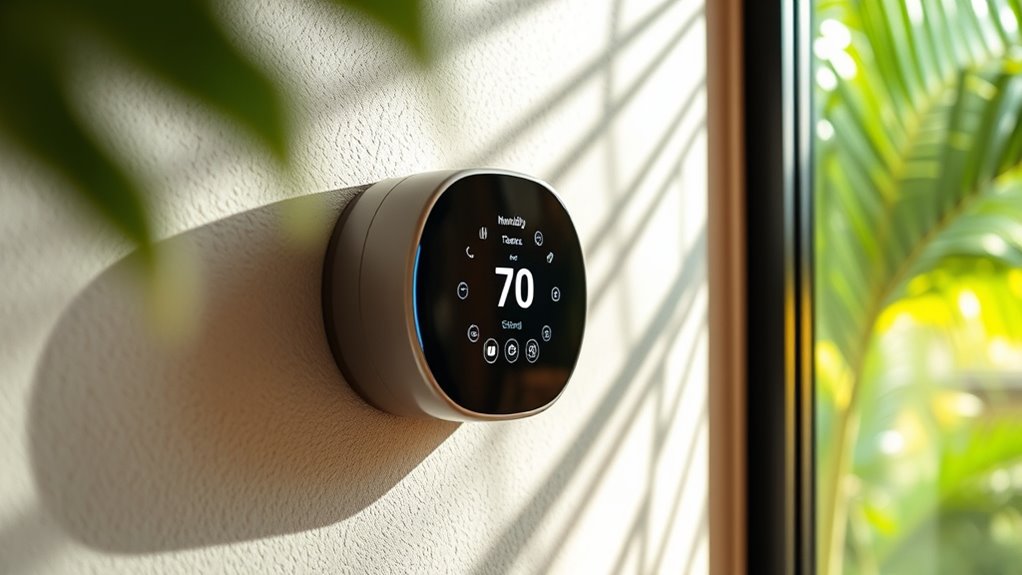
Choosing the right smart thermostat can markedly improve your home’s comfort and energy efficiency. When you live in a hot and humid region, selecting a model that effectively manages your cooling needs is vital. One of the most important aspects to contemplate is energy efficiency. A well-chosen thermostat helps you reduce unnecessary energy consumption by optimizing your air conditioning system’s operation. Look for features like adaptive scheduling, which learns your habits and adjusts temperature settings accordingly, and smart algorithms that fine-tune cooling based on outdoor temperatures, humidity levels, and occupancy patterns. These functions guarantee you don’t waste energy running your AC when you’re not home or when cooling isn’t required.
Another key factor is the user interface. You want a thermostat with an intuitive, easy-to-navigate display that allows you to quickly set and modify your preferences. Whether it’s a touchscreen, a mobile app, or voice control, the user interface should feel seamless and responsive. A clear display with straightforward menus helps you avoid confusion, especially when making quick adjustments during hot days. Some models even offer customizable interfaces, so you can prioritize the settings that matter most to you, like humidity control or specific temperature zones. This level of control guarantees you stay comfortable without overcooling, which can be costly in humid climates.
Choose a thermostat with an intuitive display and customizable options for effortless control during hot, humid days.
In hot and humid areas, humidity management becomes just as important as temperature control. Many smart thermostats integrate with dehumidifiers or have built-in humidity sensors. When choosing a device, check if it can monitor humidity levels and allow you to set preferred ranges. Maintaining ideal humidity not only enhances comfort but also prevents mold growth and deterioration of furniture. Ensuring your thermostat can handle these features often ties into its energy efficiency capabilities—by avoiding overcooling and dehumidifying intelligently, you save energy and maintain a healthier indoor environment.
Finally, compatibility with your existing HVAC system and smart home devices is vital. Some thermostats work better with certain systems, so verify compatibility before purchasing. Additionally, integration with voice assistants like Alexa or Google Assistant enables hands-free control, which is especially convenient during hot days when you’re trying to stay cool. A user interface that supports these integrations makes managing your home’s climate quick and effortless.
Frequently Asked Questions
How Do Smart Thermostats Handle High Humidity Levels?
Smart thermostats handle high humidity levels effectively by using humidity sensors to monitor moisture in the air. They adjust your cooling system to maintain comfortable conditions, preventing excess moisture buildup. Many models also feature moisture control settings that help reduce humidity, improving indoor air quality. By automatically responding to humidity changes, these thermostats guarantee your home stays comfortable and prevents issues like mold or dampness in hot, humid regions.
Are There Specific Models Optimized for Hot, Humid Climates?
Yes, some models are optimized for hot, humid climates. You’ll find thermostats with climate-specific features like enhanced humidity sensors and robust design to handle moisture. These thermostats focus on efficient cooling and dehumidification, unlike standard models that may struggle with high humidity. Look for devices with tailored thermostat design, ensuring reliable performance and better comfort control in harsh, humid environments.
Can Smart Thermostats Improve Energy Efficiency in Humid Regions?
Yes, smart thermostats can improve energy efficiency in humid regions. They come with energy-saving features like adaptive temperature controls and humidity sensors that help maintain ideal indoor conditions. By automatically adjusting cooling based on the humidity levels and your preferences, you save energy and reduce costs. You’ll enjoy more comfortable indoor air while using less energy, making your home both eco-friendly and economical.
What Maintenance Is Required for Thermostats in Humid Environments?
In humid environments, you need to regularly check your thermostat’s sensor calibration to guarantee accurate readings. Keep an eye on battery life, replacing batteries as needed to prevent malfunctions. Clean the device periodically to remove dust and moisture buildup, which can affect performance. Also, guarantee vents and filters are clean to maintain good airflow. Proper maintenance helps your smart thermostat operate efficiently despite the humidity.
Do Smart Thermostats Integrate With Dehumidifiers or HVAC Systems?
Yes, smart thermostats often integrate with dehumidifiers and HVAC systems, enhancing humidity control. Look for models with strong integration compatibility and built-in humidity sensors, so you can monitor and adjust humidity levels precisely. These thermostats communicate seamlessly with compatible devices, allowing you to optimize comfort and energy efficiency. Make certain to verify the compatibility specifications to guarantee your dehumidifier or HVAC system works smoothly with your smart thermostat.
Conclusion
Choosing the right smart thermostat for hot, humid areas can make all the difference in comfort and energy savings. By prioritizing features like humidity control, adaptive learning, and reliable connectivity, you guarantee your home stays cool and comfortable year-round. So, why settle for less when you can optimize your climate with a smart thermostat tailored for your region? Take control today and enjoy a more comfortable, efficient home every day!