
Combining smart thermostats with weather forecasts helps you proactively manage your home’s temperature, saving energy and increasing comfort. By connecting your thermostat to reliable weather data, it adjusts settings based on upcoming conditions, preheating or cooling your home in advance. This seamless integration prevents energy waste and keeps your environment cozy or cool when needed. If you want to explore how to optimize these features further, there’s more to discover that can enhance your home climate control.
Key Takeaways
- Smart thermostats use weather forecasts to proactively adjust heating and cooling for enhanced comfort and efficiency.
- Integration with weather data enables preheating or cooling in anticipation of upcoming weather changes.
- Users can customize settings based on forecast information, balancing comfort and energy savings.
- Apps display weather and energy data, offering recommendations for optimal thermostat adjustments.
- Advanced sensors improve responsiveness, automating climate control while reducing manual adjustments and energy waste.
Smart thermostats have revolutionized home comfort by allowing you to control your heating and cooling systems more efficiently. By integrating weather forecasts, you can take this control a step further, optimizing your home’s climate based on upcoming weather conditions. When you connect your smart thermostat to reliable weather data, it can automatically adjust your settings to save energy and maintain comfort without manual intervention. This proactive approach ensures your home isn’t wasting energy when you’re away or during mild weather days, helping you reduce utility bills and lessen your environmental impact.
One of the key advantages of combining smart thermostats with weather forecasts is enhanced energy efficiency. Instead of relying solely on pre-set schedules, your thermostat responds dynamically to upcoming weather changes. For example, if a cold front is forecasted, your thermostat might preheat your home slightly before you wake up, so you don’t experience a chilly morning. Conversely, if a warm day is on the horizon, it could lower your cooling settings in advance, reducing unnecessary energy consumption. This anticipatory adjustment minimizes the amount of energy needed to reach your preferred temperature, making your heating and cooling systems more efficient overall.
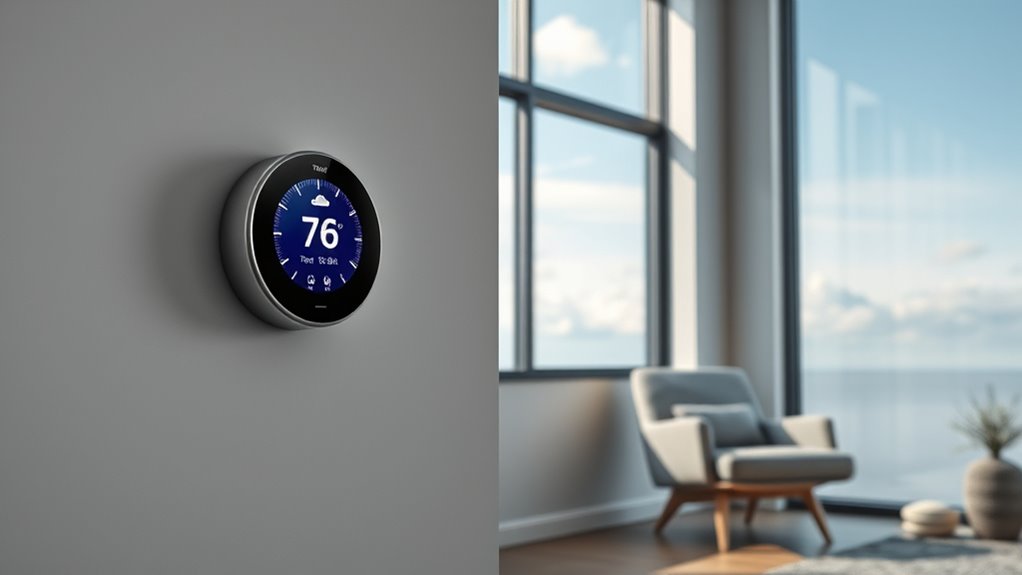
Smart thermostats dynamically respond to weather forecasts, optimizing energy use and maintaining comfort efficiently.
User customization plays a crucial role in maximizing the benefits of this technology. Your smart thermostat learns your preferences and routines, allowing you to define specific conditions for different times of day or days of the week. When weather forecasts are integrated, the system tailors its behavior further, aligning your comfort preferences with the weather predictions. You might set your thermostat to prioritize energy savings during work hours on days with mild weather, or to ensure maximum comfort when the forecast predicts extreme temperatures. This level of customization puts you in control, letting you balance comfort and efficiency according to your lifestyle and priorities.
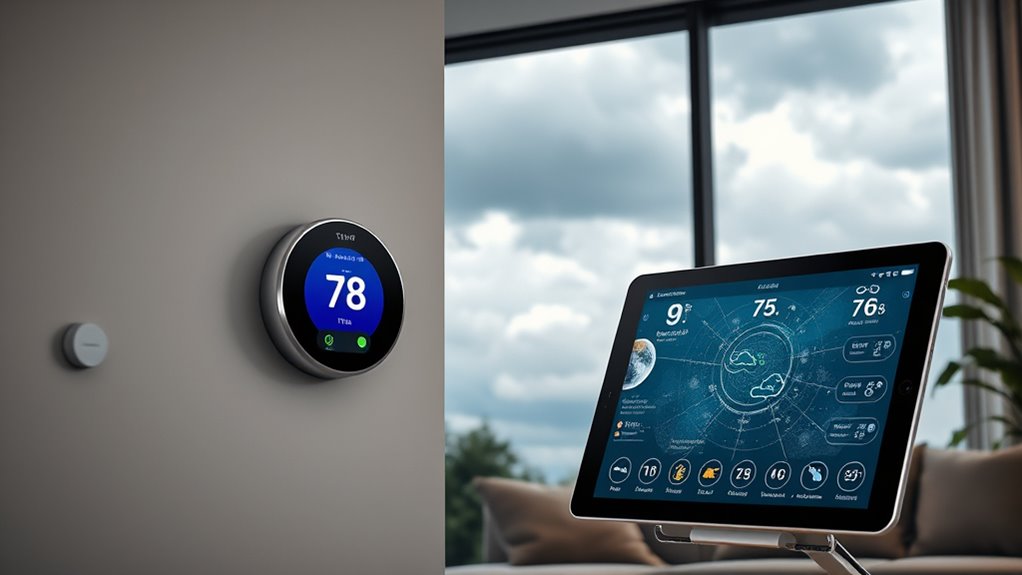
Furthermore, many smart thermostats offer easy-to-use apps that display weather forecasts alongside your energy usage data. With these tools, you can monitor how weather influences your energy consumption and make adjustments if needed. Some systems even provide recommendations based on forecast data, guiding you to set your thermostat for optimal savings. This seamless integration simplifies managing your home climate, giving you confidence that your system is working intelligently to save energy while keeping you comfortable.
In addition, advancements in sensor technology allow smart thermostats to better detect occupancy and adjust settings accordingly, further enhancing their efficiency when combined with weather forecasts. With these features, your home’s climate control becomes even more responsive and tailored to your lifestyle. This smart synergy helps you stay comfortable, save money, and reduce your carbon footprint without the hassle of constant manual adjustments.

ecobee Smart Thermostat Essential - Energy Star Certified programmable Wi-Fi Thermostat - Works with Siri, Alexa, and Google Assistant
Save up to 23% every year on heating and cooling costs, adjusts to your set schedule to save...
As an affiliate, we earn on qualifying purchases.
Frequently Asked Questions
Can Smart Thermostats Predict Long-Term Weather Changes?
Smart thermostats can’t predict long-term weather changes on their own, but they use weather prediction data to improve thermostat accuracy. By connecting to online forecasts, they adjust your home’s temperature proactively, helping you save energy and stay comfortable. While they don’t forecast weather trends themselves, integrating weather data enhances their ability to respond to upcoming conditions, making your heating and cooling more efficient and responsive to future weather changes.
How Do Weather Forecast Inaccuracies Affect Thermostat Settings?
Imagine a weather vane spinning wildly—that’s like weather model errors causing your thermostat to misjudge conditions. Inaccuracies can lead to over- or under-heating, wasting energy and comfort. Data synchronization issues exacerbate this, delaying updates and making your smart thermostat less responsive. As a result, your home might not match the actual weather, forcing manual adjustments and reducing the system’s efficiency. Staying aware helps you manage these pitfalls better.
Are There Privacy Concerns With Weather Data Integration?
Yes, there are privacy concerns when you integrate weather data with your smart thermostat. You might worry about data security and how your personal information is stored or shared. To protect your user privacy, verify the system uses secure connections and transparent privacy policies. Regularly update your device’s software, and review privacy settings to keep your data safe and prevent unwanted access.
Do Smart Thermostats Learn User Preferences Over Time?
A stitch in time saves nine. Yes, your smart thermostat learns your preferences over time through behavior adaptation, adjusting settings based on your routines. It uses sensor calibration to fine-tune temperature readings, ensuring accuracy. Over days and weeks, it observes your habits, gradually optimizing comfort and energy efficiency without you needing to program it constantly. This ongoing learning makes your home smarter and more responsive to your lifestyle.
Can Combining These Technologies Reduce Energy Bills Significantly?
Yes, combining smart thermostats with weather forecasts can substantially boost energy savings and cut costs. By adjusting your home’s temperature based on upcoming weather conditions, you prevent unnecessary heating or cooling. This proactive approach ensures you’re only using energy when needed, leading to consistent cost reduction. As a result, you enjoy lower utility bills while maintaining comfort, making this technology a smart investment for your home.
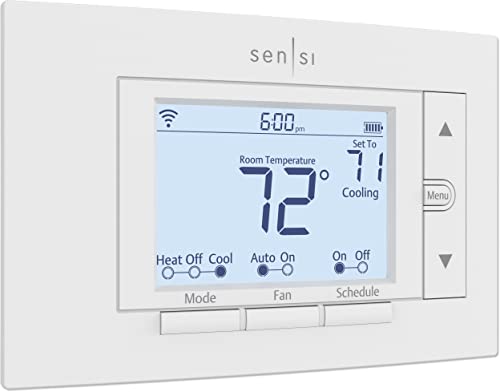
Sensi Smart Thermostat, 100 Years Of Expertise, Wi-Fi, Data Privacy, Programmable, Easy DIY Install, Works With Alexa, Energy Star Certified, Mobile App, ST55
PRIVACY PROTECTION*: Sensi won’t sell your personal information to third parties
As an affiliate, we earn on qualifying purchases.
Conclusion
By blending smart thermostats with weather forecasts, you gently guide your home’s comfort, much like a gardener tending delicate blooms. This harmonious dance ensures your environment remains cozy without waste, quietly adjusting to nature’s subtle shifts. As you embrace this seamless partnership, you create a sanctuary that feels just right—warm when needed, cool when desired—without a word. It’s a gentle symphony of technology and weather, quietly working together to keep your space perfectly in tune.
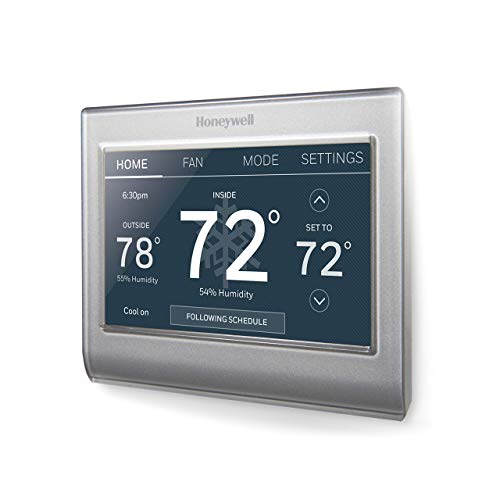
Honeywell Home RTH9585WF1004 Wi-Fi Smart Color Thermostat, 7 Day Programmable, Touch Screen, Energy Star, Alexa Ready, Gray
COMFORT COMES IN YOUR COLOR. Personalize your Wi-Fi Smart Color Programmable Thermostat to fit your décor.
As an affiliate, we earn on qualifying purchases.
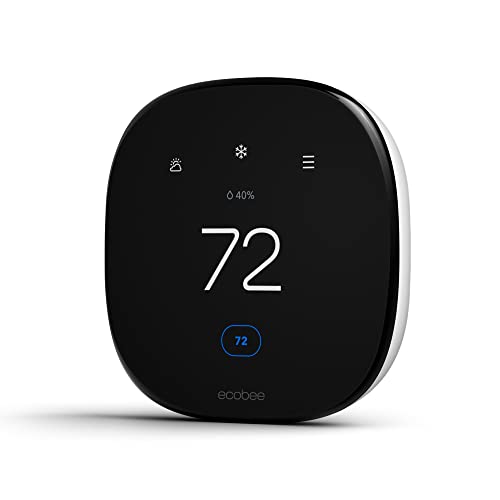
ecobee Smart Thermostat Enhanced - Programmable Wifi Thermostat - Works with Siri, Alexa, Google Assistant - Energy Star Certified - Smart Home
Save up to 26% per year on heating and cooling costs Automatically adjusts the temperature when you’re away...
As an affiliate, we earn on qualifying purchases.