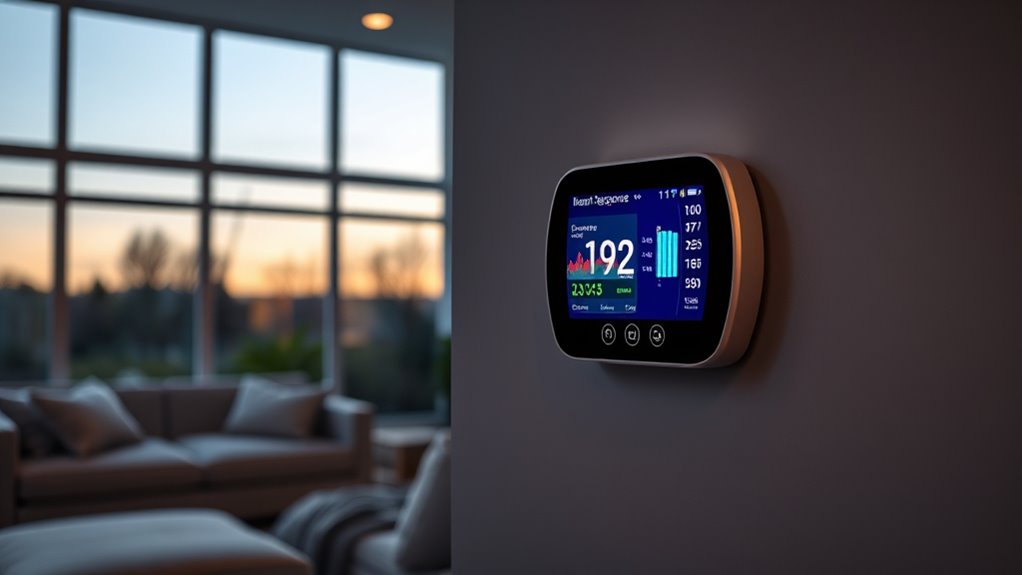

Using your smart thermostat allows you to participate easily in demand response programs that help save energy and lower your bills. During peak times, your device responds automatically by adjusting your heating or cooling slightly, reducing stress on the electrical grid while keeping your comfort intact. You can customize settings and override adjustments when needed, giving you control. To learn more about how your smart thermostat can support a sustainable energy future, keep exploring this helpful resource.
Key Takeaways
- Smart thermostats automatically adjust temperature settings during demand response events to reduce energy use without user intervention.
- Enrollment involves utility signals that trigger subtle temperature changes during peak periods for energy savings.
- Users can monitor and customize demand response settings via user-friendly apps, allowing control over comfort preferences.
- Participation can lead to utility incentives or rebates, providing financial benefits alongside energy cost reductions.
- Proper security measures are essential to protect connected devices from cyber vulnerabilities during demand response participation.
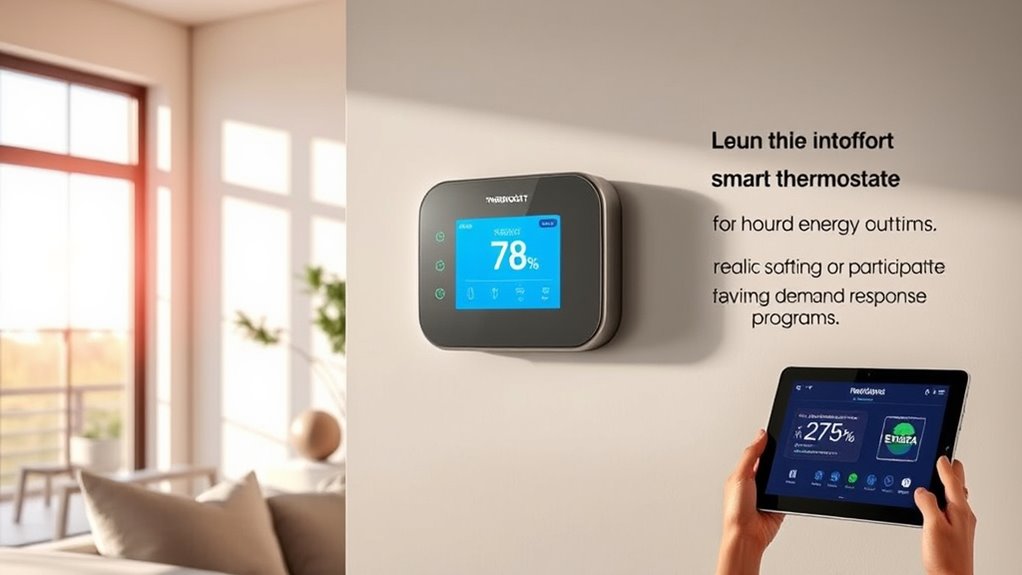
Smart thermostats have become essential tools for homeowners looking to save energy and reduce costs, especially as utilities increasingly offer demand response programs. These devices give you the power to optimize your home’s temperature settings automatically, helping you cut down on unnecessary energy use while maintaining high levels of user comfort. By participating in demand response, you contribute to easing the strain on the electrical grid during peak times, which benefits both your wallet and the environment.
Smart thermostats help save energy and costs while supporting demand response during peak grid times.
When you enroll your smart thermostat in a demand response program, your utility company can send you signals to adjust your heating or cooling settings during times of high demand. Instead of manually changing the thermostat, your device responds automatically, reducing energy consumption during critical periods. This automation ensures you don’t have to compromise your comfort, as the adjustments are usually subtle and made during the times when you’re least likely to notice. For example, your thermostat might slightly lower the air conditioning during a heatwave or allow the temperature to drift a bit higher in summer, all while keeping your home comfortable enough for you.
The energy savings come from these strategic adjustments. By reducing the cooling or heating load during peak hours, you’re decreasing the amount of energy your home consumes at times when the grid is under stress. Not only does this lower your utility bill, but it also helps prevent power outages and reduces carbon emissions. The best part is that these savings can add up over time, especially if your utility offers incentives or rebates for participating. Many smart thermostats have user-friendly apps, so you can monitor your energy use and see how demand response participation impacts your bills, giving you a clear view of your contribution and savings.
Furthermore, participating in demand response with a smart thermostat gives you more control over your home environment. You can set preferences and establish schedules to ensure your comfort isn’t compromised. If you prefer to be more involved, some systems allow you to override automatic adjustments temporarily or customize the response levels. This flexibility means you can balance energy savings with your personal comfort preferences, making demand response a seamless part of your home management. Additionally, understanding cybersecurity risks associated with connected devices helps you take steps to protect your smart home systems from potential vulnerabilities.

Sensi Smart Thermostat, Wi-Fi, DIY, Alexa, Energy Star Certified, ST55
- Privacy Protected: Won’t sell your personal data
- Easy DIY Installation: Includes level and step-by-step app guide
- Universal Compatibility: Works with most HVAC systems without c-wire
As an affiliate, we earn on qualifying purchases.
As an affiliate, we earn on qualifying purchases.
Frequently Asked Questions
What Are the Costs Involved in Installing a Smart Thermostat?
The installation costs for a smart thermostat typically range from $100 to $250, depending on the model and installer fees. You should consider compatibility considerations, ensuring your heating and cooling systems work with the device. Some smart thermostats may require professional installation, adding to costs, while others are DIY-friendly. Overall, investing in one can save you money long-term through energy efficiency and participation in demand response programs.
How Do Demand Response Programs Affect My Home Comfort?
Demand response programs can slightly impact your home comfort, with some users experiencing up to a 2°F temperature adjustment during peak times. You might notice some home comfort trade-offs, but smart thermostats allow for seasonal comfort adjustments to minimize disruptions. These programs help save energy and costs while maintaining your comfort, often with advanced settings that let you customize your preferences and stay comfortable when it matters most.
Can I Override Demand Response Signals Manually?
Yes, you can manually override demand response signals with your smart thermostat. Most devices offer user control options that let you temporarily disable or adjust the response to signals. Simply access your thermostat’s manual override feature through the app or device interface, and you’ll regain full control over your home’s comfort. Keep in mind, using manual override may affect your participation benefits in demand response programs.
Are There Privacy Concerns With Smart Thermostat Data Sharing?
Imagine your smart thermostat as a friendly robot from the future. Yes, there are privacy concerns with data sharing. You should be mindful of data privacy and data security, as your usage patterns could reveal personal habits. Always check the company’s privacy policies and guarantee they use encryption. Protecting your data keeps your home safe and maintains your control over personal information while enjoying the benefits of smart technology.
What Incentives or Rebates Are Available for Participation?
You can take advantage of rebate programs and financial incentives offered by utility companies or government agencies. These programs often reward you for participating in demand response initiatives through smart thermostats, helping you save money on installation costs or receive bill credits. By enrolling, you actively reduce energy consumption during peak times, earning rewards that make your smart thermostat investment more affordable and rewarding.

ecobee Smart Thermostat Essential – WiFi Thermostat, Energy Star Certified
- Energy Savings: Save up to 23% annually on energy costs
- System Compatibility: Compatible with 85% of HVAC systems
- Easy Temperature Control: Adjust temperature via touchscreen or app
As an affiliate, we earn on qualifying purchases.
As an affiliate, we earn on qualifying purchases.
Conclusion
Think of your smart thermostat as a brave sailor steering through changing tides. By participating in demand response programs, you become a hero guiding your community toward stability, saving energy like a lighthouse shining in the storm. Your small act becomes a powerful wave, shaping a sustainable future. Embrace this role, and let your thermostat lead the way—because together, we can weather any challenge and brighten our world’s horizon.
Sensi Smart Thermostat, Wi-Fi, DIY, Alexa, Energy Star Certified, ST55
- Privacy Protected: Won’t sell your personal data
- Easy DIY Installation: Includes level and step-by-step app guide
- Universal Compatibility: Works with most HVAC systems without c-wire
As an affiliate, we earn on qualifying purchases.
As an affiliate, we earn on qualifying purchases.
ecobee Smart Thermostat Essential – WiFi Thermostat, Energy Star Certified
- Energy Savings: Save up to 23% annually on energy costs
- System Compatibility: Compatible with 85% of HVAC systems
- Easy Temperature Control: Adjust temperature via touchscreen or app
As an affiliate, we earn on qualifying purchases.
As an affiliate, we earn on qualifying purchases.