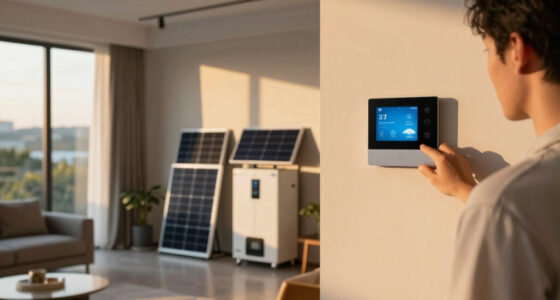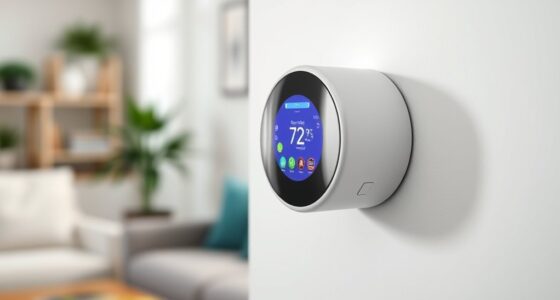
To maximize savings and protect your home during vacations, consider adjusting your smart thermostat rather than turning off your HVAC entirely. Set it to an energy-efficient “away” mode or a minimal baseline temperature, which prevents issues like frozen pipes or mold growth while saving energy. Using the remote control features allows you to make quick adjustments before and during your trip. Keep exploring to learn the best strategies for ensuring your home stays safe and comfortable.
Key Takeaways
- Set your smart thermostat to an energy-saving “vacation” or “away” mode with a safe, minimal temperature to prevent damage.
- Use remote access to adjust temperature settings before and during your trip for optimal comfort and savings.
- Avoid fully turning off the HVAC; maintain a baseline temperature to prevent mold, frozen pipes, or other issues.
- Create custom schedules or automate temperature adjustments based on your travel duration and home needs.
- Enable safety features like alerts or notifications for temperature fluctuations or system faults during your absence.
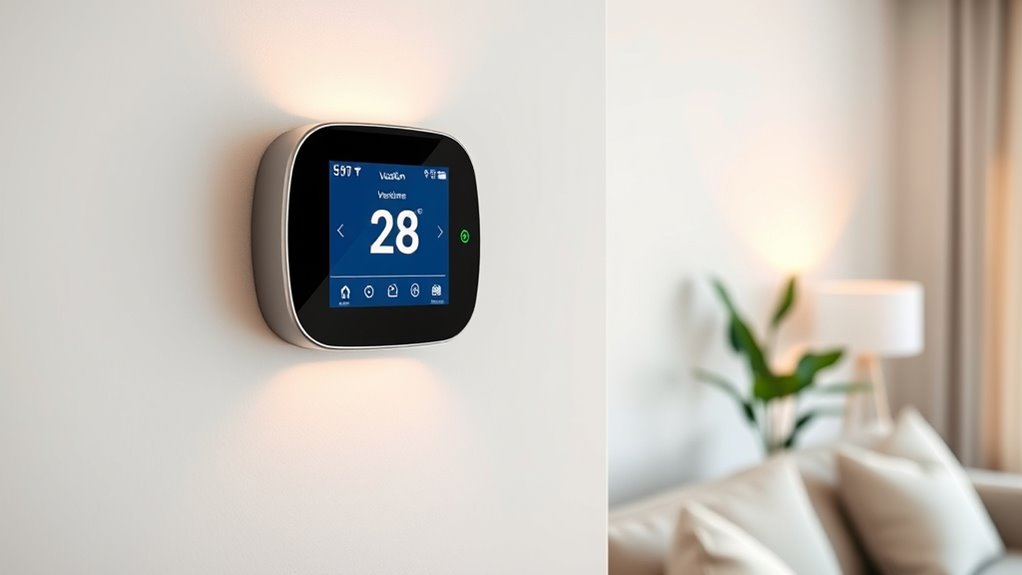
When you go on vacation, turning off your HVAC system can save energy and reduce costs. This simple step can have a notable impact on your energy conservation efforts, helping you lower your utility bills while also being more environmentally friendly. But completely shutting off your heating or cooling might not always be the best choice, especially if you’re gone for an extended period or if you want to prevent issues like mold or frozen pipes. Instead, using smart thermostat features allows you to optimize your system’s operation, balancing comfort, energy savings, and peace of mind.
A smart thermostat gives you the flexibility to set specific temperatures for when you’re away, so your home isn’t unnecessarily cooled or heated. Many models let you create custom schedules or remotely adjust your settings via smartphone apps. By lowering the temperature in winter or raising it in summer, you considerably reduce energy consumption during your absence. This targeted approach is a smart form of energy conservation because it ensures your HVAC isn’t working harder than needed, wasting energy and driving up costs. When you program your thermostat to maintain a minimal baseline temperature or humidity level, you prevent issues like frozen pipes or mold growth without paying for full heating or cooling.
Using the vacation mode feature on your smart thermostat is especially effective. It typically maintains a safe, minimum temperature that prevents damage while keeping energy use to a minimum. This mode is designed to be energy-efficient and easy to activate before you leave. Some systems even learn your routines and adjust settings automatically, optimizing energy savings without any extra effort on your part. If you’re away for longer periods, you can also set your thermostat to a “low-energy” mode, which keeps the house at a minimal temperature that’s still safe for your pipes and home structure. Additionally, smart thermostats can provide you with real-time energy consumption data, helping you understand your usage patterns and further reduce waste.
Using vacation mode on your smart thermostat maintains safety and saves energy effortlessly.
Remote control capabilities mean you don’t have to worry about forgetting to adjust your thermostat before leaving. You can simply open your app, review your settings, and make changes if your plans shift. This ensures you’re always in control of your home’s climate, preventing unnecessary energy use. Overall, smart thermostats help you maximize energy conservation and cost savings by giving you precise control over your HVAC system, even when you’re not there. By taking advantage of these features, you protect your home from potential damage, save money on utility bills, and contribute to a greener environment—all without sacrificing comfort or peace of mind during your vacation.

DR. INFRARED HEATER NEW Upgraded DR-975 7500-Watt 240-Volt Hardwired Shop Garage Electric Heater, Wall/Ceiling Mounted with Remote Controlled Thermostat White
Heavy duty 240V single Phase 4700W/7500W electric heater
As an affiliate, we earn on qualifying purchases.
Frequently Asked Questions
How Long Can I Safely Turn off My HVAC During Extended Vacations?
You can safely turn off your HVAC for up to a week or two during extended vacations to save energy, but beyond that, it’s risky. Turning it off too long can lead to issues like mold growth and damage from humidity. To maximize energy savings and prevent mold, set your thermostat to a low, consistent temperature or use a smart thermostat to maintain proper humidity and air quality while away.
Will Turning off My HVAC Affect My Home’s Plumbing or Appliances?
Turning off your HVAC can risk plumbing freezing and appliance damage if temperatures drop too low. Without heat, pipes may freeze and burst, leading to costly repairs, and appliances might also suffer damage from cold conditions. To prevent this, you should set your thermostat to a minimum safe temperature, usually around 55°F, or consider using a smart thermostat to maintain a consistent, safe temperature during your absence.
Should I Set My Thermostat to a Specific Temperature Before Leaving?
You should set your thermostat to a specific temperature before leaving to maximize energy savings and guarantee equipment safety. Think of it as giving your home a gentle hug—keeping it warm enough to prevent pipes from freezing or damage, but cool enough to save energy. Setting it around 55°F (13°C) in winter or 85°F (29°C) in summer strikes this balance, protecting your home while cutting costs during your absence.
Is It Better to Leave the HVAC on or Turn It off Completely?
It’s better to turn off your HVAC completely during your vacation to maximize energy savings and protect your equipment’s longevity. Leaving it on wastes energy and can cause unnecessary wear. If you’re worried about humidity or freezing pipes, set your thermostat to a safe, energy-efficient temperature rather than leaving it running at normal levels. This approach guarantees your system stays healthy and saves you money while you’re away.
How Can I Monitor My Home’s Temperature Remotely While Away?
Think of your home’s temperature as a watchful eye, keeping an invisible pulse on your space. With a smart thermostat, you can monitor your home’s temperature remotely via a smartphone app, ensuring ideal humidity control and air quality. You get real-time updates, so you’re always aware of your home’s environment. This way, you can make adjustments from anywhere, maintaining comfort and safety even when you’re miles away.
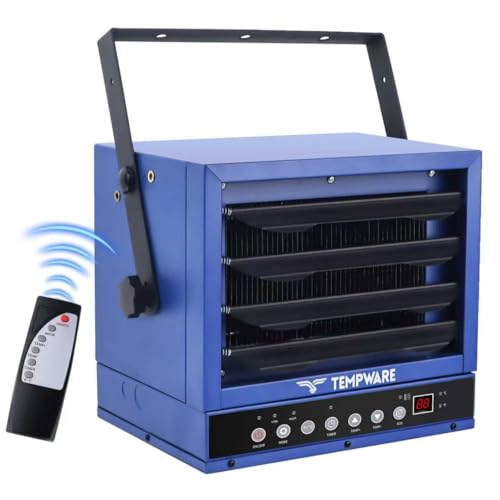
TEMPWARE 7500W Electric Garage Heater, 240V Hardwired Digital Ceiling Mount Fan-Forced Shop Heater with Full-Function Remote and 12-Hour Timer, Ideal for Workshop Warehouse
Adjustable Angle & 2 Heat Settings: This 240V hardwired garage heater features adjustable louvers and a variable mounting...
As an affiliate, we earn on qualifying purchases.
Conclusion
Turning off your HVAC during vacations is like giving your home a gust of fresh air, a brief pause in its daily rhythm. With a smart thermostat, you’re the conductor, orchestrating comfort and savings with a simple tap. Just remember, a well-timed switch isn’t just about saving energy; it’s about letting your home rest and rejuvenate, like a sleeping giant awaiting your return. Embrace the art of mindful cooling, and let your house breathe easy in your absence.

Comfort Zone Hard-Wired Ceiling Mount Garage Electric Space Heater, Fan-Forced, 5,000 watt, 240 volt, Overheat Protection, Thermal Cut-Out Switch, Ideal for Workshop & Garage, ETL Compliant, CZ220BK
EFFICIENT CEILING MOUNT: With its ceiling-mount design and hard-wired installation, this fan-forced heater is perfect for spaces like...
As an affiliate, we earn on qualifying purchases.

Comfort Zone 5000W Ceiling Mounted Garage Heater – 240V Electric Shop Heater with 3 Heat Settings, Overheat Protection, Indoor Use, ETL Listed, Grey
EFFICIENT CEILING MOUNT: With its ceiling-mount design and hard-wired installation, this fan-forced heater is perfect for spaces like...
As an affiliate, we earn on qualifying purchases.