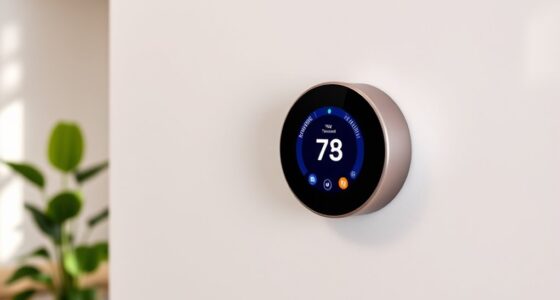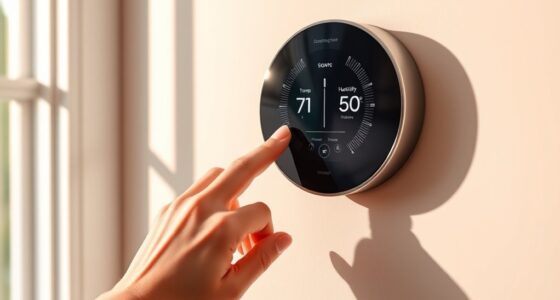
Smart thermostats help reduce your energy use and lower greenhouse gas emissions by learning your routines and adjusting heating or cooling accordingly. They provide real-time data and detailed reports on your energy footprint, encouraging smarter choices and consistent habits. By optimizing system operation, they cut utility bills and lessen demand on power plants, contributing to a healthier environment. Keep exploring how these devices can turn your home into a more sustainable space.
Key Takeaways
- Smart thermostats reduce energy consumption by adapting to user habits, lowering greenhouse gas emissions.
- They provide detailed environmental impact reports, highlighting energy savings and sustainability progress.
- Integration with home automation systems enables real-time monitoring and automated energy optimization.
- Automated adjustments prevent unnecessary energy use, supporting eco-friendly living practices.
- Data insights help users understand and improve their carbon footprint through informed behavioral changes.
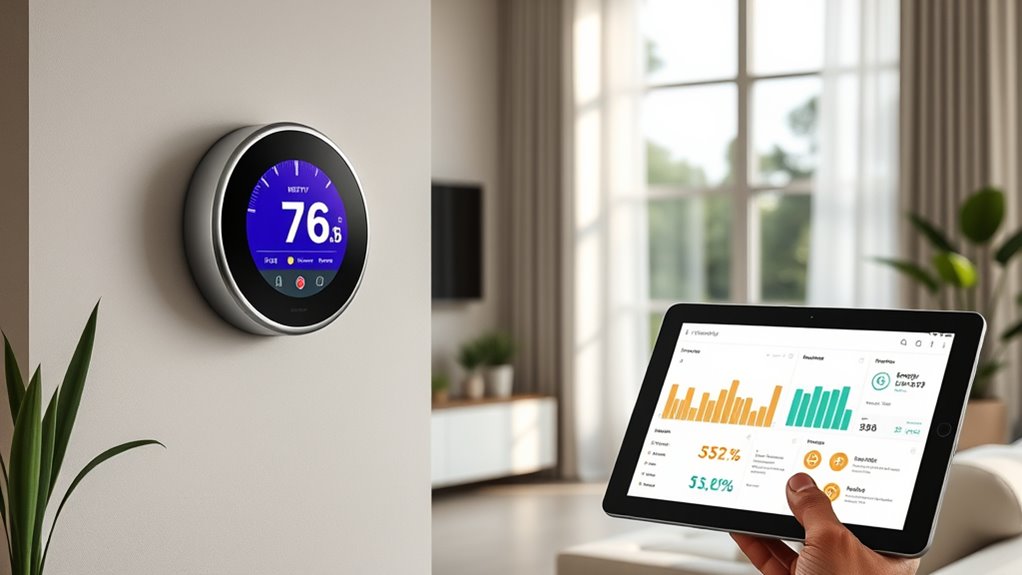
Have you ever wondered how smart thermostats can influence your home’s environmental footprint? These devices are more than just convenient temperature controllers; they’re powerful tools that can notably improve your home’s energy efficiency. By learning your routines and adjusting heating and cooling accordingly, smart thermostats help reduce unnecessary energy consumption. When you set your thermostat to be more energy-efficient, you not only cut down on utility bills but also lessen the demand for power plants that emit greenhouse gases. This means your everyday choices, aided by smart technology, directly contribute to a smaller environmental impact.
Smart thermostats reduce energy use and greenhouse gas emissions by learning routines and optimizing home climate control.
The real magic lies in how these thermostats shape user behavior. Unlike traditional thermostats, which require manual adjustments and often lead to energy waste, smart thermostats respond intelligently to your habits. For example, if you typically turn down the temperature at night or leave the house during the day, the device learns these patterns and makes automatic adjustments. Over time, this reduces the likelihood of wasting energy, because you’re not manually overriding settings or forgetting to turn off the heat or AC when leaving. This adaptive approach makes it easier for you to maintain consistent energy-efficient habits without extra effort, reinforcing positive behavior that benefits the environment.
Moreover, many smart thermostats come with detailed reports that show your energy usage patterns. These reports can highlight when you’re using more energy than necessary and suggest ways to improve. By reviewing these insights, you become more aware of how your behavior impacts your home’s energy footprint. This awareness can encourage you to fine-tune your routines, like programming more efficient schedules or adjusting temperature settings during certain times of the day. As you become more conscious of your energy consumption, you’re empowered to make smarter decisions that align with your environmental goals.
Another benefit is that smart thermostats often connect to broader home automation systems or energy management platforms. This interconnectedness allows you to see your energy footprint in real-time and even coordinate with other devices to optimize overall efficiency. For instance, you could set your system to reduce heating or cooling when you’re away or asleep, further decreasing unnecessary energy use. These features help turn your home into a smart, sustainable environment, where user behavior is guided by data and automation, leading to a more environmentally friendly lifestyle. Understanding user behavior can help you make even more targeted adjustments to maximize energy savings.
Frequently Asked Questions
How Do Smart Thermostats Communicate With Environmental Impact Reporting Systems?
Smart thermostats communicate with environmental impact reporting systems through data integration, sharing real-time energy consumption data. You’ll see how your heating and cooling patterns affect overall environmental impact, as the thermostats send detailed info via Wi-Fi or other wireless protocols. This seamless communication helps you track your energy use, reduce waste, and support sustainability goals by providing accurate, up-to-date data for environmental impact assessments.
What Data Privacy Measures Are in Place for Environmental Reporting?
You’re protected through data encryption, which secures your information from unauthorized access, and by obtaining your explicit user consent before sharing any data. These privacy measures ensure your personal details are safe and used responsibly. Companies must prioritize transparency about data collection and give you control over your information, so you can feel confident that your privacy is respected when environmental impact reporting involves your smart thermostat data.
Can Smart Thermostats Operate Without Internet Connectivity?
Yes, some smart thermostats can operate without internet connectivity, though their features might be limited. Without internet, they rely on local sensors to maintain your preferred temperature for energy savings and user comfort. While they can still adjust heating and cooling based on manual settings or local data, you might miss out on remote control, updates, and advanced automation. This setup helps you save energy while ensuring consistent comfort at home.
How Accurate Are the Environmental Impact Reports Generated?
Environmental impact reports are generally quite accurate, especially when they incorporate data on your energy savings and user behavior. These reports analyze how your smart thermostat’s adjustments reduce energy consumption, providing reliable insights. However, their accuracy depends on consistent data input and proper device calibration. If your user behavior changes, the reports adapt accordingly, offering a clear picture of your environmental impact and helping you make smarter, eco-friendly choices.
Are There Specific Brands Best Suited for Environmental Impact Tracking?
You should consider brands like Nest, Ecobee, and Hive for environmental impact tracking, as they prioritize energy efficiency and offer detailed reporting features. When comparing brands, look for those with robust energy-saving algorithms and user-friendly reports, helping you reduce your carbon footprint. These brands often provide better insights into your energy consumption, making it easier to track your environmental impact and make sustainable choices.
Conclusion
By choosing a smart thermostat, you gently steer your home’s energy use toward a more harmonious balance. As you tune the temperature with a subtle touch, you’re quietly contributing to a cleaner, greener world. Every small adjustment becomes a whisper of care for the planet’s well-being. Embrace this silent partnership, and let your home’s comfort softly pave the way toward a brighter, more sustainable future, one warm evening at a time.