When you speak to a smart thermostat, it first uses speech recognition to turn your words into digital data. Then, natural language processing breaks down your command to understand the meaning and identify key instructions. The device connects this info to its smart home system, ensuring all devices respond correctly. It can even learn your speech patterns over time for better accuracy. Keep exploring to discover how these systems continue to evolve and improve your experience.
Key Takeaways
- Voice assistants convert spoken commands into digital data through speech recognition algorithms.
- Natural Language Processing (NLP) interprets sentence structure and identifies user intent.
- Commands are integrated into the smart home ecosystem for coordinated device responses.
- Customization and learning enable the thermostat to better understand individual speech patterns and preferences.
- Advanced technologies ensure rapid, accurate, and evolving interpretation of voice commands for seamless control.

Have you ever wondered how voice assistants seamlessly understand and respond to your commands? It all comes down to sophisticated technology working behind the scenes, especially when it comes to smart home integration. When you ask your smart thermostat to adjust the temperature, the device isn’t just hearing your words; it’s interpreting a complex set of data to guarantee your request is accurately executed. This process involves multiple layers of processing, from recognizing your voice to understanding the intent behind your command.
First, your voice assistant uses advanced speech recognition algorithms to convert your spoken words into digital data. This step is vital because it transforms natural language into a form that the device can analyze. Once your command is transcribed, natural language processing (NLP) kicks in. NLP helps the thermostat comprehend what you’re asking for by breaking down the sentence structure, identifying key keywords, and understanding context. For instance, if you say, “Make it warmer,” the system recognizes the intent to increase the temperature, even if you don’t specify an exact degree.
Smart home integration plays a significant role here. When your thermostat is connected to a broader smart home ecosystem, it can coordinate with other devices to optimize your environment. For example, if your voice command is “Set the living room to 72 degrees,” the thermostat communicates with your smart home hub to adjust accordingly. This integration guarantees that your commands are interpreted accurately across multiple devices, creating a seamless experience.
Voice command customization further enhances how your thermostat responds. Many systems allow you to personalize commands and preferences, making interactions more natural and tailored to your routines. You might assign specific phrases as shortcuts for common adjustments, like saying “Good morning” to raise the temperature and turn on the lights. Customization also helps reduce misunderstandings, as the system learns your speech patterns and preferred vocabulary over time.
Ultimately, the magic lies in the combination of smart home integration and voice command customization. These features enable your thermostat to not only recognize your voice but also understand your preferences and respond promptly. As technology advances, the way voice assistants interpret commands becomes even more intuitive, making your smart home experience more fluid and efficient. Additionally, modern systems utilize self learning technology to improve their understanding of individual users over time. So, next time you ask your thermostat to change the temperature, remember there’s a sophisticated network working tirelessly behind the scenes to make that simple request a reality.

Smart Home Energy Monitor with 16 50A Circuit Level Sensors, Real-Time Power Usage & Electricity Cost Tracking, Ideal for Rental Homes & Shared Apartments, App History, Compatible with Home Assistant
- Easy Installation: Clamp-on sensors for most circuit panels
- Real-Time Power Monitoring: Track power usage anytime, anywhere
- Electricity Cost Tracking: Monitor costs and energy consumption
As an affiliate, we earn on qualifying purchases.
Frequently Asked Questions
How Do Thermostats Prioritize Multiple Voice Commands?
When you give multiple voice commands, thermostats use command prioritization and ambiguity resolution to decide which to act on first. They often prioritize commands based on recent activity or urgency. If there’s ambiguity, they ask for clarification to guarantee they understand your intent. This way, your commands are handled efficiently, reducing errors and making your smart thermostat experience smooth and responsive to your needs.
Can Voice Assistants Understand Regional Dialects?
Yes, voice assistants can understand regional dialects thanks to advanced accent recognition technology. They analyze pronunciation patterns and adapt to diverse speech nuances, helping you communicate comfortably regardless of your accent. While some accents may pose challenges initially, continuous improvements in voice recognition software enhance accuracy over time. So, you can confidently give commands, knowing your voice assistant will interpret regional dialects effectively, making your smart home experience seamless and personalized.
What Privacy Measures Protect Voice Command Data?
Imagine your voice command data as a secret message, protected by voice encryption that keeps it safe from prying eyes. You’re reassured knowing data anonymization hides your identity, ensuring your privacy. These measures work together, safeguarding your commands from unauthorized access and misuse. When you use your thermostat’s voice features, trust that your data stays private, thanks to these advanced privacy protections that guard your information every step of the way.
How Do Thermostats Handle Unclear or Ambiguous Commands?
When your thermostat receives unclear or ambiguous commands, it uses contextual interpretation to understand your intent. If it’s unsure, it often prompts you with a command clarification, asking for more details. This process helps guarantee your desired settings are accurately recognized and applied. By actively seeking clarification, your thermostat minimizes misunderstandings, making your experience smoother and more efficient, even when your voice commands aren’t perfectly clear.
Are There Compatibility Issues With Certain Smart Home Ecosystems?
You might hit a snag with certain smart home ecosystems due to compatibility issues. Keep in mind that voice assistant updates and firmware compatibility play a big role in seamless operation. Some thermostats work better with specific platforms, so it’s wise to check compatibility before you buy. Don’t put all your eggs in one basket—ensure your thermostat and voice assistant are compatible to avoid frustration and keep your smart home running smoothly.
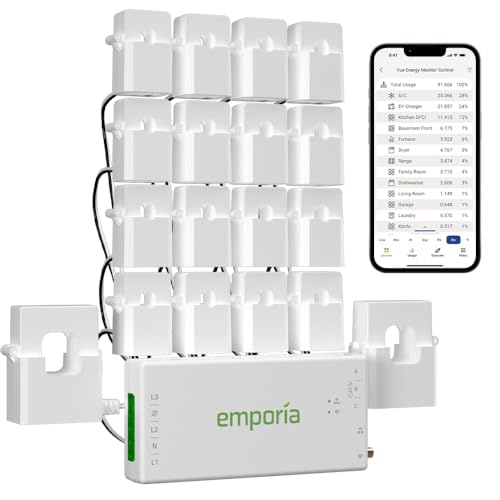
Emporia Vue 3 Home Energy Monitor - Smart Home Automation Module and Real Time Electricity Usage Monitor, Power Consumption Meter, Solar and Net Metering for UL Certified Safe Energy Monitoring
- UL Certified for Safety: Certified for electrical safety in US and Canada
- Easy Installation: Fits in most circuit panels with clamp-on sensors
- Supports Various Systems: Compatible with single, split-phase, and 3-phase systems
As an affiliate, we earn on qualifying purchases.
Conclusion
With voice assistants and thermostats working in harmony, your home becomes a haven of hassle-free comfort. As you speak, sensors swiftly seize your signals, seamlessly shaping the space around you. This symphony of smart technology turns your spoken wishes into warm, welcoming realities. So, embrace this effortless integration, and let your voice weave a world of warmth and well-being, making every moment at home more magical, more manageable, and truly yours.

Meross Smart Home Energy Monitor, Real-Time Power & Cost Tracking
- Safe and Reliable Certification: ETL-certified and UL compliant for safety
- Easy Clamp-On Installation: Quick, tool-free setup with invertible CT readings
- Universal Compatibility: Works with most US home electrical systems
As an affiliate, we earn on qualifying purchases.

Refoss Smart Home Energy Monitor with Open API, Home Assistant, No Cloud
- Local Data Access: Web UI, Open API, MQTT support
- Privacy & Control: Data stays within your home network
- Offline Functionality: Operates without internet connection
As an affiliate, we earn on qualifying purchases.