To choose a smart thermostat for a home with uneven temperatures, look for one with advanced sensor functionality and zoning capabilities. These features allow you to place sensors in different rooms, ensuring accurate readings and ideal comfort. Scheduling options help you customize settings for various zones, while remote control lets you adjust temperatures from anywhere. Plus, compatibility with other smart home devices enhances your experience. Keep exploring to find more tips on making the best choice.

Get home appliances delivered free with Prime
- Fast, free delivery on millions of items
- Prime Video, Amazon Music and more included
- Member-only deals all year
Key Takeaways
- Look for smart thermostats with multiple temperature sensors to accurately measure and adjust temperatures in different rooms.
- Choose models with zoning capabilities to customize settings for various areas of your home.
- Ensure the thermostat offers scheduling features to optimize heating and cooling based on your daily routines.
- Select a thermostat that allows remote control via smartphone for quick adjustments when needed.
- Confirm compatibility with other smart home devices to enhance overall climate management and automation.

When you’re ready to upgrade your home’s heating and cooling system, choosing a smart thermostat can make all the difference. If you’re dealing with uneven temperatures in your home, a smart thermostat can help you regain control and comfort. These devices are designed with advanced thermostat features that allow them to adapt to your specific needs, guaranteeing that every room in your home stays comfortable.
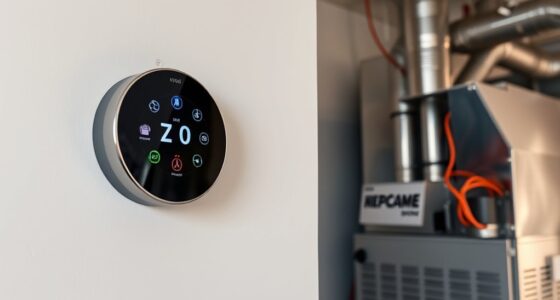
First, consider how the thermostat’s temperature sensors work. Unlike traditional models that only measure the temperature in one location, smart thermostats often come equipped with multiple sensors. These sensors can be placed in different rooms, giving you a more thorough view of your home’s temperature. This means that when one area is too hot or too cold, the thermostat can adjust accordingly, redistributing heating or cooling where it’s needed most. Implementing sensor placement strategies can maximize the effectiveness of these sensors.
Smart thermostats with multiple sensors provide a comprehensive view of your home’s temperature, ensuring optimal comfort by adjusting heating and cooling where needed.
Look for a model that allows you to set schedules or create zones. With zoning capabilities, you can customize the temperature in different areas of your home based on usage. For example, if you rarely use a guest room, you can set it to a lower temperature during the day while keeping the living areas comfortable. This not only enhances your comfort but can also lead to energy savings, as you’re not wasting energy on rooms you don’t regularly occupy. Additionally, zone control helps optimize your system’s efficiency by focusing heating or cooling efforts where they’re most needed. A smart thermostat can also learn your preferences over time, further increasing comfort and efficiency.
Another important feature is the ability to control your thermostat remotely. Many smart thermostats connect to your smartphone, allowing you to adjust settings from anywhere. If you notice that a certain room is warmer than you’d like while you’re away, you can easily lower the temperature before returning home. This flexibility is invaluable in maintaining a consistent climate throughout your space.
It’s also worth considering compatibility with other smart home devices. Some thermostats work seamlessly with smart home systems, enabling you to integrate heating and cooling into your broader home automation setup. Imagine adjusting your thermostat from your voice assistant or setting it to lower the temperature when you leave for work. These conveniences can greatly enhance your overall experience.
Ultimately, when you choose a smart thermostat with the right temperature sensors and features, you’re investing in a solution that can transform your home’s climate. By taking the time to research and find the model that best fits your needs, you’ll guarantee that every corner of your home remains comfortable, regardless of the season. Uneven temperatures in your home can be effectively managed with the right smart thermostat technology.
Products Worth Considering

Google Nest Thermostat E with Nest Temperature Sensor Bundle, White

Google Nest Learning Thermostat Pro Edition (4th Gen, 2024) with Temperature Sensor, Polished Silver

Levoit Air Purifier for Home, Pets, Bedroom – Smart Wi‑Fi for Large Rooms
As an affiliate, we earn on qualifying purchases.
Frequently Asked Questions
Can Smart Thermostats Work With All HVAC Systems?
Did you know that nearly 50% of homes have HVAC systems that can’t support all smart thermostat types? While many smart thermostats work with standard heating and cooling systems, not all are compatible with every HVAC setup. Before you buy, check the specifications of your chosen thermostat and verify it matches your system’s compatibility. This way, you’ll maximize efficiency and comfort in your home.
How Do I Install a Smart Thermostat Myself?
To install a smart thermostat yourself, start by turning off power to your HVAC system. Next, remove your old thermostat and note the wiring—this is where knowing wiring basics comes in handy. Connect the new thermostat according to its color-coded labels. For best performance, choose a location that’s away from direct sunlight and drafts. Once everything’s wired, restore power and follow the setup instructions in your thermostat’s app. You’re all set!
What Features Should I Prioritize for Uneven Temperatures?
When it comes to tackling uneven temperatures, think of your smart thermostat as a magician in your home. Prioritize features like temperature sensors that monitor various rooms, giving you the power to balance the climate. Look for adaptive learning capabilities, too; these let the thermostat understand your habits and adjust accordingly, ensuring every nook and cranny stays cozy. With these features, you’ll turn your home into a perfectly orchestrated symphony of comfort.
Are There Compatibility Issues With Older Home Systems?
Yes, there can be compatibility concerns with older home systems. Many smart thermostats require specific wiring or protocols that older HVAC systems might not support. Before you buy, check your current system’s compatibility and consider potential system upgrades. Some thermostats may offer adapters or workarounds, but it’s essential to guarantee everything fits together seamlessly. Research thoroughly to avoid any surprises and confirm your new thermostat will function efficiently.
How Much Energy Savings Can I Expect?
You can expect significant energy savings with a smart thermostat, often around 10-15% on your heating and cooling costs. By optimizing your home’s energy efficiency, it adjusts to your schedule and preferences, leading to noticeable cost reduction over time. Many users report lower utility bills within the first few months. So, investing in a smart thermostat not only enhances comfort but also helps your budget in the long run.
Conclusion
When you choose a smart thermostat for a home with uneven temperatures, remember that not all models are created equal. Some can learn your habits and adjust accordingly, while others might require manual tweaking. It’s worth investigating how features like zoning and remote sensors can optimize comfort. By understanding these differences, you can find a thermostat that not only enhances efficiency but also addresses those pesky hot and cold spots, ensuring a cozy environment year-round.