Filters alone can’t fully eliminate pet odors because they only trap airborne particles like dust and dander. They don’t neutralize gas-based smells from pet dander, urine, or drool. To truly get rid of persistent odors, you need air purifiers with activated carbon or other odor-absorbing materials. These trap and neutralize the chemical compounds responsible for smells. Want to discover more effective ways to tackle pet odors? Keep exploring to learn how.

Get home appliances delivered free with Prime
- Fast, free delivery on millions of items
- Prime Video, Amazon Music and more included
- Member-only deals all year
Key Takeaways
- Standard filters trap airborne particles but cannot neutralize persistent pet odors caused by gas molecules.
- Pet odors often originate from chemical compounds that require specific odor absorption methods to eliminate.
- Activated carbon and similar materials trap and neutralize gases, addressing odors that filters alone cannot resolve.
- Regular cleaning and filter maintenance are essential to prevent odors from lingering or returning.
- Combining odor-neutralizing features with filtration enhances overall air quality and effectively removes pet smells.
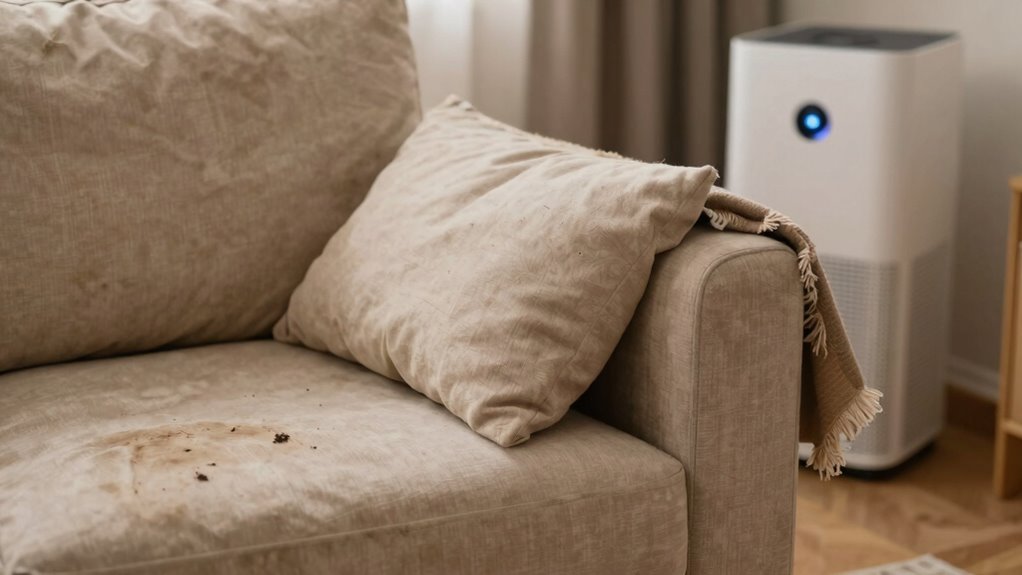
Have you ever noticed a lingering pet odor that just won’t disappear? It’s frustrating, especially when you’ve already tried running your air purifier nonstop. You might assume that the air purifier effectiveness alone will handle stubborn smells, but unfortunately, that’s not always the case. Many air purifiers focus on filtering out airborne particles like pet dander and dust, but odors are a different challenge. They require specific odor absorption methods to truly make a difference. Simply relying on a standard filter often leaves you with the same persistent smell, making you wonder if there’s a better approach.
Pet odors often persist despite air purifiers; odor absorption methods are essential for real elimination.
Air purifier effectiveness varies widely depending on the type of filter used. HEPA filters are excellent at capturing allergens and microscopic particles, but they don’t do much to neutralize odors. To combat pet smells effectively, you need a purifier equipped with activated carbon filters or other odor-absorbing materials. These filters work by trapping gas molecules and chemical compounds responsible for smells, preventing them from circulating in your home. When you combine a high-quality air purifier with specialized odor absorption methods, you’re more likely to notice a real improvement in the air quality. Understanding the air purifier effectiveness of different models can help you select the most suitable one for your needs.
Odor absorption methods are key to solving the pet smell problem. Activated carbon is one of the most common materials used because of its porous structure, which provides a large surface area for trapping odor molecules. Some air purifiers also incorporate other substances like zeolite, baking soda, or proprietary odor-neutralizing compounds. These elements work behind the scenes, absorbing and neutralizing odors rather than just masking them. It’s important to understand that while air purifiers can considerably reduce pet smells, they aren’t magic. Proper cleaning routines, like washing pet bedding and vacuuming regularly, must go hand-in-hand with air filtration to truly eliminate odors. Additionally, understanding beyond filtration methods can lead to more comprehensive odor control strategies. Regular maintenance, such as replacing filters when needed, ensures that the filter performance remains optimal over time. Incorporating additional odor-neutralizing techniques can further enhance odor elimination efforts and provide a fresher environment.
Furthermore, choosing an air purifier with specific odor-neutralizing features can enhance your chances of success. If you’re serious about tackling pet smells, look for devices that combine high air purifier effectiveness with advanced odor absorption methods. Regularly replacing filters and maintaining your purifier ensures it continues to perform at peak efficiency. Remember, the goal isn’t just to trap particles but to actively neutralize the smells at their source. When you understand the difference between filtering out particles and absorbing odors, you can choose the right tools and techniques to finally get rid of that lingering pet odor once and for all.
Products Worth Considering

Levoit Vital 100S-P Air Purifier with Washable Pre-Filter

Levoit Air Purifier for Home, Pets, Bedroom – Smart Wi‑Fi for Large Rooms

Levoit Core 600S-P Smart Air Purifier for Large Rooms up to 2933 ft²
As an affiliate, we earn on qualifying purchases.
Frequently Asked Questions
Can Air Filters Remove All Pet Odors Completely?
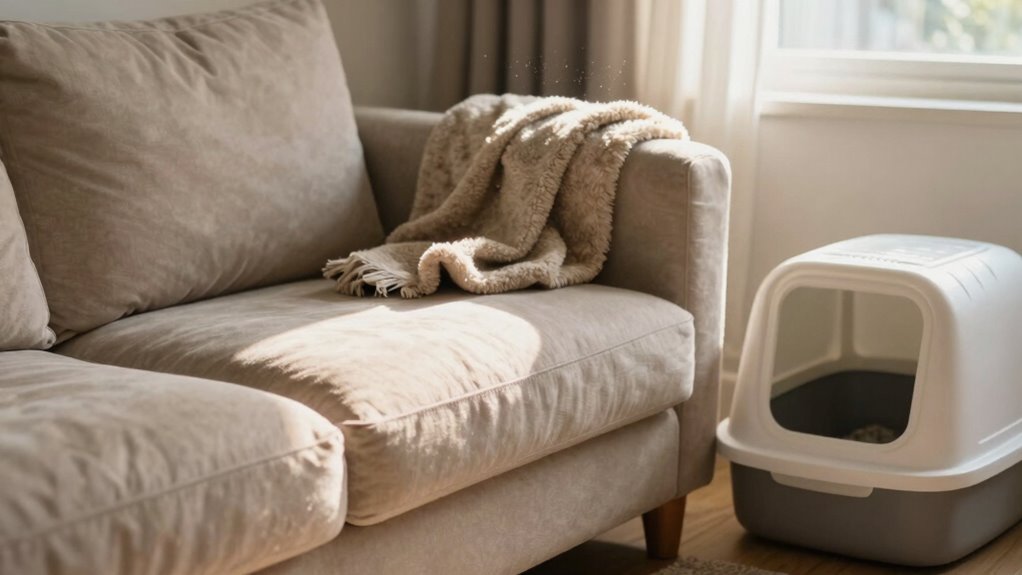
Air filters can’t completely eliminate all pet odors because odor sources like litter boxes, bedding, and furniture continually release smells. While high-quality filters improve air quality by trapping particles and reducing strong odors, they often need to be combined with other methods like regular cleaning, ventilation, and odor-neutralizing products. So, you should see a significant reduction in pet odors, but complete removal might require an all-encompassing approach.
How Often Should Filters Be Replaced for Odor Control?
You should replace your filters every 1 to 3 months for ideal odor absorption and filter maintenance. Regular replacement prevents buildup of pet odors and airborne particles, ensuring your air stays fresh. If you notice a persistent smell or reduced filter effectiveness, change it sooner. Consistent filter changes are essential for controlling odors, especially in homes with pets, to maintain a clean, odor-free environment.
Are There Specific Filters Designed for Pet Odor Elimination?
Yes, there are filters specifically designed for pet odor elimination. These filters use advanced filter technology, like activated carbon or charcoal, to improve air quality by trapping odors more effectively. When choosing a filter, look for one labeled for pet odors or containing activated carbon layers. Regularly replacing these filters guarantees peak performance, helping to reduce persistent pet smells and maintain a fresher indoor environment.
Do Air Purifiers Work Better Than Filters Alone?
Think of an air purifier as a vigilant guardian, actively battling pet odors with superior efficiency. While filters play a vital role, air purifiers enhance this by continuously circulating and filtering air, making them more effective. To keep their guard strong, you need regular filter maintenance. This combo ensures better air quality, tackling stubborn pet smells more reliably than filters alone. With consistent care, your space stays fresher longer.
Can Certain Pets Cause More Persistent Odors Than Others?
Certain pets, like cats and dogs, can cause more persistent odors due to their unique pet scent and odor buildup. Dogs, especially those with long fur or those that spend a lot of time outdoors, tend to produce stronger, more lingering smells. Cats may also contribute, but their odor buildup is often less intense. Regular cleaning and targeted odor control measures are essential to keep your space fresh and odor-free.
Conclusion
You see a room freshly aired, yet the lingering pet odor whispers beneath the surface, stubborn and unseen. Filters may clear the air temporarily, but without addressing the source, the problem persists—like trying to hide a stain with a fresh coat of paint. To truly reclaim your space, you need more than filters; you need to tackle the root. Only then can you enjoy a fresh, inviting home, free from the silent weight of pet odors.