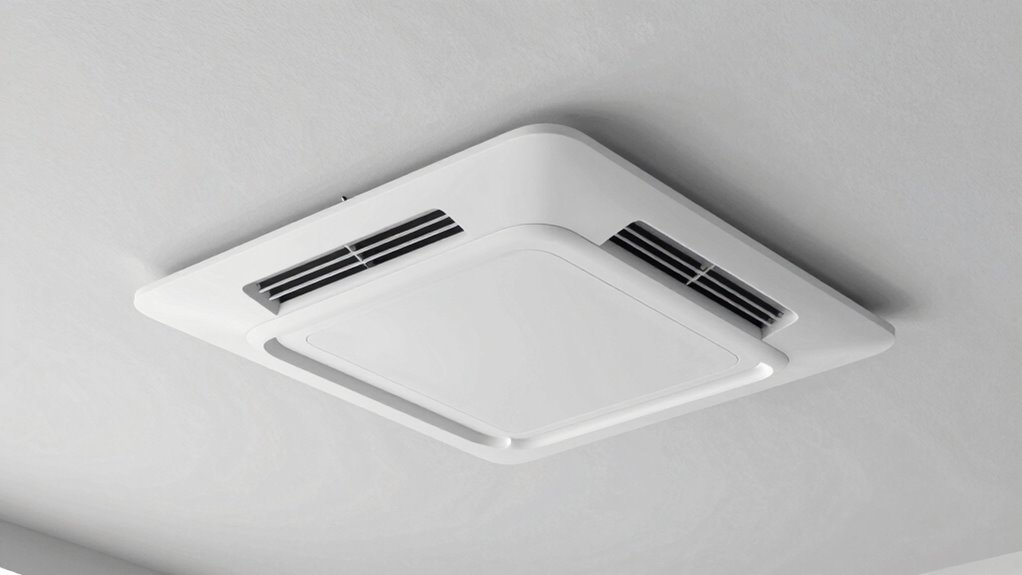

Choosing between a ceiling cassette and a wall mount depends on your space, aesthetic preferences, and cooling needs. Ceiling cassettes work best for larger, open rooms with higher ceilings, offering even air distribution and a sleek look. Wall mounts are simpler to install, suitable for smaller spaces, and easier to access for maintenance. Both systems have advantages, but understanding your specific setup will help you make the right choice—if you want to explore further, keep going.
Key Takeaways
- Ceiling cassettes offer better air distribution and aesthetic concealment, ideal for larger or open spaces.
- Wall mounts are easier and cheaper to install, suitable for smaller rooms or spaces with limited ceiling access.
- Ceiling cassettes provide more flexibility for interior reconfiguration, while wall mounts are simpler to adjust or replace.
- Energy efficiency depends on system quality and maintenance; both options can be effective with proper upkeep.
- Choice depends on room size, ceiling height, aesthetic preferences, and installation feasibility rather than a one-size-fits-all solution.
What Are Ceiling Cassettes and Wall Mount Air Conditioners?
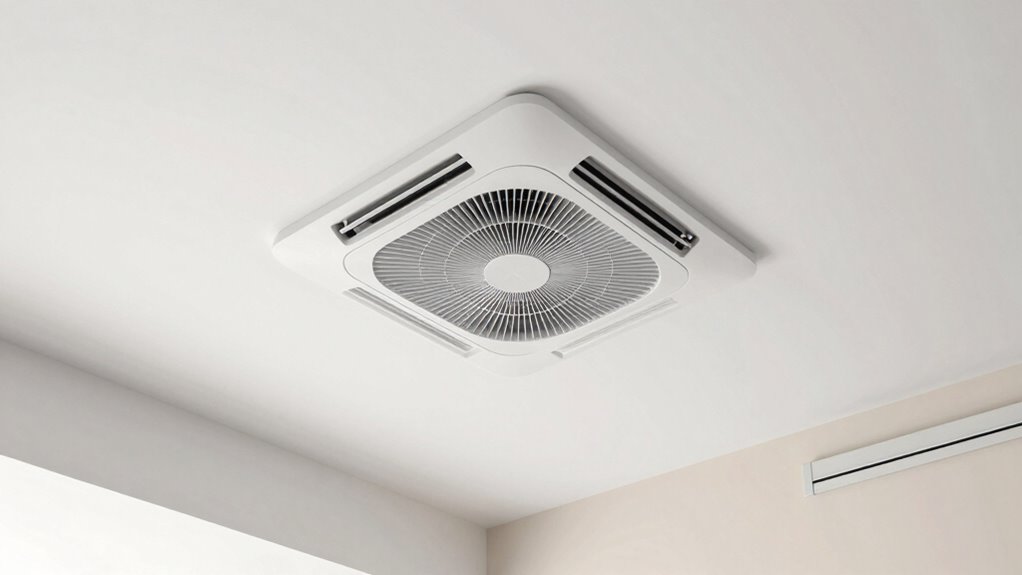
Have you ever wondered how ceiling cassettes and wall mount air conditioners differ in design and functionality? The historical evolution of these units shows how market trends have shaped their development. Wall mounts, once the go-to choice, became popular for their simplicity and space-saving design. Ceiling cassettes, however, emerged as a sophisticated alternative, offering better air distribution and aesthetics. Over time, market trends have shifted toward energy efficiency and sleek integrations, making ceiling cassettes more appealing for commercial spaces. Additionally, the air distribution capabilities of ceiling cassettes exemplify how technological advancements have enhanced their functionality and appeal. Furthermore, the market trends towards energy-efficient solutions have further propelled the adoption of ceiling cassette units in various settings. Understanding this evolution helps you appreciate the unique strengths each type offers based on their design history and how market demands continue to influence choices.
How Do Design and Installation Differ?
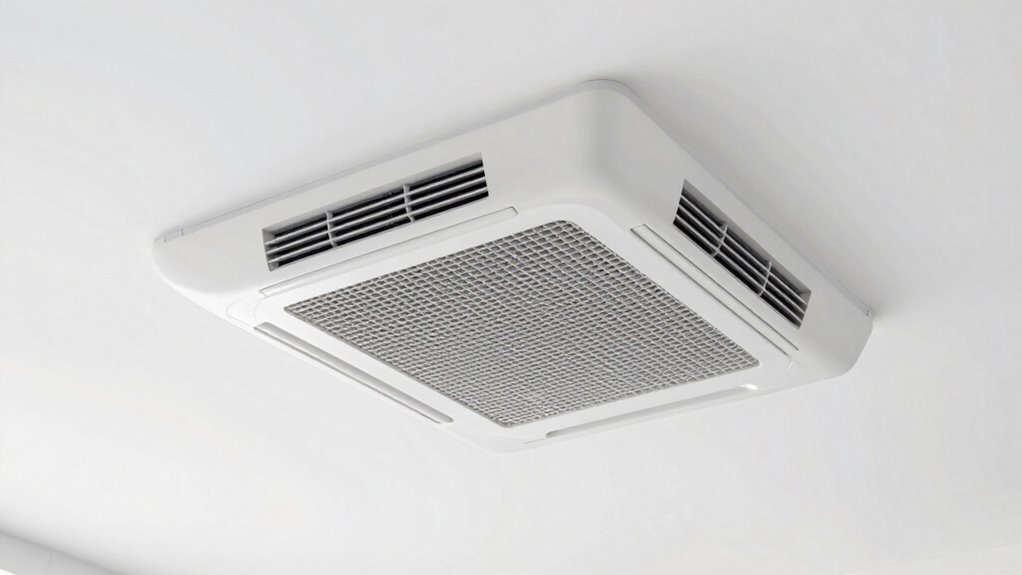
Wondering how the design and installation processes for ceiling cassettes and wall mount air conditioners differ? Ceiling cassettes typically require a drop ceiling or a reinforced ceiling space, which influences decorative options and how seamlessly they blend into your room’s aesthetics. Installation involves precise ceiling cutting and reinforcement, often needing professional help. Wall mounts are simpler; they attach directly to the wall, making for easier installation but limiting decorative choices. Maintenance requirements also differ: ceiling cassettes might need more frequent cleaning of the unit’s interior and filters, while wall mounts are generally more accessible for routine upkeep. Overall, ceiling cassettes offer a sleek, integrated look but demand more complex installation, whereas wall mounts are more straightforward but less versatile in decor. Additionally, understanding the installation requirements can help determine which option best fits your space and technical capabilities.
Which Room Layouts Work Best for Ceiling Cassettes?
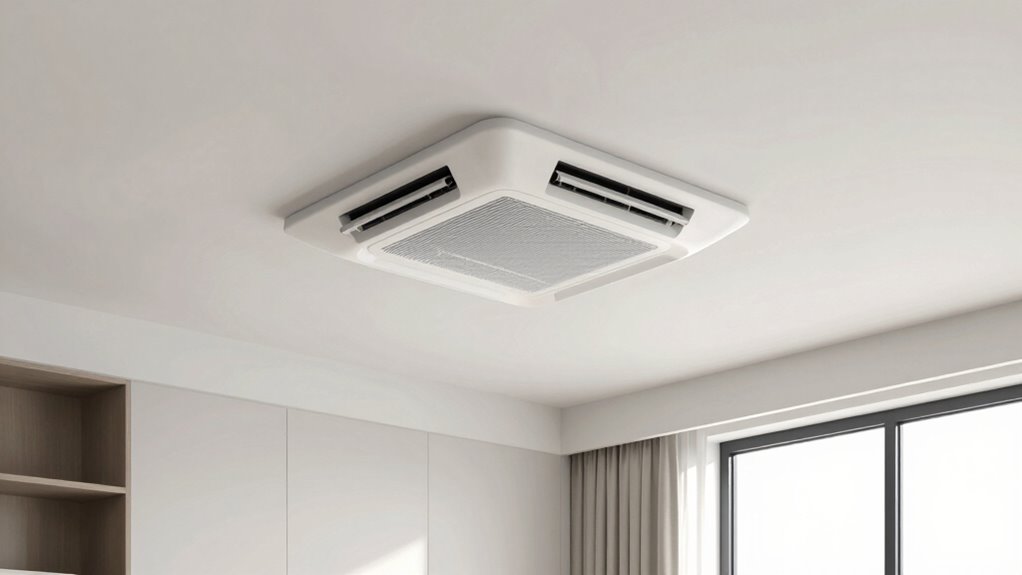
You’ll get the best results with ceiling cassettes in rooms that are of moderate size and have high ceilings. Larger spaces may require multiple units for even cooling, while lower ceilings can make installation tricky. Keep these factors in mind to guarantee your system works efficiently and comfortably. Additionally, selecting the right performance parts can enhance the overall efficiency and cooling capacity of your setup. Proper installation techniques are also essential to ensure optimal airflow and system longevity. Considering room layout can help you determine the most effective placement for your cassette units. Understanding airflow dynamics can further improve the system’s performance by promoting even cooling throughout the space.
Optimal Room Sizes
Ceiling cassette units are most effective in medium to large rooms with open layouts, typically ranging from 150 to 400 square feet. These spaces allow the unit to distribute air evenly without disrupting the interior decor. Larger rooms provide enough space for the airflow to circulate smoothly, keeping noise levels low and comfort high. To optimize performance, consider:
- Open floor plans that prevent airflow obstructions
- Rooms with high ceilings for better air distribution
- Spaces where aesthetics blend seamlessly with the cassette design
These factors help guarantee your ceiling cassette integrates seamlessly into your decor while maintaining quiet operation. Smaller or cluttered rooms may not benefit as much, as airflow could be restricted, leading to uneven cooling and increased noise.
Ceiling Height Considerations
What ceiling height works best for ceiling cassette units? Generally, ceilings between 8 and 10 feet are ideal. Higher ceilings can improve ceiling aesthetics, allowing the cassette to blend seamlessly into the space without feeling intrusive. However, very high ceilings may reduce the unit’s efficiency and make it harder to maintain wall accessibility. If ceilings are too low, the cassette might look cramped and disrupt the room’s visual balance. Proper height ensures even air distribution and maintains a clean, uncluttered look. Additionally, understanding consumer preferences can help tailor the choice to suit specific lifestyle needs and ethical considerations. It’s also important to stay updated on building codes and regulations, which can influence the feasible installation options for ceiling cassettes. Being aware of modern family expectations can help in designing spaces that accommodate everyone’s comfort and aesthetic preferences. Balancing these factors ensures maximum performance and visual harmony.
What Are the Aesthetic Considerations?
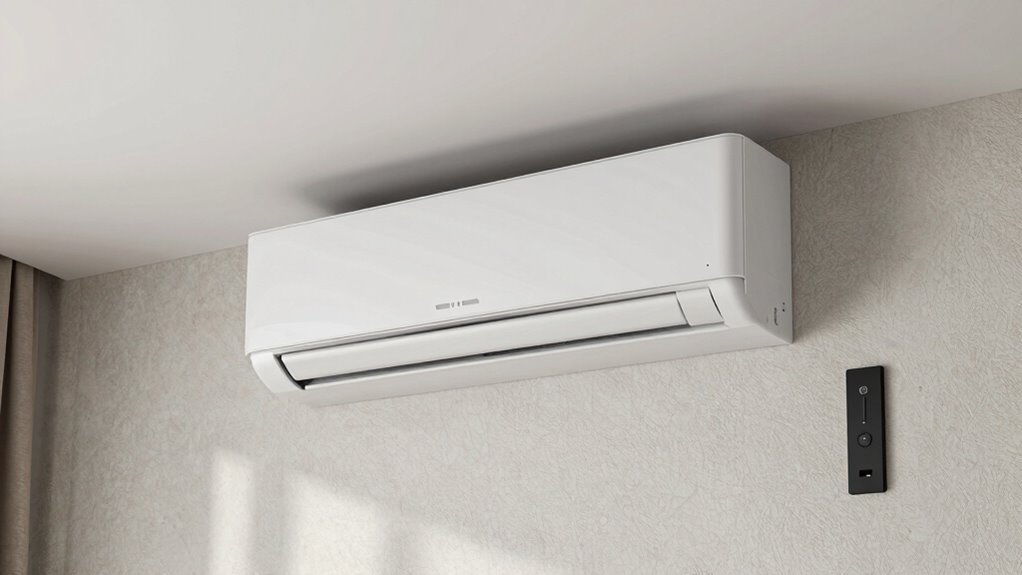
When deciding between a ceiling cassette or a wall-mounted unit, considering their aesthetic impact is essential. Your choice influences how seamlessly the unit blends into your space. Think about *color options*—neutral shades like white or beige tend to blend in, while bold colors can make a statement. Material finishes also matter: sleek, matte surfaces look modern, while glossy finishes add a touch of sophistication. Additionally, understanding the capacity of the unit ensures it fits both your aesthetic and functional needs. You should also consider how the unit complements your decor style, whether minimalistic or ornate. The size and placement can either enhance or detract from your room’s overall aesthetic. Ultimately, selecting a unit that aligns with your visual preferences ensures your space looks cohesive and stylish.
How Do Cooling Performance and Air Distribution Compare?
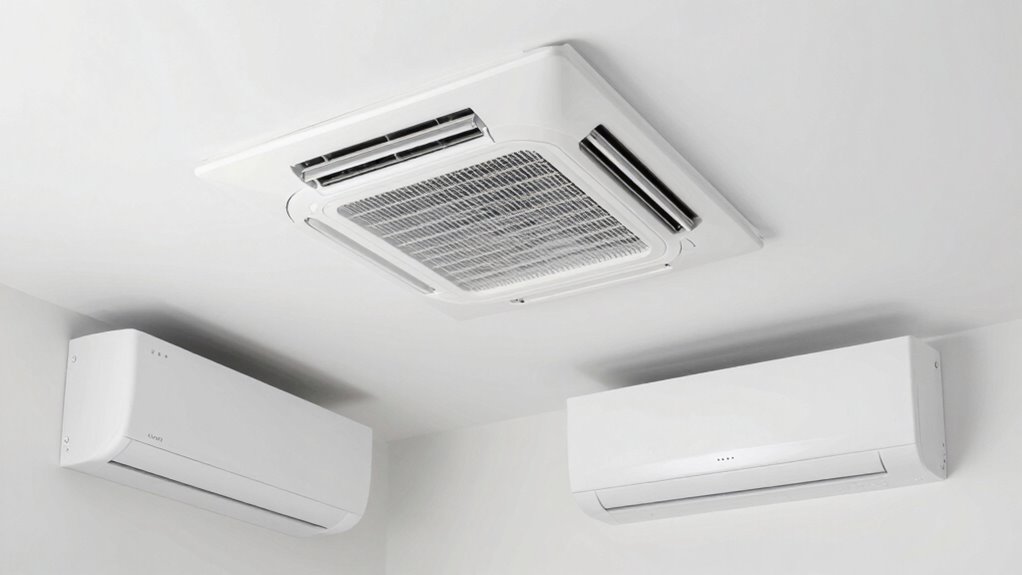
You’ll notice that ceiling cassettes and wall mounts distribute air differently, affecting airflow patterns and reach. Cooling efficiency can vary based on placement and design, impacting how well each system maintains temperature. Understanding these differences helps you choose the option that provides more consistent comfort throughout your space. Additionally, proper gear care can enhance the longevity and performance of your cooling system. Regular system maintenance also plays a crucial role in ensuring optimal airflow and energy efficiency over time. Recognizing the airflow patterns of each system can assist in optimizing placement for better home comfort. Being aware of air distribution techniques can further improve overall cooling effectiveness.
Airflow Patterns and Reach
Understanding how airflow patterns differ between ceiling cassettes and wall-mounted units is vital to evaluating their cooling performance and air distribution. Ceiling cassettes distribute air in four directions, creating a more uniform and wider reach across the room, ideal for larger spaces. Wall mounts direct airflow downward, focusing cooling on specific zones, which can limit overall reach. Additionally, airflow patterns influence how effectively a space is cooled and how evenly the temperature is maintained.
- Ceiling cassettes offer better air circulation for even cooling.
- Wall-mounted units provide targeted airflow, suitable for smaller or segmented areas.
- Smart controls enhance airflow management, regardless of placement, while maintenance requirements vary—cassettes may need more frequent cleaning due to their placement.
Choosing between them depends on your room layout and desired air coverage, with airflow patterns playing an essential role in overall comfort.
Cooling Efficiency Variations
The way airflow is distributed directly impacts a unit’s cooling efficiency. Ceiling cassettes often provide even air distribution, reducing hot spots, but may require more maintenance due to their concealed location. Wall mounts are easier to access, simplifying cleaning and filter changes, but might not circulate air as evenly. Decorative options influence the aesthetic appeal; cassettes tend to blend seamlessly into ceilings, while wall mounts are more visible. Here’s a quick comparison:
| Feature | Ceiling Cassette | Wall Mount |
|---|---|---|
| Cooling Performance | Uniform, efficient | Less even, localized |
| Air Distribution | 360-degree coverage | Limited reach |
| Maintenance Requirements | Higher, concealed unit | Lower, accessible |
| Decorative Options | Seamless, integrated | Visible, customizable |
| Installation Complexity | More involved | Simpler |
Understanding airflow distribution can help you select the best option for your space. Additionally, considering maintenance requirements ensures the system remains effective over time, especially since concealed units often demand more effort to service.
Temperature Consistency Levels
While both ceiling cassettes and wall mounts aim to maintain a comfortable temperature, their ability to deliver consistent cooling varies considerably due to differences in air distribution. Ceiling cassettes typically provide more uniform airflow, reducing hot or cold spots, but may generate higher noise levels during operation. Wall mounts often focus airflow in one direction, which can lead to uneven temperature distribution if not properly adjusted. Additionally, their maintenance routines differ: ceiling cassettes require regular filter cleaning and duct checks, while wall units need accessible filters and occasional inspections. To enjoy consistent comfort, consider:
- Ceiling cassettes for even air distribution despite potential noise
- Wall mounts for quieter operation, but with possible temperature variation
- Regular maintenance routines to optimize performance and reliability
What Are the Costs of Installation and Operation?

Installing a ceiling cassette or wall mount unit involves different costs that can substantially impact your budget. The initial installation expenses vary due to factors like ductwork, labor, and system complexity. Ceiling cassettes often cost more upfront because of additional ceiling modifications, but they can be more efficient long-term. Operation costs depend on energy efficiency and maintenance needs. Regular maintenance, such as filter cleaning, is essential to ensure optimal performance and longevity of the units.
| System Type | Installation Cost | Maintenance Requirements |
|---|---|---|
| Ceiling Cassette | Higher | Regular filter cleaning, occasional component checks |
| Wall Mount | Lower | Easier access, simpler upkeep |
When comparing costs, consider both the initial investment and ongoing maintenance. This cost comparison helps you choose a system that fits your budget and operational needs.
How Flexible Are These Systems for Future Changes?
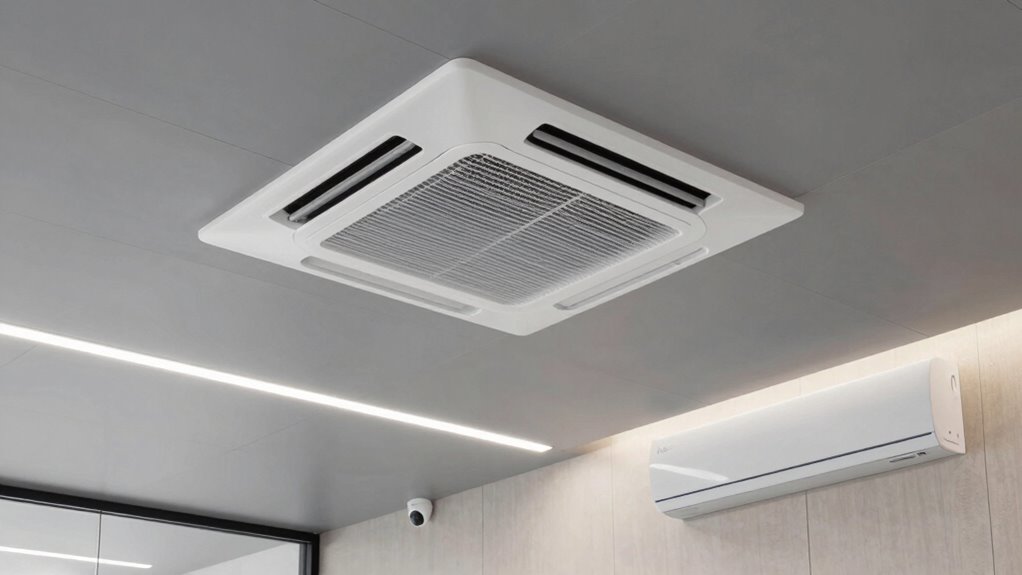
Choosing between ceiling cassette and wall mount systems involves considering not just current needs but also how adaptable they are to future changes. You’ll want systems that can easily integrate with evolving interior decor and accommodate potential layout shifts. Ceiling cassettes often offer more flexibility for reconfiguration since they’re hidden within the ceiling, reducing visual clutter. Wall mounts are usually straightforward to adjust or replace but might limit options if your interior decor changes greatly. Consider maintenance requirements too; systems that are easier to access can be more adaptable over time. Additionally, evaluating the filter sizing/flow capabilities can help ensure that your system remains efficient as your household’s water demand evolves. Both require regular maintenance to ensure continued flexibility and performance. When selecting a system, it’s also essential to consider the installation process, as some configurations may be more complex and impact future modifications. Understanding the system compatibility with existing infrastructure can further enhance your ability to adapt in the future.
When Should You Prioritize Energy Efficiency?

You should prioritize energy efficiency when reducing long-term operating costs or minimizing your environmental impact. Smart technology can optimize system performance, saving energy and lowering bills. Pay attention to noise levels, especially in quiet spaces like bedrooms or offices, where loud units can be disruptive. Consider the following:
| When to Prioritize Energy Efficiency | Benefits | Key Features |
|---|---|---|
| In energy-conscious buildings | Lower bills, eco-friendly | Smart controls, high SEER ratings |
| Quiet environments | Comfort, minimal disturbance | Noise-reducing design |
| Long-term investments | Cost savings over time | Durable, energy-efficient components |
Being aware of environmental impact of tissue paper can help inform choices that support sustainability in your overall lifestyle. Choosing energy-efficient systems now can lead to significant savings and a smaller carbon footprint later.
Which System Suits Your Specific Cooling Needs?
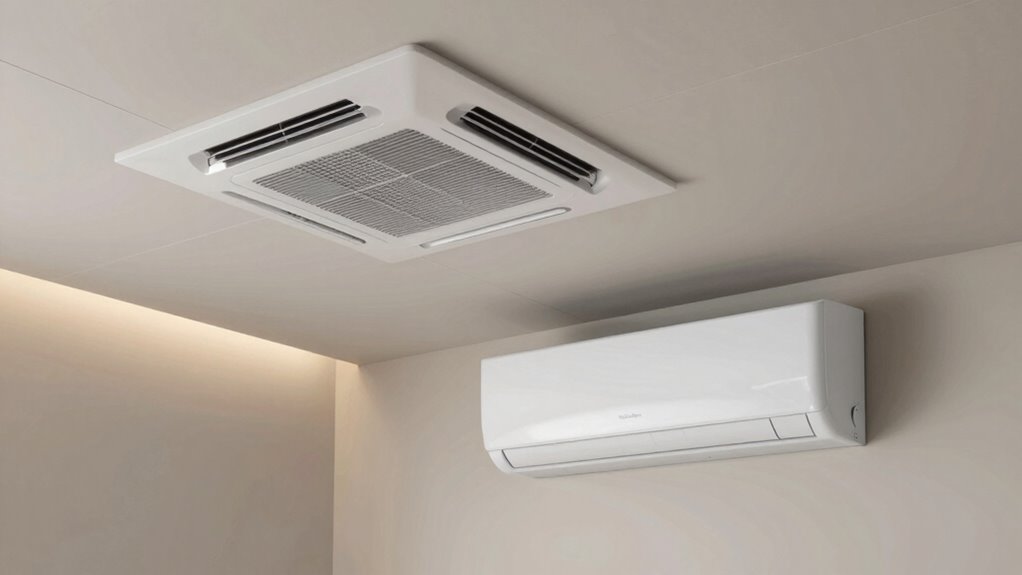
Selecting the right cooling system depends on your specific needs, space, and lifestyle. Consider what matters most to you, such as decorative options and maintenance requirements. Ceiling cassettes offer a sleek, unobtrusive look that blends into ceilings, ideal for modern spaces. Wall mounts are more accessible and easier to maintain, perfect for quick access and simpler upkeep. If you prefer a discreet aesthetic, cassettes provide a seamless appearance, while wall mounts can be customized for style. Think about your routine: do you want minimal upkeep or easy access for adjustments? Also, evaluate your space size and layout to guarantee the system fits comfortably. Ultimately, choosing the right system aligns with your design preferences and practical needs.
Frequently Asked Questions
Can Ceiling Cassettes and Wall Mounts Be Used Together in One Space?
Yes, you can use ceiling cassettes and wall mounts together in one space. Doing so can improve energy efficiency by ensuring even cooling or heating throughout the area. Keep in mind, the cost comparison varies, as ceiling cassettes often cost more upfront but save energy long-term, while wall mounts are usually cheaper initially. Combining both allows for tailored comfort, but consult an HVAC expert to optimize performance and budget.
How Do Maintenance Requirements Differ Between the Two Systems?
Did you know that ceiling cassettes typically require 20% less maintenance than wall mounts? You’ll find ceiling cassettes often have easier access for cleaning filters and components, boosting energy efficiency. Wall mounts might need more frequent service due to dirt accumulation on exposed parts. When comparing costs, consider that ceiling units usually have a higher initial investment but lower long-term maintenance costs, making them more economical over time.
Are There Specific Building Codes Affecting Installation Choices?
Building codes and installation regulations greatly influence your choice between ceiling cassette and wall mount units. You need to guarantee your installation complies with local codes, which may specify clearances, mounting heights, or venting requirements. Check with your local authorities or a licensed installer to confirm that your chosen system meets all building code standards, ensuring safety and legal compliance for your space.
Which System Offers Better Noise Levels for Quiet Environments?
You’ll find that ceiling cassettes often offer superior noise mitigation and sound insulation, making them ideal for quiet environments. Their design helps distribute sound more evenly, reducing echo and background noise considerably—almost like turning down the volume on a chaotic world. Wall mounts, while effective, usually produce slightly more noise due to vibrations and less ideal sound insulation. For tranquility, ceiling cassettes are your best bet.
How Do These Systems Impact Room Ceiling or Wall Aesthetics?
Ceiling cassettes tend to blend seamlessly with your interior design, maintaining visual harmony by staying flush with the ceiling, which keeps walls uncluttered. Wall mounts, however, can interrupt wall decor or artwork, impacting overall aesthetics. Your choice affects room aesthetics—cassettes offer a cleaner look, ideal for maintaining a sleek, modern style, while wall mounts might suit spaces where wall decor is a priority.
Conclusion
Choosing between a ceiling cassette and a wall mount isn’t just about technical specs—it’s about fitting your space and lifestyle. Sometimes, the perfect solution reveals itself when you realize how seamlessly a system can enhance comfort and style. Trust that your decision aligns with your needs, creating a cooler, more comfortable home where every detail feels just right. After all, it’s in those small moments of comfort that life truly feels complete.