
To select a smart thermostat that works well with wireless sensors, focus on models that support multiple sensors for better zone control and energy savings. Make certain the interface is simple to navigate and offers remote access via a mobile app. Check compatibility with your home’s size and layout to ensure proper coverage. Also, look for helpful features like energy reports and customization options. Keep exploring to discover more tips for choosing the perfect thermostat for your needs.
Key Takeaways
- Verify thermostat compatibility with multiple wireless sensors for comprehensive zone control.
- Ensure an intuitive user interface for easy setup, sensor monitoring, and daily adjustments.
- Confirm remote access capabilities via mobile apps for convenient control from anywhere.
- Consider the size and layout of your home to select a thermostat supporting appropriate sensor quantities.
- Look for additional features like energy reports and customizable scheduling to maximize efficiency and comfort.
Choosing a smart thermostat can substantially improve your home’s comfort and energy efficiency. When you’re exploring your options, one of the key factors to contemplate is how well the device supports wireless sensors. These sensors help you monitor different areas of your home, allowing you to optimize temperature control throughout. The right smart thermostat will seamlessly integrate wireless sensors to deliver precise heating and cooling, which leads to significant energy savings. But beyond functionality, you also want a user interface that’s intuitive and easy to navigate. A clear, straightforward interface makes it simple to set schedules, check sensor data, and adjust settings without frustration, guaranteeing you get the most out of your investment.
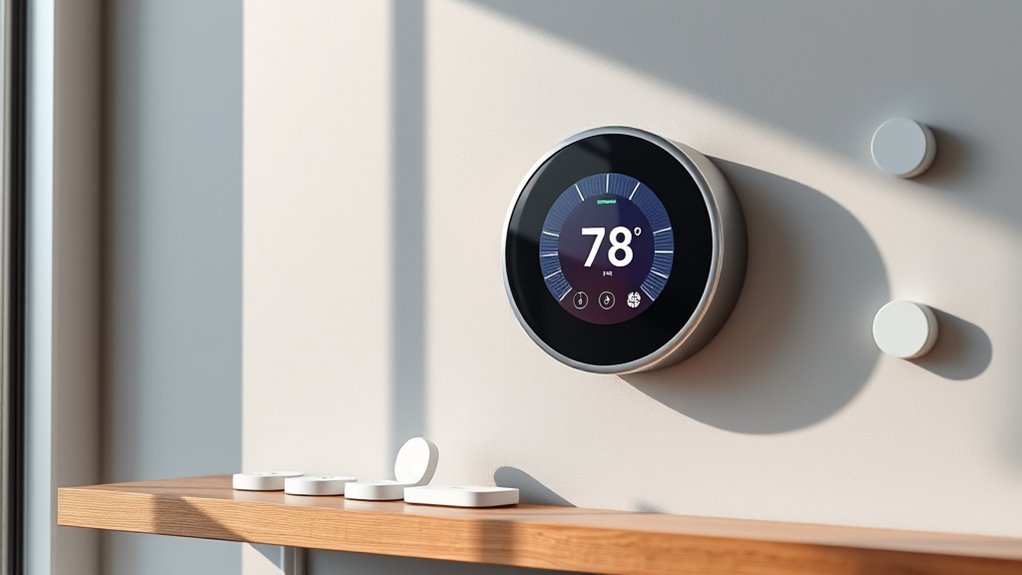
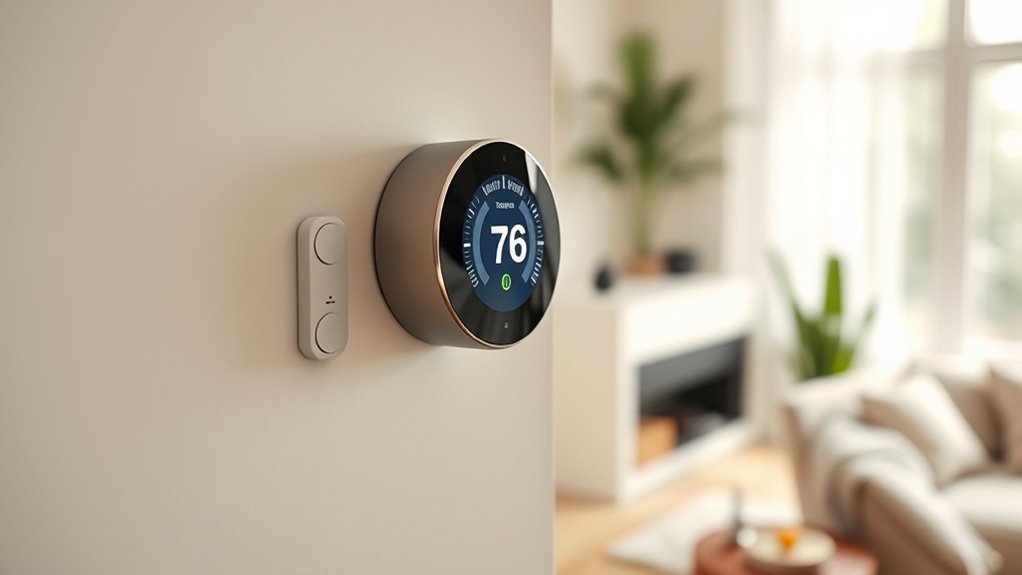
A smart thermostat with wireless sensors and an intuitive interface enhances comfort and energy savings.
As you compare different models, pay close attention to the compatibility of wireless sensors. Some thermostats support a limited number of sensors, while others allow multiple units to be placed in various rooms or zones. This flexibility can be a game-changer, especially if you have a large or multi-story home. The more sensors you can add, the better you’ll be able to fine-tune your climate control, which directly impacts your energy savings by reducing unnecessary heating or cooling in unoccupied spaces. Additionally, look for thermostats that automatically detect and incorporate data from these sensors, adjusting your HVAC system intelligently based on real-time conditions. Understanding the role of wireless sensors in energy management can help you make an informed decision.
Another vital aspect is the user interface itself. A good smart thermostat should offer a clean, user-friendly experience, whether you’re controlling it via a smartphone app, a touchscreen display, or voice commands. You want to be able to easily see sensor readings, set or modify temperature schedules, and access energy reports. An overly complicated interface can lead to frustration and discourage regular use, which undermines the potential for energy savings. Many thermostats now feature customizable dashboards, allowing you to prioritize the information most relevant to you, and some even include tutorial guides or customer support features to help you get started.
In addition to ease of use, consider whether the thermostat’s app offers remote access. Being able to adjust your thermostat from anywhere gives you added convenience and helps you respond quickly to changing plans or weather conditions. This remote capability, combined with wireless sensors that provide granular data, ensures you’re always in control, maximizing comfort while minimizing wasted energy. Ultimately, selecting a smart thermostat with robust wireless sensor support and an intuitive user interface empowers you to optimize your home’s climate efficiently, saving money and enhancing your overall comfort.

Sensi Lite Smart Thermostat, WiFi, Alexa, DIY, Energy Star Certified, ST25
- Easy DIY Installation: Built-in level and step-by-step instructions
- Compatible with Most Systems: Requires common wire for heat pump systems
- Energy Savings: Save approximately 23% on HVAC energy
As an affiliate, we earn on qualifying purchases.
As an affiliate, we earn on qualifying purchases.
Frequently Asked Questions
Can Smart Thermostats Integrate With Existing Home Automation Systems?
Smart thermostats often integrate seamlessly with existing home automation systems, allowing you to control them via voice control or apps. However, you should verify compatibility issues beforehand, as some models may not work with your system. Look for thermostats that support popular platforms like Alexa, Google Assistant, or Apple HomeKit to ensure smooth integration, making your smart home more efficient and convenient.
What Are the Energy Savings Potential Differences Among Models?
Imagine walking into a room where your smart thermostat adjusts effortlessly—that’s the power of energy efficiency. Different models offer varying potential for cost savings, depending on their features and sensors. You might notice significant savings with advanced, learning thermostats that optimize your energy use, while simpler models provide basic efficiency. By choosing the right one, you maximize your energy efficiency and enjoy long-term cost savings, making your home smarter and more economical.
How Secure Are Wireless Sensors From Hacking or Data Breaches?
Wireless sensors generally have strong security measures, but you should stay cautious. They use wireless encryption to protect data in transit, reducing the risk of hacking. However, vulnerabilities can still exist if default passwords aren’t changed or firmware isn’t updated regularly. To guarantee data privacy, choose models with robust security protocols, and always keep your device’s software current. This way, you minimize potential hacking threats and safeguard your personal information.
Do Smart Thermostats Require Professional Installation or Can I Do It Myself?
You can definitely do a DIY installation of a smart thermostat if you’re comfortable with basic wiring and follow the instructions carefully. Many models come with step-by-step guides, making setup straightforward. However, if you’re unsure about electrical work or want to ensure peak performance, opting for professional setup is a smart choice. It guarantees correct installation, compatibility, and peace of mind, especially for complex systems.
How Do Smart Thermostats Handle Multiple Zones or Rooms?
Think of your home as a symphony, with each room playing its own tune. Smart thermostats master zoning strategies by dividing your space into zones, allowing you to control temperatures individually. Proper sensor placement is key—place sensors in each zone to capture accurate readings. This setup ensures ideal comfort and efficiency, letting your smart thermostat harmonize your home’s climate effortlessly across multiple rooms.

Amazon Smart Thermostat – Save money and energy – Works with Alexa and Ring – C-wire required
- Smart Alexa Thermostat: Easy upgrade from traditional thermostats
- Automated Comfort Zones: Adjusts heating and cooling automatically
- Energy and Cost Savings: Includes rebate information from energy providers
As an affiliate, we earn on qualifying purchases.
As an affiliate, we earn on qualifying purchases.
Conclusion
Choosing the right smart thermostat is like finding the perfect puzzle piece; it fits seamlessly into your home’s rhythm. By considering compatibility, features, and your budget, you’ll create a smarter, more efficient living space. Trust your instincts and don’t rush the decision. With the right choice, you’ll enjoy comfort and savings—making your home feel like a cozy haven. Remember, the perfect thermostat is just a few clicks away, waiting to turn your house into a smarter home.

Sensi Smart Thermostat, Wi-Fi, DIY, Alexa, Energy Star Certified, ST55
- Privacy Protected: Won’t sell your personal data
- Easy DIY Installation: Includes level and step-by-step app guide
- Universal Compatibility: Works with most HVAC systems without c-wire
As an affiliate, we earn on qualifying purchases.
As an affiliate, we earn on qualifying purchases.

ecobee Smart Thermostat Essential – WiFi Thermostat, Energy Star Certified
- Energy Savings: Save up to 23% annually on energy costs
- System Compatibility: Compatible with 85% of HVAC systems
- Easy Temperature Control: Adjust temperature via touchscreen or app
As an affiliate, we earn on qualifying purchases.
As an affiliate, we earn on qualifying purchases.