
When choosing the right climate control setup for your finished attic, start by focusing on insulation, ventilation, and humidity management. Use fiberglass batts or spray foam insulation to keep temperatures consistent. Make sure your attic’s airflow is balanced with ridge and soffit vents to prevent moisture buildup. Don’t forget about humidity control with dehumidifiers for comfort. A tailored approach based on your attic’s unique characteristics enhances year-round enjoyment. Discover more tips to optimize your attic space further.
Key Takeaways
- Assess your attic’s size and layout to determine the appropriate insulation type, such as fiberglass batts or spray foam.
- Install a balanced ventilation system with ridge and soffit vents to maintain optimal airflow and prevent moisture buildup.
- Implement humidity control measures, like dehumidifiers, to keep moisture levels in check and protect against mold.
- Analyze R-value to select insulation that suits your local climate for enhanced energy efficiency throughout the year.
- Invest in a customized climate control setup to ensure year-round comfort and reduce energy costs over time.
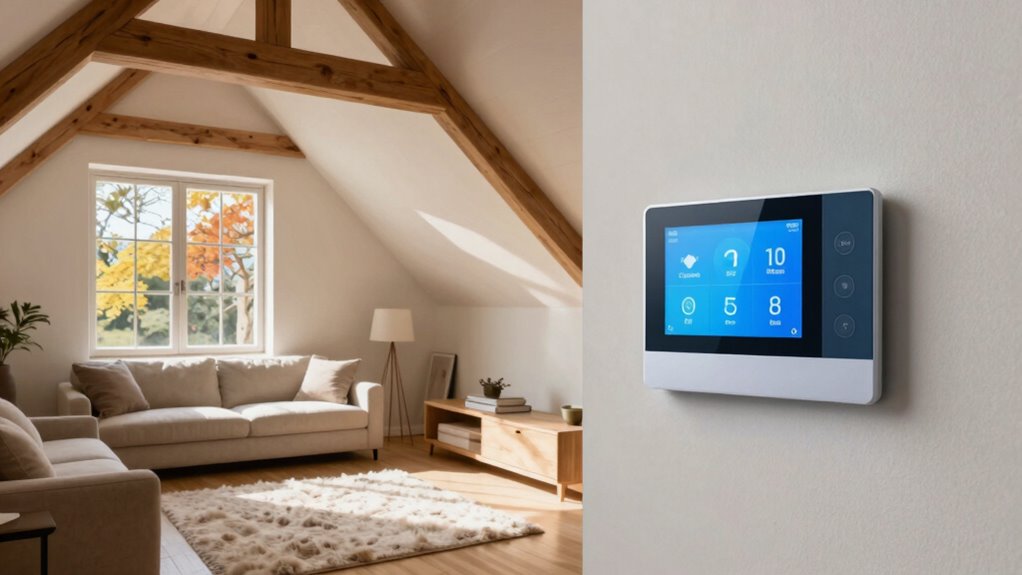
When deciding on climate control for your attic, understanding your specific needs is crucial. A finished attic can be a cozy retreat, but without the right climate control, it can quickly turn into an uncomfortable space. Start by evaluating your insulation options. Proper insulation is key to maintaining consistent temperatures and enhancing energy efficiency. You might consider fiberglass batts or spray foam insulation, both of which can help minimize heat loss in winter and keep the space cooler in summer. Analyzing the R-value of your insulation will guide you in choosing the best option for your local climate.
Next, think about ventilation systems. Effective ventilation guarantees that your attic isn’t just insulated but also has a way to breathe. Without adequate airflow, you risk trapping heat and moisture, which can lead to mold growth and structural damage. You’ll want to look into ridge vents, soffit vents, or even powered attic ventilators, depending on the layout of your space. Balancing intake and exhaust vents will help maintain ideal airflow, keeping your attic comfortable year-round. Proper ventilation also helps to control moisture levels, preventing issues related to humidity. In addition, incorporating adequate airflow can significantly improve the overall effectiveness of your climate control setup. Maintaining good air circulation is essential for preventing moisture buildup and ensuring your ventilation system works efficiently.
Effective ventilation ensures your attic breathes, preventing heat and moisture buildup that can lead to mold and structural damage.
Humidity control also plays a crucial role in climate control. High humidity can make your attic feel sticky and uncomfortable, while low humidity can lead to dry air that’s equally unpleasant. Consider using a dehumidifier to manage moisture levels, especially in warmer months. This can help prevent mold and mildew, protecting both the space and your belongings. Some HVAC systems can also incorporate humidity control features, so explore those options if you’re investing in a new system. Additionally, proper insulation and ventilation work together to optimize energy efficiency and indoor comfort.
Incorporating humidity control measures can further enhance your climate regulation by balancing moisture levels effectively. Combining insulation, ventilation, and humidity control not only enhances your comfort but also improves energy efficiency. A well-insulated and ventilated attic reduces the strain on your heating and cooling systems, leading to lower energy bills. You’ll likely find that the upfront investment in these systems pays off in the long run.
Take the time to evaluate your attic’s unique characteristics—its size, layout, and the climate in your area. By considering insulation options, ventilation systems, and humidity control, you can create a climate control setup that meets your needs. This way, your finished attic can become an inviting space for relaxation or work, no matter the season. So, roll up your sleeves, and get started on making your attic the comfortable haven you’ve always wanted!

Owens Corning R-19 Unfaced Fiberglass Insulation 77.5 Sq.ft (15 in x 93 in) 1 Batt
Coverage: One bag covers 77.5 square feet, containing 8 batts (9.69 sq ft per batt).
As an affiliate, we earn on qualifying purchases.
As an affiliate, we earn on qualifying purchases.
Frequently Asked Questions
How Does Humidity Affect Attic Climate Control Systems?
Humidity levels directly impact your attic climate control systems. High humidity can lead to moisture buildup, promoting mold and mildew growth, which can damage your insulation and structural integrity. You need effective moisture management to maintain a comfortable environment. By using dehumidifiers or proper ventilation, you can keep humidity in check, ensuring your attic stays dry and healthy. Regular monitoring helps you avoid potential problems and maintain a pleasant space.
Can I Use a Window Unit in My Attic?
Yes, you can use a window unit in your attic. The pros include easy installation and affordable cooling, making it a great budget option. However, consider the cons: window units can be less efficient in larger spaces and might struggle with extreme temperatures. Additionally, you’ll need to guarantee proper insulation and ventilation to maximize effectiveness. If you weigh these factors, you’ll make a more informed decision for your attic climate control.
What Insulation Is Best for an Attic?
For your attic, spray foam insulation’s great for sealing gaps and providing excellent thermal resistance. If you prefer something eco-friendly, cellulose insulation is a solid choice, offering good performance while being made from recycled materials. Fiberglass batts are also popular for their affordability and ease of installation. Additionally, consider adding radiant barriers to reflect heat, keeping your attic cooler in summer and warmer in winter. Each option has its benefits, so choose what fits your needs best!
Are There Energy-Efficient Options for Attic Climate Control?
Yes, there are energy-efficient options for your attic’s climate control. Imagine harnessing the sun’s rays with solar panels, powering your cooling system while slashing energy bills. Pair that with thermal barriers to keep the heat out in summer and retain warmth in winter. Together, these solutions create a comfortable oasis above your living space, ensuring you enjoy every season without the worry of skyrocketing energy costs.
How Often Should I Service My Attic Climate Control System?
You should service your attic climate control system at least once a year. Regular attic maintenance guarantees your system runs efficiently and extends its lifespan. Check filters, clean ducts, and inspect for any signs of wear or damage. If you live in extreme climates, consider more frequent checks. Staying proactive helps you avoid costly repairs and keeps your attic comfortable year-round. Don’t wait until problems arise—keep your climate control in top shape!

Hurricane-Resistant White Aluminum Soffit Vent – 40 Pack Continuous Undereave Ventilation System, 7'10" x 4.5" with Screen, American-Made Attic Airflow Solution
Hurricane-Resistant Aluminum Construction: Designed to withstand extreme weather conditions, providing your home with superior protection using durable aluminum…
As an affiliate, we earn on qualifying purchases.
As an affiliate, we earn on qualifying purchases.
Conclusion
In summary, selecting the right climate control for your finished attic is essential for comfort and energy efficiency. Did you know that improperly insulated attics can lead to a 30% increase in energy bills? By investing in the right heating and cooling solutions, you not only enhance your living space but also save money in the long run. So, take the time to evaluate your options and enjoy a cozy, well-controlled attic year-round!

Ksend Moisture Absorbers, 12 Pack, Compact Dehumidifier for Closet, Efficient Humidity Absorber Boxes, Moisture Absorber for Closet, Odor Eliminator with Fragrance Free, Blue, 6.4oz, 300ml
EFFICIENT MOISTURE REMOVAL: Ksend safe moisture absorbers effectively eliminate excess moisture in the air and maintain a comfortable…
As an affiliate, we earn on qualifying purchases.
As an affiliate, we earn on qualifying purchases.

iLiving ILG8G14-12T Automatic Gable Mount Attic Ventilator Fan with Adjustable Thermostat, 2.85 Amp, 2339 CFM, Single-Speed
Automatic adjustable built-in thermostat
As an affiliate, we earn on qualifying purchases.
As an affiliate, we earn on qualifying purchases.