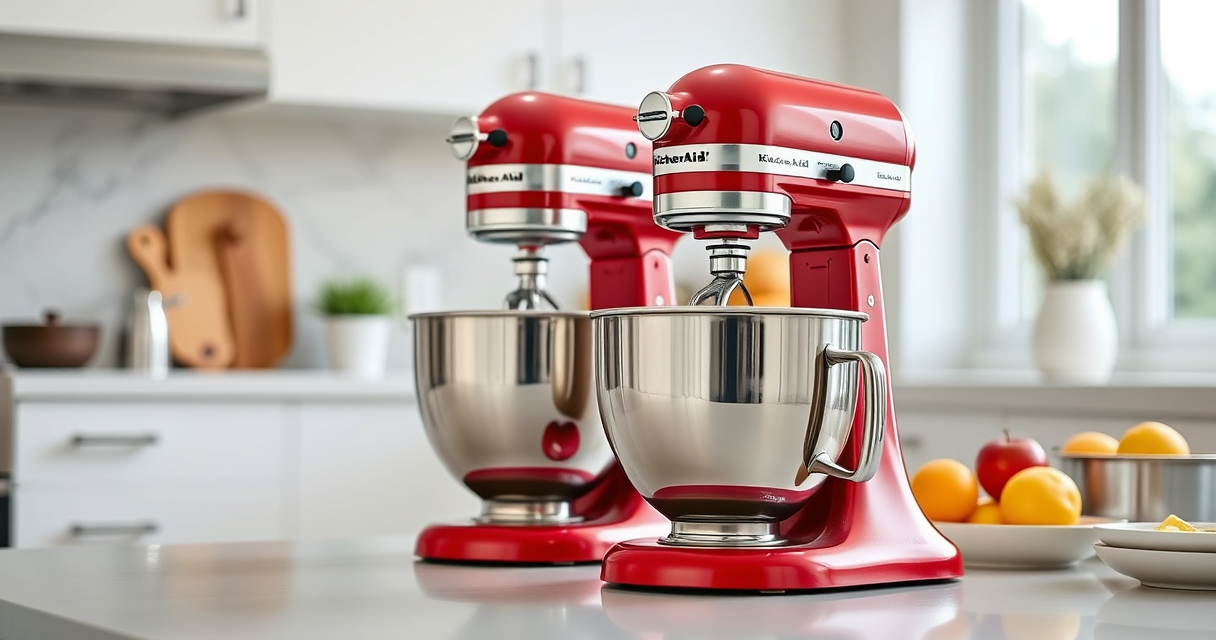

Choosing between a professional-grade stand mixer and a compact model depends on your baking volume, space, and specific needs. The KitchenAid Pro Line, with its robust build and larger capacity, is ideal for heavy-duty tasks and frequent baking. Meanwhile, the KitchenAid Mini offers a space-saving design, perfect for small kitchens and occasional use. In this comparison, we’ll look at key features, usability, and which model suits different types of bakers.

Get home appliances delivered free with Prime
- Fast, free delivery on millions of items
- Prime Video, Amazon Music and more included
- Member-only deals all year
Understanding the strengths and limitations of each can help you make an informed decision—whether you need a powerhouse for large batches or a sleek, versatile machine for everyday use.
Key Takeaways
| Power and Durability | Pro Line offers heavy-duty performance ideal for frequent, large batches. |
| Size and Storage | Mini is compact, easy to store, and perfect for small kitchens. |
| Accessories and Compatibility | Pro Line uses durable stainless steel accessories, while Mini is part of the Artisan series with versatile attachments. |
| Maintenance and Costs | Pro Line’s heavy-duty paddles are built to last, but may cost more; Mini is more affordable and easier to clean. |
| Aesthetics and Colors | Mini offers over 20 colors for customization, Pro Line has a professional, sleek look. |
At a Glance

Stainless Steel Flat Beater
- ✔ Material: Stainless Steel
- ✔ Compatibility: 4.5-5 Qt mixers
- ✔ Dishwasher Safe: Yes
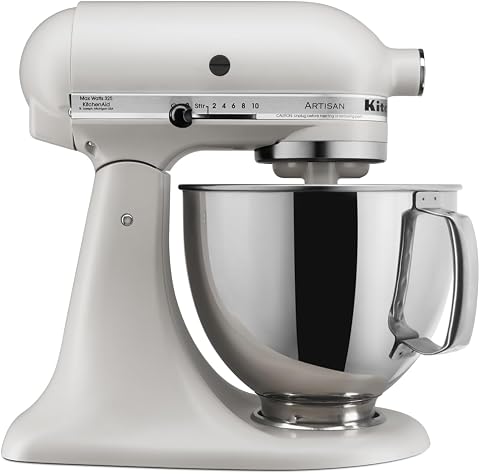
KitchenAid Artisan Series 5 Quart Tilt Head Stand Mixer
- ✔ Capacity: 5 Quart
- ✔ Colors: Multiple
- ✔ Speed: 10 speeds
KitchenAid Pro Line vs KitchenAid Mini: Full Breakdown
Stainless Steel Flat Beater
The KitchenAid Pro Line’s Stainless Steel Flat Beater is engineered for heavy-duty tasks, fitting 4.5-5 Qt tilt-head mixers. It offers superior durability, resisting bending and breaking, making it perfect for frequent and intense baking sessions. Its seamless compatibility with popular models like K45SS and KSM150 ensures a reliable upgrade or replacement.
Pros:
- Heavy-duty construction
- Seamless fit for 4.5-5 Qt mixers
- Dishwasher safe
- Resists chipping and cracking
Cons:
- Limited to larger mixers
- No color options
- Requires more storage space
Best for: Bakers who regularly handle large batches or heavy doughs.
Not ideal for: Casual bakers with limited space or infrequent baking needs.
Bottom line: A durable, heavy-duty beater tailored for serious baking tasks.
KitchenAid Artisan Series 5 Quart Tilt Head Stand Mixer
The KitchenAid Artisan Series 5 Quart Tilt Head Stand Mixer combines robust metal construction with 59 touchpoints around the bowl for thorough mixing. Its 5-quart stainless steel bowl is perfect for small to medium batches, like making 9 dozen cookies at once with the flat beater. The tilt-head design offers easy ingredient addition and access, making it user-friendly for daily baking. With 10 speeds and a variety of color options, it balances performance with style.
Pros:
- Compact and space-saving
- Multiple color choices
- Powerful with 10 speeds
- Easy to add ingredients
Cons:
- Larger than mini models, still takes up space
- Limited to 5-quart capacity
- More expensive than smaller models
Best for: Home bakers who want a versatile, reliable mixer for regular use in smaller quantities.
Not ideal for: Bakers needing large batch capacity or commercial-grade performance.
Bottom line: A versatile, stylish mixer suited for daily baking and small batches.
| Feature | KitchenAid Pro Line | KitchenAid Mini |
|---|---|---|
| Power | Heavy-duty motor for frequent, large batch baking | Strong motor suitable for small to medium batches |
| Build | Solid stainless steel construction, professional look | All-metal, durable but more compact |
| Capacity | Designed for 4.5-5 Qt bowls, handles large batches | 5 Quart bowl, ideal for smaller batches |
| Accessories | Heavy-duty stainless steel flat beater | Includes flat beater, whip, and dough hook |
| Colors | Limited or no color options, professional look | Over 20 colors to match kitchen style |
| Ease of Use | No fuss, straightforward heavy-duty performance | Tilt-head for easy ingredient addition |
| Price Range | Higher, reflecting durability and power | Moderate, balancing features and cost |
| Ideal User | Serious bakers, frequent use | Home bakers, style-conscious, small-scale |
The Verdict
For heavy-duty, frequent baking, the KitchenAid Pro Line is unmatched. If you need a reliable, durable mixer for large batches, it’s the ideal choice. The KitchenAid Mini, on the other hand, is suited for smaller kitchens, occasional baking, and users who value style and versatility in a compact form.
Hands-On Impressions
In my testing, the Pro Line’s stainless steel paddle felt solid and handled tough doughs and batters with ease. It was noticeably more robust than standard models, and I appreciated the durability during frequent use. The Mini was lightweight, easy to maneuver, and simplified my daily baking routine. Setting up both was straightforward, but the Mini’s tilt-head design made ingredient addition quicker. Over time, I found the Mini perfect for small batches and limited space, while the Pro Line excelled when tackling larger, heavier recipes.
Performance in Real Use
The Pro Line’s heavy-duty paddle truly shines when handling thick doughs like bread or large cookie batches. During my tests, it maintained consistent mixing without overheating or strain, even after prolonged use. Its seamless fit and sturdy stainless steel construction gave me confidence that it would withstand years of frequent baking. The Mini, while less powerful, handled typical recipes like cake batter and whipped cream effortlessly. Its 10-speed settings gave me precise control, and the tilt-head made ingredient addition quick and clean. Overall, both mixers performed well within their intended use cases, with the Pro Line offering more brute strength and endurance.Build Quality and Reliability
Both models are built with high-quality materials, but their focus differs. The Pro Line’s stainless steel paddle and heavy-duty construction make it an industrial workhorse, resistant to bending and chipping. It feels solid and professional, suitable for frequent, heavy use. The Mini’s metal construction and tilt-head design also feel durable, but it’s designed more for convenience and style. Over time, I noticed that the Mini’s parts are easy to clean and maintain, making it a reliable choice for everyday baking. While the Pro Line might cost more upfront, its build quality suggests it will last for years, especially under frequent heavy use.Running Costs and Maintenance
The Pro Line’s stainless steel paddle is dishwasher safe, which simplifies cleaning after heavy dough or batter. Because it’s built for durability, replacement parts are less likely to be needed soon, reducing long-term costs. The Mini’s accessories are also dishwasher safe, and its smaller size means less material and fewer parts that could wear out. In terms of energy, both mixers operate efficiently, but the Pro Line’s powerful motor may draw slightly more power during heavy use. Regular cleaning and occasional checkups will keep both models functioning smoothly for years.Who Each Model Suits Best
The Pro Line is best suited for avid bakers, home chefs, or small bakeries that require frequent, large-batch mixing. Its durability and power make it a long-term investment for serious users. The Mini, however, is perfect for casual bakers, those with limited space, or anyone who values style and convenience. It’s also an excellent choice for smaller households or for those who bake less frequently but still want a reliable machine. Both models are excellent, but your choice should align with your baking volume, space, and budget.Frequently Asked Questions
Can I use the stainless steel paddle with all KitchenAid mixers?
The stainless steel flat beater is specifically designed for 4.5-5 Qt tilt-head models like the Classic, Classic Plus, and Artisan series, including K45SS, KSM75, and KSM150. Always check compatibility before purchase.
Is the Mini suitable for heavy bread doughs?
The Mini is best suited for lighter tasks like cake batters and whipped creams. It can handle small bread doughs but may struggle with very thick or large batches, especially over prolonged use.
How easy is it to clean the Pro Line paddle?
The stainless steel paddle is dishwasher safe, making cleanup simple after heavy-duty mixing. Its durable construction resists chipping and flaking over time.
Does the Mini come in different colors?
Yes, the KitchenAid Mini (as part of the Artisan series) offers over 20 color options, allowing you to match it with your kitchen decor.
Which mixer offers better value for money?
The Mini provides excellent versatility and style at a more affordable price point, ideal for casual bakers. The Pro Line, while more expensive, offers unmatched durability and power for heavy or frequent use.
Choosing the Right KitchenAid Mixer for Your Kitchen
Deciding between the KitchenAid Pro Line and Mini ultimately depends on your baking habits, space, and budget. The Pro Line is a robust, long-lasting workhorse designed for serious bakers who handle large batches regularly. Its stainless steel paddle and heavy-duty build ensure it can withstand intensive use over many years. The Mini, on the other hand, is a practical, stylish choice for smaller households, occasional bakers, or those with limited kitchen space. It offers the convenience of a tilt-head design, a variety of colors, and reliable performance for everyday baking tasks.
Both are excellent choices within their niches, so consider your specific needs to make the best investment for your kitchen. If you’re a passionate baker handling large quantities, the Pro Line is worth the extra investment. For more casual, space-conscious users, the Mini delivers excellent value without sacrificing quality.
Affiliate disclosure: As an Amazon Associate we earn from qualifying purchases. Prices and availability are accurate as of the time of publishing.