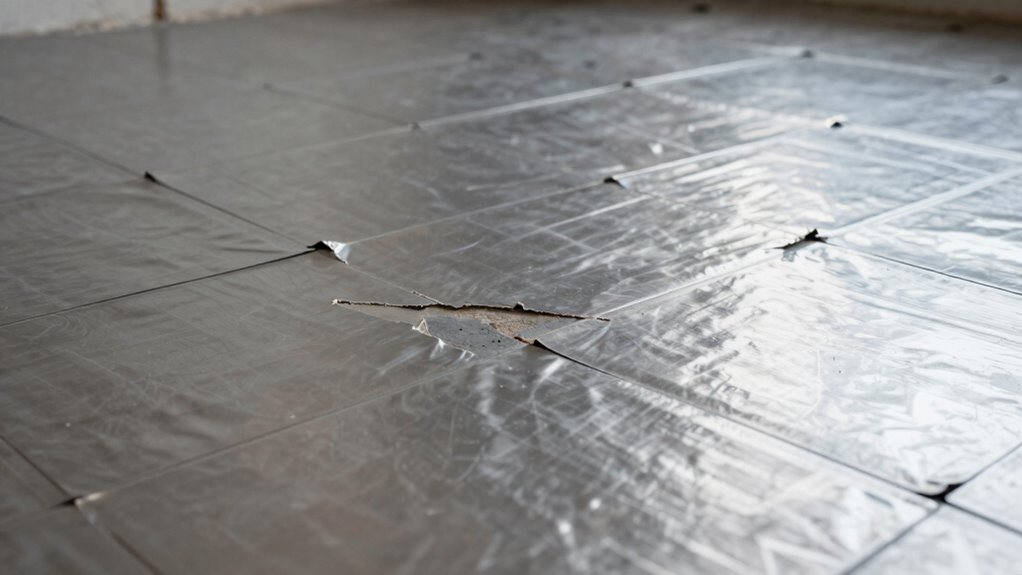

One common mistake that ruins heated floor projects is rushing your measurements or ignoring obstructions like furniture and irregular surfaces. This leads to incorrect square footage calculations, causing uneven heating, energy waste, and costly rework. Accurate measurement is essential for proper system sizing and performance. If you want to avoid these pitfalls and learn precise tips for measuring and verifying your space, keep exploring—getting it right saves you time and money in the long run.

Get home appliances delivered free with Prime
- Fast, free delivery on millions of items
- Prime Video, Amazon Music and more included
- Member-only deals all year
Key Takeaways
- Underestimating space complexity can lead to under-sizing the heating system, causing inadequate warmth and cold spots.
- Overestimating square footage results in over-sizing, increasing costs and energy waste.
- Failing to account for obstructions like furniture and cabinets skews usable space measurements.
- Ignoring irregular room shapes or slopes causes incorrect heat distribution planning.
- Rushing measurements or using unreliable tools increases errors, compromising system performance.
Products Worth Considering

Blueair Blue Pure 211i Max Air Purifier for Large Rooms

iRobot Roomba Plus 678 Robot Vacuum and Mop with AutoWash Dock

LG 75-Inch QNED73B Mini LED 4K Smart TV (2026)
As an affiliate, we earn on qualifying purchases.
Why Accurate Square Footage Is Critical for Heated Flooring

Accurate square footage is essential when planning a heated flooring project because it directly impacts the system’s efficiency and effectiveness. When calculating your space, consider design considerations like room layout and insulation, which influence how well heat distributes. Proper measurement guarantees you select the right size system, avoiding under or over-sizing that can waste energy or leave areas cold. Energy efficiency depends heavily on precise calculations; a system that’s too large consumes unnecessary power, while one that’s too small struggles to heat the space evenly. By accurately determining the square footage, you optimize system performance and reduce energy costs. Digital concepts play a crucial role in modern planning, helping you visualize and refine your project for better results. This careful planning helps ensure your heated flooring functions smoothly, providing consistent warmth and maximizing your investment.
Common Mistakes When Measuring Your Floor Space

When measuring your floor, using inaccurate techniques can lead to big problems down the line. Ignoring obstructions like cabinets or irregular shapes can also throw off your calculations. Mistakes in these areas often result in incorrect square footage, which impacts your heated floor project. Additionally, failing to account for natural landscaping features or proper measurement methods can cause errors in estimating the necessary heating capacity. To achieve precise measurements, it’s important to understand flooring material considerations, which can influence your overall heating plan. Being aware of measurement accuracy techniques can help ensure your calculations are reliable and effective. Incorporating proper measurement tools can further enhance your accuracy and prevent costly mistakes.
Inaccurate Measuring Techniques
One of the most common mistakes in heated floor projects is using inaccurate measuring techniques. Rushing or misjudging the space can lead to incorrect calculations, affecting the entire project. When measuring, guarantee you account for decorative patterns that might influence layout and consider color choices that could affect visual perception of space. Use a reliable tape measure and double-check measurements for accuracy. Remember, small errors multiply when calculating total area. To help, here’s a quick reference:
| Step | Tip |
|---|---|
| 1 | Measure length and width at multiple points |
| 2 | Record and average measurements for irregular areas |
| 3 | Include all nooks and corners in your calculations |
Precise measurements prevent costly mistakes, especially with complex patterns and color schemes.
Ignoring Obstructions or Irregularities
Ignoring obstructions or irregularities on your floor can lead to significant measurement errors that disrupt your heated floor project. Obstruction awareness is essential because furniture, pipes, or built-ins can skew your calculations if not accounted for. Similarly, irregularity identification helps you spot uneven surfaces, slopes, or cracks that could affect heating efficiency and installation. Failing to recognize these issues might cause you to overestimate or underestimate your actual usable space, leading to improper material estimates and costly mistakes. Before measuring, walk the area carefully, note any obstructions, and assess the floor’s surface. Additionally, understanding floor surface irregularities can help you plan for necessary repairs or adjustments before installation. Adjust your measurements accordingly, making sure you include or exclude areas based on how they’ll impact the heated flooring system. This attention to detail ensures a more accurate plan and a successful installation.
Tools and Techniques for Accurate Measurement

Accurate measurement is the foundation of a successful heated floor project, ensuring you purchase the right materials and avoid costly mistakes. Using reliable measurement tools is essential. A tape measure or laser distance meter provides precise readings, while a chalk line helps outline the area. Color coding your measurements can prevent confusion, especially in complex spaces. Here’s a quick overview:
| Tool | Purpose | Benefit |
|---|---|---|
| Laser Measure | Long-distance accuracy | Fast, precise, reduces errors |
| Tape Measure | Short-range measurements | Versatile, easy to use |
| Color Coding | Organizing measurements | Prevents mix-ups |
| Chalk Line | Marking boundaries | Clear, visible outlines |
Use these tools and techniques to get perfect measurements, setting your project up for success.
How to Double-Check Your Measurements Before Installation
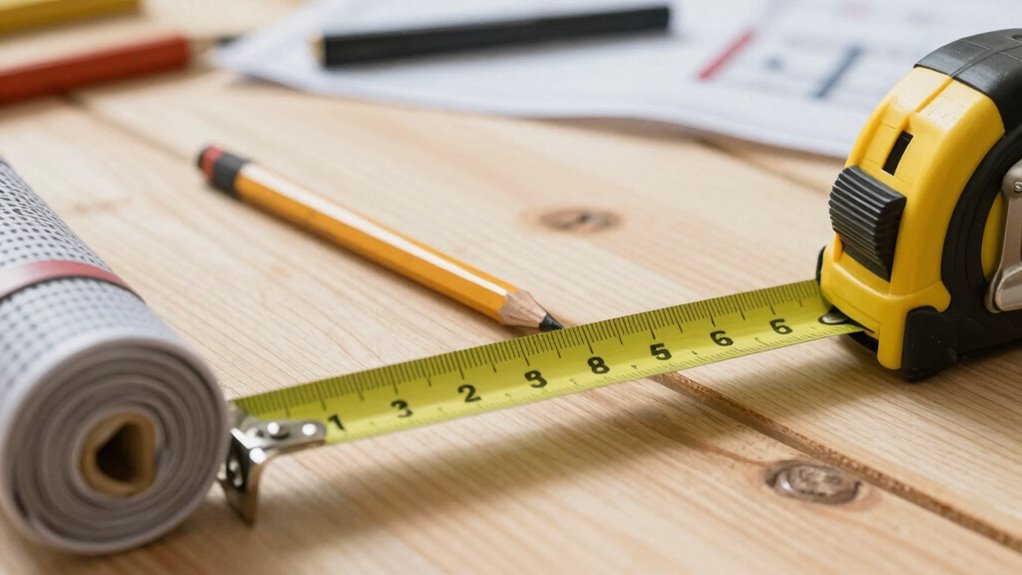
After measuring your space, it’s crucial to verify those measurements before starting installation. Double-check your figures by re-measuring key areas, especially corners and edges, to catch any discrepancies. Cross-reference your measurements with your design considerations to confirm the layout matches your plans. Confirm that your chosen material selection fits the space and aligns with your project’s specifications. Use a tape measure and a straightedge for accuracy, and consider marking measurements on the floor for visual confirmation. It’s also helpful to compare your measurements with the manufacturer’s guidelines to avoid overestimating or underestimating the required material. Taking these extra steps guarantees your heated floor project will fit perfectly, avoiding costly adjustments later and ensuring peak performance.
What to Do if You Discover Measurement Errors After Installing
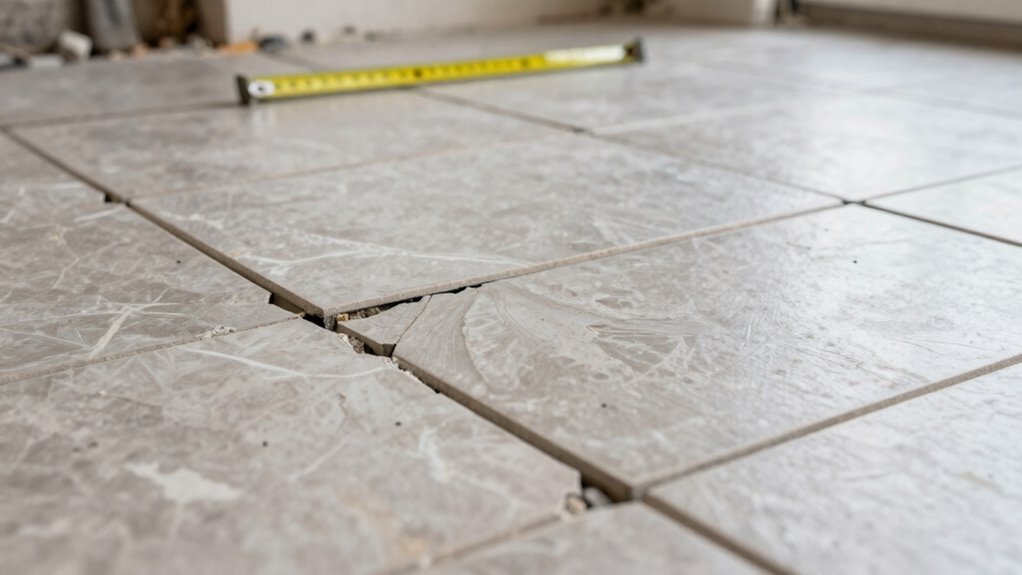
Discovering measurement errors after installing your heated floor can be stressful, but it doesn’t have to mean starting over. First, assess the extent of the mistake and consider whether it impacts the overall comfort or aesthetic. Sometimes, minor errors can be concealed with decorative accents like rugs or furniture, which also help with color coordination to hide imperfections. If the mistake is significant, consult a professional to determine if partial adjustments are possible, such as rerouting wiring or adding insulation. Avoid rushing into full removal; instead, evaluate whether creative solutions can integrate the error into your design. Remember, thoughtful decor can divert attention from measurement flaws, ensuring your space remains visually cohesive and comfortable despite the initial setback. Additionally, understanding the importance of proper appliance maintenance can help prevent future issues with heating systems. Regular inspections and timely repairs are key to maintaining efficient and safe heating systems, reducing the risk of costly mistakes down the line. Being familiar with space planning principles can also help you avoid similar errors in future projects.
How Measurement Errors Can Lead to Uneven Heating and Higher Costs

When measurement errors occur in your heated floor installation, they can cause uneven heat distribution across the space. This uneven heating not only creates uncomfortable spots but also leads to cost overruns, as you might run the system longer to compensate. Inaccurate measurements can result in under- or over-coverage of heating elements, reducing energy efficiency. When certain areas don’t receive enough heat, you may increase thermostat settings or run the system longer, wasting energy and raising your bills. Conversely, overlapping heating zones can cause hotspots, forcing you to turn the system off or adjust settings constantly. Precise measurement guarantees even heat distribution, optimizing energy efficiency and preventing unnecessary expenses. Accurate planning helps you avoid costly fixes and maintain a comfortable, energy-efficient environment.
Tips for Adjusting Your Heated Floor System Based on Precise Measurements
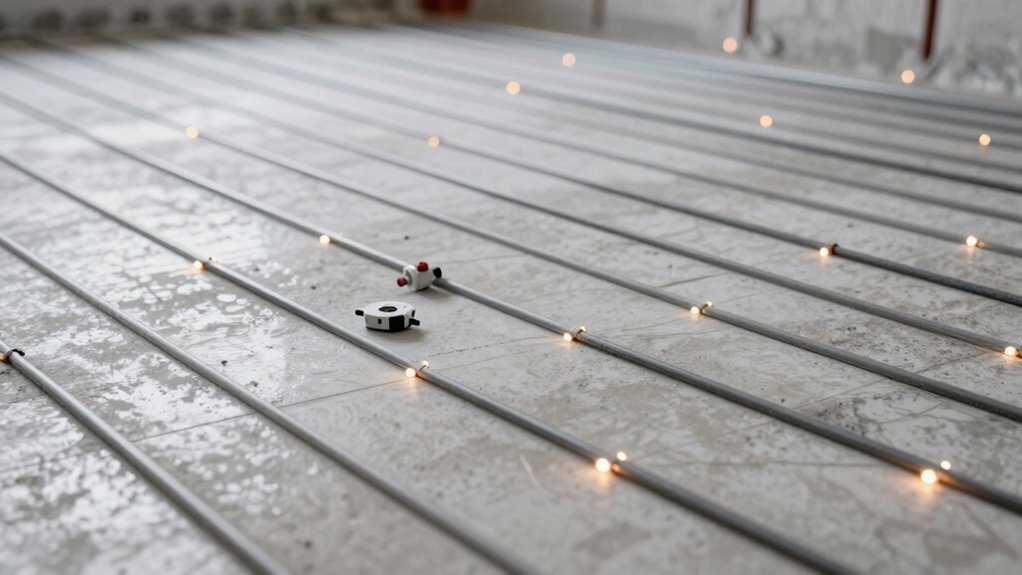
To guarantee your heated floor system operates efficiently, you need to make precise adjustments based on accurate measurements. Start by regularly checking the floor’s temperature using a reliable thermometer, ensuring consistent temperature control across the space. If certain areas are too hot or cold, adjust the thermostat settings or zone controls accordingly. Also, review your insulation strategies—adding better insulation beneath the heating elements or around the room can improve heat retention and assure even distribution. Measure the floor’s temperature at multiple points to identify discrepancies. Making these adjustments helps prevent uneven heating, reduces energy waste, and prolongs your system’s lifespan. Proper installation techniques are crucial for optimal performance. Ensuring good air quality and minimizing dust and microplastics can also contribute to more efficient heating by preventing blockages and maintaining system cleanliness. Precise measurements and thoughtful insulation strategies keep your heated floor comfortable and energy-efficient.
Frequently Asked Questions
Can Small Measurement Errors Significantly Impact Heating Efficiency?
Yes, small measurement errors can considerably impact heating efficiency. When you prioritize installation precision, even tiny inaccuracies in measurement tools can lead to uneven heated floor coverage, causing some areas to be underheated and others overheated. This wastes energy and diminishes comfort. Always double-check measurements, use reliable tools, and carefully plan your layout to guarantee ideal efficiency and consistent warmth across your space.
Are There Specific Flooring Types Prone to Measurement Inaccuracies?
Imagine laying a soft carpet or glossy laminate, where subtle measurement inaccuracies can slip unnoticed. Flooring materials like carpet and laminate are more prone to measurement errors because their edges aren’t as straightforward as tile or concrete. You rely heavily on measurement tools, but soft or uneven surfaces can distort readings. Always double-check your measurements with precise tools to guarantee your heated floor system fits perfectly and works efficiently.
How Often Should You Re-Measure Before Final Installation?
You should re-measure your space at least once before final installation to guarantee accurate cost estimation and proper material selection. This step helps catch any discrepancies, especially if measurements were taken earlier or if room dimensions changed. Re-measuring minimizes mistakes that could lead to wasted materials or budget overruns. It’s a simple but vital step for successful heated floor projects, making sure your project stays on track and within budget.
What Are the Best Practices for Measuring Irregularly Shaped Rooms?
When measuring irregularly shaped rooms, you should customize your approach based on the wall shape. Use flexible measurement tools like a tape measure or digital laser for accuracy. Break down complex spaces into smaller sections, measure each, and record every dimension. Then, add the measurements together to get the total square footage. This method guarantees precise calculations, helping you avoid costly mistakes during heated floor installations.
Does Temperature Variation Affect Measurement Accuracy?
Yes, temperature variation affects measurement accuracy because materials expand or contract due to thermal expansion, which can skew your readings. To minimize this, you should use proper calibration techniques that account for temperature changes. Regularly calibrate your measuring tools in different thermal conditions, and perform measurements at consistent temperatures whenever possible. This guarantees your measurements stay precise, especially when working with heated floors or other temperature-sensitive projects.
Conclusion
So, after all that fuss about measuring right, don’t be surprised if your perfectly heated floor ends up more “hot mess” than heat marvel. Irony’s a funny thing—you spend hours getting your measurements just right, only to discover a tiny mistake can turn your cozy project into an uneven, costly ordeal. But hey, at least now you know: in heated flooring, precision isn’t just nice; it’s everything. Happy measuring!