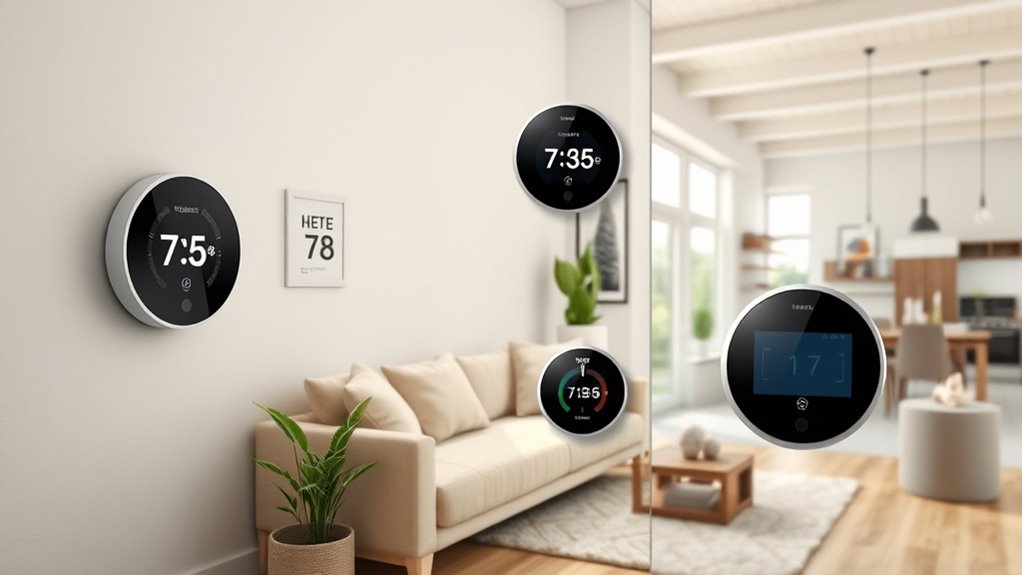

When choosing a smart thermostat, consider your home’s size and layout. For small homes or apartments, a basic model with learning features and remote control is usually enough. Larger or multi-zone homes benefit from advanced thermostats with zoning capabilities, supporting multiple sensors and independent control of different areas. These systems help save energy and improve comfort by targeting specific zones. Keep exploring to discover the best options tailored to your home’s needs.
Key Takeaways
- Choose basic smart thermostats with learning features for small homes to simplify control and maximize energy savings.
- For larger homes, opt for thermostats supporting multiple sensors and zones to tailor comfort and efficiency.
- Consider multi-zone compatibility if your home has distinct areas needing independent temperature control.
- Ensure the thermostat integrates seamlessly with your existing smart home ecosystem for easy management.
- Prioritize features like remote control, voice assistant compatibility, and energy monitoring for optimized home climate management.
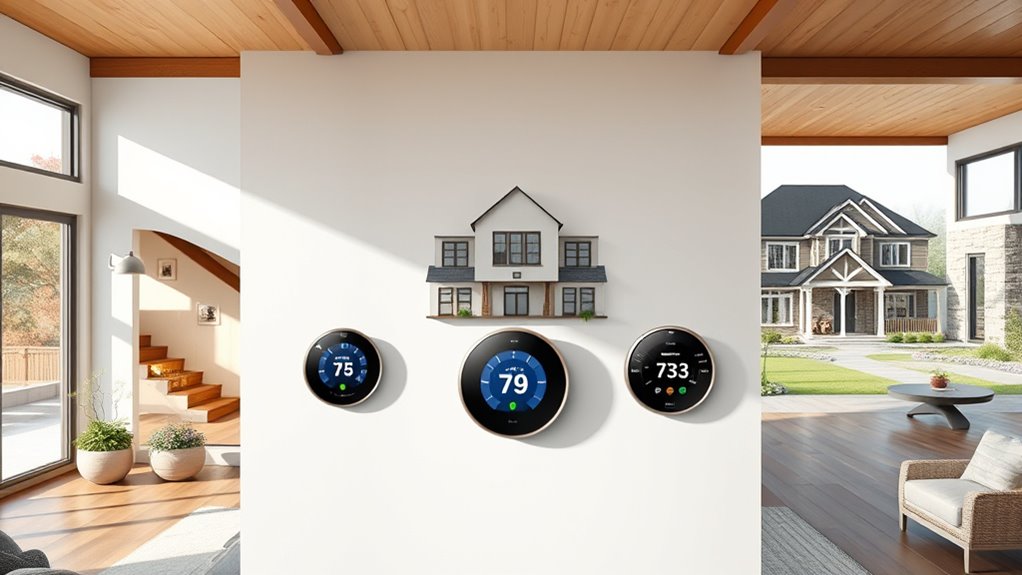
Choosing the right smart thermostat depends heavily on your home’s size, as different spaces require different features for ideal comfort and energy efficiency. If you live in a small apartment or a compact house, a basic smart thermostat with learning capabilities may suffice. These models often include features like scheduling, remote control, and compatibility with voice assistants, making it easy to maintain comfort without wasting energy. Since your home is smaller, you’ll see quick adjustments in temperature and energy savings, especially if you set it to optimize during your typical daily routines.
For small homes, basic smart thermostats with learning features offer quick adjustments and energy savings.
However, if your home is larger or has multiple rooms, you’ll want to contemplate models that support zoning systems. Zoning allows you to divide your home into separate areas, each with its own thermostat or control zone. This way, you can heat or cool only the rooms you’re using, which considerably boosts energy savings while ensuring comfort. For example, you might keep the living room warm during the day but lower the temperature in bedrooms or unused spaces. Zoning systems help prevent energy waste by avoiding unnecessary heating or cooling of unoccupied rooms, and many advanced smart thermostats integrate seamlessly with these systems. Additionally, multi-zone control can significantly enhance your ability to customize comfort levels throughout your home.
In bigger homes, you also need a thermostat that can handle multiple sensors and communicate with other smart devices. These sensors can detect temperature differences across various zones, providing more precise control and better comfort. When you invest in a smart thermostat with zoning capabilities, you’re not just controlling temperature—you’re optimizing energy use throughout your entire home. This results in lower utility bills and a more consistent indoor climate, no matter the time of year.
For large homes, look for thermostats that support multi-zone setups, have robust Wi-Fi connectivity, and offer easy integration with your existing smart home ecosystem. These features allow you to manage different zones individually via smartphone apps or voice commands, giving you full control no matter where you are. Plus, the ability to monitor your energy usage across zones helps you identify patterns and further refine your consumption, maximizing your savings. Incorporating zoning systems can significantly improve your overall home comfort and energy efficiency.

OREiN 3-in-1 Bathroom Exhaust Fan with Light & Humidity Sensor, 160 CFM, 1.0 Sone, Auto-On at 60% Humidity, 1500LM, 3CCT, Night Light, ENERGY STAR, HVI/FCC/ETL, Ceiling Opening 11.81''x 11.02''
【Easy Room-Side Installation – Fits 11.81" × 11.02" Ceiling Opening】Designed for easy bathroom fan replacement from inside the...
As an affiliate, we earn on qualifying purchases.
Frequently Asked Questions
Can Smart Thermostats Be Integrated With Existing Home Automation Systems?
Smart thermostats can definitely be integrated with your existing home automation system. You just need to check system compatibility first, as some thermostats work better with certain platforms like Alexa, Google Home, or Apple HomeKit. Once you guarantee compatibility, you can easily connect your thermostat for seamless home automation integration, allowing you to control your climate remotely and set up smart routines that make your home more efficient and comfortable.
Do Smart Thermostats Require Professional Installation or DIY Setup?
Did you know 60% of smart thermostat owners prefer DIY installation? You can usually set up your smart thermostat yourself with DIY installation, which takes about 30 minutes. However, if your system is complex or you’re unsure, a professional setup guarantees proper wiring and compatibility. Decide based on your comfort level and system complexity, but most models are designed to be user-friendly for DIY enthusiasts.
How Do Smart Thermostats Adapt to Changes in Household Occupancy?
Smart thermostats adapt to changes in household occupancy using occupancy sensors and learning algorithms. You’ll notice them detect when rooms are empty or occupied, adjusting the temperature accordingly. Over time, they learn your routines to optimize comfort and energy savings. This means you don’t have to manually change settings constantly—you get a smarter, more efficient system that responds seamlessly to your household’s habits and occupancy patterns.
Are There Privacy Concerns With Smart Thermostat Data Collection?
While smart thermostats offer convenience, they also bring subtle privacy risks through data collection. You might not realize how much your habits and routines are being monitored. It’s crucial to contemplate data security measures, like encryption and secure connections, to protect your information. Being aware of these privacy concerns helps you make informed choices, ensuring your home stays comfortable without compromising your personal data security.
What Is the Average Lifespan of a Smart Thermostat Device?
The average lifespan of a smart thermostat typically ranges from 10 to 15 years, depending on the device’s durability and usage. As you consider its longevity, focus on models that prioritize energy efficiency, which helps reduce your energy bills over time. Proper maintenance can extend its life, ensuring you get the most out of your investment while maintaining excellent control over your home’s temperature and energy consumption.

VIVOHOME Autoflow Bathroom Exhaust Fan with Light & Humidity Sensor (160-110-30CFM) - 2700K/4000K/5700K & EC Motor, Retrofit Ceiling Mount Bath Fan, No Attic Access Needed (Install Kit, 4-in Duct)
DURABLE & EFFICIENT: The bathroom exhaust fan is built with lightweight, rust-proof ABS and PP housing; Designed for...
As an affiliate, we earn on qualifying purchases.
Conclusion
Choosing the right smart thermostat depends on your home size, ensuring ideal comfort and energy savings. Did you know that households with smart thermostats save an average of 10-12% on heating and cooling costs? By selecting a thermostat tailored to your home’s size, you can maximize these savings and enjoy better control over your environment. Make an informed choice today, and you’ll experience both comfort and savings every day.

OREiN 4-in-1 Matter Smart Bathroom Exhaust Fan with Light, Bluetooth Speaker & Humidity Sensor, 110/160 CFM, 1500LM 2700K-6500K, Alexa/App/Remote Control, Required Ceiling Opening 11.39"x10.42"
【Powerful Airflow, Ultra-Quiet Performance】Select 110 CFM or 160 CFM for medium to large bathrooms up to 160 sq.ft....
As an affiliate, we earn on qualifying purchases.

Panasonic FV-0510VSC1 Whispervalue Dc Fan
Pick-A-Flow speed selector 50, 80 or 100 CFM
As an affiliate, we earn on qualifying purchases.