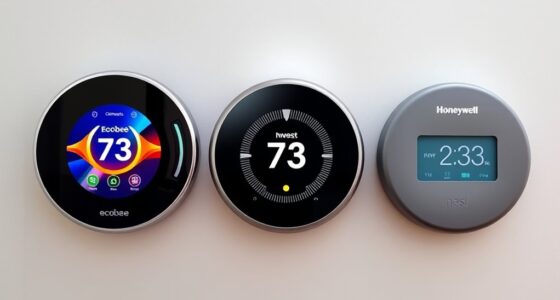

When choosing a smart thermostat, consider if you want a learning AI system or a rule-based one. AI thermostats adapt automatically to your routines, saving energy and requiring minimal manual adjustments. Rule-based systems follow fixed schedules and offer more predictable control but need manual updates for changes. Think about whether you prefer effortless customization or explicit control. Stay with us to discover which option best fits your lifestyle and comfort goals.
Key Takeaways
- Learning AI thermostats adapt automatically over time, reducing manual adjustments, unlike rule-based systems which rely on fixed schedules.
- AI systems optimize energy efficiency continuously, ideal for irregular routines; rule-based systems offer predictable control based on pre-set rules.
- AI thermostats require minimal user input after setup, providing a “set-it-and-forget-it” experience, whereas rule-based systems need ongoing manual updates.
- Rule-based systems excel in predictable environments with explicit control needs, while AI thermostats excel in flexible, dynamic home settings.
- Choose AI for maximum convenience and energy savings, or rule-based systems for straightforward control in routine lifestyles.
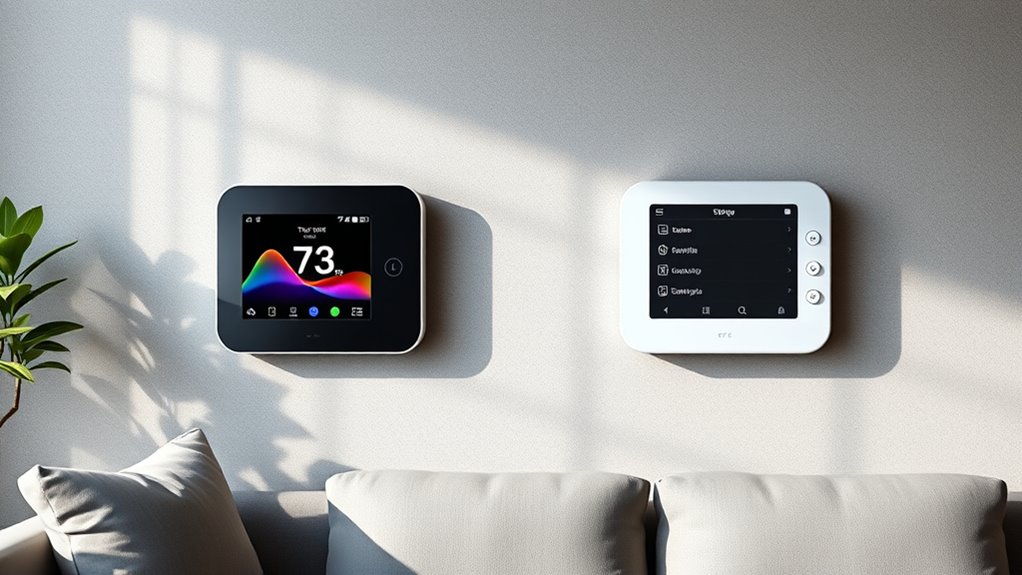
Choosing the right smart thermostat can substantially improve your home’s comfort and energy efficiency. When you’re deciding between a learning AI system and a rule-based one, it’s important to understand how each impacts your home’s energy efficiency and user customization. A learning AI thermostat adapts over time by analyzing your habits, schedules, and preferences. It learns when you’re typically home or away, adjusting temperatures accordingly without you needing to program every detail. This continuous learning helps optimize energy use, reducing waste and lowering your utility bills. Because it tailors itself to your lifestyle, you get a more personalized experience, ensuring your home remains comfortable while conserving energy.
On the other hand, rule-based thermostats rely on pre-set schedules and fixed rules that you program manually. They operate on a straightforward logic: if it’s morning, turn the heat up; if it’s night, turn it down. While this approach offers clear control and predictability, it can lack the flexibility to adapt to sudden changes in your routine. If your schedule varies, you’ll need to update the rules frequently to maintain energy efficiency. Some rule-based systems allow for multiple schedules or temporary overrides, but they don’t learn from your behavior, which might lead to less optimized energy savings over time. For users who prefer a more hands-on approach to control, rule-based systems can still provide a decent level of user customization, but they require ongoing manual adjustments to stay efficient and comfortable.
Choosing between these systems depends on how much effort you want to invest and how personalized you want your climate control to be. AI-powered systems excel at maximizing energy efficiency by automatically adjusting to your habits, often leading to smarter energy use without constant manual input. They are particularly useful if your schedule is irregular or if you want a set-it-and-forget-it solution that still delivers personalized comfort. Conversely, rule-based systems are simpler, giving you direct control over specific temperature settings and schedules, which some users find appealing for straightforward, predictable routines. Additionally, AI-driven systems leverage data analytics to continuously improve their performance and better align with your needs.
Ultimately, if your goal is to enhance energy efficiency with minimal fuss while enjoying user customization, a learning AI thermostat might be the better choice. It offers a seamless experience, adapting to your lifestyle and optimizing energy use without requiring constant oversight. However, if you prefer explicit control and predictable operation, a rule-based system can still meet your needs effectively. Both options can improve your home’s comfort, but understanding their differences helps you select the thermostat that aligns best with your habits and energy goals.
Frequently Asked Questions
How Do Learning AI Thermostats Save Energy Compared to Rule-Based Systems?
Learning AI thermostats save energy by adapting behavior based on your habits, ensuring ideal comfort with minimal energy use. Unlike rule-based systems, which follow fixed schedules, AI learns when you’re home or away and adjusts temperature automatically. This personalized approach improves energy efficiency, reducing waste and lowering costs. You benefit from smarter heating and cooling, which responds dynamically to your lifestyle, making your home more sustainable and comfortable.
Are Learning AI Thermostats Compatible With Existing Home Automation Systems?
You’ll be amazed how seamlessly some learning AI thermostats integrate with your existing home automation systems, but beware—there can be real integration challenges and compatibility issues. While many models now support popular platforms, others might require extra hubs or custom setups. So, before you buy, check the compatibility details carefully. Don’t assume everything will connect effortlessly; a little research now saves headaches later.
What Is the Typical Setup Time for a Learning AI Thermostat?
The installation process for a learning AI thermostat typically takes about 30 minutes to an hour, depending on your home’s wiring and setup complexity. During the setup duration, you’ll connect the device to your Wi-Fi, configure preferences, and allow it to learn your schedule. Most systems guide you with step-by-step instructions, making the process straightforward and quick, so you can enjoy smarter climate control sooner.
Do Rule-Based Thermostats Require Less Maintenance Than Ai-Powered Models?
You might think rule-based thermostats require less maintenance, but that’s not always the case; they can be more straightforward, yet their limited flexibility may lead to higher maintenance costs over time. AI-powered models adapt and optimize, which can reduce ongoing upkeep despite increased system complexity. So, while rule-based systems seem simpler, their long-term maintenance costs can add up, making AI thermostats a smarter choice in the long run.
Can Learning AI Thermostats Adapt to Multiple Users’ Preferences Automatically?
Yes, learning AI thermostats can automatically adapt to multiple users’ preferences through adaptive learning. You won’t need to manually set each person’s schedule; instead, the system learns from everyone’s behavior, offering multi-user customization. As you and others use the thermostat, it refines its settings, making your home more comfortable efficiently. This seamless adaptation makes AI-powered thermostats a smart choice for households with diverse preferences.
Conclusion
When choosing a smart thermostat, consider whether a learning AI or rule-based system suits your lifestyle. While rule-based systems are straightforward, a learning AI adapts seamlessly, transforming your home into a haven of perfect comfort. Don’t settle for less—think of a learning AI as the wizard of home climate control, orchestrating your environment with unparalleled precision. Ultimately, investing in the right system elevates your living space, making comfort feel like an effortless breeze rather than a daily chore.