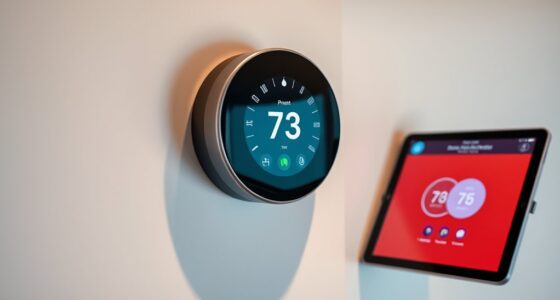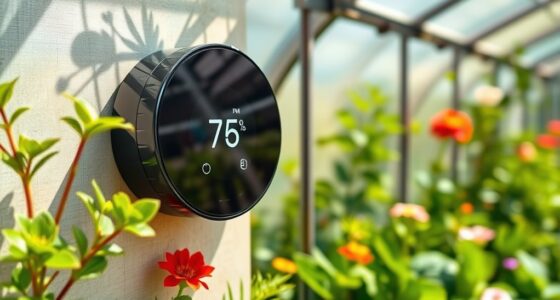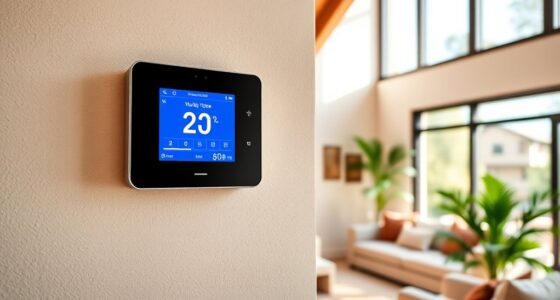
When choosing a smart thermostat for your off-grid cabin, prioritize energy-efficient models with local controls like Zigbee or Z-wave to guarantee reliable operation without needing constant internet access. Look for features such as adaptive scheduling, temperature zoning, and low power consumption to manage your energy wisely. Battery backup options are also helpful during power fluctuations. Focusing on these aspects lets you stay comfortable while conserving your renewable energy. You’ll find more helpful tips if you keep exploring.
Key Takeaways
- Choose energy-efficient thermostats with low power consumption and adaptive scheduling to maximize renewable energy use.
- Prioritize devices with local control options like Zigbee or Z-wave for reliable operation without internet dependence.
- Select models that support multi-zone heating and customizable schedules for tailored comfort and energy savings.
- Ensure compatibility with off-grid power sources, including battery backup and low energy draw features.
- Opt for user-friendly interfaces and flexible controls to easily manage temperature settings in variable weather conditions.
Choosing a smart thermostat for your off-grid cabin can considerably improve comfort and energy efficiency, but it requires careful consideration of your unique power and connectivity limitations. Off-grid living often means relying on solar power, batteries, or other renewable sources, which makes energy efficiency a top priority. A smart thermostat that optimizes heating and cooling can help reduce energy consumption, saving your limited power resources while maintaining a comfortable environment. When selecting a device, look for models designed to operate with low power demands, ensuring they don’t drain your energy reserves unnecessarily. Many smart thermostats offer features like adaptive scheduling and temperature zoning, which allow you to tailor your climate control to your habits and needs, maximizing energy savings.
Choosing an energy-efficient smart thermostat optimizes comfort while conserving limited off-grid power resources.
User customization is another critical factor. Since off-grid cabins typically experience variable weather, you need a thermostat that offers flexible settings you can easily adjust. Some models allow you to set different temperature zones for various areas of your cabin, giving you control over where and when you use energy. This is especially useful if you spend more time in certain parts of the cabin or want to prioritize heating in specific rooms. Additionally, look for thermostats with intuitive interfaces—either through a dedicated app or physical controls—that let you modify settings quickly, even when connectivity is limited. The ability to customize temperature schedules and preferences ensures you don’t waste energy when you’re away or asleep, while still keeping your space cozy when needed. Incorporating local control options can further enhance reliability in remote locations.
Choosing a smart thermostat with reliable connectivity protocols such as Zigbee or Z-wave can further ensure consistent operation without dependence on constant internet access. Connectivity can be a challenge in off-grid settings, so choose a smart thermostat that doesn’t rely solely on Wi-Fi or cloud services. Some models operate locally via Bluetooth or Zigbee protocols, reducing dependency on internet connectivity. This means your thermostat can still function and be adjusted even if your network drops out, which is common in remote locations. Battery-powered units or those with backup power options are also worth considering, so your climate control stays reliable during power fluctuations or outages.
In addition, selecting a thermostat with energy-efficient features can maximize the benefits of your renewable energy sources, helping you conserve power for other essential uses. Ultimately, selecting the right smart thermostat involves balancing energy efficiency, user customization, and connectivity robustness. Focus on devices that offer flexible scheduling, low power consumption, and reliable local controls. By doing so, you’ll ensure your off-grid cabin remains comfortable and energy-smart, making your remote living experience more sustainable and enjoyable.
Frequently Asked Questions
How Does a Smart Thermostat Work Without an Internet Connection?
Without an internet connection, a smart thermostat still works by relying on Wi-Fi independence through local controls and battery operation. You can manually adjust settings directly on the device or use a local app that communicates via a secure, offline network. This setup guarantees your thermostat maintains temperature control, even off-grid, without needing constant internet access, giving you reliable, autonomous comfort management.
Can Smart Thermostats Be Powered Entirely by Solar Energy?
Yes, you can power smart thermostats entirely with solar power. By installing a dedicated solar panel system, you provide clean energy that boosts energy efficiency and reduces reliance on traditional power sources. Just guarantee your solar setup supplies consistent power, especially during cloudy days or at night, by including a battery backup. This way, your smart thermostat stays functional, eco-friendly, and cost-effective, even off the grid.
Are There Specific Brands Optimized for Off-Grid Cabin Use?
Did you know that only about 10% of smart thermostats are designed for off-grid compatibility? When choosing a brand for your cabin, you want reliable options that handle inconsistent power sources well. Brands like Ecobee and Nest are popular, but they may lack off-grid features. Look for specialized models with robust battery backup and solar compatibility, ensuring you get the reliability you need in an off-grid setting.
How Do Smart Thermostats Handle Extreme Weather Conditions?
Smart thermostats handle extreme weather conditions by relying on accurate temperature sensors that detect rapid changes. They often feature weather resistance, protecting internal components from moisture, snow, or dust. When extreme temperatures hit, these thermostats adjust heating or cooling efficiently, maintaining comfort. You can trust their sensors and weather-resistant design to keep your cabin’s climate stable, even during harsh weather, ensuring reliable performance year-round.
What Backup Systems Are Recommended if the Thermostat Fails?
If your smart thermostat unexpectedly fails, it’s like losing your entire climate control universe! You should have backup systems like backup power sources—solar panels or batteries—and manual overrides to keep your cabin comfortable. These guarantee you can switch to manual control instantly, avoiding discomfort or energy waste. Always prepare for tech hiccups with reliable backups, so your off-grid retreat stays cozy no matter what happens.
Conclusion
Choosing the perfect smart thermostat for your off-grid cabin might seem tricky, but with the right research, you’ll open comfort like never before. Remember, it’s not just about saving energy—it’s about transforming your cabin into a haven of coziness and efficiency. Don’t settle for less; a great thermostat can be your cabin’s secret weapon in conquering the wilderness. Make the smart choice today and turn your off-grid retreat into the ultimate cozy sanctuary!