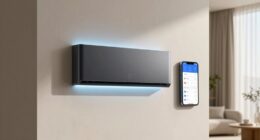
When choosing a smart thermostat, consider if you prefer a touchscreen for a modern, detailed interface or physical buttons for durable, quick adjustments. Touchscreens offer vibrant visuals, smart features, and easy navigation, but may require more frequent cleaning and attention. Physical buttons are reliable, simple to use, and work well in low-light situations. Your choice depends on whether you prioritize visual clarity or tactile control—continue on to explore which option suits your needs best.
Key Takeaways
- Touchscreens offer detailed energy data and customization, enhancing user engagement and smart home integration.
- Physical buttons provide quick, tactile control ideal for fast adjustments and durability in high-traffic areas.
- Touchscreens may require more maintenance and are prone to accidental touches; buttons are more durable and low-maintenance.
- Users preferring visual feedback and detailed info may favor touchscreens; those valuing simplicity often prefer physical buttons.
- The choice impacts daily interaction: touchscreens promote frequent engagement, while buttons support reliable, straightforward operation.

Smart thermostats have become an essential tool for managing your home’s climate efficiently and conveniently. When choosing between a touchscreen interface and physical buttons, your decision can considerably impact your experience and satisfaction with the device. The user interface is a vital factor because it determines how easily and quickly you can adjust settings, monitor energy usage, and access features. A well-designed interface not only makes daily adjustments effortless but also enhances your overall energy efficiency by encouraging regular engagement with your thermostat’s capabilities.
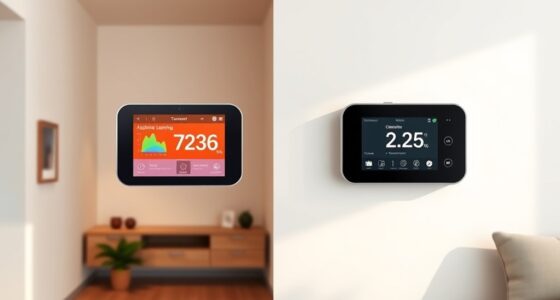
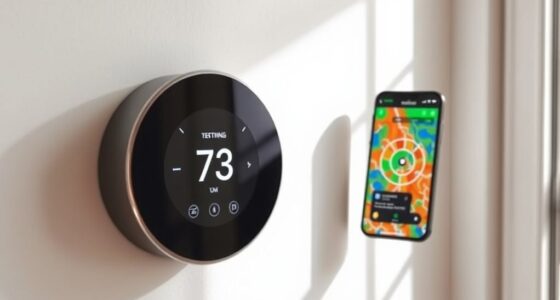
Touchscreen thermostats offer a modern, sleek look that appeals to tech-savvy users. Their vibrant displays provide a visual experience that makes navigation intuitive. With a touchscreen, you can easily scroll through menus, view detailed energy reports, and customize settings with simple taps or swipes. The clarity of a high-resolution display helps you quickly identify current temperatures and schedules, reducing the chance of errors. This visual feedback can motivate you to optimize your energy usage, ultimately leading to better energy efficiency in your home. Plus, many touchscreen models support smart features like voice commands or integrations with home automation systems, further streamlining your control options.
Touchscreen thermostats feature vibrant displays and intuitive navigation, making it easy to customize settings and access smart home integrations.
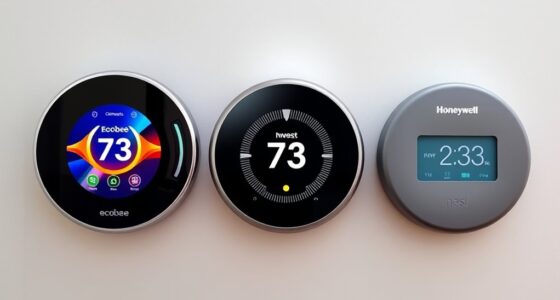
However, touchscreen interfaces can sometimes be less tactile and more prone to accidental touches, especially if the display isn’t well-calibrated. They may also require more frequent cleaning to maintain clarity and responsiveness. If you prefer a more tactile experience or have concerns about screen durability, physical buttons might suit you better. With buttons, you get reliable, tactile feedback that confirms your inputs without needing to look at the device. They’re generally easier to operate in low-light conditions or when you’re in a hurry, making quick adjustments straightforward. Physical buttons can also be more durable over time since they’re less susceptible to screen damage or malfunction. Additionally, the impact of technology on user interfaces has made physical buttons more efficient for quick, one-touch adjustments.
Your choice might also hinge on how you plan to interact with the thermostat regularly. If you enjoy exploring menus and prefer a visually rich interface, a touchscreen may enhance your experience and encourage frequent engagement. This can lead to smarter energy habits, like adjusting temperatures based on occupancy patterns or viewing real-time energy consumption data. Conversely, if simplicity and durability are your priorities, physical buttons provide a straightforward, reliable alternative that still allows you to achieve good control over your climate and energy efficiency.
Ultimately, both options serve the core purpose of helping you manage your home’s temperature effectively. Your decision should reflect your comfort preferences, technological familiarity, and the level of interaction you want with your smart thermostat. Whether you opt for the sleek, modern feel of a touchscreen or the tactile reassurance of physical buttons, understanding how the user interface influences your daily use is key to making a choice that supports your energy-saving goals.
Frequently Asked Questions
Do Touchscreen Thermostats Offer Better Energy Savings Than Physical Button Models?
Touchscreen thermostats generally offer better energy efficiency and user convenience than physical button models. Their intuitive interfaces make it easier for you to set precise temperatures and schedules, reducing energy waste. Plus, you can quickly access energy-saving features and real-time data, helping you optimize your home’s comfort and save on utility bills. Overall, the enhanced control and ease of use make touchscreen models a smarter choice for energy-conscious homeowners.
Are Touchscreen Thermostats More Durable Than Traditional Button-Based Ones?
You might notice that touchscreen thermostats aren’t necessarily more durable than traditional button models, especially given durability concerns. The sleek user interface of a touchscreen can be vulnerable to scratches, cracks, or moisture, which may affect long-term performance. Physical buttons, on the other hand, tend to withstand wear and tear better over time. So, if durability matters most, a button-based thermostat could be the more reliable choice for your home.
Can Physical Button Thermostats Function Effectively in Humid or Dusty Environments?
Physical button thermostats can function effectively in humid or dusty environments because they generally offer better humidity resistance and dust durability. You won’t have to worry about moisture or dust interfering with their operation, unlike touchscreen models which can be more sensitive to these conditions. If your space is prone to high humidity or dust, opting for a button-based thermostat guarantees consistent performance and longevity, making it a reliable choice.
Do Touchscreen Thermostats Require More Maintenance or Repairs?
Touchscreen thermostats are like delicate musical instruments; they do require more maintenance. You might encounter button malfunctions or need to recalibrate the touchscreen occasionally. Unlike physical buttons, which are straightforward, screens can be affected by dirt or smudges, leading to calibration issues. While they’re sleek and modern, you should be prepared for potential repairs or cleaning to keep them functioning smoothly over time.
Are There Additional Security Concerns With Touchscreen Smart Thermostats?
Touchscreen smart thermostats can pose additional security concerns, such as privacy issues and hacking vulnerabilities. Since they connect to your Wi-Fi, hackers could potentially access your system or personal data if you don’t update firmware regularly or use strong passwords. Unlike physical buttons, touchscreens rely on software, making them more susceptible to cyber threats. To stay safe, prioritize security features and keep the device’s software up to date.
Conclusion
Ultimately, choosing between a touchscreen and physical buttons is like picking the right tool for your home. I once struggled with a thermostat that’s all touch, only to realize I missed the tactile feel when adjusting it in the dark. Just like a well-designed gadget, your choice should suit your habits and needs. Whether you prefer the sleek swipe or the solid click, your comfort depends on finding what feels right—making your home truly smart and easy to control.