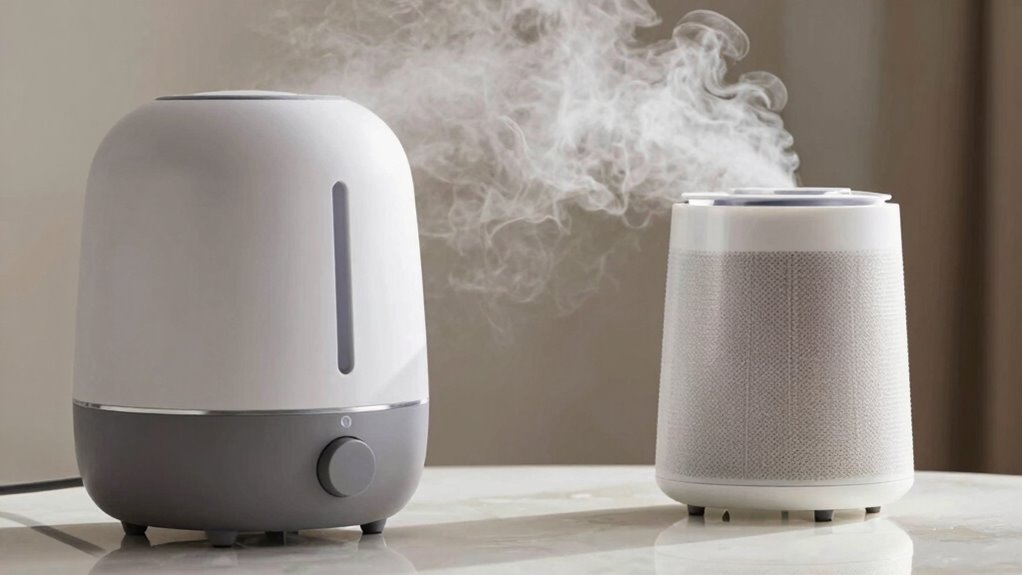
Choosing the wrong humidifier, like picking a steam model for small spaces or an evaporative one for large rooms, can cost you more in energy, maintenance, and health risks. Steam units use more electricity and may cause noise issues, while evaporative models are cheaper and quieter but need frequent filter replacements. Making an informed choice helps prevent mold, dryness, or unnecessary expenses. Keep exploring to discover the best options tailored to your needs and save you money in the long run.
Key Takeaways
- Choosing an incompatible humidifier for your room size can lead to inefficient humidification and higher energy costs.
- Steam humidifiers consume more electricity, increasing utility bills if not suited for your needs.
- An incorrect choice may result in higher maintenance costs due to mineral buildup or mold growth.
- Poor maintenance or using the wrong type can compromise air quality and pose health risks.
- Selecting the wrong model affects noise levels, aesthetics, and overall comfort, leading to additional expenses or discomfort.
How Do Steam and Evaporative Humidifiers Work Differently?
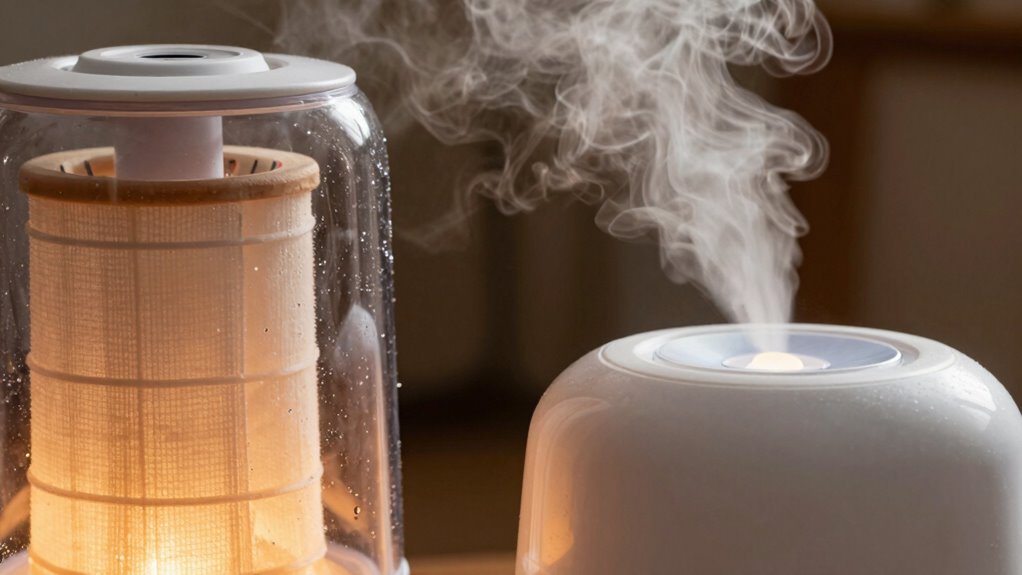
Steam and evaporative humidifiers work differently to add moisture to the air. With steam humidifiers, the humidifier heats water until it boils, releasing sterile steam into the room. This process relies on humidifier technology that uses heat to produce moisture quickly. Evaporative humidifiers, on the other hand, use a wick filter soaked in water. A fan blows air through the filter, causing water to evaporate naturally into the air. Water filtration is vital in both types to prevent mineral buildup and guarantee clean moisture output. Steam models often have built-in safety features to prevent burns, while evaporative units tend to be more energy-efficient. Understanding these differences helps you choose the right humidifier for your needs, based on how each one operates.
What Factors Are Important When Choosing a Humidifier?
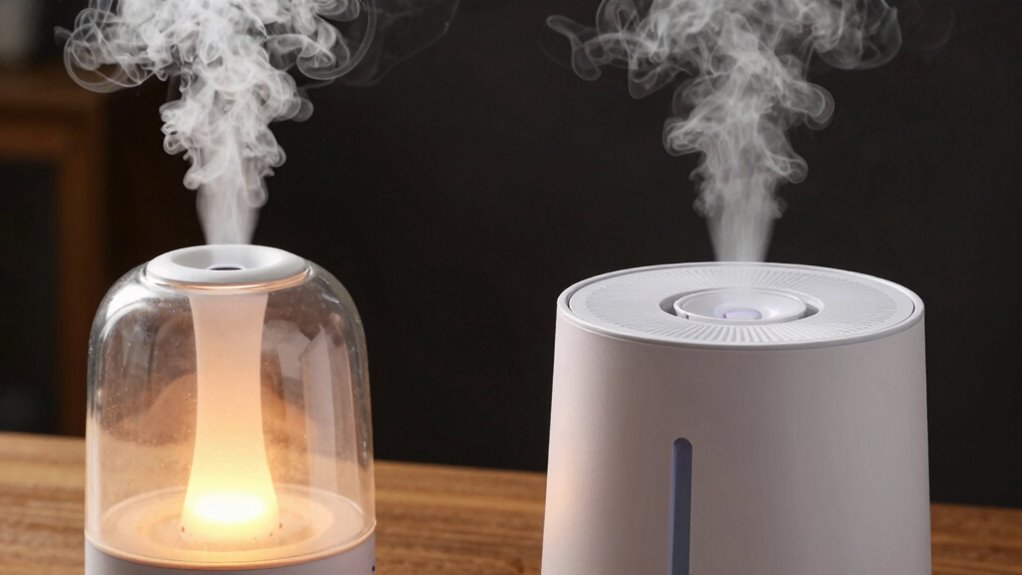
When choosing a humidifier, you need to take into account which type best fits your space and needs. Think about maintenance costs, how much room it can effectively humidify, and whether it’s compatible with your existing devices. These factors help ensure you pick a model that’s efficient, affordable, and easy to use. Additionally, consider the humidifier’s impact on air quality, as proper humidity levels can also affect your comfort and health. Understanding the digital content formats involved can also help you select devices with features that suit your tech setup and preferences.
Humidifier Type Compatibility
Choosing the right humidifier depends on several key factors that guarantee it fits your specific needs and environment. One important consideration is compatibility with your air quality needs—some humidifiers produce cleaner, safer moisture, especially for allergy sufferers. Noise levels also matter; if you prefer a quiet environment for sleep or work, opt for models designed to operate silently. For example, evaporative humidifiers tend to be quieter and better at maintaining stable humidity, while steam models can be noisier due to boiling. Consider how the humidifier’s design and function align with your space, whether it’s a bedroom, living room, or nursery. Ensuring compatibility with your air quality preferences and noise sensitivity helps you choose a humidifier that’s effective and unobtrusive. Additionally, understanding the technology differences between humidifier types can help you select the most suitable model for your environment. Recognizing how different humidifier mechanisms work can also assist in making an informed decision.
Maintenance and Cost
Selecting a humidifier involves considering both maintenance requirements and ongoing costs, as these factors can considerably impact your convenience and budget over time. Regular upkeep guarantees safety and efficiency, preventing mold or bacteria buildup. For example, filter replacement is vital for maintaining humidifier safety and air quality. Some models need frequent filter changes, increasing long-term expenses, while others have reusable filters or fewer parts to replace. Additionally, understanding the filter replacement process can help you choose a model that aligns with your budget and maintenance preferences. Incorporating models designed for easy cleaning can further reduce the hassle and help maintain optimal performance over time. Being aware of long-term costs can ensure you select a humidifier that remains affordable and effective in the long run.
Room Size Efficiency
Considering the ongoing costs and maintenance needs of a humidifier helps narrow down your options, but it’s equally important to guarantee the device fits your room size. An appropriately sized humidifier maximizes efficiency and comfort. When evaluating options, focus on these factors:
- Coverage Area: Guarantee the humidifier can effectively humidify your room’s square footage.
- Design Aesthetics: Choose a device that blends seamlessly with your decor and doesn’t clutter the space.
- Noise Levels: Opt for models with low noise output, especially for bedrooms or quiet spaces.
- Output Capacity: Match the humidifier’s output to your room size to avoid over- or under-humidification.
Matching these factors ensures optimal performance, minimizes unnecessary expenses, and creates a comfortable environment.
How Much Do Steam and Evaporative Humidifiers Cost?
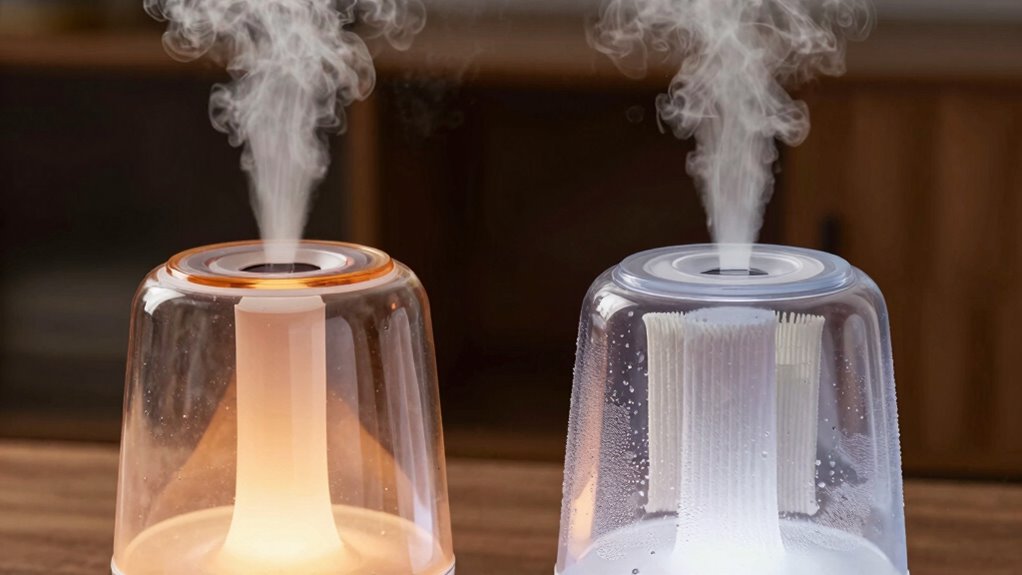
When comparing steam and evaporative humidifiers, you’ll want to take into account both the initial purchase price and ongoing costs. Steam models tend to be more expensive upfront but may have higher energy bills, while evaporative units are usually cheaper to buy but might require more filter replacements. Understanding these costs helps you choose the option that fits your budget best. Additionally, considering DIY maintenance tips can help extend the lifespan of your humidifier and reduce long-term expenses. Proper maintenance can also prevent issues caused by water quality considerations, which are crucial for preserving the device’s longevity. Being aware of advanced features offered by trusted brands in the Gold IRA Markets can also impact both initial and ongoing costs, making informed choices essential for long-term savings. Recognizing the importance of energy efficiency can further help in reducing operational costs over time.
Initial Purchase Price
Steam humidifiers generally come with a higher initial price tag compared to evaporative models, primarily because of their more complex technology and heating components. You’ll pay more upfront, but this can impact your air quality by providing consistent, humidified air. When considering cost, keep in mind:
- The price range varies considerably, with steam units often costing twice as much as evaporative ones.
- High-quality models with advanced features tend to be pricier but can improve noise levels, making them quieter.
- The initial investment may influence your choice if budget constraints are tight.
- While the upfront cost is higher, some find that steam humidifiers offer better control over humidity, impacting long-term comfort and air quality.
Choosing wisely can prevent costly replacements or upgrades later.
Operational Expenses
Operational expenses for humidifiers can vary considerably based on their technology and usage. Steam humidifiers tend to have higher energy consumption because they boil water to produce steam, leading to increased electricity costs. Evaporative models usually consume less energy, as they rely on natural evaporation rather than heating water. Over time, this difference impacts your utility bills substantially. Additionally, the environmental impact of steam units is higher due to greater energy use, contributing to a larger carbon footprint. Evaporative humidifiers are generally more eco-friendly because they operate more efficiently, using less power. If you’re concerned about ongoing costs and environmental effects, evaporative models offer a more sustainable, budget-friendly option, while steam units may seem cheaper upfront but could cost more over time. Understanding dark psychology tactics can help you make more informed choices about products and their long-term impacts.
What Are the Maintenance Requirements for Each Type?
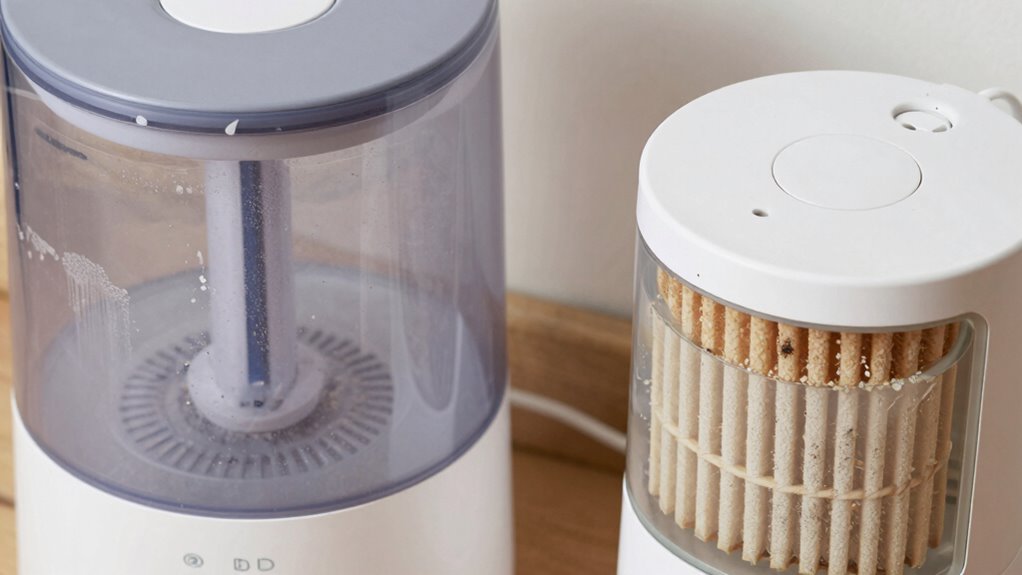
Maintaining both steam and evaporative humidifiers requires regular cleaning to prevent mold, bacteria, and mineral buildup. Proper humidifier maintenance is essential for safe operation and extends device lifespan. Here’s what you need to do:
Regular cleaning of humidifiers prevents mold, bacteria, and mineral buildup, ensuring safety and longevity.
- Clean the water tank weekly with vinegar or a mild cleaning solution.
- Replace filters or wicks as recommended by the manufacturer.
- Descale mineral deposits using descaling agents or vinegar solutions.
- Dry all parts thoroughly before reassembling to prevent mold growth.
These tasks keep your humidifier functioning efficiently and reduce potential health risks. While evaporative models generally need more frequent filter changes, steam units require less filter maintenance but need regular descaling. When considering the cost comparison, factor in cleaning supplies and filter replacements, which can influence long-term humidifier costs.
Which Humidifier Is More Energy-Efficient?
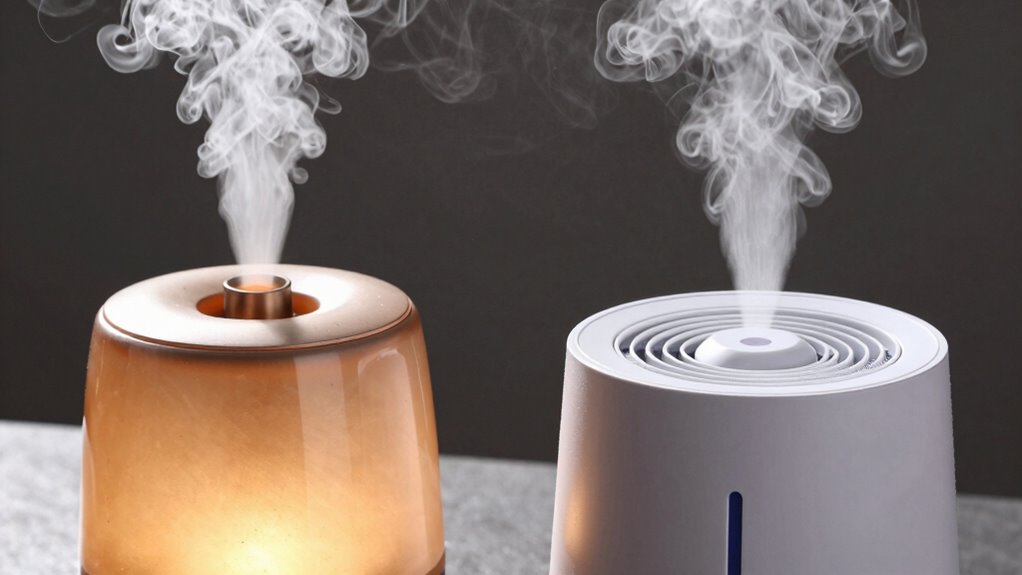
When comparing energy efficiency between humidifier types, evaporative models often use less electricity because they rely on natural evaporation processes and require minimal heating. Their simple humidifier design minimizes energy consumption, making them more cost-effective over time. In contrast, steam humidifiers need to boil water continuously, which consumes markedly more power due to their heating element. This difference in energy consumption means evaporative units are generally more energy-efficient, especially if you’re concerned about electricity bills. Additionally, their straightforward design means fewer components that require power, helping you save energy. If efficiency and lower operating costs are your goals, choosing an evaporative humidifier offers a clear advantage over steam models. Proper humidifier selection can also contribute to improved indoor air quality and overall home comfort.
Are There Health Risks With Different Humidifiers?

While humidifiers can improve air quality and comfort, they also pose potential health risks if not used properly. Poor maintenance or incorrect use can lead to mold, bacteria, or mineral dust spreading in the air. Additionally, the aesthetics of your humidifier matter, as unsightly units may be ignored, increasing risks. Noise levels vary between models and can disrupt sleep or concentration. To stay safe, consider these factors:
- Regularly clean your humidifier to prevent microbial growth.
- Use distilled water to reduce mineral dust.
- Choose models with quieter operation for better comfort.
- Select humidifiers with appealing aesthetics to encourage proper upkeep.
- Paying attention to humidifier maintenance can significantly reduce health risks and ensure optimal performance. Be aware that microplastics in dust from devices and dust particles can also impact indoor air quality, so proper filtration is essential. Also, understanding indoor air quality can help you make better choices for a healthier environment.
Being mindful of these risks helps you avoid health issues and guarantees your humidifier enhances your environment safely.
Which Humidifier Is Best for Your Room Size?
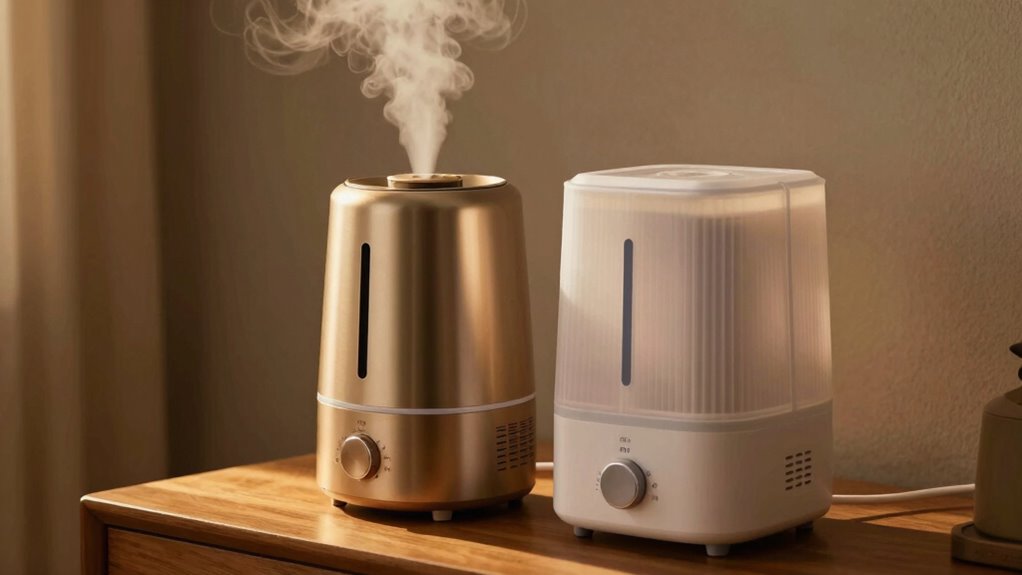
Choosing the right humidifier size depends on your room’s dimensions, as a unit that’s too small won’t effectively humidify the space, while one that’s too large can lead to excess moisture and potential mold growth. For small rooms (up to 200 sq ft), compact evaporative or steam models work best. Medium rooms (200-400 sq ft) benefit from larger units with adjustable settings. For large spaces (over 400 sq ft), consider high-capacity humidifiers with advanced humidifier technology for consistent air quality improvement. Understanding how humidifier technology works can help you select a model that meets your room’s specific needs and ensures optimal performance.
What Happens If You Pick the Wrong Humidifier?
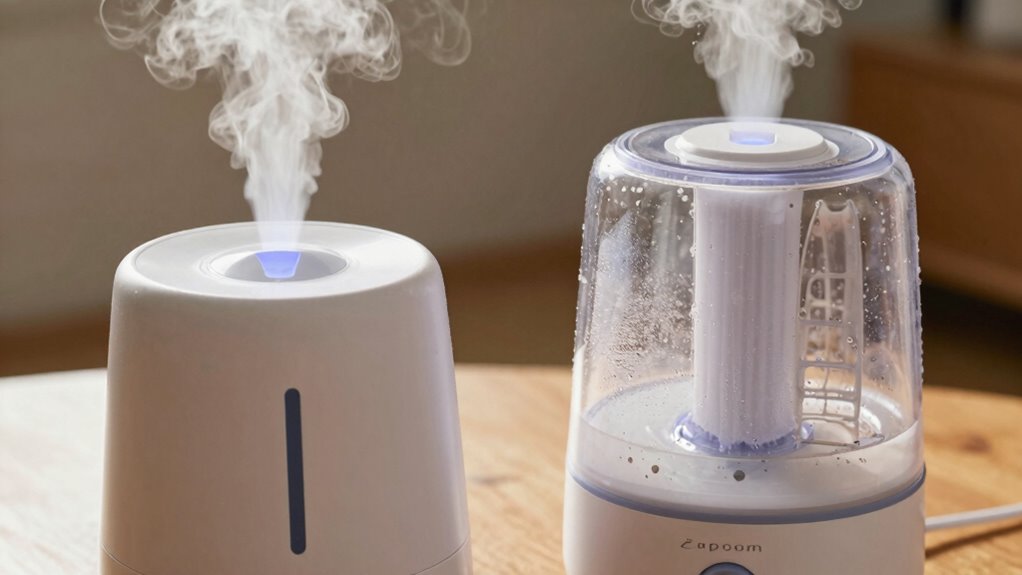
Picking the wrong humidifier can lead to a range of issues that affect your indoor air quality and comfort. If you select poorly, you might face:
- Poor humidifier aesthetics that clash with your decor, making it a visual distraction.
- Excessive noise levels that disrupt sleep or work, reducing overall comfort.
- Inadequate humidity control, causing dryness or excess moisture, which can promote mold growth. Additionally, choosing an incompatible model can compromise noise reduction efforts, making your space less peaceful.
- High maintenance needs or malfunction risks, leading to increased costs and inconvenience.
- Understanding regulatory changes can also help you ensure your devices are protected from future issues, similar to selecting the right humidifier for your environment. It’s crucial to take into account both aesthetics and noise levels to ensure your humidifier complements your space and lifestyle, preventing costly mistakes down the line. Being aware of credit card security measures can further safeguard your investments in home appliances.
Tips for Choosing the Most Cost-Effective Humidifier for Your Home
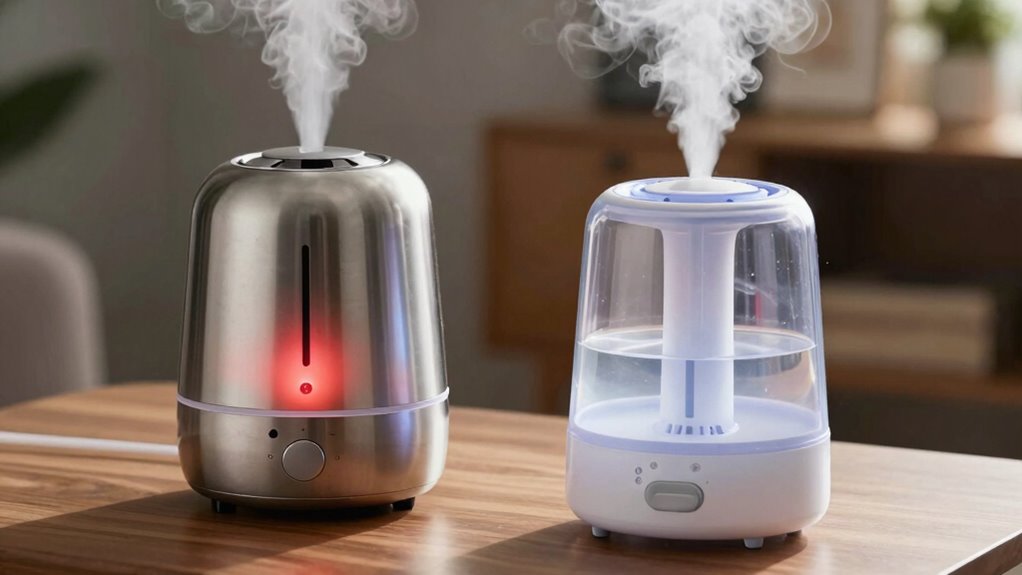
Finding a cost-effective humidifier that suits your needs involves considering both upfront expenses and ongoing maintenance costs. Don’t fall for humidifier myths that suggest cheaper models are always lower quality; instead, do brand comparisons to identify reliable options. Look for models with energy-efficient features and easy-to-clean components to save on electricity and maintenance over time. Evaluate the initial price alongside long-term costs, such as filter replacements or mineral pads. Research customer reviews and expert opinions to weed out underperforming brands. Choosing the right humidifier requires balancing affordability with durability and efficiency. This way, you avoid costly repairs or replacements down the line, ensuring you get the most value from your investment while maintaining a healthy indoor environment. Understanding humidifier types can help you select the best model for your specific needs.
Frequently Asked Questions
Can Humidifiers Help With Allergies or Asthma Symptoms?
Humidifiers can help with allergy relief and reduce asthma triggers by maintaining proper indoor humidity levels, preventing dry air that worsens symptoms. By adding moisture, you can soothe irritated nasal passages and ease breathing. Just make certain you keep your humidifier clean to prevent mold and bacteria buildup, which could worsen allergies. Choosing the right type and maintaining it properly makes a significant difference in managing allergy and asthma symptoms effectively.
How Long Do Humidifiers Typically Last Before Needing Replacement?
Your humidifier’s lifespan depends on its type and maintenance, but most last about 6 to 12 months before needing replacement. Keep an eye on the replacement timeline—if your unit starts to emit strange odors, produce less mist, or shows signs of wear, it’s time to contemplate a new one. Regular cleaning extends lifespan, but don’t delay replacing it when performance drops; the risk of mold or bacteria buildup increases.
Are There Any Safety Features to Look for in Humidifiers?
You should look for safety features like automatic shut-off mechanisms and water level sensors in humidifiers. These safety mechanisms prevent the unit from overheating or overflowing, reducing fire risks and water damage. Water level sensors guarantee the device stops when the water runs low, protecting the motor and extending its lifespan. Prioritize models with these features to keep your space safe and maintain your humidifier’s performance.
What Are the Common Signs That a Humidifier Needs Cleaning?
Like a well-tuned orchestra, your humidifier signals when it’s time for cleaning. Look out for unusual odors, visible mineral buildup, or mold around the unit. If your filter looks dirty or clogged, it’s a sign you need filter maintenance. Hard water deposits, reduced mist output, or a strange taste or smell in the mist are clues that mineral buildup is affecting performance. Regular cleaning keeps it running smoothly.
Can Using a Humidifier Improve Sleep Quality?
Using a humidifier can markedly improve your sleep quality by enhancing sleep enhancement and breathing comfort. When your air is properly humidified, you breathe easier, reduce congestion, and minimize dry throat or coughs that disrupt rest. Whether you choose a steam or evaporative humidifier, maintaining a consistent humidity level creates a more comfortable sleep environment. This helps you fall asleep faster and enjoy deeper, more restful sleep throughout the night.
Conclusion
Choosing the right humidifier is like planting a seed—you need the right type to flourish. If you pick a steam model for a small room, it’s like overwatering a tiny plant—wasteful and costly. Conversely, an evaporative humidifier suited for larger spaces can flourish without draining your wallet. Make informed choices, and you’ll nurture a healthier, more comfortable home—without the costly surprises of the wrong pick.