
TL;DR
Scientists at UIUC and DTU have created a 3D-printed thermal cloak that redirects heat around objects, making them invisible to infrared cameras. This breakthrough enables thermal camouflage for irregular shapes, with potential applications in security and electronics. The technology remains in laboratory testing and is not yet deployable in real-world scenarios.
Scientists have created a 3D-printed thermal cloak that can hide complex objects from infrared detection by guiding heat around them, marking a significant advance in thermal camouflage technology. This development, by researchers at the University of Illinois Urbana-Champaign and the Technical University of Denmark, could impact fields such as security, electronics, and stealth technology.
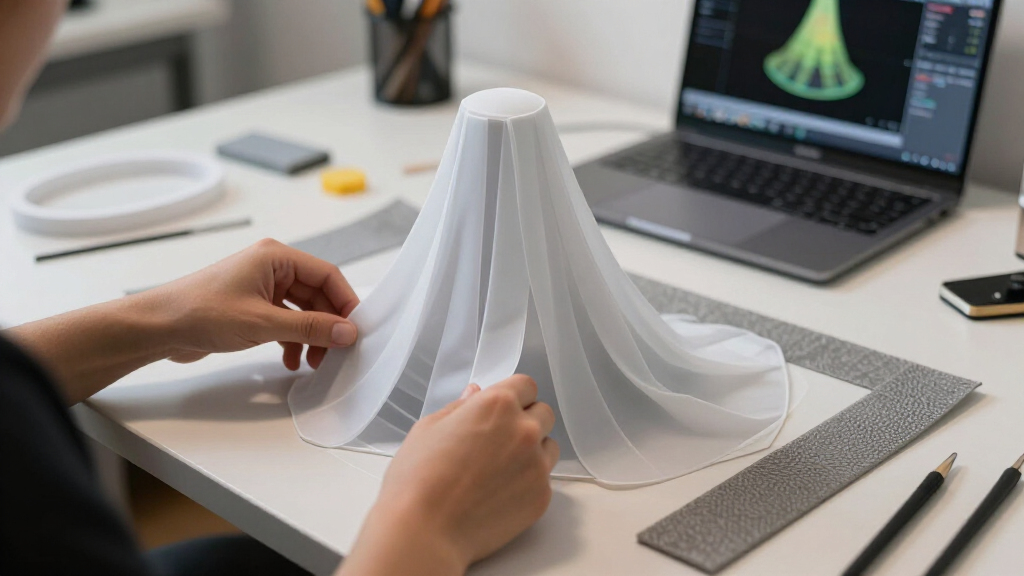
The new thermal cloak uses a combination of a 3D-printed aluminum lattice and a low-conductivity rubber-like material called PDMS to control heat flow around an object. Unlike previous designs limited to flat or simple geometries, this version is capable of conforming to irregular three-dimensional shapes, including face-like structures and complex forms.
In experiments, the researchers placed a thermally distinct core inside a shell with the lattice guiding heat around the protected space. When subjected to a temperature difference—one side heated to 40°C and the other cooled with iced water—the infrared imaging showed that heat effectively bypassed the object, rejoining the external pattern with minimal disturbance. This suggests the cloak’s ability to conceal objects from thermal imaging, regardless of the heat direction.
The design’s flexibility was demonstrated through various shapes, including prototypes mimicking human faces, which handled heat arriving from multiple axes. Currently, the technology functions as a rigid, laboratory-only prototype and cannot yet be applied to moving objects or those generating their own heat, such as humans or active machinery.
Implications for Infrared Stealth and Thermal Management
This innovation could significantly advance thermal camouflage by enabling objects of irregular shape to evade infrared detection, a capability previously limited to simple geometries. Potential applications include military stealth, protected electronics, and thermal management in sensitive equipment. While still in the experimental phase, this technology points toward future developments in active thermal cloaking systems that could adapt to changing heat sources and environments, bringing practical invisibility closer to reality.
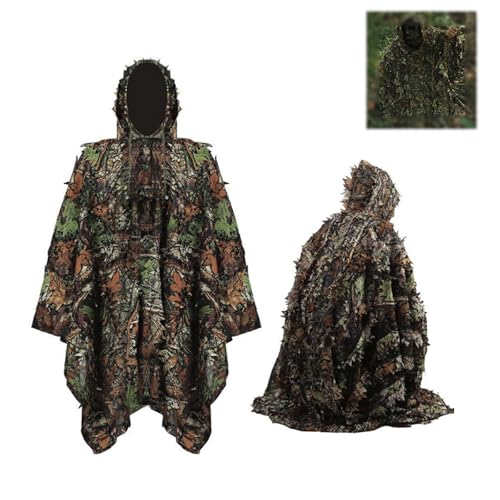
FASHION ITEM 2024 New 3D Bionics Thermal Camouflage Quick-Drying Waterproof Cloak, Infrared Ir Thermal Blocking
- Thermal Camouflage Technology: Effective 3D bionics thermal concealment
- Full Coverage Design: Provides complete coverage for gear and body
- Versatile Woodland Camouflage: Leaves blend seamlessly in wooded areas
As an affiliate, we earn on qualifying purchases.
As an affiliate, we earn on qualifying purchases.
Progress in Thermal Cloaking Technologies
Traditional thermal cloaks relied on flat surfaces or fixed heat directions, offering limited concealment. Recent breakthroughs, including this 3D-printed approach, have expanded the scope to complex shapes and dynamic heat flows. Earlier prototypes demonstrated basic heat redirection, but the new design’s ability to handle irregular forms and multiple heat axes marks a notable evolution in the field.
Current research is focused on refining materials and structures to enable flexible, lightweight, and active cloaking solutions that could eventually be integrated into real-world applications, including wearable or portable systems. The technology remains confined to controlled laboratory settings, with ongoing efforts to address challenges like heat generated internally by objects and movement.
“This new approach allows us to manipulate heat flow around complex shapes, which was not feasible with previous flat or simple geometries.”
— an anonymous researcher
3D printed heat redirecting materials
As an affiliate, we earn on qualifying purchases.
As an affiliate, we earn on qualifying purchases.
Limitations and Challenges of Current Thermal Cloak Designs
It is not yet clear how well the cloak performs with objects that generate their own heat or in dynamic environments. The current prototypes are rigid and cannot accommodate movement or internal heat sources, limiting immediate practical application. Further research is needed to develop adaptable, active cloaking systems capable of managing internal heat and real-world conditions.
thermal imaging concealment products
As an affiliate, we earn on qualifying purchases.
As an affiliate, we earn on qualifying purchases.
Next Steps Toward Practical Thermal Invisibility
Researchers plan to explore active systems that can manage heat generated within objects, aiming to create more flexible and deployable thermal cloaks. Future work will focus on integrating sensors and adaptive materials, with the goal of transitioning from laboratory prototypes to real-world applications, including wearable or portable thermal camouflage devices.
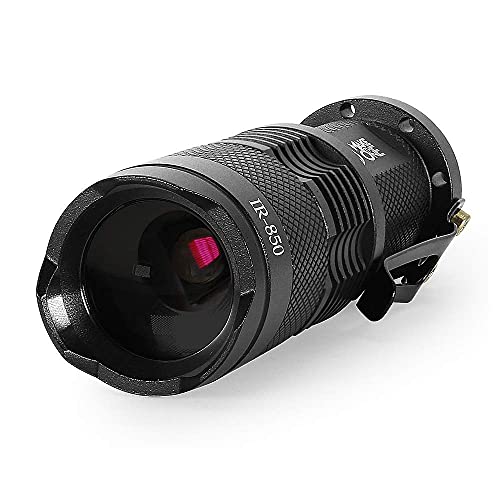
Maketheone IR Torch 3 Watt 850NM Infrared Light Night Vision Flashlight Torch – Infrared Light is Invisible to Human Eyes – to be Used with Night Vision Device (NOT Include Battery)
- Invisible IR Light: Emits high-power 850NM infrared light
- Zoomable for Long Range: Adjustable zoom for different distances
- Optical Convex Lens: Focuses beam for spotlight or flood
As an affiliate, we earn on qualifying purchases.
As an affiliate, we earn on qualifying purchases.
Key Questions
Can this thermal cloak hide moving objects?
Currently, no. The prototypes are rigid and designed for static objects. Future research aims to develop flexible, active systems capable of concealing moving heat sources.
Is this technology ready for practical use?
No, it remains in laboratory testing. Significant development is needed before it can be applied in real-world scenarios.
Could this be used to hide humans or active machinery?
Not yet. The current design cannot handle internal heat generation or movement. Future advancements may enable such applications.
What materials are used in the cloak?
The cloak combines a 3D-printed aluminum lattice with PDMS, a low-conductivity rubber-like material, to control heat flow.
What are potential applications for this technology?
Possible uses include infrared stealth for military purposes, protecting sensitive electronics, and managing heat in complex machinery.
Source: designboom