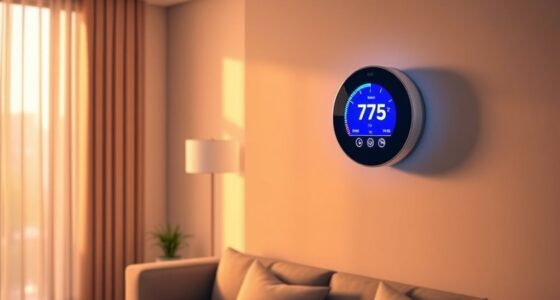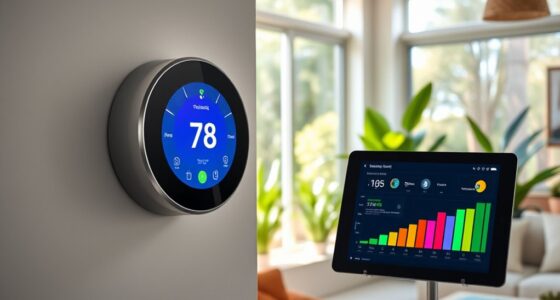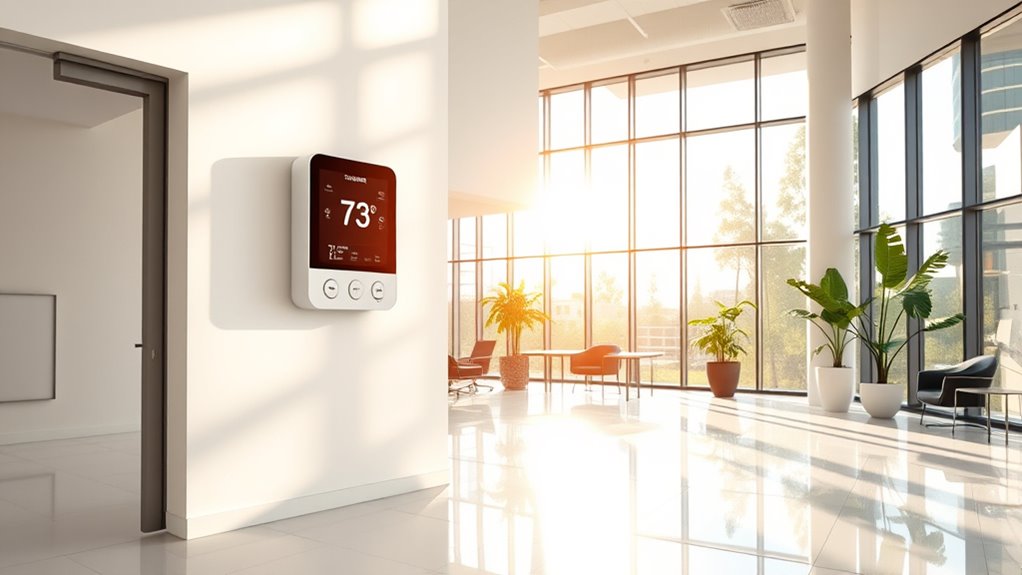

Using smart thermostats in your commercial building helps you cut energy costs by optimizing heating and cooling based on real-time data and occupancy patterns. They allow you to fine-tune indoor temperatures, prevent energy waste during off-hours, and improve overall efficiency. The technology also offers insights for predictive maintenance and easier integration with building systems. Keep exploring to discover how these upgrades can deliver long-term savings and sustainable operation benefits.
Key Takeaways
- Smart thermostats optimize HVAC operation, reducing energy waste and lowering utility bills in commercial buildings.
- They enable real-time monitoring and adjustments, ensuring efficient energy use based on occupancy patterns.
- Integration with building management systems enhances control, leading to significant energy savings over time.
- Retrofitting smart thermostats helps identify inefficiencies and supports sustainability goals through precise temperature management.
- Predictive maintenance features prevent costly system failures, maintaining optimal energy performance long-term.

Energy savings in commercial buildings are essential for reducing operating costs and minimizing environmental impact. One of the most effective ways to achieve this is by installing smart thermostats, which optimize heating and cooling systems based on real-time data and usage patterns. These devices allow you to fine-tune indoor temperatures, guaranteeing that your space remains comfortable for occupants while preventing energy waste. When you focus on occupant comfort, you’re not just keeping people happy—you’re also encouraging consistent building use, which further enhances energy efficiency. Smart thermostats adapt to different schedules and preferences, automatically adjusting settings during off-hours or when spaces are unoccupied. This means you can maintain a pleasant environment without unnecessary energy expenditure, ultimately lowering utility bills and reducing your carbon footprint.
However, integrating smart thermostats into existing commercial buildings isn’t without its challenges. Retrofit challenges can be significant, especially if your current HVAC systems are outdated or incompatible with modern automation technology. You might face difficulties with wiring, limited space for new controls, or complex system configurations that require professional installation. These obstacles can slow down the implementation process and increase upfront costs, making some building owners hesitant to move forward. Despite these challenges, the long-term benefits often outweigh the initial hurdles. Upgrading to smart thermostats can provide precise control, real-time monitoring, and even predictive maintenance insights that prevent costly system failures. Additionally, retrofitting options are increasingly available to simplify integration and reduce costs. As you navigate retrofit challenges, it’s essential to work with experienced professionals who understand your building’s specific needs and can recommend tailored solutions.
Another key consideration is the integration of smart thermostats with existing building management systems. Compatibility issues may arise, requiring additional hardware or software upgrades. You’ll also need to consider the learning curve associated with new technology—training staff to operate and interpret data from these devices ensures you maximize their potential. While retrofit challenges can seem intimidating at first, they’re often manageable with proper planning and expertise. The investment in overcoming these hurdles pays off through improved occupant comfort, reduced energy costs, and a more sustainable operation overall.
Frequently Asked Questions
How Do Smart Thermostats Integrate With Existing Building Management Systems?
Smart thermostats integrate with your existing building management system through building automation protocols like BACnet or Modbus, enabling seamless communication. They connect to your system’s network, allowing real-time energy monitoring and control. You can remotely adjust settings, automate temperature schedules, and optimize energy use. This integration helps you enhance efficiency, reduce costs, and gain better insight into your building’s performance, all while maintaining comfort and operational control.
What Are the Upfront Costs Versus Long-Term Savings for Smart Thermostats?
You’ll typically face an initial investment of $200 to $500 per thermostat, but that cost pays off. Studies show businesses can save up to 20% on energy bills annually. Over time, these smart thermostats deliver significant long-term benefits, reducing operational costs and improving efficiency. While the upfront costs might seem steep, the energy savings and increased control make them a smart investment for your commercial building.
How Do Smart Thermostats Adapt to Different Commercial Building Types?
Smart thermostats adapt to different commercial building types by analyzing occupant behavior and implementing zoning strategies. You can program them to respond to varying occupancy patterns, ensuring energy is used efficiently. They automatically adjust temperatures based on real-time data, helping you optimize comfort and savings. By customizing settings for specific zones and understanding occupant habits, you maximize energy efficiency tailored to your building’s unique needs.
Are There Any Specific Regulations or Standards for Installing Smart Thermostats?
Yes, you need to guarantee building code compliance when installing smart thermostats, following local regulations and standards. Additionally, you should address privacy considerations by safeguarding data collection and access. Always verify that the installation meets electrical and safety codes, and inform users about data usage policies. This approach helps you stay compliant, protect user privacy, and optimize energy efficiency in your commercial building.
What Maintenance Is Required for Smart Thermostats to Ensure Optimal Performance?
You need to regularly check for firmware updates to keep your smart thermostat functioning smoothly and securely. Additionally, if your thermostat uses batteries, replace them as needed to prevent interruptions. Keep the device clean and ensure sensors are unobstructed for accurate readings. By staying current with firmware updates and maintaining batteries, you’ll ensure peak performance, energy efficiency, and reliable control over your building’s climate.
Conclusion
By embracing smart thermostats, you subtly steer your commercial building toward enhanced energy efficiency. These devices gently optimize temperature control, quietly reducing costs and environmental impact. As you incorporate this technology, you contribute to a more sustainable future while maintaining comfort and operational excellence. Ultimately, a small shift in your approach can lead to a more responsible and refined management of resources, quietly elevating your building’s performance and your organization’s reputation.