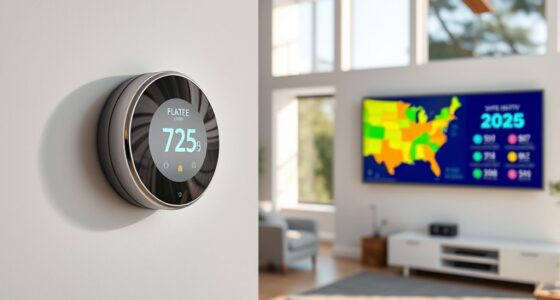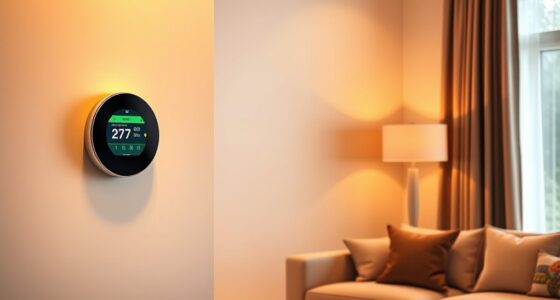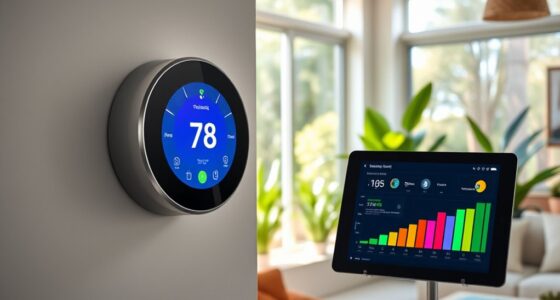
Installing smart thermostats in your rental properties can cut your energy costs markedly by precisely controlling heating and cooling based on occupancy and environmental conditions. They allow tenants to set comfortable temperatures while reducing waste when units are unoccupied. These devices also help you stay compliant with regulations and keep tenants happy by offering personalized control. Want to discover how to maximize savings and tenant satisfaction? Keep exploring to find out more.
Key Takeaways
- Smart thermostats optimize heating and cooling schedules to reduce energy waste during unoccupied periods.
- They enable tenants to personalize temperatures within guidelines, enhancing comfort and efficiency.
- Automated features respond to occupancy and environmental changes, maximizing energy savings.
- Clear communication and lease clauses ensure compliance and prevent disputes over thermostat use.
- Remote management allows tenants and landlords to monitor and adjust settings for consistent savings.
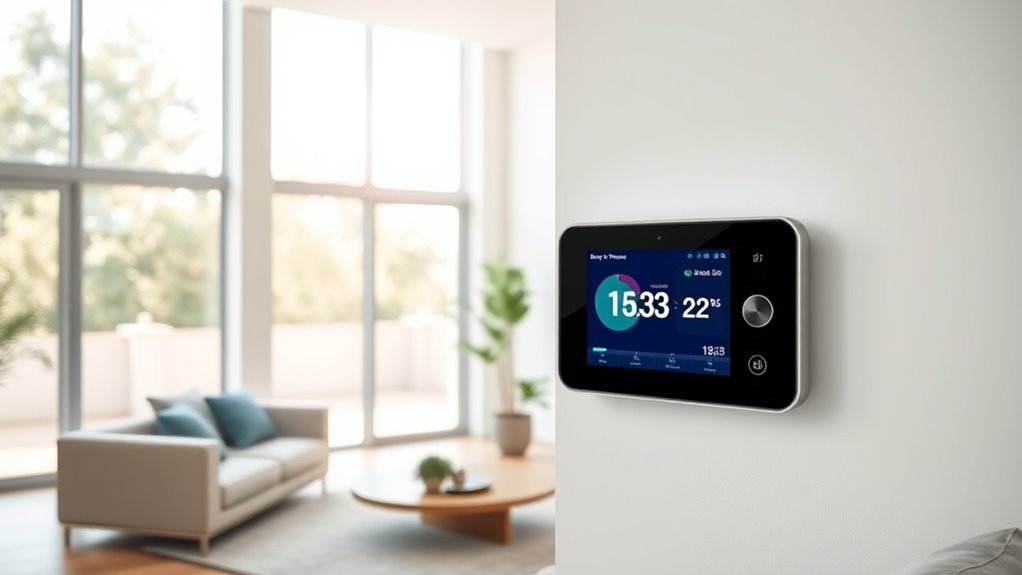
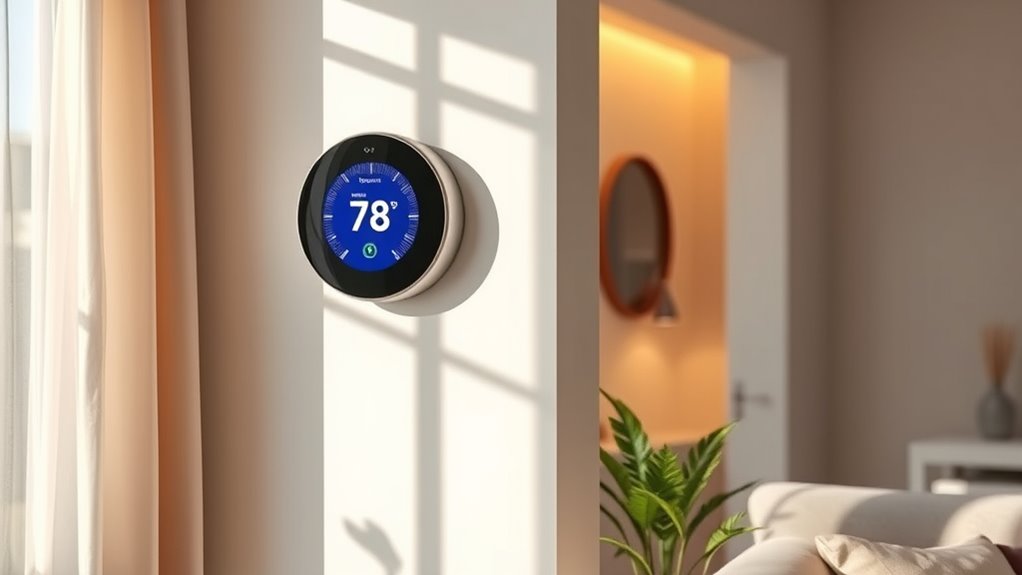
Implementing smart thermostats in rental properties can considerably reduce energy costs while improving tenant comfort. As a property owner or manager, you understand that balancing cost efficiency with tenant satisfaction is essential. Smart thermostats allow you to control heating and cooling more precisely, ensuring tenants experience a comfortable environment without wasting energy. By adapting to individual preferences and schedules, these devices can optimize temperature settings during occupied hours and reduce unnecessary energy use when units are unoccupied. This not only lowers utility bills but also enhances tenant satisfaction, making your property more attractive in competitive markets.
However, integrating smart thermostats also requires careful navigation of leasing regulations. Many jurisdictions have specific rules about adjusting settings or making modifications to rental units. You need to ensure that installing these devices complies with local laws and lease agreements. Clear communication with tenants about how the smart thermostats work and how their use aligns with lease terms can prevent misunderstandings. It’s advisable to include clauses or notices in lease agreements that specify the use of smart thermostats and any impact on energy costs or comfort levels. Doing so promotes transparency and helps you avoid potential disputes related to thermostat adjustments or tenant control.
Tenant comfort remains a top priority when deploying smart thermostats. These devices empower tenants to personalize their environment, allowing them to set preferred temperatures within guidelines you establish. When tenants have control over their comfort, they tend to be happier and more likely to stay longer. Additionally, some smart thermostats come with features like remote access via smartphones, so tenants can adjust temperatures before they arrive home, ensuring a cozy environment upon their arrival. This flexibility can lead to fewer complaints and a more positive rental experience.
To maximize the benefits, educate tenants on how to use the smart thermostats effectively. Provide simple instructions and highlight any restrictions or recommended settings. For instance, setting temperature ranges that promote energy efficiency while maintaining comfort can help prevent excessive energy consumption. Also, consider setting default or recommended temperature schedules that align with typical occupancy patterns, further reducing energy waste without sacrificing tenant comfort. When tenants understand how to use the system properly, it fosters cooperation and enhances overall energy savings. Implementing features like sensor-based adjustments can further optimize energy use by automatically responding to occupancy and environmental changes.
Frequently Asked Questions
Can Tenants Install or Remove Smart Thermostats Without Landlord Approval?
You generally can’t install or remove smart thermostats without your landlord’s permission, as tenant rights usually protect against unauthorized modifications. It’s important to ask for installation permissions beforehand, since landlords have the right to approve or deny changes that affect the property. If you proceed without approval, you risk violating your lease agreement, which could lead to penalties or losing your tenant rights. Always seek clear permission first.
How Do Smart Thermostats Impact Rental Property Insurance Policies?
Smart thermostats can positively influence your rental property insurance policies by potentially opening insurance discounts, thanks to their energy efficiency and safety features. However, they also introduce liability considerations if tenants tamper with them or cause damage. You should inform your insurer about any smart technology installations to guarantee proper coverage and avoid surprises, making certain your investment benefits from the best possible protection and peace of mind.
Are Smart Thermostats Compatible With All Heating and Cooling Systems?
Smart thermostats aren’t compatible with all heating and cooling systems due to compatibility issues. You need to check your system’s specifications to guarantee smooth system integration. Some older or specialized HVAC systems may require additional equipment or may not support smart thermostats at all. Before purchasing, verify compatibility with your current setup to avoid installation problems and maximize energy savings.
What Are the Potential Privacy Concerns With Smart Thermostat Data Collection?
You should be aware that smart thermostats collect data on your habits, raising concerns about data security and tenant privacy. This information can reveal when you’re home or away, potentially compromising your privacy if not properly safeguarded. To guarantee your data is secure, choose devices with strong encryption and transparent privacy policies. Always read the terms, and advocate for strict data security measures to protect your privacy.
Do Smart Thermostats Require Professional Installation for Rental Properties?
Installing smart thermostats in rental properties is like fitting a new piece into a puzzle—you often need professional installation to guarantee everything works smoothly. The installation requirements can vary, but most landlords prefer to handle it through approved technicians. Always get landlord approval before proceeding; some properties might have specific rules or restrictions that could affect installation. This way, you avoid surprises and keep everything running like clockwork.
Conclusion
By installing smart thermostats, you can cut energy costs and boost tenant comfort in your rental properties. These devices make managing temperatures effortless, saving you money and hassle. Remember, a penny saved is a penny earned—so investing in smart technology is a smart move. Embrace innovation, and watch your savings grow while keeping your tenants happy. After all, the early bird catches the worm, and smart choices lead to a brighter, more efficient future.