To lower HVAC runtime in homes that sit empty for long periods, start by installing a smart thermostat. It’ll adjust temperatures based on your schedule and learn your habits for maximum efficiency. Next, improve your insulation to prevent energy loss and maintain consistent indoor temperatures. Finally, seal any gaps or leaks to keep conditioned air in. These steps will help reduce strain on your system, and there are more strategies you might find helpful.
Key Takeaways
- Install a smart thermostat to adjust temperatures automatically during empty periods, reducing unnecessary HVAC runtime.
- Upgrade insulation to minimize energy loss and maintain stable indoor temperatures when the home is unoccupied.
- Conduct regular maintenance to ensure efficient HVAC operation, preventing excess runtime due to neglected issues.
- Seal gaps and leaks around windows, doors, and ductwork to prevent conditioned air loss and reduce system strain.
- Implement zoning systems to control temperatures in unused areas, lowering the overall workload on the HVAC system.

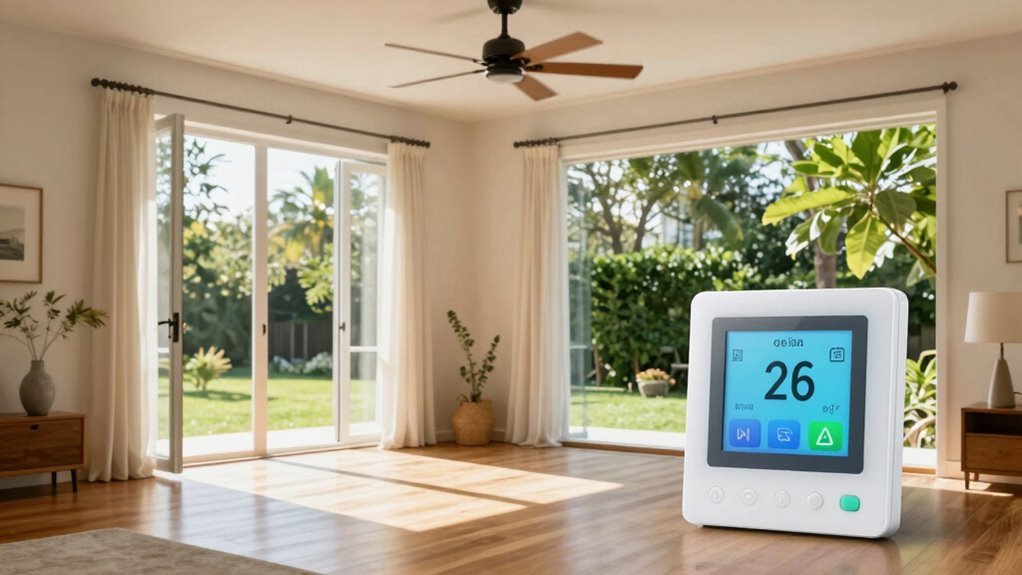
When you want to lower your HVAC runtime, it’s vital to understand that small changes can make a big difference. You might not realize how many simple adjustments can enhance your home’s energy efficiency. One of the most effective ways to achieve this is by using smart thermostats. These devices allow you to set programmable settings, which help regulate your system based on your schedule. If you’re away from home for extended periods, programming your thermostat to adjust the temperature can greatly reduce energy consumption.
Another key aspect to take into account is insulation upgrades. Proper insulation keeps your home comfortable, minimizing the need for your HVAC system to work harder. If your insulation is outdated, it can lead to considerable energy loss, forcing your system to run longer. By upgrading your insulation, you’ll create a more energy-efficient home and lessen the burden on your HVAC system. Additionally, insulation quality plays a crucial role in maintaining consistent indoor temperatures and reducing energy waste.
Upgrading your insulation enhances comfort and boosts energy efficiency, reducing the workload on your HVAC system.
Regular maintenance is also important. Scheduling routine check-ups can help identify and resolve potential issues before they escalate. A well-maintained system runs more efficiently, which translates to reduced runtime. During these maintenance visits, technicians can clean components, replace filters, and confirm that everything operates smoothly. This proactive approach can save you money on energy bills as well. Additionally, air filters should be checked and replaced regularly to maintain optimal airflow and efficiency.
Think about air sealing as another effective strategy. Sealing gaps and leaks in windows, doors, and ductwork prevents conditioned air from escaping, keeping your home comfortable with less effort from your HVAC system. By improving air sealing, you’ll notice a difference in your energy efficiency and a decrease in runtime.
Additionally, utilizing indoor gardening to help regulate indoor humidity levels can reduce the strain on your HVAC system, leading to lower runtime and improved comfort. Zoning systems are another excellent option if your home has long empty periods. These systems allow you to control temperatures in different areas of your home independently. If certain rooms aren’t used often, you can reduce heating or cooling in those spaces, which again reduces the overall workload on your HVAC system.

Amazon Smart Thermostat – Save money and energy – Works with Alexa and Ring – C-wire required
An Alexa thermostat – Amazon Smart Thermostat is an easy way to switch from a traditional thermostats for…
As an affiliate, we earn on qualifying purchases.
As an affiliate, we earn on qualifying purchases.
Frequently Asked Questions
How Often Should I Change My HVAC Filters?
You should change your HVAC filters every 1 to 3 months, depending on the filter types and your home’s needs. If you have pets or allergies, consider changing them more often. Regular filter maintenance not only improves air quality but also keeps your system running efficiently. Check your filters monthly for dirt and debris, and replace them as needed to avoid strain on your HVAC system and guarantee peak performance.
What Temperature Settings Are Most Energy-Efficient?
Setting your thermostat to around 68°F during the day and lowering it to 60°F at night can save you up to 10% on your heating bills. These energy-saving temperatures enhance your comfort while reducing HVAC runtime. For ideal setback settings, consider adjusting the temperature further when you’re away. This way, you maximize savings without sacrificing comfort when you’re home, ensuring your system runs efficiently and effectively.
Can Smart Thermostats Really Save Energy?
Yes, smart thermostats can really save energy. By utilizing smart features, they learn your schedule and adjust temperatures accordingly, minimizing unnecessary heating or cooling. You can program them to lower energy usage when you’re away, leading to significant energy savings. Plus, many offer energy reports, helping you track usage and optimize settings. Overall, investing in a smart thermostat can make your home more efficient and reduce your energy bills.
What Are the Signs of an Overworked HVAC System?
Your HVAC system’s like a marathon runner—if it’s overworked, it’ll show signs of strain. Look for unusual noises like banging or hissing, which signal distress. If you notice fluctuating temperatures in your home, it’s a sign your system’s struggling. High utility bills also indicate energy waste, hinting at inefficiency. Paying attention to these signs can help you catch problems early and keep your system running smoothly.
How Can I Improve My Home’s Insulation?
To improve your home’s insulation, start by conducting an energy audit to identify weak spots. Consider using insulation materials like fiberglass, foam boards, or spray foam to fill gaps in walls, attics, and basements. Seal air leaks around windows and doors with weatherstripping or caulk. Additionally, adding insulation to your attic can greatly reduce heat loss. These steps will help keep your home comfortable and lower energy bills.

Reach Barrier 3009 Garage Door Insulation Kit
Reach Barrier(Tm) Reflective Insulation And Bubble Barrier Technology Blocks Up To 95-Percent Of Radiant Heat Which Will Help…
As an affiliate, we earn on qualifying purchases.
As an affiliate, we earn on qualifying purchases.
Conclusion
By implementing these strategies, you can greatly reduce your HVAC runtime, saving energy and money while improving comfort. Imagine coming home to a cozy atmosphere, knowing you’ve done your part to protect the planet and your wallet. Picture the relief of lower bills each month, all while enjoying the peace of mind that comes from an efficient system. Now, think about how much more you could do with the extra cash—what will your next adventure be?

ETERART Heavy-Duty Aluminum Foil Duct Tape – 2" x 20 Yds, High-Temp Seal for HVAC, Dryer Vents & Insulation, Stops Air Leaks & Resists Extreme Heat for Home Repair, Silver
STOPS AIR LEAKS & SAVES ENERGY: Designed for HVAC contractors and DIYers. This heavy-duty aluminum foil tape creates…
As an affiliate, we earn on qualifying purchases.
As an affiliate, we earn on qualifying purchases.

SmartZone-3X : 3 Zone HVAC Controller KIT w/ Temp Sensor; Dual Climate Control to Replace Honeywell HZ322, EWC, Zonefirst, Zonex, Durozone & More
3 Zone HVAC zone control – Version 3.0 (Replaces SmartZone-2X)
As an affiliate, we earn on qualifying purchases.
As an affiliate, we earn on qualifying purchases.