To lower energy use at night, you should set your smart thermostat to cooler temperatures in winter and warmer in summer. Switch off lights or use energy-efficient LEDs for a cozy atmosphere. Enable sleep mode on devices to minimize drain and consider using power strips to cut power to multiple items at once. Finally, program your devices to turn off when you leave home. There are more great tips waiting for you to discover!
Key Takeaways
- Set smart thermostats to cooler temperatures in winter and warmer in summer during the night to optimize energy savings.
- Use LED bulbs to reduce energy consumption while creating a cozy ambiance for nighttime relaxation.
- Enable sleep mode on electronics to minimize energy drain from devices not in use overnight.
- Program lights and devices to turn off automatically during the night to prevent unnecessary energy waste.
- Ensure thermostats are centrally located and shaded for accurate readings, enhancing nighttime energy efficiency.
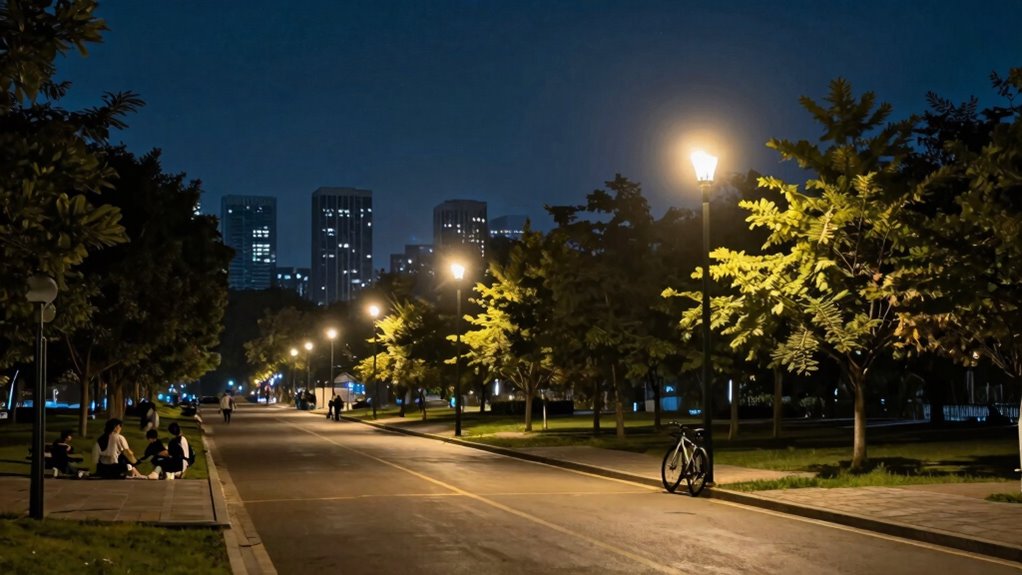
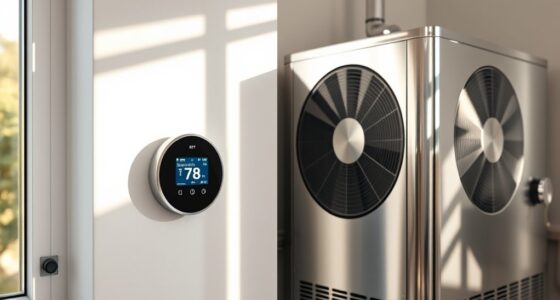
As the sun sets, you can take simple steps to lower your energy use and save money. One effective way to start is by utilizing smart thermostats. These devices learn your habits and automatically adjust the temperature when you’re asleep or away, greatly reducing energy consumption. Instead of cranking up the heat or A/C, let your thermostat do the work for you. Set it to a cooler temperature in winter or a warmer one in summer during the night, and you’ll notice a drop in your energy bills.
As the sun sets, smart thermostats can help you save energy and reduce your bills by adjusting temperatures automatically.
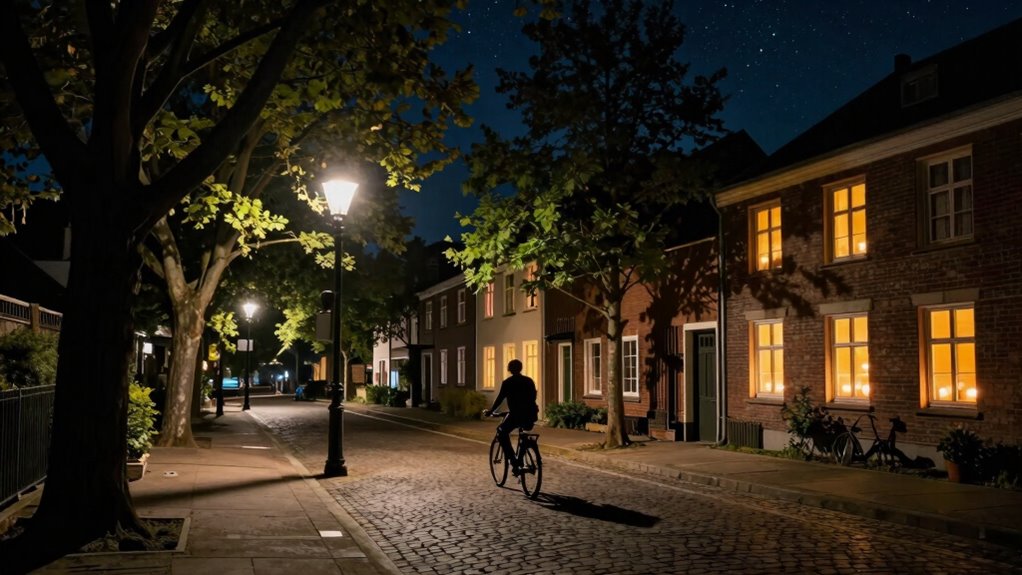
Switching to energy-efficient bulbs, like LED lighting, is another easy adjustment. Unlike traditional incandescent bulbs, LEDs consume considerably less energy and last much longer. When you’re winding down for the night, replace any remaining incandescent bulbs with LED lighting. It not only saves energy but also creates a cozy atmosphere that’s perfect for relaxation.
You might also want to take into account putting your devices in sleep mode. Many electronics, from computers to gaming consoles, continue to draw power even when they’re not in use. By enabling sleep mode, you can minimize this energy drain while you sleep. Don’t forget about using power strips for your devices. By plugging multiple electronics into a single power strip, you can easily turn everything off at once, preventing phantom energy use that adds up over time. Using energy-efficient appliances can further enhance your savings and reduce overall energy consumption.
Home automation systems can enhance your energy-saving efforts as well. You can program your lights and devices to turn off at specific times or when you leave the house. This level of control can help guarantee that you’re not wasting energy unnecessarily. Incorporating smart home technology can make these adjustments even more seamless and efficient. Additionally, a well-placed thermostat can improve the accuracy of temperature control in your home. In fact, research shows that smart thermostats can lead to significant energy savings when used properly.
Finally, think about the placement of your thermostat. If it’s near heat sources like windows or appliances, it may not read the actual room temperature accurately. Make sure it’s placed in a central, shaded spot for ideal efficiency. Additionally, choosing a smart thermostat can optimize your energy use even further by adapting to your daily routine.

Amazon Smart Thermostat – Save money and energy – Works with Alexa and Ring – C-wire required
An Alexa thermostat – Amazon Smart Thermostat is an easy way to switch from a traditional thermostats for…
As an affiliate, we earn on qualifying purchases.
As an affiliate, we earn on qualifying purchases.
Frequently Asked Questions
How Can I Monitor My Nighttime Energy Consumption Effectively?
To monitor your nighttime energy consumption effectively, start with energy tracking tools like smart meters or apps. They help you analyze your usage patterns over time. Set up alerts for peak usage and compare your nightly consumption. You can also plug devices into smart plugs to get real-time data. By regularly reviewing this information, you’ll spot trends and identify ways to cut back on energy use during the night.
What Appliances Consume the Most Energy at Night?
When you think of a nighttime feast, it’s like your home’s appliances are overindulging. Energy-hungry appliances, like refrigerators, water heaters, and HVAC systems, can really spike your nighttime power consumption. For example, a refrigerator runs constantly, even while you sleep, consuming about 100-800 kWh a year. By identifying these energy hogs, you can take steps to reduce their nighttime usage and save on your electricity bill while you dream.
Are There Any Government Incentives for Reducing Nighttime Energy Use?
Yes, there are government incentives for reducing nighttime energy use. You can take advantage of government rebates that encourage energy efficiency upgrades in your home. These programs often cover things like smart thermostats, energy-efficient appliances, and insulation improvements. By participating, you not only save money but also reduce your energy consumption at night. Check your local government’s website to find specific programs available in your area and start saving today!
How Does Nighttime Energy Use Impact My Electricity Bill?
You might think nighttime energy use doesn’t matter, but it can sneakily inflate your electricity bill. By not prioritizing energy efficiency, you miss out on nighttime savings that could lighten your financial load. Lights left on, appliances running, and cooling systems cranked up during off-peak hours add up quickly. So, when you embrace smarter habits at night, you’re not just saving energy; you’re also keeping more money in your pocket.
Can Smart Home Devices Help With Nighttime Energy Savings?
Yes, smart home devices can definitely help you save energy at night. Smart thermostats adjust temperatures based on your preferences, preventing unnecessary heating or cooling. Energy-efficient lighting, like LED bulbs, uses less power, especially when paired with automated schedules that turn them off during peak hours. By optimizing your energy usage, these devices not only reduce your bill but also contribute to a more sustainable lifestyle.

dalattin 24 Pack LED Bulbs Daylight White 5000K, 60 Watt Equivalent A19 Standard Bulbs, E26 Base, 800 LM, Efficient 9W Energy Saving, Non-Dimmable, 80+ CRI, 120V, UL Listed, for Living Room, Office
【Efficiency Meets Comfort】 Dalattin's A19 engergy saving LED bulbs replace 60W incandescents with just 9W while delivering full…
As an affiliate, we earn on qualifying purchases.
As an affiliate, we earn on qualifying purchases.
Conclusion
By embracing simple nighttime settings, you can channel your inner superhero, saving energy while protecting the planet. Whether you dim the lights, unplug unused devices, or use smart technology, every small change adds up. Think of it as your own personal “Green Lantern” moment—shining a light on sustainability. So, as you wind down for the night, remember: your choices matter. Together, we can create a brighter, more efficient future, one restful evening at a time.
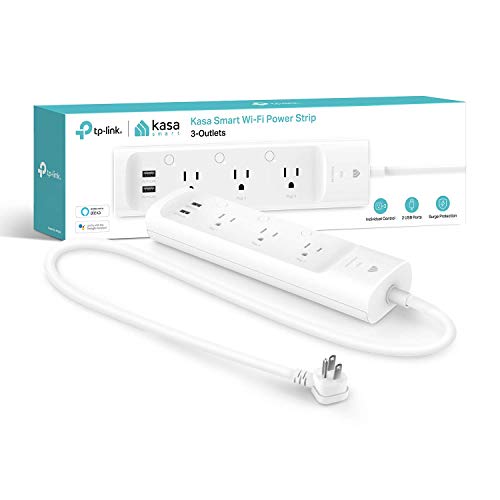
kasa smart Plug Power Strip KP303, Surge Protector with 3 Individually Controlled Smart Outlets and 2 USB Ports, Works with Alexa & Google Home, No Hub Required , White
3 smart outlets plus 2 USB ports: Support 5 appliances simultaneously with 3 independently controllable smart outlets and…
As an affiliate, we earn on qualifying purchases.
As an affiliate, we earn on qualifying purchases.

Tensky Smart Watch for Men/Women Android/iPhone/Samsung, Alexa Built-in, 1.8" Touch Screen Fitness Tracker with Answer/Make Calls, 3ATM Waterproof Heart Rate/Sleep/SpO2 Monitor, 120+ Sport Modes
【Call Receiving/Dialing & Alexa Built-in】Directly use this smart watch with text and call to make and answer calls…
As an affiliate, we earn on qualifying purchases.
As an affiliate, we earn on qualifying purchases.