
TL;DR
The Mobility House and Wallbox successfully installed the first residential bidirectional EV charger in San Diego, enabling vehicle-to-grid services. This development marks a significant milestone in US V2G adoption and grid strengthening efforts.
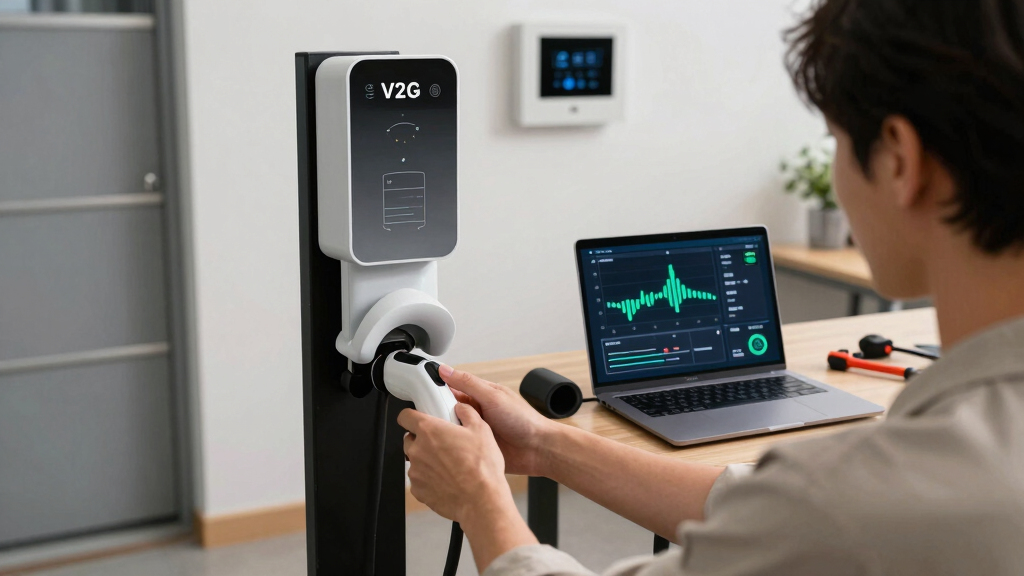
The Mobility House and Wallbox have completed the first residential bidirectional EV charging system in San Diego County, a key step toward wider Vehicle-to-Grid (V2G) integration in the US. This milestone allows EVs to supply power back to the home and grid, strengthening energy resilience amid grid strain, according to officials.
On this week, The Mobility House and Wallbox installed a Kia EV9 connected to a Quasar 2 bidirectional charger at a home in San Diego County. This setup represents the first residential bidirectional charger interconnected in the county, paving the way for broader adoption of V2G technology in US homes.
Russell Vare, VP of Vehicle-Grid Integration at The Mobility House North America, confirmed that this project achieved interconnection approval with the utility, a necessary step for V2G operation. The system can now export power, enabling EVs to act as energy assets for the grid and the home.
During the announcement at ACT Expo ’26, Dylan Gasperik, North America’s director of marketing communications for The Mobility House, emphasized the significance of this milestone for EV owners and utilities, noting that it opens new revenue streams and enhances grid stability.
Why It Matters
This development matters because it demonstrates the practical viability of V2G technology in residential settings, which could significantly enhance grid resilience and reduce energy costs. As EV adoption rises, integrating vehicle batteries into the grid offers a way to balance supply and demand, especially during peak periods or outages.
Industry experts, including Vare, highlight that this project signals progress toward mainstream V2G deployment, which could transform how energy is managed and distributed across the US, especially amid increasing grid stress and renewable integration challenges.
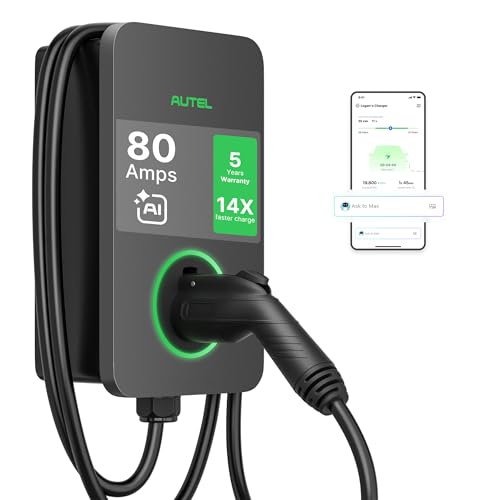
Autel MaxiCharger Level 2 Electric Vehicle (EV) Charger, up to 80 Amp Fast Charging EV Charger Level 2, Integrated Cloud with AI, Indoor/Outdoor Charging Stations J1772, Hardwired
AI-POWERED SMART CHARGING & APP CONTROL – This ev charger level 2 uses Autel’s AI-integrated smart app to…
As an affiliate, we earn on qualifying purchases.
As an affiliate, we earn on qualifying purchases.
Background
V2G technology has been under development for several years, with pilot programs and utility partnerships testing its potential. Prior to this, most V2G efforts focused on fleet or commercial applications, with residential integration remaining limited. The recent installation in San Diego marks a shift toward consumer-level adoption, supported by regulatory approvals and technological advancements in bidirectional chargers.
The project aligns with broader efforts to modernize the grid and incorporate renewable energy sources, which require flexible, distributed storage solutions like V2G-enabled EVs. The ACT Expo ’26 serves as a platform to showcase these innovations and promote policy and industry support.
“This is an important milestone in the commercialization of vehicle-to-everything services for electric vehicle drivers. We have accomplished interconnection approval and enabled the system to export power, realizing the full value of V2G.”
— Russell Vare, VP of Vehicle-Grid Integration, The Mobility House
“This installation demonstrates that residential V2G is now feasible and scalable, offering new opportunities for EV owners to participate in grid support and revenue generation.”
— Dylan Gasperik, North America’s Director of Marketing Communications, The Mobility House

SEGUMA Level 2 EV Charger, 40Amp Electric Car Chargers 25FT Cable with NEMA 14-50 Plug, Adjustable Current, Timing Delay Electric Vehicle Chargers for J1772 BEVs/PHEVs 240V 9.6kW
Up To 9.6kWh High Speed Charging: The Seguma level 2 ev charger provides 40Amp current with 240V voltage,…
As an affiliate, we earn on qualifying purchases.
As an affiliate, we earn on qualifying purchases.
What Remains Unclear
It is not yet clear how widespread residential V2G adoption will become in the US, or how utilities and regulators will adapt policies to support large-scale deployment. Details about long-term system performance, user incentives, and grid integration strategies remain under development.

Wallbox Pulsar Plus Level 2 EV Charger 48 Amp – 11.5kW 240V Wall Home EV Charger – J1772 25ft Cable – Outdoor and Indoor EVSE – Energy Star and UL Certified – Assembled in USA – Black Matte
FAST CHARGING: Pulsar Plus EV Charger is 9x faster than portable basic chargers, providing up to 45 miles…
As an affiliate, we earn on qualifying purchases.
As an affiliate, we earn on qualifying purchases.
What’s Next
Next steps include expanding pilot programs, securing more interconnection approvals, and developing regulatory frameworks to facilitate broader residential V2G adoption. Industry stakeholders anticipate additional installations and policy support in the coming year, moving toward commercial-scale deployment.

EVIQO Level 2 EV Charger, 40 Amp 240V, J1772 for Non-Tesla EVs, 25ft Cable, WiFi (2.4GHz) Smart App, Weatherproof Indoor/Outdoor (IP66, NEMA 4), UL & ETL Certified, NEMA 14-50 Plug-in, 9.6kW
PLUG-IN, NO ELECTRICIAN: EVIQO Level 2 EV charger with a max output of 40A on a dedicated 50A…
As an affiliate, we earn on qualifying purchases.
As an affiliate, we earn on qualifying purchases.
Key Questions
What is Vehicle-to-Grid (V2G) technology?
V2G allows electric vehicles to supply stored energy back to the grid or home, helping balance supply and demand and providing potential revenue for EV owners.
Why is the San Diego installation significant?
It is the first residential bidirectional charger interconnected in the county, demonstrating the technical and regulatory feasibility of V2G at the home level in the US.
How does V2G benefit the grid?
V2G can provide ancillary services like frequency regulation, reduce peak load, and improve resilience during outages or high demand periods.
What are the challenges to wider V2G adoption?
Key challenges include regulatory approvals, utility policies, user incentives, and the cost and availability of bidirectional chargers.