
To reduce energy waste in guest rooms and little-used spaces, start with smart thermostats that adjust temperatures when guests leave. Upgrade to LED lighting and install occupancy sensors to turn off lights automatically. Encourage guests to participate in sustainability efforts, like opting out of daily housekeeping. In common areas, use occupancy sensors for lights and HVAC. These simple steps enhance guest comfort while saving energy. Stick around to discover more effective strategies for boosting your sustainability efforts.
Key Takeaways
- Implement smart thermostats to automatically adjust temperatures based on occupancy, reducing energy waste when rooms are unoccupied.
- Upgrade to LED lighting and install occupancy sensors to minimize energy use in guest rooms and common areas.
- Encourage guests to participate in sustainability by offering incentives for opting out of daily housekeeping services.
- Utilize occupancy sensors in little-used spaces, like meeting rooms, to ensure lights and HVAC systems operate only when necessary.
- Promote awareness of energy-saving initiatives through digital channels and informational brochures to engage both guests and staff.
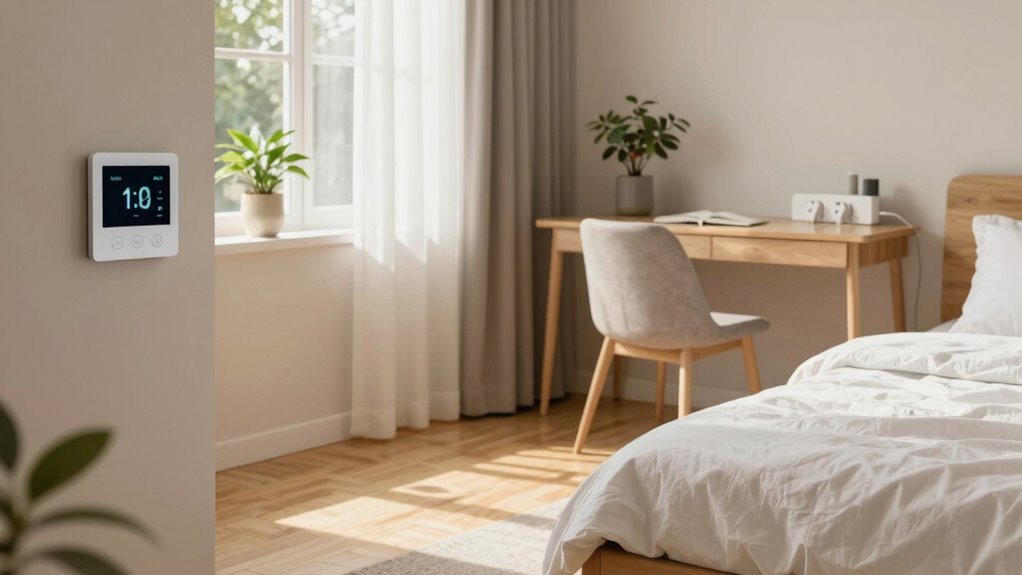
When you consider the impact of energy waste in guest rooms, it’s clear that small changes can lead to considerable savings. Each room in a hotel can be a hotspot for energy inefficiency if you’re not careful. By implementing smart technologies and eco-friendly practices, you can not only reduce waste but also enhance guest engagement and satisfaction.
Small changes in hotel guest rooms can lead to significant energy savings, enhancing both sustainability and guest satisfaction.
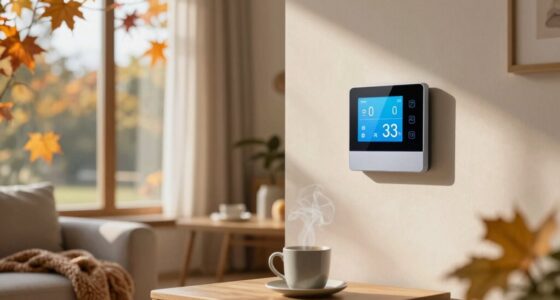
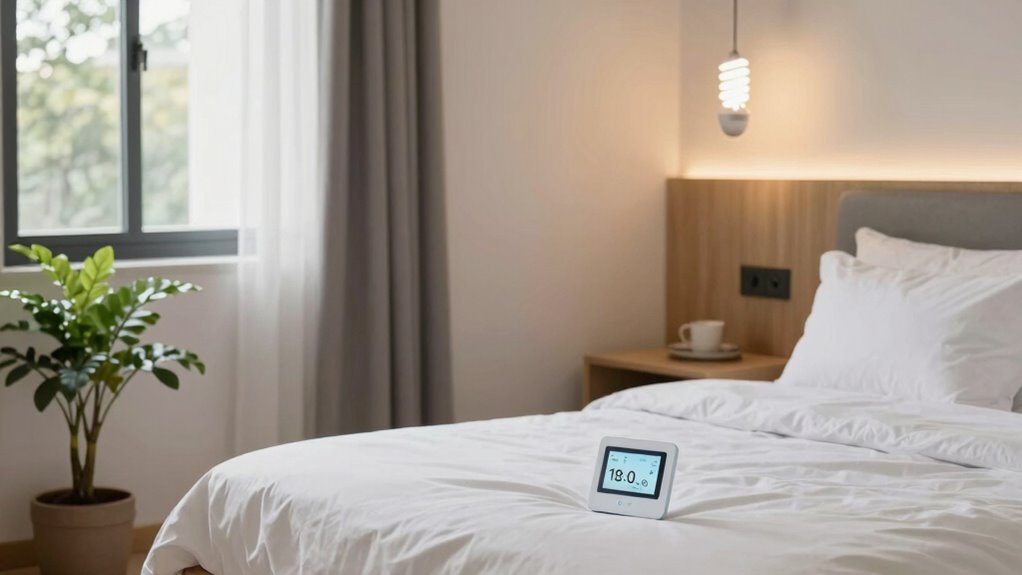
One of the most effective tools at your disposal is the installation of smart thermostats. These devices learn guests’ preferences and adjust temperatures automatically, guaranteeing comfort without excessive energy use. When guests leave the room, the thermostat can switch to an energy-saving mode. This small step can greatly cut down on heating and cooling costs, all while keeping your guests happy.
Next, consider upgrading to energy-efficient lighting. Switching to LED bulbs can reduce energy consumption drastically. These bulbs last longer and consume less power than traditional options. You might also implement occupancy sensors that automatically turn lights off when a room is unoccupied. This technology not only saves energy but also serves as a gentle reminder to guests about eco-friendly practices, encouraging them to be more mindful during their stay. Incorporating energy-saving methods can further amplify these benefits.
Engaging your guests in sustainability efforts can create a more meaningful experience for them. You could offer incentives for guests who opt out of daily housekeeping, allowing you to conserve both water and electricity. By communicating the benefits of these eco-friendly practices, you’ll foster a sense of community and responsibility among your guests. Additionally, providing guests with information about energy waste and how they can help reduce it can further promote sustainable behaviors. Understanding indoor air quality and its connection to energy efficiency can also motivate guests to participate in eco-friendly initiatives.
Another area to focus on is minimizing energy waste in little-used spaces like meeting rooms or lounges. By installing occupancy sensors in these areas, you can guarantee that lights and HVAC systems only operate when needed. This not only saves energy but also demonstrates your commitment to sustainability, reinforcing your brand’s eco-friendly image.
Finally, don’t underestimate the power of clear communication. Provide information about your energy-saving initiatives in room brochures or through digital channels. This not only raises awareness but also invites guests to participate in your eco-friendly efforts. When guests feel like they’re part of the solution, it enhances their overall experience and makes them more likely to return.

Honeywell Home RTH9585WF Wi-Fi Smart Color Thermostat, 7 Day Programmable, Touch Screen, Energy Star, Alexa Ready, C-Wire Required, Not Compatible with Line Volt Heating Gray
- Color Personalization: Customize to match your decor
- Energy Savings Rewards: Rebates and utility programs available
- Flexible Scheduling: Program according to your schedule or rates
As an affiliate, we earn on qualifying purchases.
As an affiliate, we earn on qualifying purchases.
Frequently Asked Questions
What Are the Benefits of Reducing Energy Waste in Hotels?
Reducing energy waste in hotels boosts sustainability practices, enhancing your brand’s reputation. It leads to significant financial savings, lowering operating costs while increasing profitability. Plus, guests appreciate environmentally conscious hotels, which boosts guest satisfaction and encourages repeat visits. You’re also minimizing your environmental impact, contributing to a healthier planet. By prioritizing energy efficiency, you not only attract eco-minded travelers but also create a more sustainable business model for the future.
How Can Staff Be Trained to Minimize Energy Consumption?
Picture your staff as a well-oiled machine, smoothly reducing energy waste. To minimize energy consumption, you’ll want to implement engaging training programs that focus on practical tips and real-life scenarios. Encourage staff engagement by involving them in discussions about energy-saving practices. Use visual aids, gamification, and regular feedback to keep everyone motivated. When your team feels a sense of ownership, they’ll naturally adopt energy-efficient habits that benefit the entire hotel.
What Technologies Assist in Energy Management for Guest Rooms?
Smart thermostats and occupancy sensors help you manage energy efficiently in guest rooms. Automated lighting adjusts based on room usage, while energy dashboards provide real-time monitoring of consumption. Cloud management allows you to control systems remotely, and predictive analytics helps forecast energy needs. With remote controls, guests can easily adjust settings, ensuring comfort without unnecessary waste. These technologies empower you to create a more energy-efficient environment while enhancing guest experiences.
Are There Financial Incentives for Energy-Efficient Upgrades?
Yes, there are several financial incentives for energy-efficient upgrades. You can take advantage of financial rebates from utility companies, which often encourage energy-saving improvements. Additionally, tax credits may be available for specific upgrades, helping to offset costs. Look into energy grants that local or federal programs provide, and don’t forget about utility incentives that reward your efforts to reduce energy consumption. These options can greatly lower your upfront investment while promoting sustainability.
How Often Should Energy Audits Be Conducted in Hotels?
You should conduct energy audits in hotels at least annually. Curiously, hotels that perform regular audits can save up to 30% on energy costs. By focusing on energy audit frequency, you’ll identify inefficiencies and optimize guest room assessments. This proactive approach not only enhances sustainability but also boosts your bottom line. Keeping track of energy usage guarantees you’re aware of areas needing improvement, leading to a more efficient operation overall.

ECOELER PIR Motion Sensor Ceiling Light, 3CCT Selectable Occupancy Light with Time Countdown & Light Sensor, 16W 1000Lm, Hard-Wired Motion Light for Garage, Hallway, Stairwell, 2Pack
- 3CCT Color Options: Selectable warm, cool, daylight white
- Adjustable Time Delay: Set 30sec to 5mins delay
- Dusk to Dawn Sensor: Detects motion only at night
As an affiliate, we earn on qualifying purchases.
As an affiliate, we earn on qualifying purchases.
Conclusion
To wrap it up, reducing energy waste in guest rooms and rarely used spaces isn’t just good for the environment; it also saves you money in the long run. By taking simple steps—like using energy-efficient bulbs and smart thermostats—you can make a big difference. Remember, every little bit helps, so don’t throw in the towel! Embrace these changes, and you’ll not only conserve energy but also create a more comfortable experience for your guests.

Wall Mounted Portable Air Conditioner & Heater, No-Drill Installation HVAC System, Quiet Energy-Efficient Cooling & Heating Unit for Bedroom, Apartment, Office, Small Room Climate Control (One Color)
- No-Drill Wall Mount: Easy setup without drilling
- All-Season Climate Control: Cooling and heating for year-round use
- Quiet Operation: Low-noise airflow for peaceful environment
As an affiliate, we earn on qualifying purchases.
As an affiliate, we earn on qualifying purchases.

Layla Noise & Security Monitoring Device for Airbnb, Rental, Office & Home | Noise, Humidity & Occupancy Sensor, Intruder Detection, Guest Counting | Radar-Based Motion Detection | Privacy-Safe
- Real-Time Noise Monitoring: 24/7 privacy-safe decibel tracking with alerts
- AI Occupancy & Party Detection: Radar-based head count and activity alerts
- Intruder Detection & Guest Counting: Early warning for overcrowding and intruders
As an affiliate, we earn on qualifying purchases.
As an affiliate, we earn on qualifying purchases.