Using a smart thermostat helps you cut down on HVAC cycling by optimizing your system’s operation with advanced algorithms. It analyzes your habits, adjusts settings based on weather conditions, and detects when nobody is home through occupancy sensing or geofencing. This prevents unnecessary start-stop cycles, saving energy and reducing wear on your equipment. If you want to discover how these features work together to boost efficiency, keep exploring the options available.
Key Takeaways
- Advanced algorithms analyze habits and indoor conditions to prevent unnecessary short cycling of HVAC systems.
- Smart thermostats adjust settings based on weather forecasts to optimize system operation and reduce cycling.
- Occupancy sensing and geofencing automatically modify temperature settings when no one is home, decreasing frequent HVAC start-stops.
- Customizable schedules allow precise control, minimizing frequent cycling caused by manual adjustments.
- Remote control and automation features enable proactive adjustments, reducing the need for constant thermostat fiddling and system cycling.
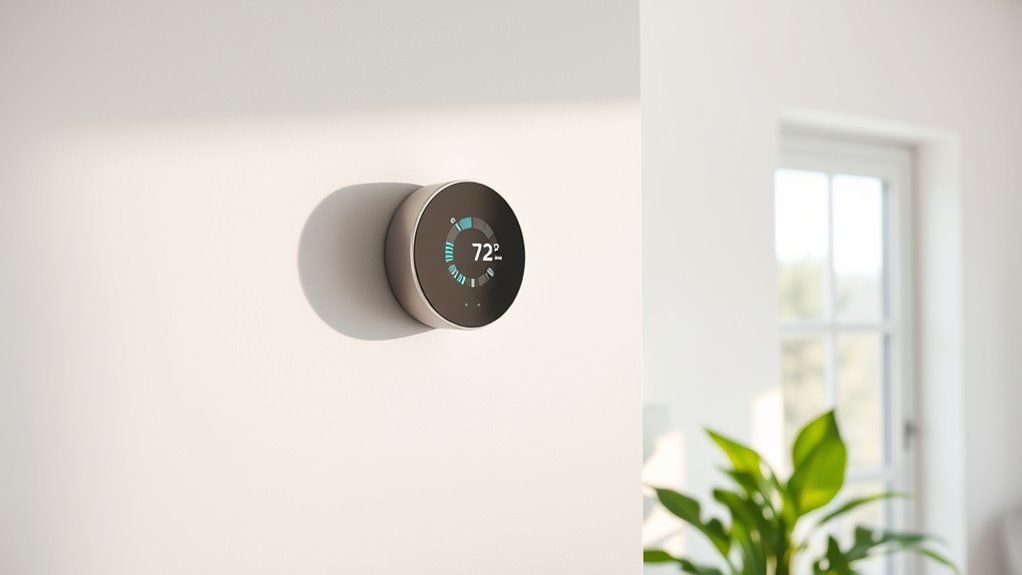
Smart thermostats are revolutionizing how homeowners manage their HVAC systems, especially when it comes to reducing unnecessary cycling. These devices give you the power to optimize your heating and cooling routines, leading to significant energy savings and enhanced user convenience. Instead of manually adjusting your thermostat or letting it run on a fixed schedule, a smart thermostat learns your preferences and adapts to your lifestyle, guaranteeing your home stays comfortable without wasting energy.
Smart thermostats optimize comfort and energy savings by adapting to your lifestyle and reducing unnecessary cycling.
When your HVAC cycles on and off frequently, it wastes energy and wears out your equipment faster. Smart thermostats address this issue by using advanced algorithms to prevent short cycling. They analyze your habits, indoor conditions, and even weather forecasts to fine-tune heating and cooling, reducing those unnecessary start-stop cycles. As a result, your system runs more efficiently, cutting down on energy consumption and lowering your utility bills. You’ll notice that your home remains comfortably climate-controlled without the constant on-and-off pattern that wastes power and causes wear and tear.
User convenience is a major benefit of these devices. With a smart thermostat, you don’t need to be home to control your HVAC system. You can adjust settings remotely via your smartphone or voice commands, making it easy to change temperatures on the go. Many models also feature intuitive interfaces and customizable schedules, so you can set your ideal comfort levels for different times of the day or days of the week. This flexibility guarantees your home is always at a comfortable temperature when you arrive, without the need to constantly fiddle with the thermostat settings.
Additionally, smart thermostats often include features like occupancy sensing and geofencing, which further optimize energy use. If the device detects that no one’s home, it can automatically lower or raise the temperature, saving energy without sacrificing comfort. When you return, it adjusts to your preferred settings, ensuring a seamless experience. This automation not only reduces energy waste but also adds to your user convenience, removing the need for manual adjustments and second-guessing. Recognizing the importance of energy efficiency can help you make smarter decisions about your home climate control.
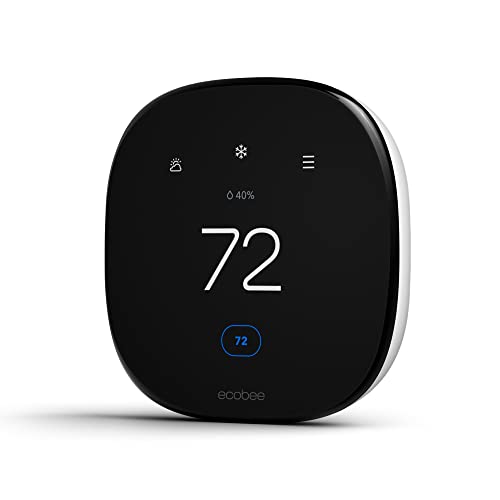
ecobee Smart Thermostat Enhanced, Programmable Wifi Thermostat
- Energy Savings: Save up to 26% on energy costs
- Automatic Temperature Adjustment: Adjusts when you're away for efficiency
- Wide Compatibility: Compatible with 90% of systems
As an affiliate, we earn on qualifying purchases.
As an affiliate, we earn on qualifying purchases.
Frequently Asked Questions
Do Smart Thermostats Work With All HVAC Systems?
Smart thermostats don’t work with all HVAC systems because compatibility issues can arise, especially with older or specialized setups. You might face wiring requirements that aren’t standard, which could need extra adapters or modifications. Before purchasing, check your system’s compatibility and wiring setup. If you’re unsure, consult the thermostat manufacturer’s guidelines or a professional installer to guarantee a smooth fit and proper operation.
How Much Can I Save on Energy Bills Using a Smart Thermostat?
You can save up to 10-15% on your energy bills with a smart thermostat, even if you’re worried about initial costs. These devices optimize your HVAC system, reducing unnecessary cycling and energy waste. Over time, this leads to significant cost reduction, making your home more efficient. Plus, smart thermostats learn your schedule, ensuring comfort while saving you money without constant manual adjustments.
Are Smart Thermostats Easy to Install Myself?
Yes, smart thermostats are generally easy for DIY installation. Most models come with step-by-step troubleshooting guides and clear instructions, making it manageable even if you’re not an expert. You’ll typically need to turn off power, remove your old thermostat, and connect the new one following the guide. If you encounter issues, troubleshooting guides are available online to help you resolve common problems quickly.
Can Smart Thermostats Learn My Schedule Automatically?
Yes, smart thermostats can learn your schedule automatically. They use advanced learning algorithms and adaptive scheduling to track your habits over time. As you go about your day, the thermostat adjusts settings based on your routines, optimizing comfort and energy efficiency. You don’t have to program it manually; instead, it intelligently adapts to your lifestyle, ensuring your HVAC system runs only when needed.
What Features Should I Look for in a Smart Thermostat?
Look for a smart thermostat with accurate temperature sensors so it can learn your preferences efficiently. A user-friendly interface makes adjusting settings and viewing data simple. Features like Wi-Fi connectivity, compatibility with voice assistants, and adaptive scheduling help optimize your HVAC system. Also, check for energy reports and zoning options to reduce cycling and save on energy costs. These features make sure you get comfort and efficiency tailored to your lifestyle.

Sensi Smart Thermostat, Wi-Fi, DIY, Alexa, Energy Star Certified, ST55
- Privacy Protected: Won’t sell your personal data
- Easy DIY Installation: Includes level and step-by-step app guide
- Universal Compatibility: Works with most HVAC systems without c-wire
As an affiliate, we earn on qualifying purchases.
As an affiliate, we earn on qualifying purchases.
Conclusion
By switching to a smart thermostat, you can cut down on unnecessary HVAC cycling, saving energy and extending your system’s lifespan. Did you know that smart thermostats can reduce energy use by up to 12%? That means lower bills and a smaller carbon footprint. So, take control of your home’s comfort and efficiency—install a smart thermostat today and make a positive impact on both your wallet and the environment.

ecobee Smart Thermostat Essential – WiFi Thermostat, Energy Star Certified
- Energy Savings: Save up to 23% annually on energy costs
- System Compatibility: Compatible with 85% of HVAC systems
- Easy Temperature Control: Adjust temperature via touchscreen or app
As an affiliate, we earn on qualifying purchases.
As an affiliate, we earn on qualifying purchases.

Honeywell Home T5 Smart Wi-Fi Thermostat
- Energy Savings: Save 8-16% on heating and cooling bills
- Rebate and Rewards: Eligible for energy rebates and utility programs
- Flexible Scheduling: 7-day programmable schedule or location-based control
As an affiliate, we earn on qualifying purchases.
As an affiliate, we earn on qualifying purchases.