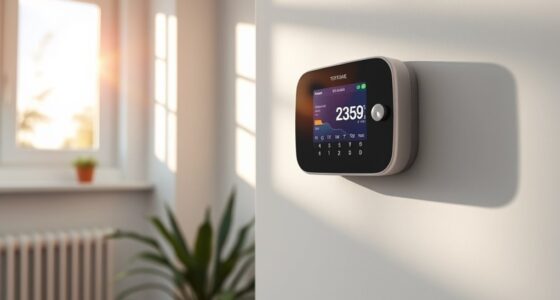
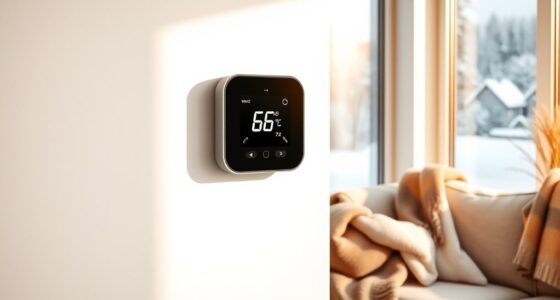
Using a smart thermostat helps you cut your HVAC fan runtime by syncing fan operation with actual heating or cooling needs. It adapts to your habits, running the fan only when necessary, and works with zone control to target specific areas. This prevents unnecessary fan use, saves energy, and keeps your home comfortable. Want to discover how to maximize these benefits and optimize your system even further? Keep exploring to learn more.
Key Takeaways
- Smart thermostats adapt to user habits and learning algorithms to run fans only during heating or cooling cycles.
- Zone control allows targeted fan operation in specific areas, reducing unnecessary airflow in unoccupied spaces.
- Combining zone control with smart thermostats ensures fans operate only when needed, improving energy efficiency.
- Smart thermostats provide insights and enable fine-tuning of fan settings to minimize wasteful operation.
- Using adaptive algorithms, smart thermostats optimize fan runtime, balancing comfort and energy savings effectively.

Have you ever wondered how long your HVAC fan should run during heating or cooling cycles? If so, you’re not alone. Many homeowners struggle with balancing comfort and efficiency, especially when it comes to fan runtime. The good news is that smart thermostats can help you refine your fan operation, leading to better energy efficiency and more even temperatures throughout your home. One key feature that plays a crucial role in this process is zone control. By dividing your home into different zones, you gain more precise control over heating and cooling, allowing the system to target specific areas without wasting energy on unoccupied spaces.
With traditional thermostats, the fan often runs continuously or on a fixed schedule, which can waste a lot of energy and cause uneven comfort levels. Smart thermostats, however, adapt to your habits and preferences, enabling you to set more efficient fan runtimes. For example, they can run the fan only when necessary, such as during the actual heating or cooling cycle, instead of keeping it on constantly. This targeted approach reduces unnecessary energy consumption and helps you save on utility bills. Additionally, many smart thermostats include features like adaptive algorithms that learn your patterns over time, automatically adjusting fan operation for maximum efficiency without sacrificing comfort.
Smart thermostats optimize fan runtime by learning habits and running only when needed, saving energy and enhancing comfort.
Zone control complements these capabilities perfectly. When your system is equipped with zone control, the smart thermostat can decide how long the fan should run in each zone based on real-time conditions. If one part of your home is already at the desired temperature, the fan can be kept off in that area, while still running in zones that need conditioning. This not only improves energy efficiency but also ensures a more consistent temperature in every part of your home. You’ll notice fewer hot or cold spots and enjoy a more comfortable environment overall.
Furthermore, smart thermostats often provide detailed insights into your energy usage, showing you how adjusting fan runtimes impacts your overall consumption. Armed with this information, you can fine-tune your settings for maximum performance. By leveraging zone control and smart scheduling, you prevent your HVAC system from running longer than necessary, which ultimately extends the lifespan of your equipment and reduces wear and tear. This proactive approach to managing fan runtime ensures you get the most out of your HVAC system while keeping energy costs down.
In essence, smart thermostats empower you to take control of your heating and cooling processes. They refine fan runtime by intelligently balancing comfort and efficiency, especially when combined with zone control. This way, you enjoy a more comfortable home, lower energy bills, and a more sustainable way to stay cool or warm all year round. As research in AI Security continues to advance, future innovations may further optimize HVAC performance through smarter, more secure systems.
Frequently Asked Questions
Can Smart Thermostats Improve Overall Energy Efficiency?
Yes, smart thermostats can improve your overall energy efficiency by optimizing temperature control and reducing unnecessary energy consumption. They learn your schedule, adjust settings accordingly, and can even turn off or lower heating and cooling when you’re not home. This targeted control minimizes waste, lowers utility bills, and helps conserve energy, making your home more eco-friendly while maintaining comfort.
How Do Smart Thermostats Adapt to Changing Weather Conditions?
Like a sailor adjusts their sails, smart thermostats respond to changing weather conditions through weather responsiveness and adaptive scheduling. They monitor outdoor temperatures and humidity, automatically adjusting your indoor climate for ideal comfort and efficiency. This real-time adaptation helps prevent energy waste, ensuring your system runs only when needed. By staying in tune with the weather, your smart thermostat keeps your home comfortable while saving energy and money.
Are There Specific Brands Known for Better Fan Runtime Management?
You’ll find that brands like Nest, Ecobee, and Honeywell are known for better fan control and solid brand reputation. These smart thermostats offer advanced features that help you optimize fan runtime, saving energy while maintaining comfort. Their reliable performance and user-friendly interfaces make managing fan settings easier. Choosing a trusted brand guarantees you get consistent results, and many models adapt to your schedule and weather changes for efficient fan control.
What Is the Typical Cost Savings From Reducing Fan Runtime?
You can typically save about 10-15% on your energy bills by adjusting your fan runtime. When you make small fan adjustments, you reduce the energy used by your HVAC system, leading to noticeable savings over time. Smart thermostats help you optimize fan operation, ensuring energy reduction without sacrificing comfort. The exact savings depend on your usage habits, but consistent fan control can substantially cut your overall HVAC costs.
Do Smart Thermostats Require Professional Installation?
Imagine flipping a switch and feeling a cool breeze—smart thermostats often don’t need a professional upgrade. You can typically do a DIY installation if you’re comfortable with basic wiring, which saves money and time. However, for complex systems or if you’re unsure, a professional installation guarantees everything’s set up correctly and safely. Either way, you’ll enjoy the convenience and savings a smart thermostat offers.
Conclusion
By embracing smart thermostats, you’re not just cutting down on energy use—you’re taking control of your comfort and the planet’s health. Reducing your HVAC fan runtime is like giving your home a gentle, mindful gust of fresh air, easing your worries and costs. Every small step counts, turning your house into a sanctuary that cares for both you and the environment. Let technology be your ally in creating a smarter, more sustainable future.