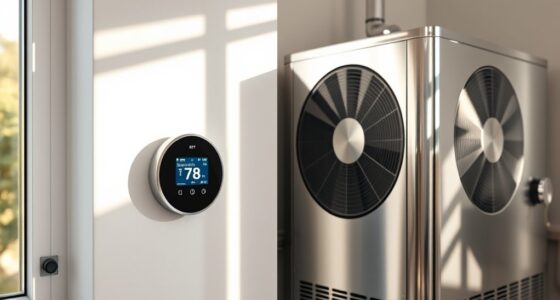

Smart thermostats help cut standby energy use by automatically adjusting heating and cooling when rooms are unoccupied, reducing unnecessary power draw. They connect with motion sensors and smart devices to detect activity and turn systems off when not needed, preventing phantom loads. By monitoring energy use and scheduling ideal times, you save money while cutting your household’s energy footprint. Want to discover practical tips to maximize these benefits? Keep exploring to learn more.
Key Takeaways
- Smart thermostats optimize heating and cooling schedules to prevent systems from running unnecessarily, reducing standby power consumption.
- They communicate with other smart devices like motion sensors to automatically turn off or adjust devices when rooms are unoccupied.
- Integration with smart lighting and power strips helps automate the shutdown of devices in standby mode, cutting energy waste.
- Energy monitoring features identify devices and habits causing standby power drain, enabling targeted energy-saving actions.
- Remote control and scheduling functionalities ensure systems operate only when needed, minimizing unnecessary standby energy use.
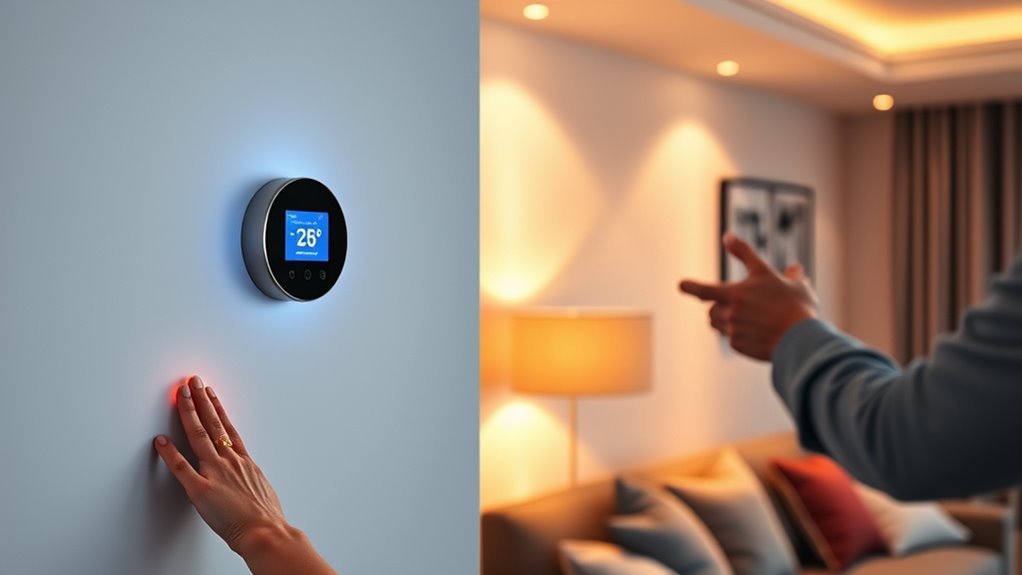
Many household devices continue to draw power even when turned off, quietly wasting energy and increasing your electricity bills. This hidden drain, often called standby power or phantom load, can add up over time if you’re not careful. To combat this, you need strategies focused on energy conservation, and one of the most effective ways is smart home integration. Smart thermostats, in particular, can play a significant role in reducing unnecessary energy use by managing your home’s heating and cooling systems more efficiently.
Traditional thermostats often stay on standby mode, consuming power without actively regulating your home’s temperature. Smart thermostats, however, are designed to optimize energy consumption by learning your habits, adjusting settings automatically, and providing remote control options. With these devices, you can turn your heating or cooling system on or off from anywhere, ensuring it only runs when necessary. This minimizes the energy wasted by leaving systems running when nobody’s home or when heating or cooling isn’t needed.
Additionally, smart home integration allows these thermostats to communicate with other smart devices in your house. For example, they can sync with smart lighting or motion sensors to detect when rooms are unoccupied and adjust the climate accordingly. This level of automation helps cut down on standby power use by actively managing devices and systems that would otherwise draw power continuously. Over time, these small adjustments lead to significant reductions in your overall energy consumption and, consequently, your energy bills.
Another advantage is the detailed energy monitoring smart thermostats provide. You can review usage data on your app or control panel, giving you insights into which devices or habits cause the most standby power drain. Armed with this information, you can make smarter decisions about how to configure your home’s devices to maximize energy conservation. Plus, many smart thermostats come with scheduling features, allowing you to set specific times for heating or cooling, ensuring systems aren’t running when they’re not needed.
Research shows that standby energy use can account for a significant portion of household electricity consumption, making smart control an impactful solution. The bottom line is that integrating a smart thermostat into your home isn’t just about convenience; it’s about actively managing energy use and reducing waste. By controlling your heating and cooling more efficiently, you’re not only saving money but also helping the environment by lowering your household’s overall energy footprint. With smart home integration, you turn your house into an intelligent system that works around your routine, ensuring devices only draw power when absolutely necessary. This proactive approach to energy conservation can make a noticeable difference in your energy bills and your home’s overall efficiency.
Frequently Asked Questions
Do Smart Thermostats Save Energy When Not Actively Adjusting Temperature?
Yes, smart thermostats conserve energy even when not actively adjusting the temperature. They reduce standby energy consumption by automatically entering energy-saving modes when you’re away or asleep. Your device’s compatibility with your heating and cooling system guarantees ideal performance, maximizing savings. By learning your routines and making adjustments accordingly, smart thermostats help lower your overall energy use, making your home more efficient without sacrificing comfort.
How Do Smart Thermostats Learn Household Habits Over Time?
Think of your smart thermostat as a diligent student, observing your behavior patterns daily. Using machine learning, it analyzes when you’re home, asleep, or away, gradually mastering your routine. Over time, it anticipates your needs, adjusting the temperature seamlessly. This learning process lets your thermostat optimize comfort and energy efficiency, making your home smarter and more responsive, all without you lifting a finger.
Can Smart Thermostats Be Integrated With Other Home Automation Devices?
Yes, smart thermostats can be integrated with other home automation devices. You can connect them through compatible platforms like Google Home or Amazon Alexa, which support various devices for seamless control. This device compatibility lets you automate your home’s climate alongside lighting, security, and entertainment systems, creating a smarter, more efficient living space. By integrating these devices, you gain centralized control and enhanced energy savings.
What Security Measures Protect Smart Thermostat Data From Hacking?
Smart thermostats protect your data through strong encryption protocols and user authentication. You should guarantee your device uses end-to-end encryption to secure your information during transmission. Additionally, enable multi-factor or two-factor authentication to prevent unauthorized access. Regularly update your thermostat’s firmware, use strong, unique passwords, and avoid connecting to unsecured Wi-Fi networks. These steps help keep your smart thermostat data safe from hacking attempts.
Are There Cost Differences Between Basic and Advanced Smart Thermostats?
You’ll find that basic smart thermostats typically cost less upfront, with lower installation expenses, but may lack advanced features like learning algorithms and remote access. Advanced models, while more expensive and requiring higher installation costs, offer richer feature comparisons, including better energy management and customization options. Consider your needs and budget; investing in a more advanced thermostat can pay off through greater savings and convenience over time.
Conclusion
Think of your smart thermostat as the captain of a ship, steering your energy away from the stormy seas of wasted standby power. By making small adjustments, you’re guiding your home to stay warm or cool just when needed, avoiding the drifting into unnecessary energy use. With each smarter decision, you’re charting a course toward a more efficient, sustainable future—like a skilled navigator saving treasure along the way. Let your smart thermostat be your trusted guide.