You need a different thermostat strategy for your heat pump because it relies heavily on precise, seasonal adjustments to operate efficiently and prevent unnecessary wear. Standard settings can cause rapid cycling, energy waste, and reduce your system’s lifespan. By tailoring your thermostat to outdoor temperatures and adjusting settings throughout the year, you can improve comfort, save energy, and extend your equipment’s longevity. Keep exploring to discover how to optimize your heat pump thermostat effectively.
Key Takeaways
- Heat pumps operate efficiently within specific temperature ranges, requiring tailored thermostat settings to prevent overwork or underperformance.
- Proper seasonal adjustments optimize energy use and comfort, unlike traditional thermostats that rely on static temperature settings.
- Heat pumps are sensitive to rapid cycling; specialized strategies reduce system wear and extend equipment lifespan.
- External factors like outdoor temperature and humidity significantly impact heat pump efficiency, necessitating dynamic thermostat management.
- Advanced control features and sensor maintenance ensure reliable readings, preventing inefficiencies and equipment damage.
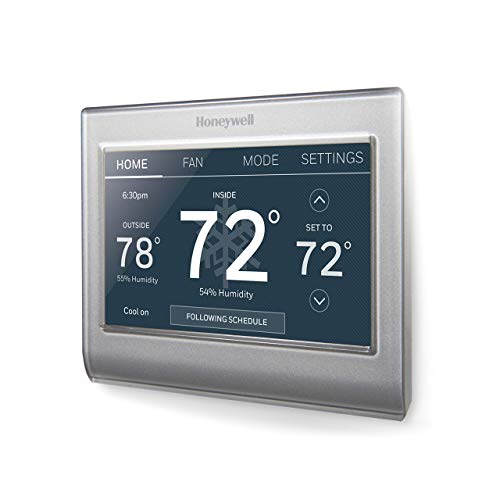
Honeywell Home RTH9585WF1004 Wi-Fi Smart Color Thermostat, 7 Day Programmable, Touch Screen, Energy Star, Alexa Ready, Gray
COMFORT COMES IN YOUR COLOR. Personalize your Wi-Fi Smart Color Programmable Thermostat to fit your décor.
As an affiliate, we earn on qualifying purchases.
As an affiliate, we earn on qualifying purchases.
Why Heat Pumps Need a Different Thermostat Strategy
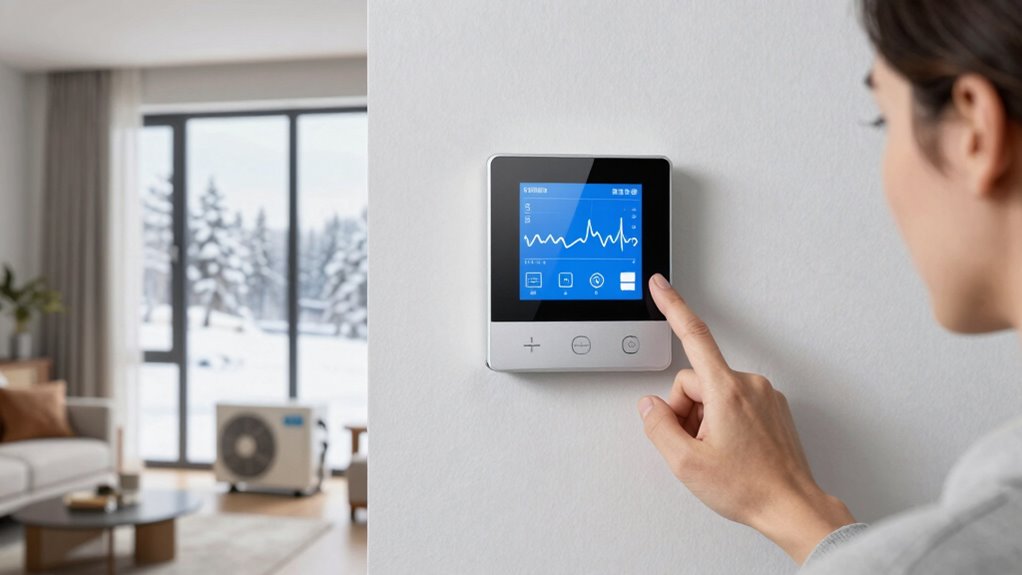
Heat pumps operate differently from traditional heating and cooling systems, which means they require a tailored thermostat strategy. To maximize efficiency, you should consider heat pump zoning, allowing you to control different areas separately based on usage. This prevents energy waste and maintains comfort in specific zones. Additionally, smart thermostat integration is essential, as it enables you to program and adjust settings remotely, adapting to your schedule and preferences. With a smart thermostat, you can optimize your heat pump’s performance, ensuring it runs only when needed. Proper zoning and smart thermostat use work together to improve energy savings, comfort, and system lifespan. By implementing these strategies, you’ll get the most out of your heat pump while keeping utility costs in check. Proper thermostat setup is crucial for aligning your system with its unique operational requirements. Understanding how heat pump technology functions can help you develop more effective thermostat strategies that enhance performance and longevity. Being aware of system limitations can prevent potential issues and ensure optimal operation, especially since heat pumps can have specific installation requirements that influence thermostat placement and control. Additionally, recognizing the importance of system compatibility can ensure your thermostat works effectively with your heat pump model.

SmartZone-3X : 3 Zone HVAC Controller KIT w/ Temp Sensor; Dual Climate Control to Replace Honeywell HZ322, EWC, Zonefirst, Zonex, Durozone & More
3 Zone HVAC zone control – Version 3.0 (Replaces SmartZone-2X)
As an affiliate, we earn on qualifying purchases.
As an affiliate, we earn on qualifying purchases.
How Heat Pumps Work in Different Outdoor Temperatures
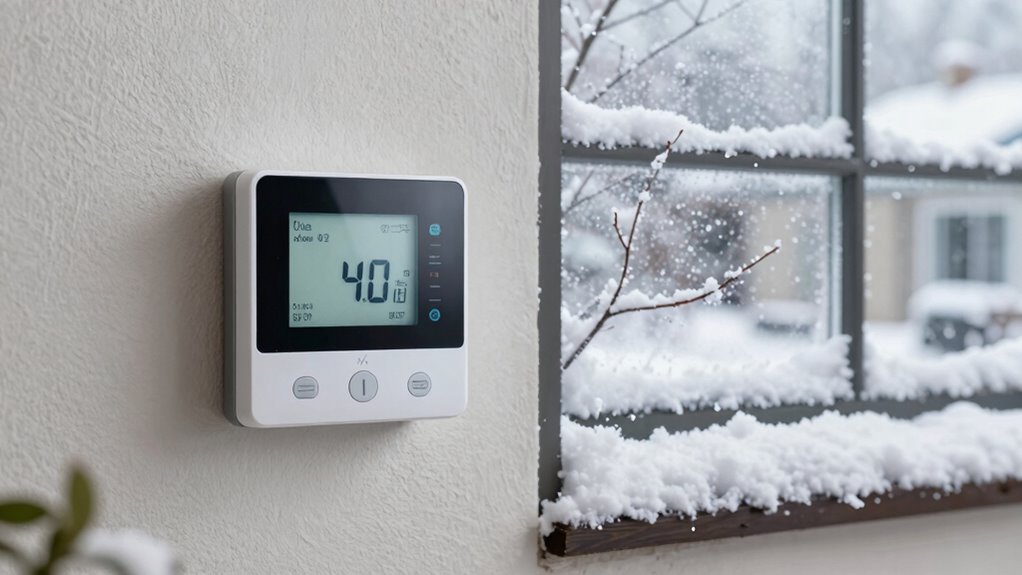
Understanding how heat pumps perform across various outdoor temperatures is key to maximizing their efficiency. When considering heat pump installation, it’s important to recognize that outdoor temperature greatly influences their operation. In milder weather, heat pumps work efficiently by extracting heat from the air. As outdoor temperature drops, the system must work harder, reducing efficiency and possibly switching to backup heating. Modern models include features like defrost cycles to handle colder conditions better. Knowing how your heat pump responds to outdoor temperature changes helps you set realistic expectations and optimize performance. Adjusting your thermostat strategy accordingly ensures you don’t overwork the system or waste energy. Being aware of these temperature-dependent behaviors allows you to maintain comfort while keeping energy costs in check. Additionally, understanding the impact of outdoor temperatures can help prevent issues related to microplastics in dust, which may affect air quality indoors. Recognizing how outdoor temperature fluctuations influence system efficiency highlights the importance of proper thermostat settings for optimal operation. To further enhance system performance, considering factors like scent balance can contribute to a healthier indoor environment. Being mindful of external factors such as humidity levels can also improve overall comfort and efficiency.

C7089U1006 Outdoor Temperature Sensor Replacement for Honeywell THX9421R5021WW, TH8321R1001, TH8321WF1001 c7089u1006
Function:C7089U1006 provides accurate outdoor temperature readings so you can adjust the temperature for optimal comfort
As an affiliate, we earn on qualifying purchases.
As an affiliate, we earn on qualifying purchases.
Why Traditional Thermostat Settings Fail for Heat Pumps
Traditional thermostat settings often fail for heat pumps because they can’t adapt well to changing outdoor conditions, leading to inadequate temperature control. This mismatch can cause you to waste energy and increase your utility bills. Over time, it may also shorten your heat pump’s lifespan due to unnecessary strain and wear. Implementing a smart thermostat designed for heat pumps can help address these issues by adjusting settings based on outdoor weather conditions. Properly managing temperature fluctuations is essential for maintaining efficiency and prolonging the lifespan of your heat pump. Additionally, understanding how outdoor climate impacts your system can help optimize performance and energy savings, especially since climate variability plays a significant role in system efficiency. Recognizing the influence of regional weather patterns can further enhance your thermostat strategy for maximum comfort and savings.
Inadequate Temperature Control
Have you ever noticed that your thermostat struggles to keep your home comfortable with a heat pump? This often leads to temperature fluctuation, where your house feels too hot or too cold despite setting a specific temperature. Traditional thermostats aren’t designed for heat pumps, so they don’t respond well to the unique heating and cooling demands. Poor thermostat calibration can cause inaccurate readings, making it harder to maintain consistent comfort. As a result, your system may run excessively or shut off prematurely, worsening temperature control. To fix this, you need a thermostat that’s properly calibrated for your heat pump and understands how to handle temperature fluctuations. Without this, your home’s comfort remains inconsistent, and your system isn’t working as efficiently as it should.
Energy Waste Risks
Because heat pumps operate differently from conventional systems, relying on standard thermostat settings often leads to energy waste. If you set your thermostat too high or low, your heat pump may cycle excessively or run constantly, wasting energy. Additionally, improper settings can cause indoor humidity levels to rise or fall unpredictably, making your home uncomfortable and forcing the system to work harder. Noise levels can also increase if the heat pump runs inefficiently or runs more frequently than necessary. These issues not only raise your energy bills but also strain the equipment. To avoid this, you need a tailored thermostat strategy that considers ideal humidity, efficient cycling, and quieter operation, ensuring your heat pump runs smoothly without wasting energy. Understanding the importance of support networks for new fathers can help homeowners access resources for optimizing their heating systems and maintaining comfort. Proper system calibration is essential to ensure your heat pump operates within optimal parameters, reducing unnecessary wear and tear. Moreover, adopting a customized thermostat strategy tailored specifically for heat pump operation can significantly improve energy efficiency and system longevity. Adjusting your thermostat settings based on heat pump-specific considerations can further enhance performance and save energy. Being aware of the climate zone you live in can also influence the most effective thermostat settings for your heat pump system.
Shortened Equipment Lifespan
Setting your thermostat too high or low can do more than waste energy; it also puts unnecessary stress on your heat pump. This stress accelerates wear and shortens the equipment’s lifespan, reducing its reliability and increasing maintenance costs. When you frequently set extreme temperatures, your system cycles on and off more often, leading to faster component fatigue. To maximize energy efficiency and user comfort, avoid drastic temperature changes.
- Rapid cycling damages compressor components over time
- Overworking the system causes unnecessary wear
- Inconsistent temperatures lead to frequent system adjustments
- Proper settings extend equipment longevity and efficiency
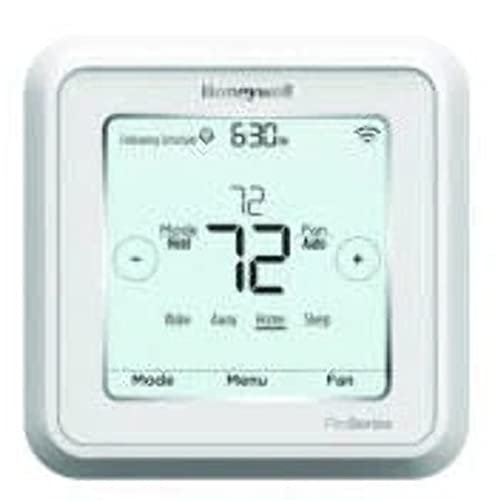
Honeywell TH6320WF2003/U Lyric T6 Thermostat, 3 Heat / 2 Cool Heat Pump Or 2 Heat / 2 Cool Conventional, 4.09" x 4.09" x 1.06"
Hvac/Thermostats & Accessories
As an affiliate, we earn on qualifying purchases.
As an affiliate, we earn on qualifying purchases.
How to Program Your Thermostat for Optimal Heating and Cooling

To keep your heat pump running efficiently, you need to set the right temperature for each season. Adjust your thermostat to match outdoor conditions and your comfort preferences. Proper programming guarantees your home stays cozy without wasting energy. Being aware of early warning signs can also help you identify potential issues before they become costly repairs. Incorporating landscaping elements can further improve energy efficiency by providing natural insulation and shade.
Optimal Temperature Settings
Finding the right temperature settings for your heat pump thermostat can considerably improve comfort and energy efficiency. Keep your thermostat between 68-72°F in winter and around 75°F in summer for ideal comfort. For better indoor air quality and humidity control, avoid setting temperatures too high or low, which can cause moisture issues or discomfort.
Consider these tips:
- Use a consistent schedule to prevent unnecessary cycling
- Adjust your thermostat for specific rooms based on use
- Lower the temperature slightly overnight to save energy
- Maintain proper humidity levels to improve comfort and air quality
Adjusting for Seasons
Ever wonder how to keep your home comfortable and energy-efficient throughout the changing seasons? Adjusting your thermostat properly is key. As temperatures fluctuate, program your heat pump to reflect seasonal needs, lowering settings during milder months and increasing them when it’s colder. This helps optimize indoor air quality by avoiding over-conditioning, which can lead to dry or stale air. Take advantage of smart home integration to automate adjustments based on weather forecasts or your daily routines. Many smart thermostats learn your preferences and adjust automatically, ensuring comfort and efficiency year-round. Remember, proper seasonal programming not only saves energy but also prolongs your heat pump’s lifespan, keeping your indoor environment healthy and cozy regardless of outside weather. Additionally, understanding warp issues and recycling options for your HVAC components can contribute to environmentally responsible disposal when upgrading or replacing equipment. Using the right thermostat strategy can further enhance your home’s climate control and energy savings.
Seasonal Temperature Settings for Your Heat Pump

Are you aware of how adjusting your thermostat settings seasonally can improve comfort and energy efficiency? Setting different temperatures for summer and winter helps optimize your heat pump’s performance. In colder months, lower your thermostat slightly to save energy, but not so much that humidity levels drop and air filtration becomes less effective. Conversely, in summer, raising the temperature a bit can prevent overcooling and maintain comfortable humidity. Keep in mind that maintaining proper humidity levels enhances comfort and reduces strain on your system. Proper air filtration also supports these adjustments by removing airborne allergens and particles. To maximize efficiency and comfort, consider these tips:
- Adjust temperature gradually between seasons
- Monitor humidity levels regularly
- Use a programmable thermostat for seasonal changes
- Ensure good air filtration year-round
Being aware of energy-saving strategies can also help you make more informed adjustments and reduce your overall energy consumption. Additionally, understanding how humidity control impacts comfort can lead to better seasonal settings for your heat pump.
Maintaining Consistent Temperatures for Comfort and Efficiency

Maintaining consistent temperatures throughout the year guarantees your heat pump operates efficiently while keeping your living space comfortable. Using smart technology in your thermostat allows you to set precise, stable temperatures that adapt to your daily routines. These smart thermostats can learn your preferences and automatically adjust settings for ideal comfort and energy savings. Consistency prevents unnecessary cycling, reducing wear and tear on your heat pump and lowering energy bills. By avoiding frequent temperature swings, you help your system run smoothly and efficiently. Smart technology also provides convenient controls via smartphone apps, so you can monitor and adjust settings anytime. Ultimately, a steady temperature approach maximizes comfort and efficiency, helping you save energy while maintaining a cozy home year-round.
Common Mistakes That Can Hurt Your Heat Pump
While keeping your thermostat steady improves efficiency, certain common mistakes can still harm your heat pump’s performance and longevity. One mistake is ignoring your smart home’s energy monitoring features, which can hide inefficiencies. Another is setting the temperature too high or low, causing unnecessary strain. Avoid frequent manual adjustments, as they disrupt ideal operation. Also, neglecting regular maintenance, like filter changes, reduces efficiency and risks damage.
To protect your heat pump, focus on:
- Using your smart home system to monitor energy use
- Avoiding extreme temperature settings
- Limiting manual tweaks
- Keeping up with maintenance routines
These mistakes can lead to higher energy bills and potential equipment failure, so stay attentive to proper thermostat use and system health.
Choosing the Best Thermostat Features for Heat Pump Control

Choosing the right thermostat features can considerably enhance your heat pump’s efficiency and comfort. Look for smart integration, which allows your thermostat to connect seamlessly with your home’s Wi-Fi, voice assistants, or other smart devices. This makes it easier to control and schedule your system from anywhere. User customization is also essential; select a thermostat that lets you set personalized schedules, temperature setbacks, and adaptive comfort settings. These features help optimize energy use while maintaining comfort. A thermostat with smart learning capabilities can automatically adjust based on your habits, reducing manual input. Prioritize models that combine smart integration with user customization, so you can fine-tune your heat pump’s operation for maximum efficiency and comfort tailored to your lifestyle.
Monitoring and Fine-Tuning Your Thermostat Settings
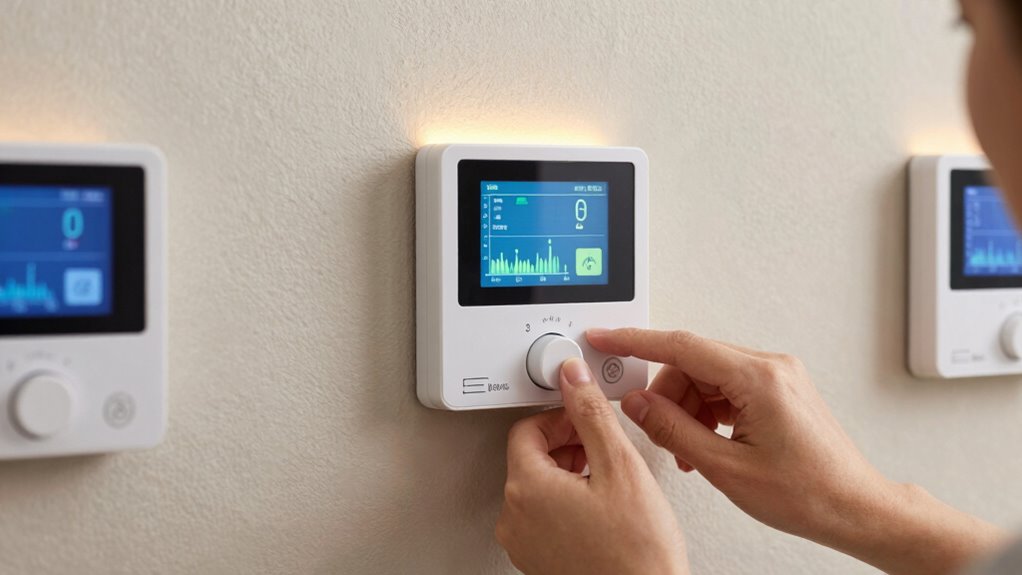
To guarantee your heat pump operates efficiently and comfortably, it’s vital to regularly monitor and fine-tune your thermostat settings. Start by checking sensor placement; ensure sensors are positioned away from drafts, direct sunlight, or heat sources that can skew readings. Use your thermostat’s user interface to review current settings and make adjustments based on seasonal changes or your comfort preferences. Keep an eye on how the system responds to your tweaks, and adjust accordingly. Proper sensor placement and familiarization with the user interface help prevent unnecessary cycling or energy waste. Regular monitoring allows you to identify patterns, such as temperature inconsistencies or delays, so you can maximize your thermostat’s efficiency and comfort.
Regularly monitor and adjust your thermostat for optimal heat pump efficiency and comfort.
- Place sensors in stable, central locations away from heat sources
- Use the user interface to log and track temperature adjustments
- Adjust settings seasonally for peak performance
- Regularly verify sensor accuracy and responsiveness
Frequently Asked Questions
Can I Use a Standard Thermostat With My Heat Pump?
You can’t just use any standard thermostat with your heat pump. Thermostat compatibility is essential because many traditional models aren’t designed to handle heat pump controls. You need a thermostat that offers proper temperature calibration and can manage the unique heating and cooling cycles of a heat pump. Investing in a compatible, advanced thermostat ensures efficient operation, energy savings, and accurate temperature regulation for your heat pump system.
How Often Should I Adjust My Heat Pump Thermostat?
You should adjust your heat pump thermostat as needed, typically once a month, to maintain comfort. Regular thermostat calibration guarantees accurate temperature readings, preventing energy waste. If you have temperature zoning, tweak the settings in each zone based on occupancy and weather changes. This helps optimize efficiency and comfort. Avoid over-adjusting to prevent confusion; instead, make small, consistent adjustments to keep your system running smoothly.
Are Smart Thermostats Better for Heat Pump Efficiency?
Smart thermostats are like having a personal climate coach, making them great for heat pump efficiency. They easily enable zone control and seasonal adjustments, so you can optimize comfort and energy savings. With their learning features, they adapt to your schedule, reducing unnecessary heating or cooling. Overall, smart thermostats help you fine-tune your system, ensuring it runs efficiently year-round and saves you money on energy bills.
What Is the Ideal Temperature Setting for Energy Savings?
You should set your thermostat to around 68°F during winter and 78°F in summer for ideal energy savings. Proper temperature calibration helps prevent unnecessary energy consumption, ensuring your heat pump operates efficiently. Adjusting your thermostat by a few degrees can considerably reduce energy costs while still maintaining comfort. Use a smart thermostat to easily fine-tune these settings, monitor your energy consumption, and make adjustments for maximum savings.
How Does Humidity Affect Thermostat Settings for Heat Pumps?
Humidity impacts your heat pump’s thermostat settings because managing moisture is essential for comfort and efficiency. When humidity is high, you should lower your thermostat slightly to promote moisture control and prevent mold. Conversely, in dry conditions, raising the temperature can improve comfort. Proper humidity management helps maintain a healthy indoor environment, reduces energy use, and keeps your heat pump operating effectively. Adjust your settings accordingly to optimize moisture control and comfort.
Conclusion
To keep your heat pump running efficiently, you need to adopt a specialized thermostat strategy. Did you know that improper settings can increase your energy bills by up to 30%? By understanding how your heat pump responds to outdoor temperatures and adjusting your thermostat accordingly, you’ll save money and stay comfortable year-round. Regular monitoring and fine-tuning are key—so don’t overlook this simple yet powerful way to optimize your system’s performance.