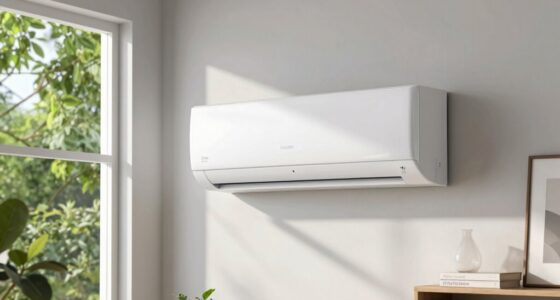
Smart thermostats and smart vents work together by automatically adjusting temperature settings and airflow based on occupancy and your preferences, helping you save energy. When your thermostat detects that a room is unoccupied, it signals the vents to close or reduce airflow in that area, reducing unnecessary heating or cooling. Conversely, vents open in areas you frequent, enhancing comfort while conserving energy. If you explore further, you’ll discover how their coordination maximizes efficiency even more.

Get home appliances delivered free with Prime
- Fast, free delivery on millions of items
- Prime Video, Amazon Music and more included
- Member-only deals all year
Key Takeaways
- Smart thermostats adjust temperature settings based on occupancy data, directing smart vents to open or close accordingly.
- They coordinate with smart vents to optimize airflow, heating, and cooling in occupied zones only.
- Real-time sensor data allows thermostats and vents to fine-tune climate control, reducing energy waste.
- Automated routines enable seamless adjustments for comfort and efficiency during different times and activities.
- This collaboration minimizes HVAC workload, lowers energy bills, and prolongs system lifespan through precise regulation.
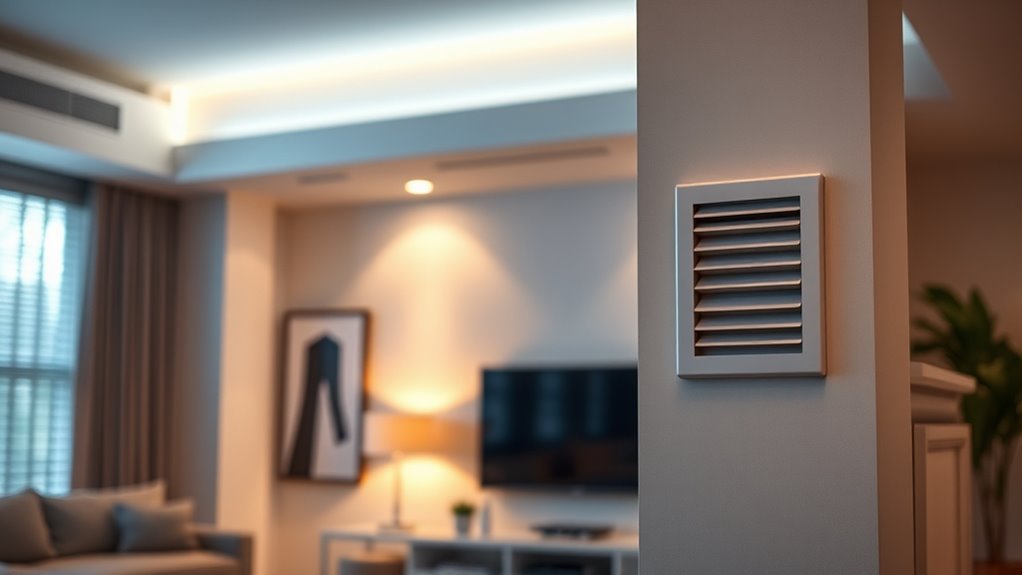
Smart thermostats and smart vents are transforming how you manage home energy use, making it easier to save money and reduce your environmental impact. By working together, they enable advanced zoning strategies that enhance comfort and efficiency throughout your house. Instead of heating or cooling the entire home equally, you can target specific rooms or zones based on occupancy or your preferences. This approach not only conserves energy but also enhances comfort, as you avoid wasting conditioned air in unoccupied areas.
Smart thermostats and vents enable targeted, efficient climate control tailored to your home’s needs.
With user automation, you set your preferences once, and your smart system adjusts itself automatically. For example, when you leave the house, the thermostat can lower the temperature, and smart vents can close in rooms you’re not using. Conversely, as you return home, the vents open in the areas you frequent most, and the thermostat adjusts to your preferred temperature. This seamless coordination minimizes energy waste and ensures you’re comfortable when you need to be.
Smart thermostats leverage sensors and learning algorithms to monitor your habits, making real-time adjustments based on time, occupancy, or even weather conditions. When paired with smart vents, they can fine-tune airflow to specific zones, ensuring each room gets the right amount of conditioned air. For instance, if your living room heats up quickly, the system can automatically close vents in that space while opening vents in cooler rooms, balancing temperature and reducing unnecessary heating or cooling. This zoning strategy reduces the workload on your HVAC system, leading to lower energy bills and less strain on equipment.
User automation also allows you to create customized schedules and scenes. You might set your system to prioritize comfort in the mornings and evenings while conserving energy during the day. The smart vents respond accordingly, opening or closing based on your routines. You can even integrate voice commands or mobile app controls to adjust zones on the fly. This flexibility ensures maximum efficiency without sacrificing comfort.
Additionally, smart vents can help prevent energy wastage caused by inefficient airflow, contributing to more sustainable home management.
Frequently Asked Questions
Can Smart Vents Work With Any Type of HVAC System?
Smart vents work with many HVAC systems, but their compatibility depends on your system’s HVAC compatibility and vent integration capabilities. You should check if your system supports smart vent installation and if the vents can be integrated seamlessly. Some systems may require additional components or specific models. Always consult the manufacturer’s guidelines or a professional to ensure your HVAC system can effectively work with smart vents for maximum energy savings.
Do Smart Thermostats Require Professional Installation?
Around 60% of smart thermostat owners find increased energy efficiency, but you might wonder if you need professional help. The good news is, smart thermostats often have straightforward installation processes, and many DIY-friendly models exist. However, if your HVAC system is complex or you’re unsure, hiring a professional ensures proper setup and maximum energy savings. This way, you get the most out of your smart home upgrade without any hassle.
How Secure Are Smart Home Energy Devices?
Smart home energy devices are generally secure, but you should be aware of privacy concerns and cybersecurity risks. Manufacturers often implement encryption and regular updates to protect your data. However, you must stay vigilant by using strong passwords and secure Wi-Fi networks. By doing so, you reduce the chances of unauthorized access, ensuring your smart devices remain safe and your privacy is preserved.
Can Smart Vents Be Controlled Remotely?
You can definitely control smart vents remotely through mobile control apps. Many smart vent systems offer remote access, allowing you to adjust airflow and temperature settings from anywhere. This means you can optimize your home’s comfort or save energy even when you’re away. Just make sure your smart vent and thermostat are connected to a reliable Wi-Fi network, and you’ll have full control at your fingertips, anytime and anywhere.
What Is the Typical Cost Savings With Smart System Integration?
You can typically see cost savings of 10-30% with smart system integration, boosting your home’s energy efficiency. By automating temperature adjustments based on your schedule and preferences, smart thermostats and vents minimize wasted energy. This means you spend less on heating and cooling while maintaining comfort. Over time, these savings add up, making your smart system investment worthwhile for both your budget and the environment.
Conclusion
So, here’s the irony: your smart thermostat and vents are working tirelessly to save energy, yet they often end up competing for control. Instead of cooperating, they can sometimes cancel each other out, wasting more energy than they save. But when they truly collaborate, you’ll notice the difference—comfort without high bills. It’s almost amusing how technology designed to save you money sometimes needs a little help to do its job right.
Cold & flu season Picks
humidifiers
As an affiliate, we earn on qualifying purchases.