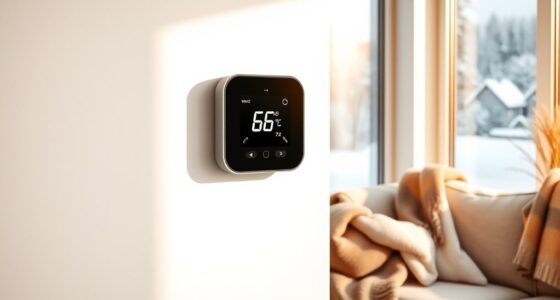
Smart thermostats help you reach net-zero homes by optimizing energy use through precise control and learning your schedule. They respond to weather changes and occupancy patterns, reducing waste and lowering your utility bills. With seamless integration of renewable energy sources like solar power, they shift energy consumption to peak renewable times. Automated adjustments keep your home comfortable while cutting carbon emissions. Keep exploring to discover how these advanced systems can transform your home’s sustainability efforts.
Key Takeaways
- Smart thermostats optimize energy use by learning user habits and adjusting heating/cooling for maximum efficiency.
- They integrate with renewable energy sources, shifting consumption to periods of peak renewable production.
- Automated controls reduce waste by adjusting settings based on occupancy and weather conditions.
- Real-time energy monitoring helps homeowners identify and eliminate inefficient energy practices.
- Remote management and scheduling enable precise control, supporting net-zero energy goals and reducing carbon footprint.

Smart thermostats are transforming the way we manage energy in homes, making it easier to achieve net-zero energy consumption. These devices give you precise control over your heating and cooling systems, enabling significant energy savings while maintaining user comfort. Instead of setting your thermostat and forgetting it, a smart thermostat learns your schedule, preferences, and even adapts to changes in weather, enhancing energy use without sacrificing comfort. This dynamic adjustment ensures your home isn’t wasting energy when you’re away or asleep, directly reducing your carbon footprint and lowering utility bills.
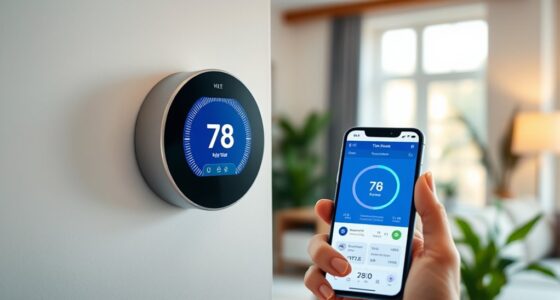
With a smart thermostat, you gain real-time insights into your energy consumption, helping you make smarter decisions about your home’s climate management. As you monitor usage patterns through a user-friendly app, you can identify opportunities to further improve efficiency. For instance, you might notice that your heating system runs longer than necessary during certain times of the day or night. Armed with this knowledge, you can fine-tune your settings or set specific schedules that maximize energy savings without compromising your comfort. The ability to control and customize your home’s climate remotely also means you can adjust settings before arriving home, ensuring ideal comfort upon your arrival while avoiding unnecessary energy use.
Monitor energy use in real-time and optimize your home’s climate remotely for maximum efficiency and comfort.
One of the key ways smart thermostats support net-zero goals is by seamlessly integrating with renewable energy sources like solar panels. When paired with such systems, your thermostat can respond to fluctuating energy production, shifting usage to times when your renewable energy supply is at its peak. This synchronization minimizes reliance on fossil fuels and increases your home’s overall energy efficiency. Additionally, many smart thermostats come with features like occupancy sensors and geofencing, which detect when you’re home or away and automatically adjust settings accordingly. This automation ensures you’re not wasting energy when no one is in the house, further bolstering your efforts toward a net-zero footprint.
Furthermore, advancements in HVAC system tuning allow for even greater optimization of your home’s climate control, ensuring your systems operate at peak efficiency alongside your smart thermostat. Ultimately, smart thermostats empower you to take control of your energy consumption without sacrificing comfort. They provide a simple yet powerful way to reduce your home’s energy demand, support renewable energy integration, and move closer to a sustainable, net-zero lifestyle. As you embrace these intelligent devices, you’ll notice not only the environmental benefits but also the financial savings they bring. By intelligently managing your home’s climate, you actively participate in the transition toward greener living, making your home more efficient, comfortable, and aligned with your sustainability goals.
Frequently Asked Questions
Can Smart Thermostats Integrate With Renewable Energy Sources?
Yes, smart thermostats can integrate with renewable energy sources through renewable integration features. They work with energy monitoring systems to optimize your home’s energy use, ensuring you’re using renewable energy efficiently. By adjusting heating and cooling based on energy availability, they help reduce reliance on fossil fuels. This integration allows you to maximize renewable energy consumption, making your home more eco-friendly and contributing to your goal of achieving a net-zero footprint.
What Is the Cost Difference Between Basic and Advanced Smart Thermostats?
Ever wondered about the cost comparison between basic and advanced smart thermostats? Generally, basic models start around $50 to $100, offering essential features like temperature scheduling. Advanced thermostats range from $150 to $300, including features like learning algorithms, energy reports, and voice control. The feature differences justify the higher price, so consider which capabilities matter most for your energy goals and budget before making a choice.
How Do Smart Thermostats Affect Long-Term Energy Savings?
Smart thermostats considerably reduce your long-term energy consumption by adjusting heating and cooling based on your habits and preferences. As a result, you’ll notice consistent cost savings on your energy bills over time. By optimizing your home’s temperature efficiently, you use less energy without sacrificing comfort. This not only lowers your expenses but also contributes to a greener environment, making your home more sustainable in the long run.
Are Smart Thermostats Compatible With All Home HVAC Systems?
Smart thermostats aren’t compatible with all home HVAC systems due to compatibility limitations and installation requirements. To confirm compatibility, you should check your system’s wiring and type, such as whether it’s a 24V system or uses proprietary controls. Some systems may need additional adapters or professional installation to work properly. Always verify your HVAC setup before purchasing a smart thermostat to avoid issues and ensure seamless integration.
What Security Measures Protect Smart Thermostat Data?
Think of your data like a treasure chest, and security measures guard it fiercely. Smart thermostats use encryption standards to protect your data from unauthorized access, ensuring your privacy concerns are addressed. Manufacturers implement secure cloud storage and regular software updates to patch vulnerabilities. You can also enable two-factor authentication for added protection. These measures work together to keep your information safe, giving you peace of mind while enjoying the benefits of smart home tech.
Conclusion
By embracing smart thermostats, you’re opening the door to a future where your home breathes in harmony with the planet. These devices act as the heartbeats of energy efficiency, guiding your home toward net-zero goals with the precision of a conductor leading an orchestra. With every adjustment, you’re not just saving energy—you’re composing a symphony of sustainability, turning your living space into a beacon of eco-conscious living.