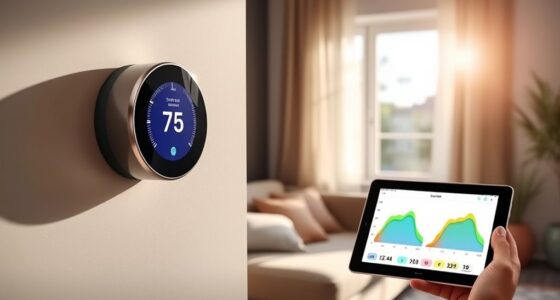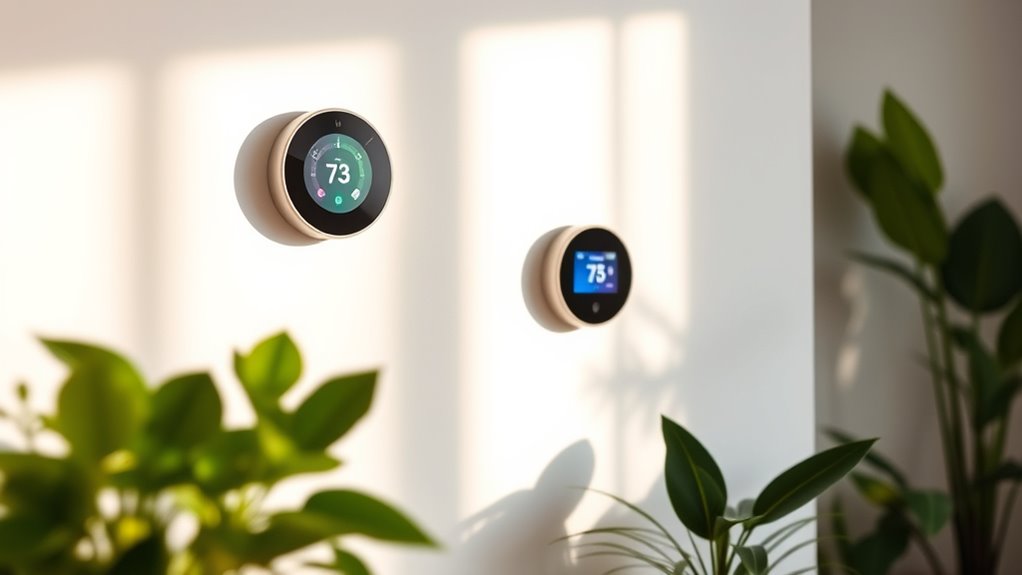

Smart thermostats help you cut your home’s carbon footprint by optimizing energy use through automatic adjustments based on your routines and preferences. They reduce unnecessary heating during absences or sleep, which lowers greenhouse gas emissions. With features like remote control and real-time energy data, you can make smarter decisions that save energy and money. By integrating with renewable energy sources, they boost eco-friendly living. Keep exploring to discover how these devices make your home more sustainable and efficient.

Get home appliances delivered free — and shop member deals
- Fast, free delivery on millions of items
- Access to Prime Big Deal Days deals on October 6–7
- Prime Video, Amazon Music and more included
Key Takeaways
- Smart thermostats optimize heating schedules, reducing unnecessary energy use and lowering greenhouse gas emissions.
- Automated temperature adjustments during absences or sleep prevent energy waste and minimize the carbon footprint.
- Real-time energy consumption data enables users to make informed decisions to enhance efficiency.
- Integration with renewable energy sources and home automation maximizes eco-friendly operation.
- Learning algorithms adapt to routines, ensuring efficient heating while maintaining comfort and reducing environmental impact.
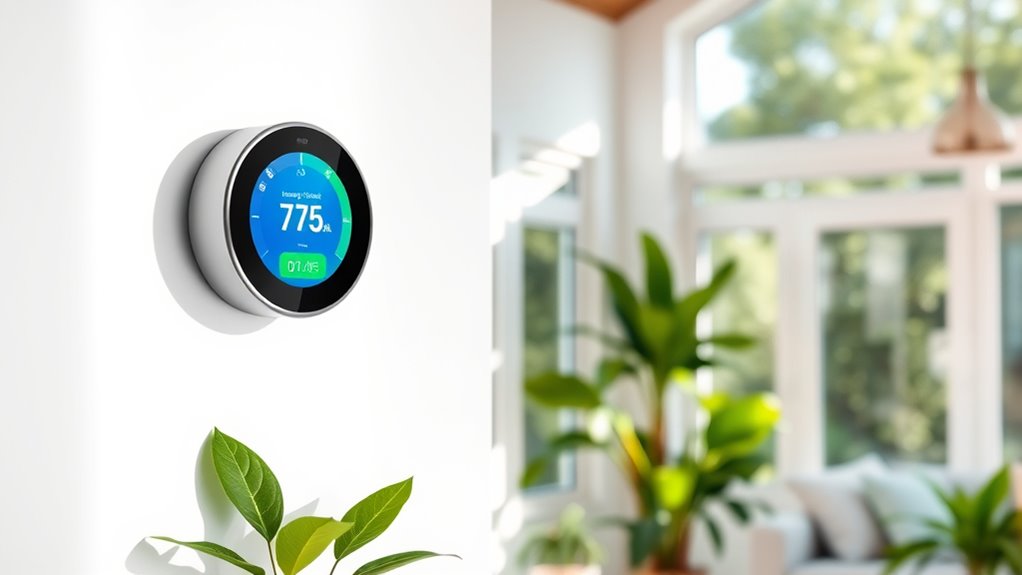
Have you ever wondered how your home heating habits impact the environment? Your daily choices about temperature settings and heating schedules can substantially influence your carbon footprint. That’s where smart thermostats come into play. These devices are designed to optimize energy consumption, leading to notable energy savings while maintaining user comfort. By intelligently managing your home’s heating, smart thermostats help reduce unnecessary energy use, which directly cuts down on greenhouse gas emissions. When you’re not home or during sleeping hours, the thermostat can automatically lower the temperature, ensuring you’re not wasting energy. This automation not only benefits the environment but also saves you money on energy bills.
Smart thermostats offer you the ability to customize and control your heating remotely, giving you more precise command over your home’s climate. This means you can turn the heat down before you leave for work or turn it up just before you arrive home, ensuring your space is comfortable when needed without excess energy expenditure. Their learning algorithms adapt to your habits over time, creating personalized schedules that maximize efficiency without sacrificing user comfort. You won’t need to constantly adjust the thermostat manually, which often leads to energy waste when settings are forgotten or inaccurately maintained. Instead, these devices learn your routines, optimizing heating patterns so your home stays cozy without unnecessary heating.
Moreover, smart thermostats often come with features that provide real-time energy consumption data. This transparency allows you to see how much energy your heating system is using and identify opportunities for further savings. As you become more aware of your consumption patterns, you can make informed decisions to reduce your carbon footprint even more. Data analysis by AI can identify trends and preferences in energy use, helping you optimize your habits for greater sustainability. When you combine these features with energy-efficient heating systems, the impact on the environment becomes even more substantial.
In addition, many smart thermostats are compatible with renewable energy sources or home automation systems, further enhancing their role in sustainable living. They can integrate with solar panels or other green technologies, ensuring your home operates as efficiently as possible. By reducing unnecessary energy use and enabling smarter control, you’re actively contributing to lowering greenhouse gas emissions, making your home more eco-friendly. Ultimately, smart thermostats empower you to balance energy savings with user comfort, proving that you don’t have to sacrifice comfort for sustainability. Instead, you can enjoy a warm, comfortable home while also doing your part to protect the planet.
smart thermostat with energy monitoring
As an affiliate, we earn on qualifying purchases.
As an affiliate, we earn on qualifying purchases.
Frequently Asked Questions
Can Smart Thermostats Learn My Daily Schedule Automatically?
Yes, smart thermostats can learn your daily schedule automatically. They adapt over time by analyzing your manual adjustments and usage patterns, so you don’t have to program them manually every day. You can also use voice control to set or change temperatures quickly, which helps the thermostat understand your preferences better. This personalized learning helps optimize energy use, reducing your carbon footprint while keeping your home comfortable.
Are Smart Thermostats Compatible With All Heating and Cooling Systems?
Think of smart thermostats as puzzle pieces—you need the right shape. Not all are compatible with your HVAC system, so check compatibility first. They often require specific wiring and installation requirements, which vary by system type. Before buying, verify your heating and cooling setup matches the thermostat’s specifications. This way, you’ll seamlessly connect the pieces and enjoy smarter, energy-efficient climate control at home.
How Much Can I Realistically Save on Energy Bills?
You can realistically save up to 10-15% on your energy bills with a smart thermostat. The cost reduction potential depends on your current energy usage and habits. By optimizing your heating and cooling schedules, you’ll reduce unnecessary energy consumption, leading to noticeable savings over time. Keep in mind that consistent use and proper programming are key to maximizing your energy bill savings and achieving the best results.
Do Smart Thermostats Require Professional Installation?
You don’t always need professional services for smart thermostat installation, but it depends on your home’s wiring and system compatibility. Some models have simple installation requirements and come with detailed instructions, making DIY feasible. However, if your HVAC system is complex or you’re unsure about the wiring, consulting a professional guarantees proper setup, safety, and peak performance. It’s worth considering to avoid potential issues down the line.
Are There Privacy Concerns With Smart Thermostat Data Collection?
Yes, there are privacy concerns with smart thermostat data collection. You should be aware that your data is often protected through data encryption, but there’s still a risk of third-party access. Make sure you review the privacy policies and security features of your device. By doing so, you can better control who accesses your information and guarantee your personal data stays secure.
As an affiliate, we earn on qualifying purchases.
Conclusion
By installing a smart thermostat, you’re not just saving energy—you’re revolutionizing the planet! Imagine slashing your carbon footprint so drastically that Mother Earth throws a celebration just for you. Every degree you save could power a city block or plant a forest of trees. So, go ahead, make the switch—because your small change can create a tidal wave of environmental impact, turning you into a hero in the fight against climate change!
smart thermostat compatible with solar panels
As an affiliate, we earn on qualifying purchases.
As an affiliate, we earn on qualifying purchases.
learning Wi-Fi thermostat for energy saving
As an affiliate, we earn on qualifying purchases.
As an affiliate, we earn on qualifying purchases.
NFL season / tailgating Picks
team gear
As an affiliate, we earn on qualifying purchases.