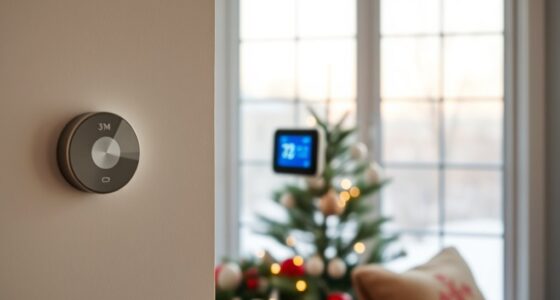
Smart thermostats typically save more energy than programmable models because they adapt to your habits and adjust settings automatically. With features like learning routines and remote control, they prevent waste even when you’re away. Programmable thermostats rely on pre-set schedules, which may not suit daily changes. To maximize savings and understand how each type can benefit your home, explore the key differences and smarter options available.
Key Takeaways
- Smart thermostats adapt to user behavior, optimizing energy use more effectively than fixed schedules of programmable models.
- Remote access allows real-time adjustments, reducing unnecessary energy consumption when away from home.
- Smart thermostats often provide detailed energy reports, helping users identify savings opportunities beyond traditional programmable setups.
- Programmable thermostats rely on pre-set schedules, which may be less responsive to daily changes, potentially leading to less energy efficiency.
- Overall, smart thermostats can deliver greater energy savings through adaptive learning and remote management, but require more initial setup effort.

When it comes to reducing energy bills, choosing the right thermostat can make a significant difference. Both smart and programmable thermostats offer ways to optimize your home’s heating and cooling, but they do so with distinct features and considerations. Your decision depends on how much effort you’re willing to invest in setup and how intuitive you find their interfaces.
Starting with installation challenges, programmable thermostats are generally straightforward to install if your existing wiring matches their requirements. They often come with detailed instructions, and many users find the process manageable with basic tools. However, if your wiring setup is unusual or outdated, installation can become tricky, potentially requiring professional help. Smart thermostats, on the other hand, tend to have more complex installation procedures. They often connect wirelessly or via existing wiring, but some models may require additional components or adapters. Powering them, especially if they use Wi-Fi, may involve troubleshooting connection issues or ensuring your home’s network is robust enough for seamless operation. If you’re not comfortable with electrical work or technology setups, these installation challenges could become a barrier, and professional installation might be advisable.
Beyond installation, the user interface plays an essential role in how effectively you can leverage your thermostat’s features. Programmable thermostats typically feature traditional digital screens with physical buttons or dials. They’re simple to operate once you understand the scheduling functions, but their interfaces can feel outdated or less intuitive, especially if you’re used to modern devices. Smart thermostats excel here, offering sleek touchscreen interfaces or mobile apps that provide a more interactive experience. These apps allow you to adjust settings remotely, view energy reports, and set personalized schedules with just a few taps. The learning curve may be steeper initially, but once you become familiar, managing your home’s climate becomes effortless. Plus, the ability to control your thermostat remotely offers flexibility that programmable models lack, ensuring you’re never wasting energy when you’re away.
Frequently Asked Questions
Do Smart Thermostats Require Professional Installation?
Smart thermostats often require professional installation because of installation challenges, especially if your wiring setup is complex. While some models are user-friendly and may be installed by handy homeowners, others need technical expertise. Keep in mind, the price considerations include both the device and installation costs. If you’re unsure, hiring a professional can guarantee proper setup, avoid potential issues, and maximize energy savings.
Can Programmable Thermostats Learn User Preferences Over Time?
Think of your programmable thermostat as a diligent student enthusiastic to learn. It doesn’t instinctively know your preferences but adapts through user behavior, thanks to its adaptive learning feature. Over time, it observes patterns and fine-tunes settings to match your lifestyle. So, yes, a programmable thermostat can learn your preferences, making your home more comfortable and energy-efficient without you having to manually adjust it constantly.
Are Smart Thermostats Compatible With All HVAC Systems?
Smart thermostats are compatible with most HVAC systems, especially if your home supports smart home integration. However, some older or specialized systems may need additional wiring or adapters. These devices offer advanced energy management features, allowing you to control your heating and cooling remotely and optimize energy savings. Before purchasing, check your system’s compatibility and verify it supports smart home integration to maximize the benefits of a smart thermostat.
How Secure Are Smart Thermostat Data and Privacy?
Smart thermostats generally prioritize your privacy, but privacy concerns do exist. They use data encryption to protect your information, making it difficult for unauthorized access. However, you should be aware that some data may be shared with third parties or used for targeted advertising. To enhance security, regularly update firmware, use strong passwords, and review privacy settings. Staying informed helps guarantee your data remains protected and your privacy is maintained.
What Is the Typical Lifespan of These Devices?
Typically, your thermostat’s time tends to be about 10 to 15 years, depending on device durability and technological obsolescence. You can prolong its lifespan by handling it carefully and keeping software updated. While technology advances rapidly, investing in a high-quality model can delay obsolescence. Regular maintenance and mindful use help maximize your device’s longevity, ensuring it stays functional and efficient well beyond its expected lifespan.
Conclusion
In the battle of energy savings, smart thermostats are like savvy navigators, adjusting your home’s climate with precision and intuition, guiding you toward efficiency effortlessly. Programmable thermostats act as dependable maps, setting routines to save energy, but lack the adaptive finesse. Ultimately, choosing between them is like selecting a seasoned captain or a trusty compass—both steer you toward savings, but the smart thermostat’s intuitive touch offers a smoother voyage through the seasons.