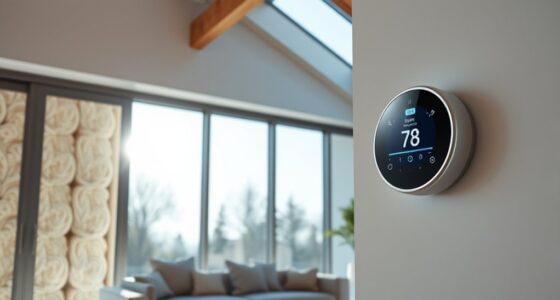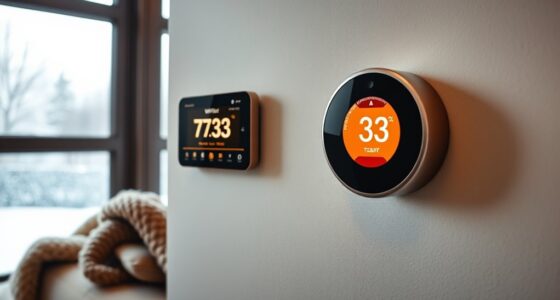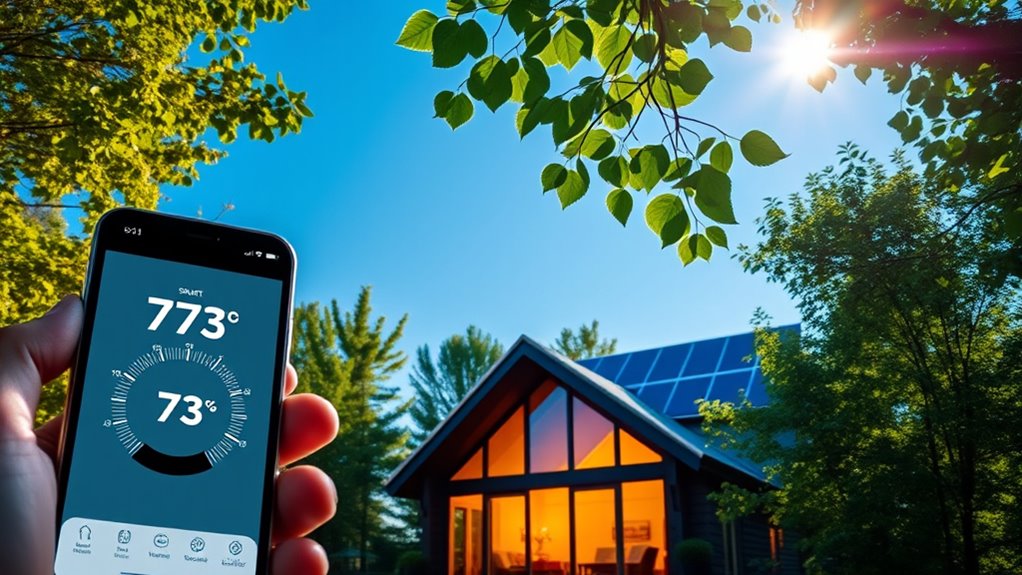
Using smart thermostats in vacation properties helps you save energy by allowing remote control and automatic adjustments that prevent unnecessary heating or cooling. With zoning capabilities, you can set different temperatures for various areas, ensuring comfort and reducing waste. These devices learn your preferences over time, optimize operation, and send alerts for issues. If you want to discover how these features can maximize your savings and simplify property management, keep exploring the options available.
Key Takeaways
- Remote monitoring allows real-time temperature adjustments to prevent energy waste when the property is unoccupied.
- Zoning capabilities enable setting different temperatures in various areas, optimizing energy use based on occupancy.
- Automated learning features adjust climate settings for maximum efficiency and comfort, reducing unnecessary HVAC operation.
- Alerts for irregularities help prevent issues like frozen pipes or mold, protecting property and reducing costly repairs.
- High-quality smart thermostats extend HVAC lifespan and lower energy bills through proactive, precise climate management.
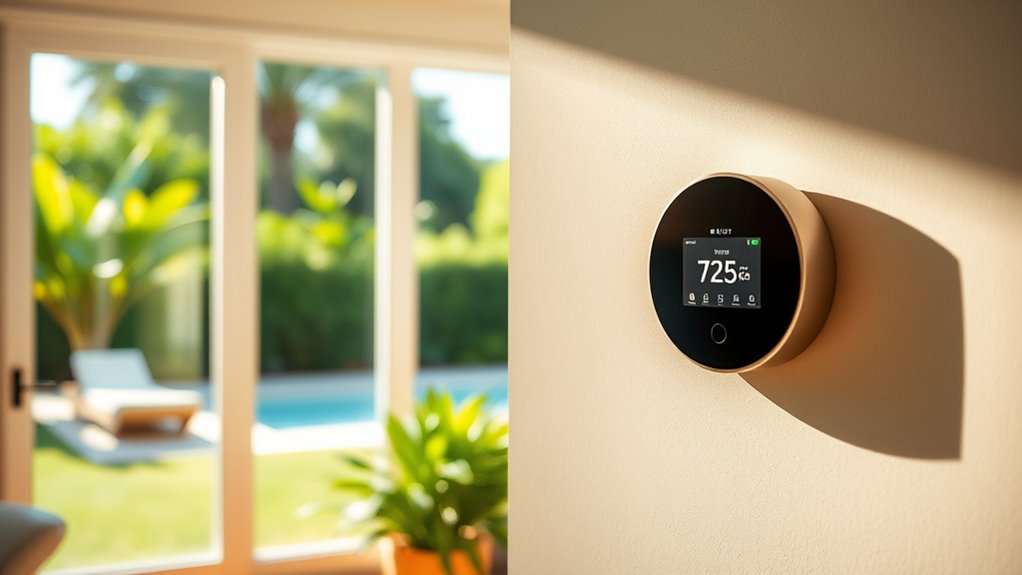
When managing a vacation property, keeping energy costs under control can be challenging, especially when you’re not there regularly. One effective way to tackle this is by utilizing smart thermostats that support remote monitoring. With remote monitoring, you can oversee your property’s climate from anywhere, ensuring the heating or cooling isn’t running unnecessarily. This feature allows you to adjust the temperature settings in real-time, preventing energy waste when the property is unoccupied or during off-peak seasons. You can receive alerts if the system detects irregularities, such as temperature drops or spikes, so you can address issues immediately, saving both energy and money.
Monitor your vacation home’s climate remotely to save energy and costs efficiently.
Another key feature to maximize energy savings is temperature zoning. Smart thermostats often enable you to divide your property into multiple zones, each with its own temperature controls. This means you can set different temperatures for bedrooms, living areas, or outdoor spaces based on usage patterns. For instance, you might keep bedrooms cooler at night and warmer during the day, or turn off heating in rarely used rooms. Temperature zoning ensures you’re not wasting energy conditioning spaces that aren’t occupied, which is especially important for vacation rentals where occupancy can vary widely. By customizing the climate for each zone, you maintain comfort for guests while minimizing energy consumption.
The combination of remote monitoring and temperature zoning provides a powerful toolkit for managing your vacation property efficiently. You don’t have to be physically present to ensure the HVAC system is functioning efficiently. Instead, you can make adjustments on your smartphone, tablet, or computer, instantly tweaking settings as needed. This flexibility helps prevent overheating or overcooling, which can lead to unnecessary energy costs. Plus, many smart thermostats learn your preferences over time, automatically adjusting temperatures based on your patterns, further reducing waste.
Implementing these smart features not only cuts costs but also extends the lifespan of your HVAC equipment by avoiding constant cycling or overuse. It also offers peace of mind, knowing your property is protected from temperature-related issues like frozen pipes or mold growth. Overall, integrating remote monitoring and temperature zoning into your vacation property management strategy transforms how you control energy use. It offers convenience, cost savings, and peace of mind—making your property more efficient and environmentally friendly while ensuring guests enjoy a comfortable stay.
Furthermore, selecting a high-quality smart thermostat with advanced features can maximize these benefits and provide more precise control over your property’s climate.
Frequently Asked Questions
Can Smart Thermostats Be Controlled Remotely During Power Outages?
Smart thermostats can sometimes be controlled remotely during power outages if they have a battery backup or are connected to solar power systems. Battery backups keep the device powered temporarily, allowing you to adjust settings remotely. Solar power can provide ongoing energy, but it depends on the system’s design. Check if your thermostat supports these features, so you can manage your vacation property’s climate even when the main power is out.
Are Smart Thermostats Compatible With All Types of HVAC Systems?
Smart thermostats aren’t compatible with all HVAC systems. Before installing, check the device’s HVAC compatibility and installation requirements. Some systems, like older models or certain heat pumps, might need additional wiring or adapters. To guarantee a smooth setup, review your system’s specifications and consult a professional if needed. This way, you can enjoy seamless control and energy savings without compatibility issues.
How Secure Is Remote Access to Smart Thermostats?
Remote access to smart thermostats is generally secure if you follow best cybersecurity practices. Manufacturers use encryption and secure login protocols to protect your data privacy. However, cybersecurity concerns remain if you use weak passwords or don’t update firmware regularly. To stay safe, enable two-factor authentication, change default passwords, and keep your device’s software current. This way, you minimize potential risks and guarantee your remote access stays secure.
Do Smart Thermostats Require Professional Installation?
Smart thermostats generally don’t require professional installation, but installation requirements can vary. You might need some basic technical skills to set them up yourself, but many models are designed for easy installation with clear instructions. Before purchasing, check compatibility considerations, like your HVAC system type and Wi-Fi setup. If you’re unsure, a professional can guarantee everything’s installed correctly, especially for complex systems or specific compatibility needs.
Can Smart Thermostats Learn and Adapt to My Vacation Schedule Automatically?
Like a seasoned traveler, your smart thermostat uses learning algorithms to automatically adapt to your vacation schedule. It observes your preferences and adjusts temperatures accordingly, much like a trusted companion anticipating your needs. With adaptive scheduling, you won’t have to manually set it each time. Instead, it learns over time, ensuring your vacation property remains comfortable while saving energy. It’s like having a personal energy assistant who knows your rhythm.
Conclusion
Think of your vacation home as a quiet garden, waiting patiently for your return. Smart thermostats act like attentive gardeners, gently tending to the environment—keeping it cozy when you’re there and conserving energy when you’re away. By installing one, you’re nurturing your home’s comfort and savings simultaneously. With this little device as your digital gardener, you guarantee your property stays lush and vibrant, even during periods of rest, all while saving energy effortlessly.