
TL;DR

Get home appliances delivered free with Prime
- Fast, free delivery on millions of items
- Prime Video, Amazon Music and more included
- Member-only deals all year
A House Beautiful report outlines four habits professional organizers say can help keep clutter under control in small homes: use designated drop zones, follow a one-in, one-out rule, refuse unneeded freebies and put items away regularly. The advice focuses on routines that limit clutter rather than a one-time cleanout; it does not establish that the habits physically increase a room’s size.
A House Beautiful report has outlined four decluttering habits that professional organizers recommend for keeping small homes more orderly: assign everyday items drop zones, remove an item when bringing in a replacement, decline unneeded freebies and put things away after use. The advice addresses how quickly belongings can accumulate in compact homes, though it does not claim that decluttering changes a room’s actual dimensions.
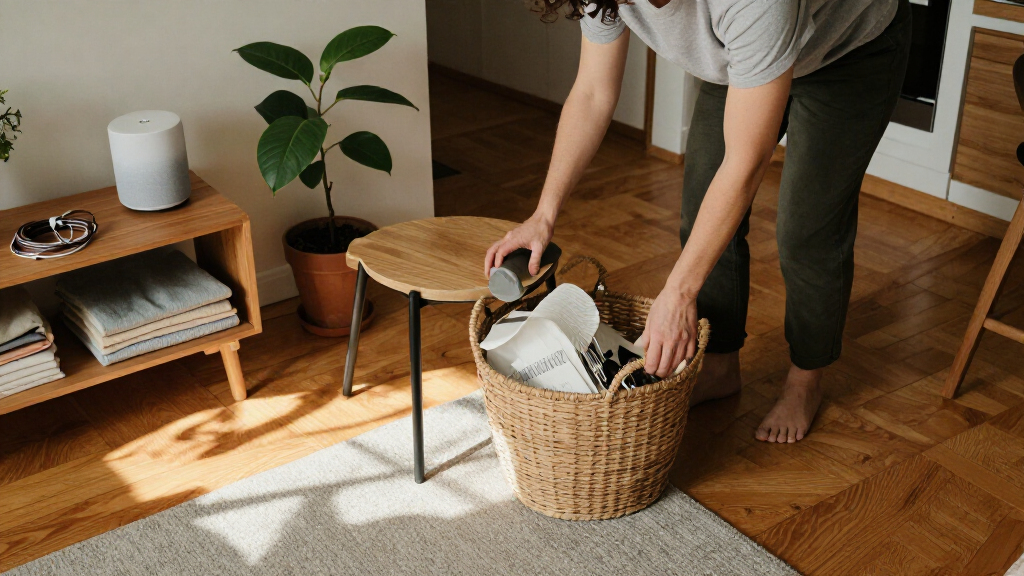
The organizers’ central advice is to rely on repeatable systems rather than a major, occasional purge. A tray, bowl, hook or small basket near an entryway can give keys, bags and other everyday belongings a designated place. Cathy Orr, cofounder of The Uncluttered Life, also recommends using one collection basket for misplaced items, then spending about 10 minutes each evening returning them to their proper homes.
A second habit is the one-in, one-out rule: before bringing home a new item, remove one from the same category. Macie Kreutzer, founder of For the Love of Simple, advises clearing out at least one item before shopping for new home goods or clothing and not bringing in more than the space can hold. The report also recommends checking existing closet, refrigerator and pantry supplies before shopping, which may help prevent unnecessary purchases.
The other habits focus on preventing small items and unfinished chores from accumulating. Diane Greenhalgh, owner of Tiny to the Max, advises refusing freebies without a specific, immediate use, including extra hotel toiletries, conference merchandise and takeout utensils. For daily upkeep, Greenhalgh suggests putting away makeup, loading dishes and clearing surfaces after meals. Carroll Cartwright, owner of Neatly & Co., recommends a 10-to-15-minute evening reset when it is not possible to tidy as tasks are completed.
Small Routines Limit Daily Clutter
In a compact home, a small number of misplaced objects can quickly take over counters, entryways and other shared surfaces. The report’s recommendations target the points where clutter forms: new purchases coming in, useful items lacking a home, freebies that accumulate and everyday tasks left unfinished.
The approach also breaks organizing into actions that can be done in short periods. A nightly basket check or brief reset may feel more manageable than waiting until belongings have gathered into a large cleanout. These are organizers’ practical recommendations, not evidence that a specific routine will work for every household or create more usable floor area in every layout.
Products Worth Considering

eufy Security Essential 7-Piece Alarm System

Bose TV Speaker (2nd Gen) Compact Soundbar

Bose TV Speaker Compact Soundbar with Bluetooth and HDMI-ARC, Black
As an affiliate, we earn on qualifying purchases.
Four Habits, One Repeatable System
The report frames small-space organization as a matter of managing what enters and stays, not finding a single product or trick. It notes that flat surfaces in places such as studio apartments and galley kitchens can become natural collection points. Assigning items a home and making removal part of shopping are presented as ways to interrupt that cycle.
For items already being discarded, the report advises keeping donation bags or boxes moving toward their destination rather than leaving them in a hallway or garage. Carroll Cartwright says setting unwanted items outside the main living area can make it easier to complete the removal. The report does not prescribe a particular donation service or a fixed schedule for larger clear-outs.
“The hard part is actually DOING it.”
— Gayle M. Gruenberg of Let’s Get Organized
Results Depend on Household Routines
The report offers professional organizers’ recommendations, but it does not provide measured results, comparisons between households or evidence that one habit is more effective than another. It also does not specify how much time each routine takes beyond the suggested 10-minute basket check and 10-to-15-minute reset.
How well the advice fits will depend on a household’s layout, possessions and daily schedule. The report does not address larger space constraints, such as insufficient storage or the needs of people who share a small home. Its headline says the habits make spaces feel bigger; the article’s practical advice concerns reducing visible clutter, not changing a home’s size.
Start With One Weekend Reset
Readers can begin by choosing one habit to test over a weekend: set up a small drop zone, review one category before shopping, remove unused freebies or clear surfaces at the end of the day. The report recommends making unwanted items easy to donate or remove so they do not become another pile inside the home.
After the initial sort, the suggested next step is repetition: return misplaced belongings from a collection basket each night and spend a short period closing unfinished tasks. The report gives no formal follow-up date or measure of success; residents can judge whether the routine is manageable and whether it keeps frequently used surfaces clearer.
Key Questions
What four habits does the report recommend?
It recommends creating drop zones and a collection basket, using a one-in, one-out rule, refusing freebies without a clear use and putting items away after use.
How does a collection basket work?
Use one container for belongings picked up in the wrong place during the day. The report says to spend about 10 minutes at night returning those items to where they belong.
What does one-in, one-out mean?
Before bringing a new item into a category such as clothing or home goods, remove one existing item from that category. The report also suggests checking pantry, refrigerator and closet supplies before shopping.
Do these habits make a small room physically bigger?
No. The report describes ways to reduce visible clutter and keep belongings organized; it does not say that decluttering changes a room’s dimensions.
Source: housebeautiful.com