
TL;DR
Designer Lauren Lerner says marble can have the longer physical lifespan, while quartz is more likely to keep a near-new appearance through years of everyday use. The difference comes down to how each material ages: marble can scratch and etch, while quartz resists stains but can be damaged by heat and sunlight.
Marble can outlast quartz as a countertop material, but quartz may look newer after years of daily use, designer Lauren Lerner told Hunker in a report comparing the two surfaces. The distinction matters to homeowners weighing long-term durability: marble can develop scratches and etching as it ages, while quartz resists many common stains but can be permanently marked by hot pans.

Get home appliances delivered free with Prime
- Fast, free delivery on millions of items
- Prime Video, Amazon Music and more included
- Member-only deals all year
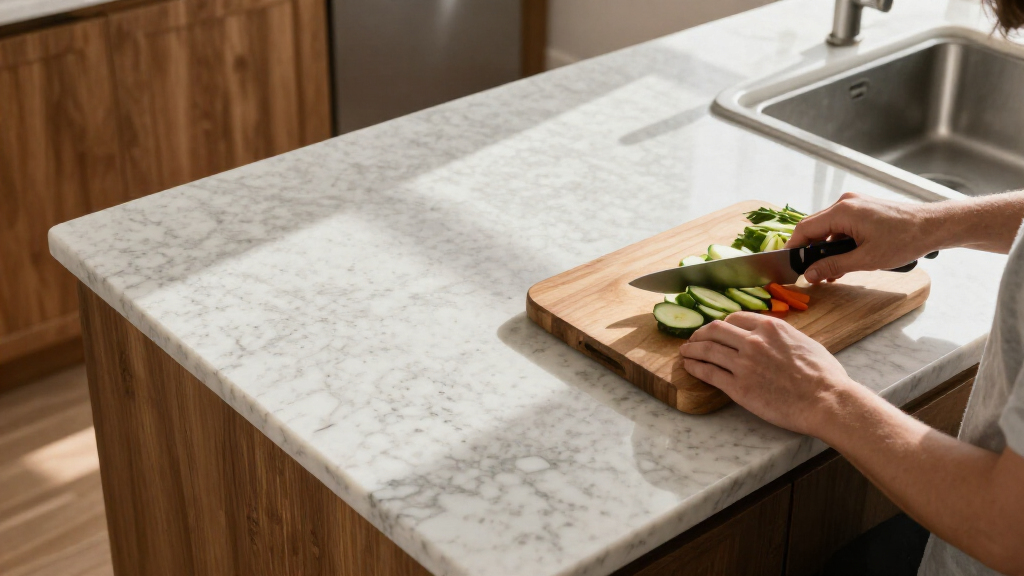
Lerner, founder and principal designer of Living with Lolo, said marble counters can last for centuries, pointing to old examples in Europe. She described marble as a surface that changes rather than simply fails, developing a patina that some owners value as part of its natural character. Whether that aging is desirable depends on a homeowner’s tolerance for visible wear.
Quartz is nonporous and does not require sealing, according to Lerner. It resists stains from substances such as wine, coffee and oil, and its consistent color and pattern can be easier to match across a large installation. The report says quartz rates 7 on the Mohs mineral-hardness scale, compared with 3 to 4 for marble; the scale describes resistance to scratching, not overall countertop performance.
Quartz also has vulnerabilities. Its resin binder can scorch or discolor when exposed to a hot pan, and Lerner said the surface cannot handle heat above 300 degrees Fahrenheit without risk of permanent marks. Direct sunlight can yellow or fade it over time. Marble handles heat and UV exposure better, but its porosity makes it more vulnerable to spills and acidic substances, and it needs regular sealing.
Durability Depends on How Surfaces Age
The comparison is useful because “lasting longer” can refer to either the physical survival of a counter or how long it keeps its original appearance. Marble may remain usable for generations, but its scratches and etching can become part of its look. Quartz can stay closer to its original appearance through routine household use, provided it is protected from excessive heat and sunlight.
That difference can shape the cost and effort of ownership over time. Marble calls for periodic sealing and prompt cleanup of spills; quartz needs less routine care but requires precautions around cookware and strong sun. Buyers should consider both the material’s durability and whether they want a surface that shows signs of age or one designed to look more consistent.
Products Worth Considering

Ring Wired Doorbell Pro (3rd Gen) and Floodlight Cam Pro (2nd Gen) Bundle

Dyson V8 Cordless Vacuum

TCL 55-Inch R7D Series QLED 4K UHD HDR Roku Smart TV (55R7D, 2026)
As an affiliate, we earn on qualifying purchases.
Care Requirements Shape Long-Term Wear
The Hunker report presents the choice as a balance between natural variation and low maintenance. Each marble slab is distinct, and Lerner said the stone offers depth that engineered quartz can imitate but not reproduce exactly. Quartz, by contrast, is more uniform, which can help when matching surfaces in a kitchen or across multiple bathrooms.
Lerner recommends using a trivet on quartz and cleaning it with mild soap and water, avoiding bleach, abrasive pads and harsh degreasers. For marble, she advises sealing every six months to a year and testing the surface with water: if it darkens rather than beading, it may need resealing. Spills such as lemon juice, vinegar, tomato sauce, oil and red wine should be cleaned promptly; she recommends a pH-neutral stone cleaner.
The report also notes that California regulators are moving toward restrictions on engineered stone with high silica content, citing silicosis cases among fabricators who cut it. Lerner said she is showing clients alternatives, including quartzite, large-format porcelain and newer low-silica engineered surfaces. The supplied material does not provide a timeline or detailed scope for the regulatory action.
“Marble technically lasts longer. It’s natural stone, and some marble counters in Europe are centuries old. But quartz comes out ahead for how most families actually live, because it’s nonporous and doesn’t stain or etch, so it looks close to new after 15 or 20 years.”
— Lauren Lerner, founder and principal designer of Living with Lolo, speaking to Hunker
Lifespan Varies by Use and Care
The report does not give a controlled, side-by-side lifespan estimate for quartz and marble. Lerner’s examples and advice are expert commentary, not a guarantee that a particular counter will last a set number of years. Actual wear depends on installation, product composition, household use and maintenance; the source does not quantify how much each factor changes lifespan.
The report also does not specify the exact regulatory timeline or requirements for California’s proposed restrictions on high-silica engineered stone. Its statements about heat limits and surface care are attributed to Lerner; individual manufacturers may provide product-specific care instructions that homeowners should check.
Compare Slabs and Care Guidance
For anyone choosing a new counter, the next step is to compare the specific slabs and review the manufacturer’s care and warranty instructions. Homeowners should consider whether they can avoid placing hot cookware directly on quartz and whether they are willing to seal marble and clean acidic spills quickly. There is no single winner for every household: the better fit depends on the preferred appearance, maintenance routine and likely sources of wear.
Owners who already have either surface can reduce avoidable damage by following material-specific care advice. Quartz users can use trivets and mild cleaners; marble owners can monitor the seal, use pH-neutral products and wipe spills promptly. The report offers no new testing or regulatory decision date, so those developments remain to be confirmed.
Key Questions
Which countertop lasts longer, quartz or marble?
Designer Lauren Lerner told Hunker that marble can last longer as a material, with some European counters centuries old. Quartz may retain a near-new look longer under typical household use, so the answer depends on whether lifespan means continued use or appearance.
Does quartz need to be sealed?
No. The report describes quartz as nonporous and not in need of sealing. It recommends using mild soap and water and protecting the surface from hot pans, which can scorch or discolor the resin.
How often should marble countertops be sealed?
Lerner recommends sealing marble every six months to a year. She suggests dropping water on the surface: if the stone darkens instead of the water beading, it may be time to reseal.
What damages quartz and marble countertops?
Hot cookware and prolonged direct sunlight can damage quartz, according to the report. Marble is porous and more susceptible to stains and etching from acidic spills; it also needs regular sealing and prompt cleanup.
Source: hunker.com