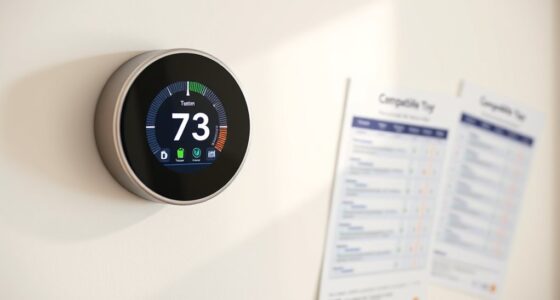
An accurate AQI gives you detailed insights beyond just color rings by showing specific pollutant levels, like PM2.5 and ozone. It helps you understand the exact air quality risks inside your home or workspace, guiding you to take precise actions such as ventilation or reducing certain activities. Unlike simple color codes, this data lets you assess health risks more clearly. Keep reading to discover how precise AQI details can better protect your indoor environment.
Key Takeaways
- AQI provides a specific numerical value indicating pollutant concentration, offering more detail than simple color codes.
- Numerical AQI levels help assess health risk more accurately than visual indicators alone.
- Precise AQI readings enable targeted actions, like adjusting ventilation or reducing pollutant sources.
- AQI data facilitates monitoring pollution trends over time, unlike static color signals.
- It enhances understanding of indoor air quality by translating complex pollutant data into an actionable metric.

Understanding AQI readings is essential for staying informed about air quality and protecting your health. While many people rely on color-coded rings or numbers to gauge whether the air seems safe, these visuals often oversimplify what’s really happening. The AQI, or Air Quality Index, provides a more detailed picture by translating complex pollutant data into a single, easy-to-understand number. This number offers direct insight into the levels of harmful pollutants in the air, making it a valuable tool for decision-making, especially when it comes to indoor air quality and pollutant sources.
AQI simplifies complex air quality data into a clear number, guiding healthier indoor environment decisions.
Indoor air quality isn’t just about outdoor pollution seeping inside; it’s also influenced by numerous pollutant sources within your home or workspace. Common sources include tobacco smoke, cooking fumes, cleaning chemicals, and even certain building materials. When you check the AQI, you get a clearer understanding of how these sources contribute to overall air quality, beyond the visible or smell-based cues. For example, a high AQI reading might indicate elevated levels of particulate matter (PM2.5), which can originate from indoor activities like burning candles or using a fireplace. Recognizing this helps you identify which pollutant sources are impacting your environment most markedly.
The real value of the AQI reading lies in its ability to quantify risk. Unlike a color ring that might simply suggest “good” or “bad,” the actual number tells you how close you are to unhealthy levels. A reading in the 0-50 range indicates good air quality, while 51-100 suggests moderate, and anything above that signals potential health concerns. When you see your AQI approaching higher levels, you can take proactive steps—like increasing ventilation, reducing the use of chemical-based products, or even using air purifiers—to improve indoor air quality and minimize health risks.
Furthermore, the AQI reading helps you understand how different pollutant sources contribute to overall air quality. For instance, if your AQI spikes after cooking dinner or during cleaning, you know these activities are major contributors. This insight allows you to adjust your habits accordingly, such as opening windows or switching to less polluting alternatives. Over time, paying attention to AQI readings enables you to reduce exposure to harmful pollutants, making your indoor space safer and healthier. Ultimately, the AQI offers a precise, actionable snapshot of your air environment, far more than a simple color ring ever could. Additionally, understanding air quality can empower you to implement effective purification and ventilation strategies tailored to your specific indoor environment.
indoor air quality monitor with AQI display
As an affiliate, we earn on qualifying purchases.
As an affiliate, we earn on qualifying purchases.
Frequently Asked Questions
How Often Should I Check the AQI for Health Safety?
You should check the AQI daily, especially if you’re sensitive to pollution or notice air quality fluctuations. Regular checks help you stay aware of air quality trends and identify pollution sources that might affect your health. If pollution levels spike or stay high over several days, it’s wise to limit outdoor activities. Staying informed allows you to take precautions, protecting yourself from potential health impacts caused by poor air quality.
Can AQI Readings Predict Long-Term Health Effects?
The air quality index can hint at potential health implications, but it doesn’t predict long-term effects with certainty. Think of it as a warning sign rather than a crystal ball—helping you understand immediate risks. While consistently poor air quality can contribute to long-term health issues like respiratory problems, you need to take into account other factors too. Regular monitoring and proactive steps protect your health far better than relying solely on a single AQI reading.
Do AQI Levels Vary Significantly Throughout the Day?
Yes, AQI levels vary considerably throughout the day due to air quality fluctuations caused by changing pollution sources. Morning and evening rush hours often see higher AQI readings because of increased vehicle emissions. Weather conditions like wind, temperature, and sunlight also influence pollution levels. You should monitor AQI updates regularly, especially during times of high air pollution, to protect yourself from exposure and plan outdoor activities accordingly.
How Accurate Are Consumer-Grade AQI Devices?
Imagine holding a tiny, delicate compass in your hand, guiding you through fog and shadows—that’s what consumer-grade AQI devices aim to do. They’re fairly accurate when well-calibrated, but calibration accuracy and sensor reliability vary between models. While they provide useful real-time insights, they might not match professional-grade instruments in precision. Trust your device, but also stay mindful of occasional inaccuracies, especially in extreme or rapidly changing air conditions.
What Actions Should I Take During High AQI Days?
During high AQI days, prioritize indoor air quality by keeping windows and doors closed to prevent outdoor pollution sources from entering. Use air purifiers if available, and avoid strenuous outdoor activities. Limit time spent outdoors, especially near busy roads or industrial areas. Regularly check AQI updates, and consider ventilating your home when pollution levels drop. Taking these steps helps reduce your exposure and protect your health during poor air quality days.
As an affiliate, we earn on qualifying purchases.
Conclusion
Remember, the AQI reading isn’t just a number; it’s a mirror reflecting your environment’s hidden truths. Like a lighthouse guiding ships through fog, it illuminates the unseen dangers lurking in the air. Paying attention to these numbers helps you navigate safely, reminding you that awareness is your greatest shield. In a world of shifting skies, let the AQI be your steady beacon, guiding you toward clarity, health, and peace amidst the haze.
As an affiliate, we earn on qualifying purchases.
As an affiliate, we earn on qualifying purchases.