
Many energy-saving myths—like drastically turning down your thermostat to Save money—are outdated. Smart thermostats prove that simple, consistent schedules and well-managed settings are more effective. Features like geofencing and energy reports help optimize comfort without waste. Using these tools correctly means you don’t need extreme temperature drops. Want to discover how to maximize savings with your smart thermostat? Keep exploring to uncover smarter, more efficient home heating and cooling tips.

Get home appliances delivered free — and shop member deals
- Fast, free delivery on millions of items
- Access to Prime Big Deal Days deals on October 6–7
- Prime Video, Amazon Music and more included
Key Takeaways
- Drastically lowering thermostats during winter does not guarantee significant energy savings; proper programming is more effective.
- Modern smart thermostats optimize heating and cooling based on routines, debunking the myth that simple temperature drops save energy.
- User-friendly interfaces allow easy scheduling, preventing unnecessary energy use when away or asleep.
- Features like geofencing and automatic learning help reduce waste by adjusting temperatures when no one is home.
- Energy reports provide insights that help users optimize settings, challenging misconceptions about simple temperature reductions.

Have you ever believed that turning your thermostat down drastically saves energy? Many people think that lowering the temperature markedly during colder months will cut their energy bills. However, smart thermostats challenge this myth by offering smarter ways to manage your home’s heating and cooling. Instead of simply turning the heat down and leaving it there, you can use programming tips and an intuitive user interface to optimize comfort and efficiency. Modern smart thermostats allow you to set specific schedules that match your daily routines, ensuring your home isn’t heating unnecessarily when you’re away or asleep. By customizing these settings, you avoid the common mistake of setting the thermostat to a very low temperature and forgetting about it, which can sometimes lead to energy waste if the system works harder to reach that temperature later.
The user interface of these devices is designed to be user-friendly, making it easy for you to create and adjust your schedules. With just a few taps, you can program your thermostat to warm up your house before you wake up or cool down when you leave for work. Some models even learn from your habits over time, automatically adjusting settings based on your behavior, removing the need for constant manual programming. This technology dispels the myth that energy savings come only from drastic temperature drops. Instead, it emphasizes the importance of consistent, well-planned settings that maintain comfort without excessive energy use.
Another programming tip is to leverage features like geofencing, which uses your smartphone’s location to determine whether you’re home or away. When you leave, the thermostat can automatically lower the temperature, and when you return, it can warm up again. This dynamic adjustment prevents energy wastage while ensuring your home is comfortable when needed. The user interface makes setting up these features straightforward, often guiding you through setup in minutes. Many smart thermostats also provide energy reports that help you understand your consumption patterns, so you can refine your programming tips further to maximize savings.
In addition, understanding the energy consumption patterns of your heating system can help you make smarter programming decisions, ultimately leading to greater savings. In essence, debunking the myth that lowering your thermostat drastically saves energy depends on smart scheduling and effective use of the user interface. It’s not about extreme adjustments but about thoughtful, programmed settings that balance comfort and efficiency. By taking advantage of these features, you’ll find that you can save energy without sacrificing comfort, proving that smart thermostats are about smarter management—not just lowering temperatures considerably.
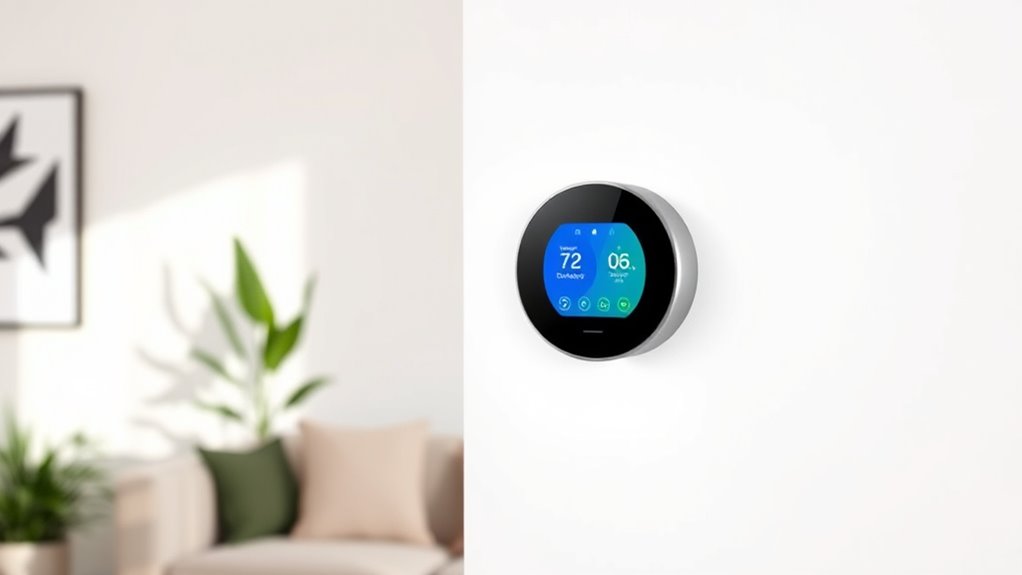
smart thermostat with scheduling
As an affiliate, we earn on qualifying purchases.
As an affiliate, we earn on qualifying purchases.
Frequently Asked Questions
Do Smart Thermostats Work With All Heating and Cooling Systems?
Smart thermostats work with most heating and cooling systems, but compatibility issues can arise. You’ll need to check your system’s type and wiring to guarantee smooth system integration. Some older systems or certain heat pump models might not be compatible without additional accessories. It’s best to review your HVAC setup and consult the thermostat’s compatibility list or a professional to avoid any surprises and ensure your smart thermostat functions properly.
How Much Can I Really Save Using a Smart Thermostat?
You can typically save around 10-15% on your energy bills with a smart thermostat, boosting your home’s energy efficiency. These devices optimize your heating and cooling schedules, reducing unnecessary energy use. The actual savings depend on your habits and system, but over time, you’ll notice lower costs and improved energy efficiency. Investing in a smart thermostat is a smart move toward saving money while making your home more eco-friendly.
Are Smart Thermostats Difficult to Install Myself?
Getting started with DIY installation might seem like a puzzle, but it’s often more straightforward than you think. Many smart thermostats are designed for easy setup, yet compatibility concerns can pop up if your system isn’t standard. Still, with clear instructions and a little patience, you can usually tackle the installation yourself. Just double-check your HVAC system’s compatibility and guidelines, and you’ll be up and running in no time.
Can Smart Thermostats Improve Indoor Air Quality?
Yes, smart thermostats can improve indoor air quality by enhancing air filtration and humidity control. They allow you to adjust settings remotely, ensuring better air circulation and filtering pollutants more efficiently. By maintaining ideal humidity levels, they reduce mold growth and dust mites. With these features, you create a healthier environment, making your indoor air cleaner and more comfortable without much effort on your part.
Do Smart Thermostats Require a Stable Wi-Fi Connection to Function Properly?
Smart thermostats do require a stable Wi-Fi connection to work properly. If your Wi-Fi has frequent connectivity issues or weak signals, it can affect the thermostat’s ability to receive commands and update settings. Ensuring Wi-Fi stability helps your smart thermostat function smoothly, avoiding disruptions in climate control. To prevent problems, consider upgrading your router or reducing interference, so your device stays connected and performs efficiently.
As an affiliate, we earn on qualifying purchases.
Conclusion
Think of your smart thermostat as the lighthouse guiding your energy use through foggy myths. It’s not just a device; it’s your beacon of efficiency, illuminating the truth behind false beliefs. By trusting its guidance, you’re steering away from wasted energy and costs, heading toward a brighter, smarter future. Let this beacon lead you to smarter choices—because your home’s comfort and the planet’s health depend on the truth you choose to follow.
As an affiliate, we earn on qualifying purchases.
As an affiliate, we earn on qualifying purchases.
Fall yard work Picks
leaf blowers
As an affiliate, we earn on qualifying purchases.