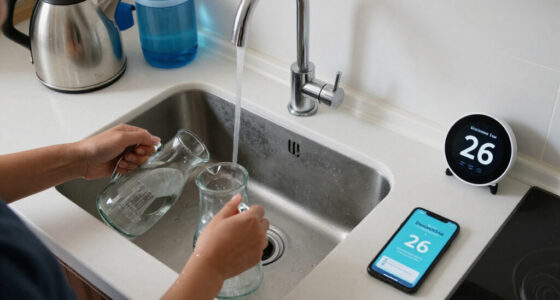
By 2026, smart thermostats will become even smarter, personalizing climate control through advanced AI and machine learning. They’ll seamlessly connect with your entire smart home, optimizing energy use while enhancing comfort. Expect intuitive voice controls, AR interfaces, and proactive energy-saving suggestions that adapt to your habits. These devices will integrate with renewable energy sources and storage systems for greater efficiency. To discover how these innovations will transform your home, keep exploring the exciting developments ahead.

Get home appliances delivered free with Prime
- Fast, free delivery on millions of items
- Prime Video, Amazon Music and more included
- Member-only deals all year
Key Takeaways
- Increased personalization through advanced AI will enable smart thermostats to predict user needs more accurately.
- Enhanced ecosystem integration will allow seamless communication with solar panels, smart windows, and energy storage for optimal efficiency.
- User interfaces will become more intuitive, featuring voice control, augmented reality, and visual energy consumption insights.
- Proactive energy-saving recommendations and complex pattern analysis will optimize climate control while maintaining comfort.
- Improved security protocols will address privacy concerns, ensuring safe, personalized smart home climate management.
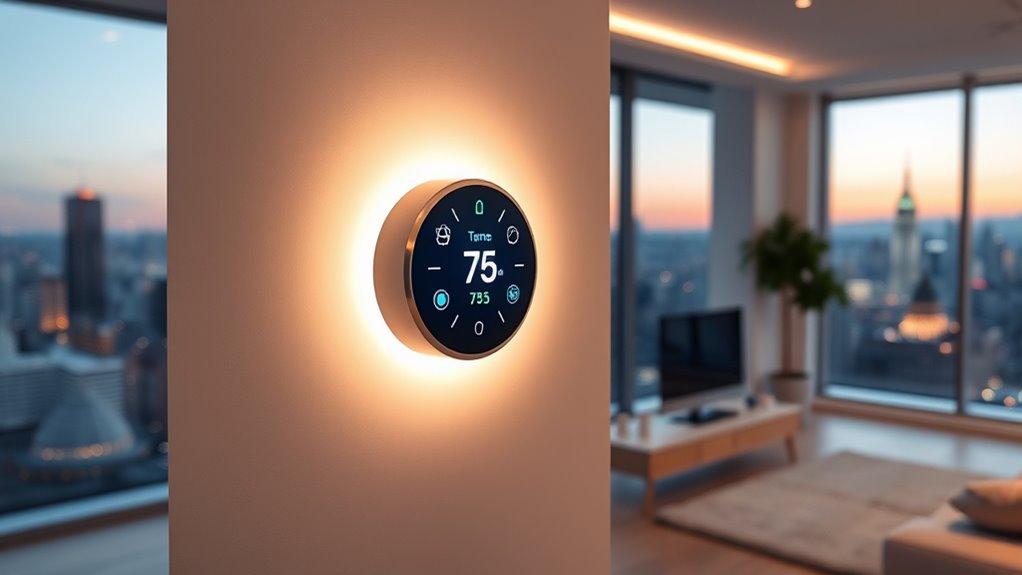
Smart thermostats are rapidly transforming home comfort by offering more personalized, energy-efficient climate control. As these devices become smarter and more intuitive, they’re reshaping how you manage your home’s temperature, helping you save money while maintaining comfort. The future of smart thermostats is centered on enhanced energy efficiency and user personalization, making it easier than ever to tailor your environment to your preferences and lifestyle.
Imagine walking into your home and having the thermostat automatically adjust to your preferred temperature based on your daily schedule, habits, or even your location. That’s the power of user personalization. Advances in machine learning and AI are enabling smart thermostats to learn your routines over time, reducing the need for manual adjustments. They can detect when you’re about to arrive home and preheat or cool the space accordingly, ensuring comfort without wasting energy. As these devices evolve, expect more sophisticated algorithms that can analyze complex patterns—consider factors like weather forecasts, occupancy sensors, and energy consumption habits—to optimize your home’s climate seamlessly.
Energy efficiency remains a key driver in the future development of smart thermostats. They’ll become more adept at minimizing energy waste by precisely controlling heating and cooling systems based on real-time data. With integration into broader smart home ecosystems, these thermostats will communicate with solar panels, smart windows, and energy storage units to maximize renewable energy use and reduce reliance on traditional power sources. This interconnectedness will enable even smarter adjustments, like reducing heating when the house is unoccupied or leveraging off-peak energy rates automatically. Such features will markedly cut your energy bills and carbon footprint.
Furthermore, future smart thermostats will likely incorporate more user-friendly interfaces, making customization effortless. Voice control, intuitive apps, and augmented reality interfaces will allow you to set preferences quickly and monitor energy consumption visually. As privacy concerns grow, expect enhanced security measures that protect your data while still providing personalized experiences. The devices will also offer proactive recommendations, guiding you to make smarter energy choices without sacrificing comfort.
Additionally, the development of high color accuracy projectors will ensure that your home cinema visuals are more vibrant and true-to-life, enhancing your overall viewing experience.
Frequently Asked Questions
How Will Smart Thermostats Integrate With Renewable Energy Sources?
You’ll see smart thermostats increasingly integrate with renewable energy sources by optimizing solar integration, allowing your system to use solar power efficiently. They’ll also participate in grid optimization, adjusting your heating and cooling based on energy demand and supply. This means your thermostat can reduce energy consumption during peak times, maximize renewable use, and lower costs, all while helping support a greener, more sustainable energy grid.
Will There Be Universal Standards for Smart Thermostat Interoperability?
Yes, there will likely be universal standards for smart thermostat interoperability, but standardization challenges and compatibility issues remain. You might find it tricky to connect devices from different brands now, but industry efforts aim to simplify integration. As standards evolve, you’ll enjoy smoother compatibility, allowing your smart home to work seamlessly. Keep an eye on industry updates to stay ahead of these changes and maximize your smart thermostat’s potential.
How Secure Will Smart Thermostats Be Against Hacking Threats?
Smart thermostats are becoming more secure, with over 80% now using advanced data encryption to protect your data. While cybersecurity vulnerabilities remain a concern, manufacturers are continuously improving security measures. You can further safeguard your device by updating firmware regularly and using strong, unique passwords. Overall, smart thermostats will become increasingly resilient against hacking threats, giving you peace of mind while enjoying smarter, safer home control.
Can Smart Thermostats Adapt to Regional Climate Differences?
Yes, smart thermostats can adapt to regional climate differences using adaptive algorithms. These algorithms analyze local weather patterns, outdoor temperatures, and your preferences to optimize indoor comfort and energy efficiency. You’ll find that your thermostat adjusts settings accordingly, ensuring your home remains comfortable regardless of regional climate variations. By learning from your habits and environment, it provides tailored heating and cooling, saving energy and enhancing your comfort seamlessly.
What Are the Privacy Implications of Increased Data Collection?
Like a double-edged sword, increased data collection in smart thermostats raises privacy concerns. You might think your data privacy is protected, but user surveillance becomes more pervasive as companies gather detailed habits and preferences. This heightened data collection can compromise your privacy, making you vulnerable to misuse or hacking. Stay vigilant—understand how your data is stored and shared to protect yourself from potential privacy breaches.
Conclusion
By 2026, smart thermostats will become even more intuitive, learning your habits and adjusting seamlessly. Imagine a thermostat that detects your return home and adjusts the temperature automatically, saving energy without you lifting a finger. For example, a smart system in a busy family home could optimize comfort and efficiency, proving that future thermostats will not only save money but also enhance your daily life effortlessly. Embrace the future—your perfect home climate awaits.
Fall yard work Picks
leaf blowers
As an affiliate, we earn on qualifying purchases.