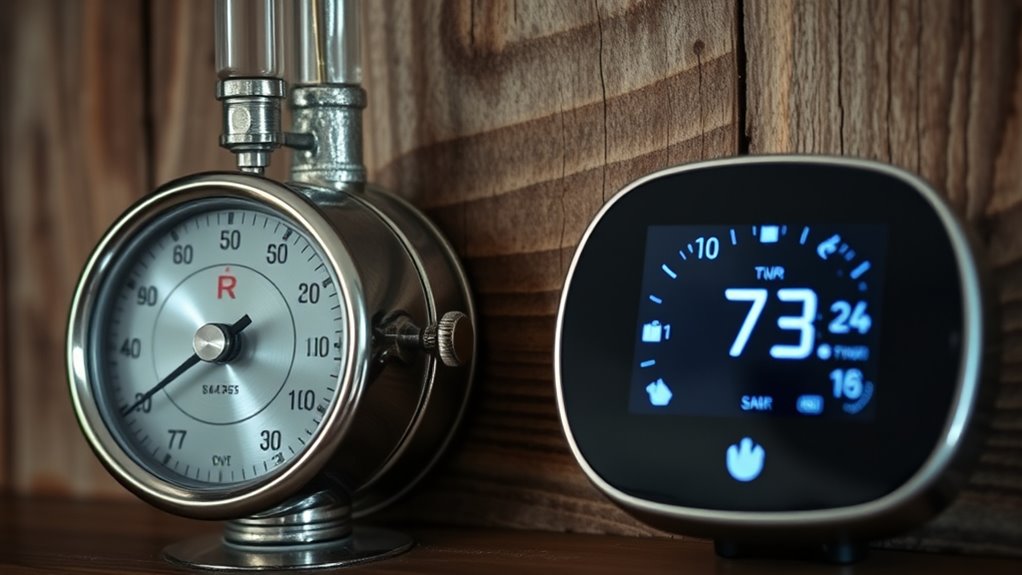

The history of thermostats shows how they’ve evolved from simple mercury devices that used expanding metal or liquid to trigger heating and cooling systems, to more advanced electronic and bimetallic models that improve safety and accuracy. Modern thermostats now include programmable and smart features that let you control your environment remotely and save energy. This journey from manual adjustments to intelligent systems means you’ll discover how technology continues to enhance indoor comfort and efficiency as you explore further.

Get home appliances delivered free with Prime
- Fast, free delivery on millions of items
- Prime Video, Amazon Music and more included
- Member-only deals all year
Key Takeaways
- Early thermostats used mercury-filled glass bulbs that triggered circuits through expansion and contraction for automatic temperature control.
- Mercury thermostats marked a shift from manual adjustments to reliable automatic regulation in homes and industries.
- 20th-century advancements introduced bimetallic strips, improving safety and durability by replacing mercury-based systems.
- Modern thermostats feature increased accuracy, programmable settings, and easy installation, enhancing energy efficiency and user convenience.
- Current trends focus on smart thermostats with automation and remote management, continuing the evolution from basic to intelligent climate control systems.
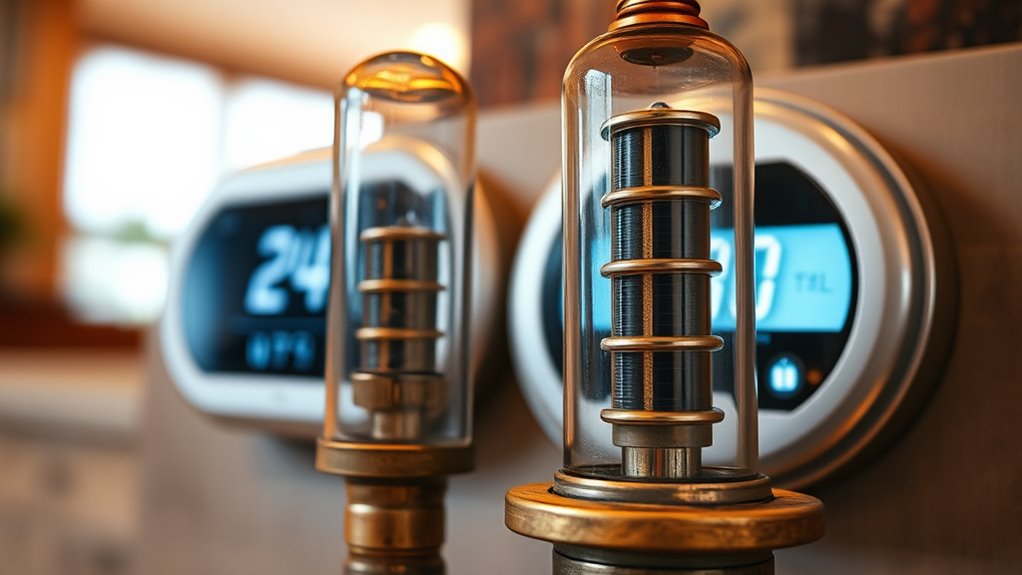
Have you ever wondered how thermostats evolved from simple manual devices to the sophisticated smart systems we use today? The journey begins with early inventions designed to control temperature in homes and industries. Back in the late 19th and early 20th centuries, inventors developed basic devices like the mercury thermostat, which used a glass bulb filled with mercury that expanded and contracted with temperature changes. When the mercury reached a certain point, it would complete an electrical circuit, turning the heating or cooling system on or off. These early inventions marked a significant step forward, providing a more automatic way to maintain comfortable indoor temperatures rather than relying on manual adjustments. Over time, technological advancements led to more refined and reliable thermostats, making temperature regulation more precise and accessible for everyday use. The development of modern control systems has further revolutionized thermostat technology, integrating automation and remote management features.
As the 20th century progressed, engineers introduced new materials and mechanisms that improved thermostat performance. Bimetallic strips, for example, became a popular component because of their ability to bend with temperature changes, triggering switches without the need for mercury or complicated systems. These innovations made thermostats more durable and safer, especially as concerns about mercury safety grew. With each technological advancement, thermostats became not only more accurate but also easier to install and operate, paving the way for their integration into modern homes. The advent of electrical controls allowed for more complex features, like programmable settings, which gave users the ability to set temperatures based on schedules, saving energy and costs.
smart thermostat with remote control
As an affiliate, we earn on qualifying purchases.
As an affiliate, we earn on qualifying purchases.
Frequently Asked Questions
How Accurate Are Modern Smart Thermostats Compared to Traditional Models?
Modern smart thermostats are highly accurate, often more so than traditional models, thanks to advanced sensor accuracy and improved calibration methods. You’ll find they adapt better to your home’s needs, using precise temperature readings to optimize comfort and energy use. Their ability to learn your habits and adjust settings automatically makes them reliable. Overall, their technological innovations ensure you get consistent, accurate temperature control, surpassing the performance of older, manual thermostats.
What Environmental Impacts Have Thermostats Historically Had?
You might not realize it, but thermostats have historically impacted the environment through energy conservation efforts and mercury pollution. Traditional models helped reduce energy use by regulating heating and cooling, lowering greenhouse gas emissions. However, mercury thermostats posed environmental risks if broken or discarded improperly, releasing toxic mercury. Modern thermostats aim to balance energy efficiency with eco-friendliness, reducing pollution and promoting sustainable energy use.
How Did Early Thermostats Influence Home Automation Development?
Imagine a small, steady heartbeat in your home—early thermostats set this rhythm. They paved the way for home automation by establishing basic temperature regulation and creating simple user interfaces. These devices symbolized control and comfort, inspiring innovations that integrated sensors and remote controls. Your home’s smarter systems today trace their roots back to these initial thermostats, which made automation more intuitive and reliable, shaping modern living’s seamless convenience.
Are There Any Notable Failures or Recalls in Thermostat History?
You might be aware of some thermostat failures, especially recall incidents related to mercury hazards. In the past, mercury-based thermostats posed environmental and health risks, leading to recalls and phased-out use. These failures prompted industry changes, encouraging safer, digital alternatives. While not all thermostats had issues, these incidents highlight the importance of safety updates and innovations that have improved thermostats over time, reducing risks for consumers.
How Have Thermostat Designs Varied Across Different Cultures?
You’ll notice that thermostat designs vary across cultures, reflecting different approaches to cultural heating and traditional cooling. In some regions, manual thermostats prioritize simplicity and local climate needs, while others incorporate advanced technology to optimize energy use. Cultural preferences influence features like temperature ranges and control methods, making thermostat designs uniquely adapted to local lifestyles. This diversity highlights how environmental and cultural factors shape heating and cooling solutions worldwide.
As an affiliate, we earn on qualifying purchases.
Conclusion
Now that you know the fascinating journey from mercury-filled dials to advanced smart thermostats, isn’t it amazing how technology keeps improving our everyday lives? Each innovation brings greater comfort, efficiency, and control. As you consider upgrading your home, imagine what the future of thermostat technology might look like. Are you ready to embrace the smart solutions that can make your life easier and more energy-efficient? The history is exciting—your turn to be part of the next chapter!
As an affiliate, we earn on qualifying purchases.
As an affiliate, we earn on qualifying purchases.
Fall Picks
fall essentials
As an affiliate, we earn on qualifying purchases.