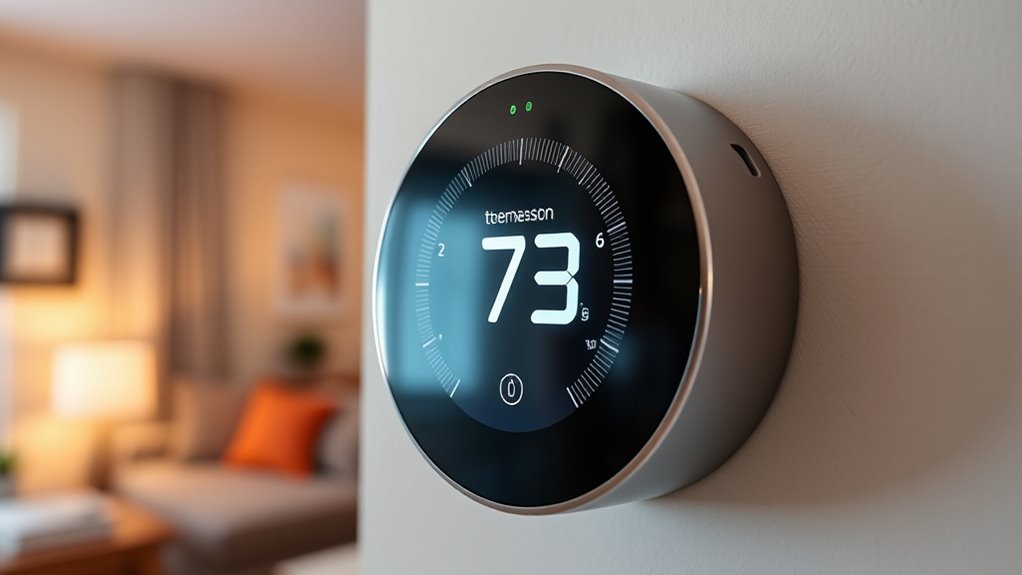

Smart thermostats work by using sensors like temperature, humidity, and motion detectors to constantly gather data about your environment. These sensors help the system understand your home’s conditions in real time. Then, algorithms analyze this data to make smart adjustments to your heating and cooling, learning your routines for better efficiency and comfort. If you keep exploring, you’ll discover how these intelligent systems optimize energy use while keeping you comfortable.
Key Takeaways
- Sensors collect real-time data on temperature, humidity, and motion to monitor environmental conditions continuously.
- Data from sensors is analyzed by algorithms to make precise, automatic adjustments to heating or cooling systems.
- Algorithms learn user habits and routines to predict future needs and optimize energy efficiency proactively.
- User interfaces display sensor data and insights, allowing easy customization of preferences and schedules.
- The combination of sensors and algorithms ensures comfort while reducing energy consumption through intelligent adjustments.

Have you ever wondered how smart thermostats can make your home more comfortable and energy-efficient? The secret lies in their sophisticated sensors and algorithms working together seamlessly. When you install a smart thermostat, it doesn’t just turn your heating or cooling system on and off based on a fixed schedule. Instead, it continuously gathers data through various sensors placed around your home, such as temperature sensors, humidity sensors, and motion detectors. These sensors provide real-time information about your environment, allowing the thermostat to make precise adjustments. By accurately monitoring conditions, you’re able to optimize energy savings without sacrificing comfort.
Furthermore, the reliability of a smart thermostat depends on the quality of its load‑planning tools, ensuring that your system operates efficiently and effectively. The user interfaces of smart thermostats play a pivotal role in how effectively you can interact with and customize your system. Most models feature intuitive touchscreens, mobile apps, or voice controls, making it easy for you to set your preferences or see current conditions at a glance. These interfaces often display data collected by sensors, giving you insights into your energy usage and helping you understand how your settings impact your bills. When you adjust the temperature or create schedules using these user-friendly interfaces, the thermostat learns from your habits and routines. This learning process enables the system to predict your needs and adjust settings proactively, reducing unnecessary energy consumption.

Honeywell Home T9 WiFi Smart Thermostat with 1 Smart Room Sensor, Touchscreen Display, White
SAVE MONEY AND ENERGY. Adjust your ENERGY STAR certified thermostat from anywhere with your mobile device, or let…
As an affiliate, we earn on qualifying purchases.
As an affiliate, we earn on qualifying purchases.
Frequently Asked Questions
Can Smart Thermostats Learn User Preferences Automatically?
Yes, smart thermostats can learn your preferences automatically. They analyze your user behavior using learning algorithms, adjusting the temperature based on your habits and routines. As you interact with the device, it gets better at predicting when you want it to turn up or down. Over time, it creates a personalized schedule, helping you save energy while keeping your home comfortable without you having to manually set it each time.
Do Smart Thermostats Work During Power Outages?
Power outages pause your smart thermostat’s performance, preventing it from maintaining your perfect temperature. However, with power outage resilience, your system may still operate if it has backup power solutions like batteries or generators. You’ll want to plan proactively, deploying backup power options to make certain of seamless, consistent climate control during outages. This way, your thermostat stays tuned to your preferences, even when the power temporarily takes a pause.
Are Smart Thermostats Compatible With All HVAC Systems?
Smart thermostats aren’t compatible with all HVAC systems, so you need to check installation compatibility first. They work best with modern systems but may require a C-wire or additional wiring for proper setup. When compatible, they boost energy efficiency by learning your schedule and adjusting temperatures automatically. Always verify your system’s compatibility before purchasing to guarantee seamless integration and ideal performance with your existing HVAC setup.
How Secure Is the Data Collected by Smart Thermostats?
Your data’s security is like a vault guarded by digital locks. Smart thermostats use data encryption to protect your information from prying eyes, and they follow strict privacy policies to keep your data safe. While no system is foolproof, manufacturers continually update security measures to safeguard your data. Rest assured, your privacy remains a priority, and these devices work hard to keep your home and information secure.
Can Smart Thermostats Be Controlled Remotely Without Internet?
You can’t control smart thermostats remotely without internet access because remote access relies on an internet connection. Offline control is possible if the thermostat has local controls or a manual interface, but you won’t be able to use your smartphone or web app for remote access. To manage your thermostat remotely, verify it’s connected to the internet. Without it, you’re limited to offline control via physical buttons or a local display.
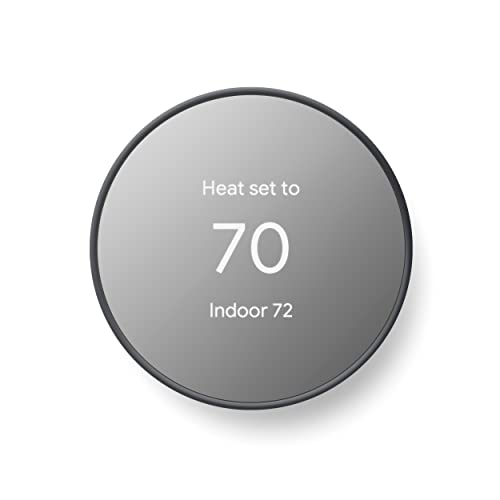
Google Nest Thermostat – Smart Thermostat for Home – Programmable Wifi Thermostat – Charcoal
ENERGY STAR certified smart thermostat for home that helps you save energy and stay comfortable.Connectivity : Wi-Fi -…
As an affiliate, we earn on qualifying purchases.
As an affiliate, we earn on qualifying purchases.
Conclusion
Now that you understand how sensors and algorithms make smart thermostats intelligent, it’s easy to see how they seamlessly blend technology with comfort. While they adapt effortlessly to your habits, they also rely on complex data processing behind the scenes. It’s like having a dedicated energy expert working silently in the background, ensuring your home stays cozy and efficient. So, as smart thermostats learn about you, they quietly transform your living space into a more comfortable, energy-saving haven.

Govee Indoor Hygrometer Thermometer 3 Pack, Bluetooth Humidity Temperature Gauge with Large LCD Display, Notification Alert with Max Min Records, 2 Years Data Storage Export for Room Greenhouse, Black
Easy to Use: Download the Govee Home app, search for and select H5075, and pair the room thermometer…
As an affiliate, we earn on qualifying purchases.
As an affiliate, we earn on qualifying purchases.

Amazon Smart Thermostat – Save money and energy – Works with Alexa and Ring – C-wire required
An Alexa thermostat – Amazon Smart Thermostat is an easy way to switch from a traditional thermostats for…
As an affiliate, we earn on qualifying purchases.
As an affiliate, we earn on qualifying purchases.