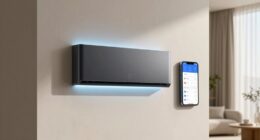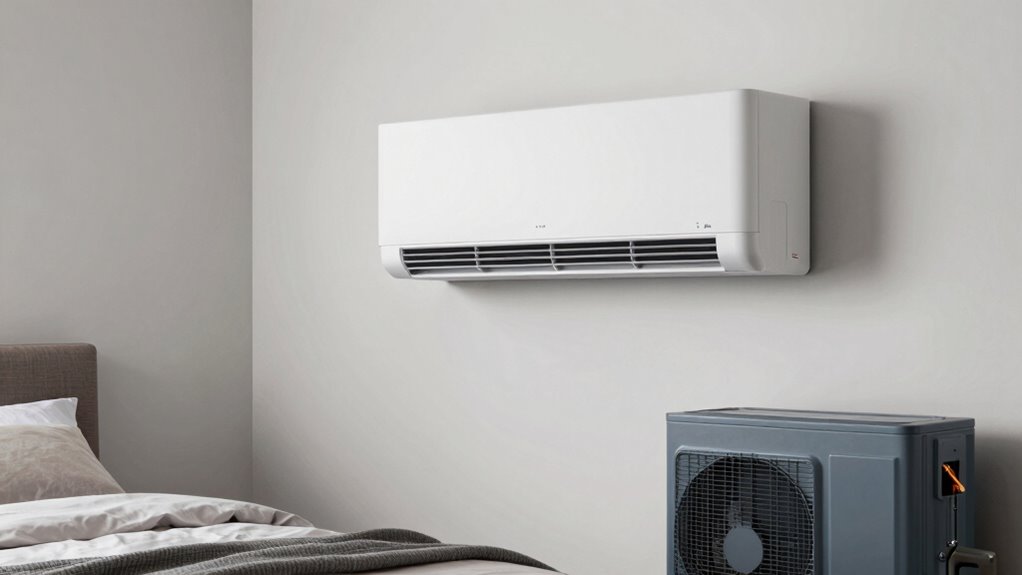

Bedroom mini splits prioritize comfort, quiet operation, and clean air because these factors directly affect your sleep quality and health. You need a system that maintains a consistent temperature without noise or pollutants disturbing your rest. In contrast, garage units focus on durability and weather resistance, handling more extreme conditions. Understanding these differences helps you choose the right system for each space, and if you keep exploring, you’ll find helpful tips to select the best features for your needs.
Key Takeaways
- Bedrooms require quiet operation and precise temperature control for restful sleep, unlike garages which prioritize durability and weather resistance.
- Energy efficiency is critical in bedrooms to reduce utility costs, whereas garages focus on robust performance against external elements.
- Clean air and filtration are essential in bedrooms for health, while garages prioritize ease of installation and ruggedness.
- Mini splits for bedrooms need smart features and silent operation, unlike garage units that emphasize durability and straightforward installation.
- Proper placement and size considerations differ to optimize comfort in bedrooms and withstand environmental challenges in garages.
Why Bedrooms and Garages Have Different Climate Control Needs

Since bedrooms and garages serve different purposes, their climate control needs naturally vary. In bedrooms, comfort and energy efficiency are top priorities, so you want a unit that provides consistent temperature control without wasting energy. Mini splits designed for bedrooms often focus on quiet operation and precise temperature adjustments. In contrast, garage units usually prioritize durability and ease of installation, since garages tend to be larger and more exposed to external elements. When choosing a system, consider installation considerations carefully—garage units might need more robust mounting options or weatherproofing, while bedroom systems should prioritize minimizing noise. Your goal is to select equipment that balances energy efficiency with reliable performance, tailored to the specific use case of each space. Additionally, selecting the right air leak sealing techniques can improve overall efficiency and comfort in both environments. Incorporating installation techniques that address specific space needs can further optimize system performance and longevity. Properly understanding climate control requirements for each space helps ensure you choose the most suitable system, especially when considering the different environmental factors that impact performance. A thorough understanding of space-specific needs can help guide more effective system selection and setup.
Why Quiet Operation and Clean Air Matter More in Bedrooms
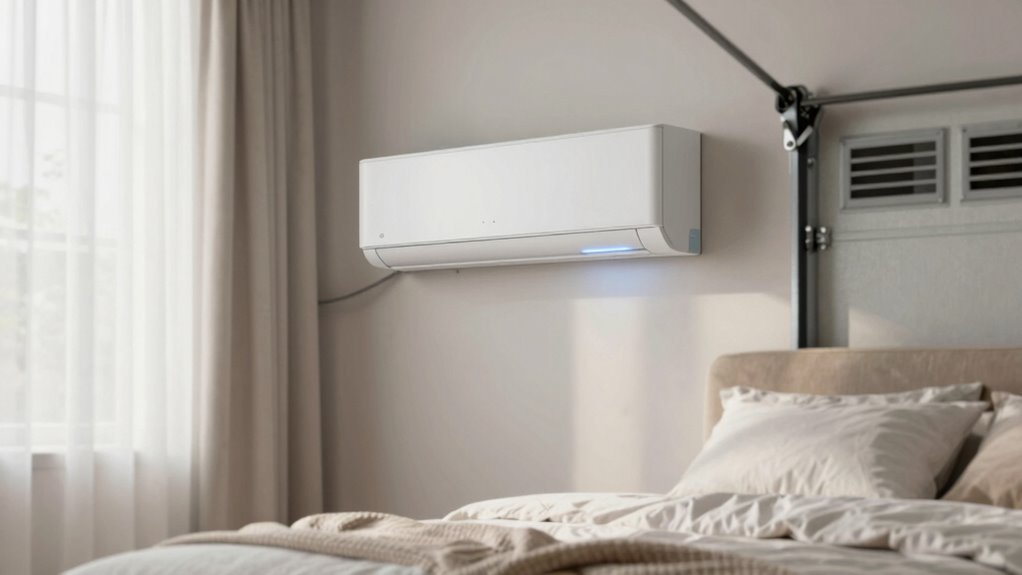
Because you spend a significant amount of time sleeping and resting in your bedroom, quiet operation and clean air are essential for a comfortable, restful environment. High noise levels can disrupt your sleep, making it harder to wake up refreshed. Poor air quality can trigger allergies or breathing issues, impacting your health. To prioritize your comfort, consider these factors:
- Low noise levels ensure peaceful sleep without disturbance.
- Quiet operation prevents distracting sounds during rest.
- Improved air quality reduces allergens and pollutants.
- Clean air supports better breathing and overall well-being.
- Utilizing natural filtration systems can help maintain healthier air quality in your space.
- Understanding consumer choices in HVAC units can help you select the most suitable system for your needs.
- Paying attention to indoor air pollutants such as microplastics in dust can further enhance your bedroom’s air quality.
- Recognizing the importance of air filtration methods can significantly improve your sleep environment. Additionally, selecting systems with appropriate filtering capabilities can further improve air purity and comfort.
How Temperature Control Differs Between Bedrooms and Garages

Temperature control in bedrooms and garages differs markedly due to their distinct functions and environments. In bedrooms, you want precise temperature regulation for comfort and sleep quality, making energy efficiency a priority. You’ll need a mini split system that provides consistent, quiet operation without wasting energy. Smart controls and connected equipment can further optimize temperature management for both settings. Garages, on the other hand, often experience more extreme temperature fluctuations, so you may prioritize higher heating or cooling capacity. Installation considerations also differ; bedrooms require careful placement to avoid drafts and noise disruptions, while garages may need more robust units suited for larger or more variable spaces. Overall, understanding these differences helps you select a system that balances energy efficiency and effective temperature control based on each space’s unique needs.
How to Choose the Best Mini Split Features for Your Bedroom

Choosing the right mini split features for your bedroom involves focusing on comfort, quiet operation, and energy efficiency. To make the best choice, consider these factors:
Selecting a mini split with comfort, quietness, and efficiency ensures a peaceful, cost-effective bedroom climate.
- Energy efficiency: Look for units with high SEER ratings to save on energy bills. A highly efficient system can also contribute to cost savings over time, making it a smart investment. Additionally, understanding the challenges in nanotech fabrication can help you appreciate the importance of precise manufacturing for optimal system performance. Ensuring the system’s components are manufactured with advanced precision can further enhance its durability and efficiency. This emphasis on AI-driven innovation in manufacturing processes can lead to more reliable and longer-lasting units.
- Quiet operation: Prioritize models with noise reduction features for peaceful sleep.
- Installation considerations: Choose units that fit your space easily and require minimal modifications.
- Smart features: Opt for remote controls or Wi-Fi connectivity for convenient climate management.
- Brand reputation: Select reputable brands known for reliable and efficient mini split systems to ensure long-term satisfaction.
Common Mistakes to Avoid When Buying a Bedroom Mini Split

When shopping for a bedroom mini split, it’s easy to make mistakes that can impact your comfort and savings. One common error is ignoring energy efficiency ratings, which can lead to higher utility bills. Always check the unit’s SEER and HSPF ratings to guarantee maximum performance. Another mistake is neglecting proper installation tips; improper setup can cause leaks, noise, or reduced efficiency. Avoid underestimating your cooling or heating needs—oversized or undersized units won’t perform well or save money. Also, don’t overlook the importance of correct placement for airflow and temperature control. Taking the time to choose an energy-efficient model and following precise installation tips will make a significant difference in your comfort and long-term savings. Additionally, understanding HVAC performance factors can help you select the most suitable unit for your space, ensuring optimal energy efficiency and reliable operation. Being aware of climate considerations can further enhance your decision-making process, especially in regions with extreme weather conditions. Properly assessing thermal load can help prevent overspending on unnecessary capacity. Being mindful of installation best practices can help you avoid common pitfalls and ensure your mini split functions efficiently from the start.
Frequently Asked Questions
Are Mini Splits Energy-Efficient for Long-Term Use?
Yes, mini splits are energy-efficient for long-term use. They offer significant energy savings by providing targeted heating or cooling, which reduces waste. When you compare costs, mini splits often have a lower operating cost over time than traditional systems. Their efficient operation and easy installation make them a smart choice if you’re looking to cut energy bills and enjoy consistent comfort in the long run.
How Often Should Mini Splits Be Serviced for Optimal Performance?
You should service your mini split at least once a year for peak performance. Regular maintenance schedules include cleaning or replacing filters every 1-3 months, depending on usage and environment. This helps guarantee efficient cooling and heating, prevents dust buildup, and prolongs the unit’s lifespan. If you notice reduced airflow or strange noises, consider more frequent service. Staying on top of filter replacements and routine checks keeps your mini split running smoothly year-round.
Can Mini Splits Be Used in Both Heating and Cooling Modes Simultaneously?
Mini splits generally don’t support dual mode operation for simultaneous heating and cooling. They’re designed to switch between modes, not run both at once. If you need both functions simultaneously, look for systems with advanced features like heat pumps with dual-zone or multi-zone capabilities, or consider separate units. This guarantees you get efficient, consistent temperature control, especially important in spaces like bedrooms versus garages where priorities differ.
What Is the Typical Lifespan of a Bedroom Mini Split Unit?
A bedroom mini split typically lasts around 12 to 15 years with proper installation considerations and regular maintenance. You should pay attention to noise levels, as quieter units improve comfort, especially during sleep. Choosing a model with reliable components and ensuring professional installation can extend its lifespan. Keep an eye on filters and refrigerant levels, and address any issues promptly to maximize your unit’s performance and longevity.
Are There Specific Safety Features to Consider for Bedroom Installations?
Yes, when installing a bedroom mini split, you should consider safety features like child safety locks on the remote controls to prevent accidental operation. Additionally, pay attention to noise levels, guaranteeing the unit operates quietly to avoid disrupting sleep. These features help protect children from mishaps and create a comfortable environment, making your bedroom safer and more peaceful. Prioritizing these aspects ensures a safer, more user-friendly installation.
Conclusion
Choosing the right mini split for your bedroom isn’t just a quick decision — it’s your ticket to transforming it into a serene sanctuary. Prioritizing quiet operation, clean air, and precise temperature control guarantees you’ll sleep like royalty. Don’t settle for a one-size-fits-all solution; your bedroom deserves a mini split as perfect as your dreams. Make the right choice now, or risk living in a climate chaos — and nobody wants that!