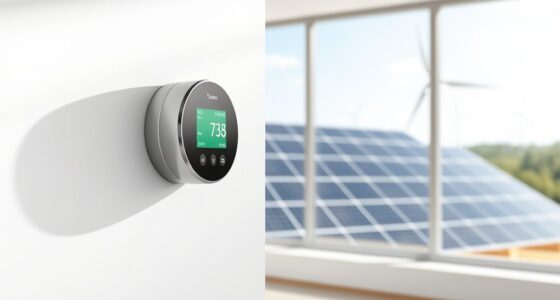
Smart thermostats help you earn LEED certification by optimizing energy use and lowering environmental impact. They enable you to manage heating and cooling more efficiently, adapt to occupancy patterns, and respond to weather conditions automatically. This not only reduces energy waste but also supports your commitment to sustainability. By integrating advanced features like data analytics and remote control, smart thermostats enhance overall building performance. Keep exploring to learn how these tools can further your LEED goals.
Key Takeaways
- Smart thermostats optimize energy use, supporting LEED’s energy efficiency requirements.
- They enable real-time monitoring and data analytics, aiding performance documentation for LEED certification.
- Automated controls adjust for occupancy patterns, reducing energy waste and aligning with LEED standards.
- Integration with other building systems enhances overall sustainability and environmental impact.
- Using smart thermostats demonstrates a commitment to sustainable practices, contributing to LEED credit achievement.

Smart thermostats are increasingly becoming essential tools for buildings aiming to achieve LEED certification, as they help optimize energy use and reduce environmental impact. By integrating these devices, you can actively manage heating and cooling systems, leading to significant energy savings. This not only cuts costs but also demonstrates your commitment to sustainability, a core criterion in LEED standards. When you install smart thermostats, you gain precise control over indoor temperatures, ensuring that energy isn’t wasted on unnecessary heating or cooling. Instead, your building responds intelligently to occupancy patterns and external weather conditions, maintaining optimal performance while conserving resources.
One of the key benefits of smart thermostats is their ability to enhance occupant comfort without sacrificing energy efficiency. Unlike traditional thermostats, these devices learn your building’s usage habits, adjusting settings automatically for maximum comfort. For example, if your building experiences peak occupancy during certain hours, the thermostat adapts to provide a comfortable environment during those times. Conversely, during off-hours or when spaces are unoccupied, it reduces heating or cooling, preventing wasteful energy consumption. This dynamic adjustment ensures that occupants are always comfortable while energy use remains minimized, a balance that LEED encourages to promote sustainable building operations.
Smart thermostats optimize comfort and energy efficiency by learning habits and adjusting settings automatically.
Furthermore, smart thermostats often come with features like remote access and real-time data analytics, empowering building managers and occupants to fine-tune climate control. With remote control, you can make adjustments from anywhere, responding quickly to changing conditions or occupancy schedules. Data insights help identify patterns of energy use, pinpointing opportunities for further efficiency improvements. This proactive approach aligns with LEED’s emphasis on continuous performance monitoring and management, ensuring your building maintains high sustainability standards over time.
In addition, these devices support integration with other smart building systems, such as lighting and ventilation controls. When coordinated properly, this creates a comprehensive approach to energy management, amplifying savings and environmental benefits. As a result, your building not only meets LEED requirements but also benefits from reduced operational costs and improved occupant satisfaction.
Frequently Asked Questions
How Do Smart Thermostats Impact LEED Point Calculations?
Smart thermostats boost your LEED points by improving energy savings through efficient temperature control. They use occupancy monitoring to adjust settings based on whether spaces are occupied, reducing unnecessary energy use. This not only cuts costs but also demonstrates your commitment to sustainable building practices. By optimizing energy performance, smart thermostats help you achieve LEED certification more easily and showcase your dedication to environmentally responsible design.
Are All Smart Thermostats Compatible With LEED Certification Requirements?
Did you know that over 90% of smart thermostats are compatible with LEED criteria? Not all smart thermostats meet LEED requirements, so you need to check compatibility first. Many models are designed to integrate seamlessly with LEED certification standards, but it’s crucial to verify each device’s compatibility to make certain it contributes to your project’s points. Always review product specifications to confirm they align with LEED criteria.
Can Smart Thermostats Replace Traditional HVAC Controls for LEED Credits?
Smart thermostats can replace traditional HVAC controls to earn LEED credits, especially when integrated into smart home automation systems. They optimize energy use, reduce HVAC maintenance costs, and promote sustainability. By providing precise control and real-time data, you can improve building efficiency and meet LEED requirements more effectively. Just make certain the thermostats are compatible with your system and meet LEED standards for energy management and indoor environmental quality.
What Are the Long-Term Cost Savings of Using Smart Thermostats for LEED Projects?
Using smart thermostats in LEED projects offers long-term cost savings through significant cost reduction by optimizing energy use. They help you reduce utility bills and prevent unnecessary HVAC operation. Plus, with maintenance benefits like early fault detection and remote diagnostics, you can extend equipment lifespan and lower upkeep costs. Over time, these advantages make smart thermostats a smart investment, contributing to both financial savings and sustainable building management.
How Do Smart Thermostats Contribute to Occupant Comfort and Energy Efficiency?
Imagine a gentle breeze guiding you to perfect comfort—smart thermostats do just that. They adapt to your habits, ensuring occupant comfort by maintaining ideal temperatures, while optimizing energy efficiency. With real-time adjustments, they prevent waste and reduce energy use. This seamless coordination creates a harmonious environment where occupants feel cozy and energized, all while conserving resources. Smart thermostats transform buildings into responsive, efficient spaces that truly serve their inhabitants.
Conclusion
By integrating smart thermostats into your building, you not only boost energy efficiency but also move closer to LEED certification. These devices optimize heating and cooling, reducing your environmental footprint and lowering costs. Remember, “A stitch in time saves nine”—investing in smart technology today prevents bigger issues later. Embrace smart thermostats as a crucial step toward sustainable, certified buildings that benefit both your bottom line and the planet.