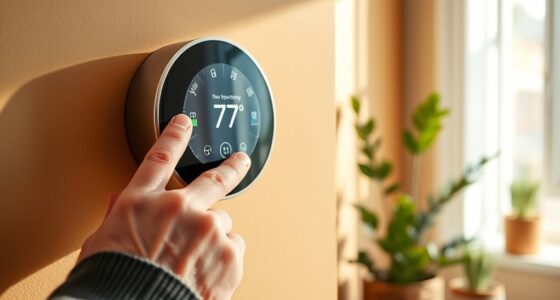
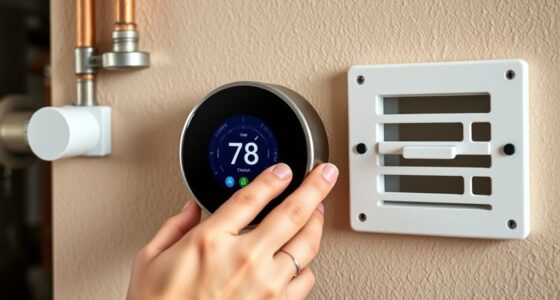
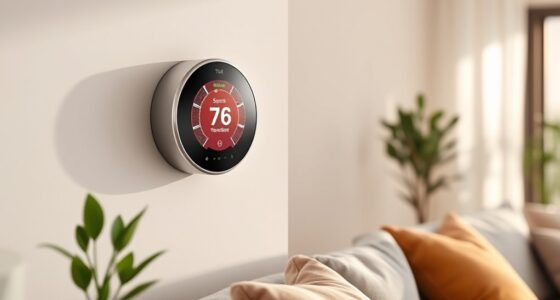
Smart thermostats help you make the most of renewable energy by adjusting your heating and cooling based on real-time solar or wind power availability. They communicate with the grid to increase energy use during periods of high renewable generation and reduce demand when supply is low. This coordination supports grid stability and maximizes renewable integration. If you want to discover how these intelligent devices can optimize your energy use further, keep exploring the possibilities.
Key Takeaways
- Smart thermostats optimize home energy use by adjusting heating and cooling based on real-time renewable energy availability.
- They communicate with grid systems to increase energy consumption during periods of excess renewable generation.
- By shifting demand to high renewable periods, they help reduce waste and support renewable energy integration.
- Smart thermostats participate in demand response programs, adjusting usage in response to grid signals to stabilize renewable supply.
- They work with energy storage systems to maximize renewable energy utilization and enhance grid reliability.

Have you ever wondered how smart thermostats can boost your home’s energy efficiency while supporting renewable energy sources? The answer lies in their ability to seamlessly integrate with the evolving energy landscape, particularly through concepts like energy storage and grid stabilization. When your smart thermostat adjusts your heating and cooling based on real-time data, it doesn’t just save you money; it also plays a part in optimizing the use of renewable energy and maintaining a balanced power grid.
Renewable energy sources such as solar and wind are inherently variable—they produce power intermittently depending on weather conditions and time of day. Smart thermostats contribute to managing this variability by communicating with the broader energy system. For example, during periods of excess renewable generation, your thermostat can shift energy consumption to times when renewable power is abundant, supporting grid stability. They work hand-in-hand with energy storage systems, which store surplus renewable energy for later use. When your thermostat reduces demand during peak times, it helps prevent strain on the grid, making it easier for utilities to incorporate more renewable sources into their energy mix without risking overloads or blackouts.
Your smart thermostat also plays a critical role in grid stabilization. By intelligently adjusting your home’s energy consumption, it helps balance supply and demand, reducing the need for fossil-fuel-based backup power. This balancing act is especially important as the share of renewable energy in the grid increases. When there’s a surplus of wind or solar energy, your thermostat can help absorb that excess, contributing to grid stability. Conversely, during low renewable output, it can reduce your home’s energy use, easing pressure on the system. This dynamic interaction ensures that renewable energy is used efficiently, reducing waste and helping accelerate the transition to cleaner energy sources.
Furthermore, with advances in smart grid technology, your thermostat can now respond not just to your household preferences but also to signals from the grid operator. This two-way communication enables your device to participate in demand response programs, where it temporarily adjusts your home’s energy use in response to grid needs. In doing so, it supports energy storage solutions by smoothing out fluctuations and ensuring that renewable energy is stored or utilized more effectively.
Frequently Asked Questions
Can Smart Thermostats Predict Renewable Energy Availability?
Yes, smart thermostats can predict renewable energy availability by using energy forecasting and weather integration. They analyze local weather data and forecast models to anticipate sunlight or wind patterns, helping optimize heating and cooling. By adjusting settings based on predicted renewable energy supply, you can maximize renewable usage, save energy, and reduce costs. This proactive approach makes your home more sustainable and aligns your energy consumption with renewable resource availability.
How Do Smart Thermostats Handle Grid Fluctuations From Renewable Sources?
Smart thermostats handle grid fluctuations from renewable sources by actively participating in grid balancing. They adjust your heating and cooling based on real-time grid signals, helping stabilize supply and demand. If energy storage options are integrated, they can delay or accelerate energy use, reducing strain on the grid. This teamwork ensures efficient energy consumption, supports renewable integration, and keeps your home comfortable during fluctuating renewable energy generation.
Are There Specific Brands Compatible With Renewable Energy Systems?
Sure, some brands like Nest, Ecobee, and Honeywell are compatible with renewable energy systems, making you feel like a tech-savvy eco-warrior. They prioritize renewable integration, allowing seamless control and efficiency. But don’t fall for every “smart” label; check compatibility first. After all, who wants a thermostat that’s as clueless about renewable energy as a squirrel in a solar panel? Choose wisely, and let tech and nature dance.
Do Smart Thermostats Reduce Overall Energy Consumption Effectively?
Smart thermostats do reduce your overall energy consumption effectively by optimizing heating and cooling schedules. They enhance energy efficiency and adapt to your routines, ensuring you stay comfortable without wasting energy. By learning your preferences and adjusting settings accordingly, they help lower utility bills while maintaining user comfort. With smart features, you gain better control, making your home more eco-friendly and cost-effective without sacrificing comfort.
How Secure Is Data Sharing Between Thermostats and Renewable Energy Providers?
You can trust that data sharing between smart thermostats and renewable energy providers prioritizes data privacy and cyber security. Manufacturers use encryption and secure protocols to protect your information from unauthorized access. While no system is completely foolproof, ongoing updates and strict security standards help minimize risks. Staying informed about your device’s security features and regularly updating software further enhances your data privacy and cyber security, keeping your energy info safe.
Conclusion
By integrating smart thermostats with renewable energy, you turn your home into a harmonious dance of efficiency and sustainability. These devices act as the conductor, optimizing energy use and reducing your carbon footprint. As you embrace this technology, you’re not just adjusting temperatures—you’re steering the future toward greener horizons. With each smart decision, you’re weaving a brighter, cleaner world, where renewable energy and innovation work hand in hand like a well-choreographed symphony.