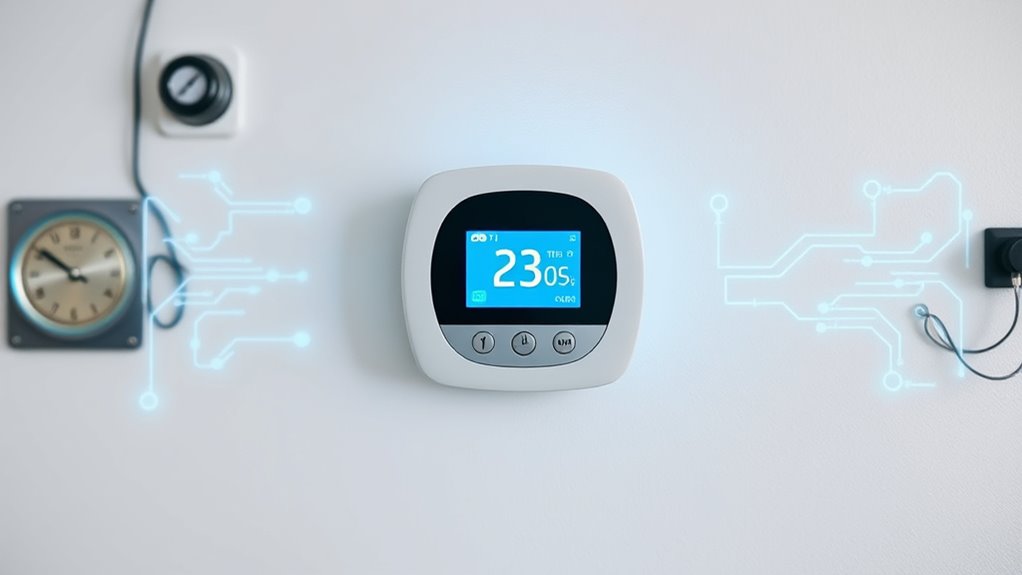

The evolution of thermostat communication protocols has moved from basic wired signals to advanced wireless standards like Zigbee and Z-Wave, which allow seamless device interconnectivity. These protocols enable remote control, automation, and data sharing with other smart home devices, boosting energy efficiency and convenience. They support smarter scheduling and occupancy detection, making your home more comfortable and eco-friendly. If you keep exploring, you’ll discover how these innovations are shaping even more intelligent, efficient smart home systems.
Key Takeaways
- Early thermostats used basic analog signals, limiting remote control and interoperability.
- Transition to digital and wireless protocols like Zigbee and Z-Wave improved connectivity and automation.
- Wireless protocols enable seamless integration with smart home ecosystems, enhancing energy efficiency and user convenience.
- Protocol advancements focus on increased speed, security, and reliability for smarter thermostat communication.
- Future developments aim for more autonomous, energy-efficient systems supporting sustainable living environments.

Thermostat communication protocols are the backbone of modern heating and cooling systems, enabling devices to exchange data efficiently and reliably. As technology advances, these protocols have become essential in making your home smarter, more responsive, and energy-efficient. When you delve into smart home integration, understanding how these protocols work helps you optimize your system’s performance. They facilitate seamless connectivity between your thermostat, sensors, and other smart devices, ensuring that your home environment stays comfortable without wasting energy.
Over time, communication protocols have evolved from simple wired connections to sophisticated wireless standards. Initially, thermostats relied on basic analog or digital signals, which limited their ability to communicate with other devices or adapt to your lifestyle. As wireless technology gained popularity, protocols like Zigbee and Z-Wave emerged, allowing your thermostat to connect wirelessly with smart home hubs and sensors. This evolution means you can now control your heating and cooling remotely through apps or voice commands, enhancing convenience and energy management.
Wireless protocols like Zigbee and Z-Wave enable remote control and smarter energy management.
The shift toward wireless protocols has also driven improvements in energy efficiency. Today’s smart thermostats use these protocols not only to receive commands but also to collect data on your usage patterns. They analyze this data to optimize heating and cooling schedules, reducing unnecessary operation and saving you money. For example, if your system detects that a room is unoccupied, it can adjust the temperature accordingly, preventing energy waste. This level of automation is possible thanks to robust communication protocols that guarantee reliable data exchange, even in complex smart home setups.
Additionally, these protocols support interoperability across various devices and brands, allowing a more integrated and flexible smart home ecosystem. The integration of these protocols into your smart home ecosystem also means your thermostat can work alongside other devices. For instance, it can coordinate with smart blinds, lighting, or even weather sensors to create a more holistic approach to comfort and efficiency. This interconnectedness not only improves energy efficiency but also enhances your overall home experience. You get real-time updates and control, ensuring your system responds swiftly to changing conditions.
As the technology continues to evolve, newer protocols promise even faster, more secure, and more reliable communication. This ongoing development means your smart home can become increasingly autonomous, with your thermostat playing a central role in maintaining comfort while conserving energy. Understanding these protocols’ progression helps you appreciate how they contribute to smarter, greener homes. Ultimately, the evolution of thermostat communication protocols is shaping a future where energy efficiency and seamless smart home integration go hand in hand, making your living space more comfortable and sustainable.
Top picks for "evolution thermostat communication"
As an affiliate, we earn on qualifying purchases.
Frequently Asked Questions
How Do Different Protocols Impact Energy Efficiency?
Different protocols directly impact your energy efficiency by enabling faster, more reliable data exchange with your smart grid. Efficient protocols use data compression to reduce transmission size, saving energy and bandwidth. This means your thermostat can respond quicker to changing conditions, optimizing heating and cooling. As a result, you enjoy lower energy bills and a smaller carbon footprint, thanks to seamless communication that makes your home smarter and more energy-efficient.
Are There Security Risks Associated With Certain Protocols?
Like a castle with hidden secret passages, some protocols carry vulnerabilities that hackers could exploit. You should be aware that protocol vulnerabilities and encryption challenges pose security risks, especially with older or poorly secured systems. These weaknesses can lead to unauthorized access or control. To protect your smart thermostat, choose protocols with robust security features, regularly update firmware, and enable strong encryption to keep your home safe from digital intruders.
Can Older Thermostats Be Upgraded to Newer Protocols?
Yes, you can upgrade older thermostats to newer protocols through retrofit compatibility. Many models support protocol migration with compatible hardware or smart hub integrations, allowing you to enjoy advanced features and better security. Check if your thermostat is retrofit compatible and consult the manufacturer’s guidelines. This process helps you upgrade your system without replacing the entire unit, making it a cost-effective way to modernize your home’s heating and cooling control.
How Do Protocols Affect Device Interoperability?
Did you know that over 60% of smart home devices face interoperability issues? Protocols directly impact device compatibility, making it essential for your devices to use compatible wireless standards. When protocols align, your thermostat can seamlessly communicate with your smart home system, enhancing efficiency. If protocols aren’t compatible, you might experience delays or limited features. To guarantee smooth operation, always check wireless standards and protocol compatibility before adding new devices.
What Future Developments Are Expected in Thermostat Communication?
In the future, you can expect thermostats to integrate more with the smart grid, enabling better energy management and cost savings. Cloud integration will allow your device to learn your habits and optimize comfort remotely. You’ll likely see enhanced interoperability across different systems, making it easier to control multiple devices seamlessly. These developments will make your home smarter, more efficient, and responsive to your needs.
Conclusion
You’ve seen how thermostat communication protocols have evolved from simple to sophisticated, from wired to wireless, and from proprietary to standardized. You’ve understood how these changes improve efficiency, reliability, and user control. You’ve explored how advancements streamline setup, enhance integration, and support smart home automation. You’ve witnessed the continuous progress shaping the future of climate control. Embrace these innovations, adapt to new protocols, and enjoy the comfort, convenience, and connectivity they bring to your daily life.